Kamil Khanlarov occupies a distinctive place in twentieth-century Azerbaijani painting through his individual approach to landscape, sensitivity to colour, and connection with national artistic traditions. His work encompasses the diversity of Azerbaijan’s natural environment, historical subjects, and scenes of everyday life, expressed through a personal painterly language. For Khanlarov, landscape was more than a depiction of nature: through colour and composition, it became an image imbued with emotional significance.
The Beginnings of an Artistic Career
Kamil Aliabbas oglu Khanlarov was born in Baku on 9 March 1915. From 1931 to 1935, he studied at the Azim Azimzade Azerbaijan State Art Technical School. In 1939, he became a member of the Union of Artists of Azerbaijan. In recognition of his contribution to the arts, he was awarded the honorary title of Honoured Artist in 1964 and that of People's Artist in 1992.
Alongside his artistic practice, Khanlarov pursued a long career in art education. From 1938 to 1985, he taught at the art institution bearing Azim Azimzade’s name, contributing to the professional development of younger artists. His legacy is therefore significant not only for his paintings but also for his contribution to Azerbaijan’s artistic education.
The Painterly Image of Azerbaijani Nature
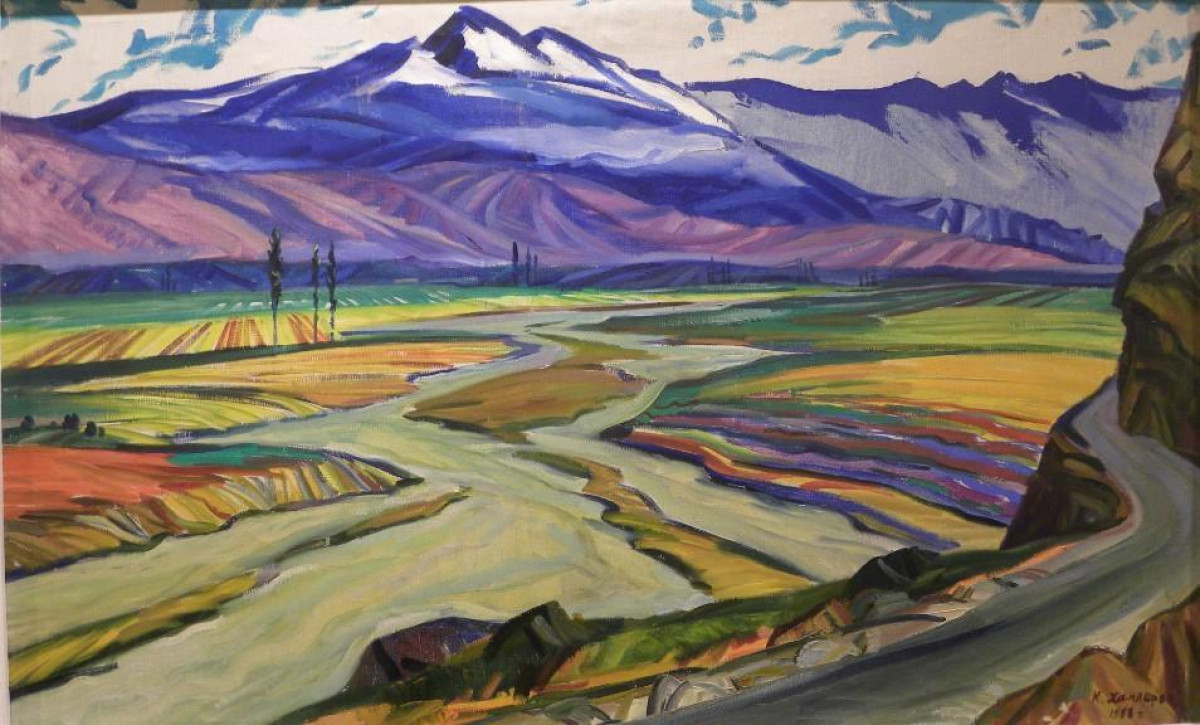
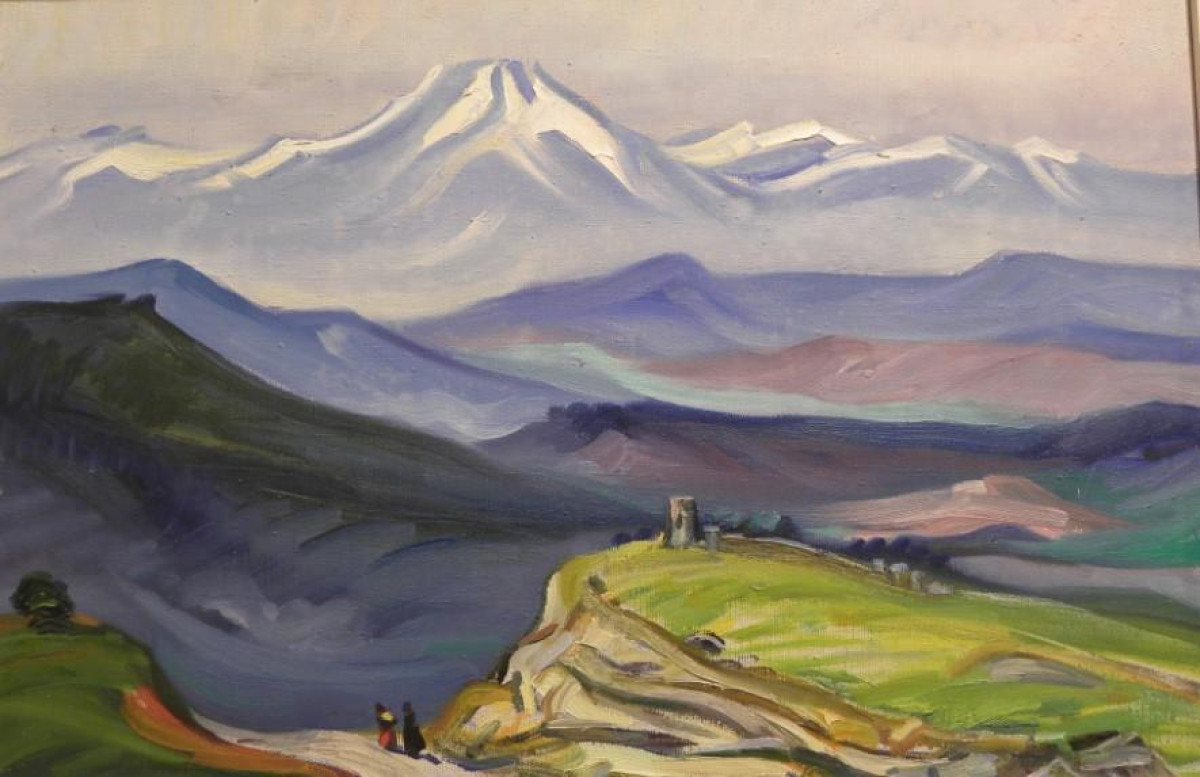
Landscape was a central genre in Khanlarov’s work. His travels across Azerbaijan allowed him to observe diverse natural environments and translate their distinctive qualities into painting. Zaqatala, Astara, the Talysh Mountains, Shusha, Sharur, Julfa, and the Absheron Peninsula feature among the places represented in his work.
Paintings such as Mountains of Zaqatala (1946), Astara (1955), Talysh Mountains (1956), The Surroundings of Shusha (1957), Shusha (1964), On the Banks of the Araz (1965), Sharur Valley (1968), At the Southern Border (1972), View of Mount Murovdag (1972), and Lake Jeyranbatan (1987) illustrate the breadth of his engagement with landscape.
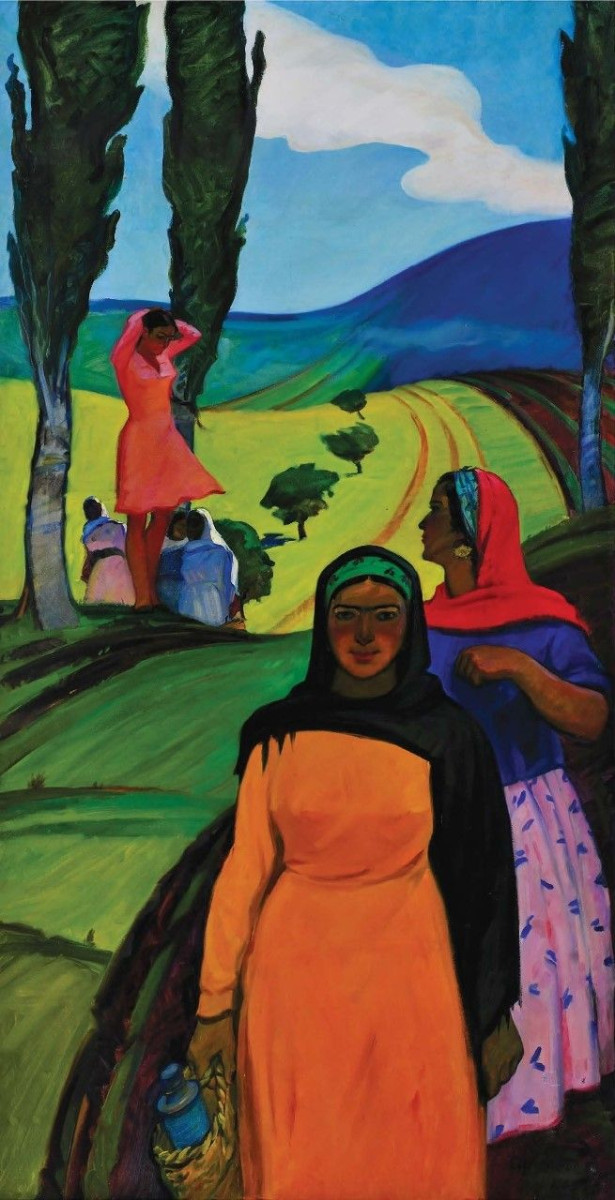
In these works, spatial structure, relationships between colours, and the overall mood are essential. Art-historical studies characterise Khanlarov’s landscapes by their lyrical quality and colour harmony. Rich hues, the balance of warm and cool tones, and clearly organised forms are among the defining features of his style.
His interest in Azerbaijani miniature painting is another noteworthy aspect of his artistic outlook. The colour richness and decorative structure of this tradition offer a meaningful point of comparison with his work. Khanlarov, however, did not simply reproduce inherited forms; he engaged with national artistic heritage through the expressive possibilities of modern painting.
History and the Human Figure
Khanlarov’s artistic interests extended beyond landscape. Historical subjects, including Before the Execution of Mazdak, Javanshir’s Detachment, and The Expulsion of the Sassanids, reflect his interest in Azerbaijan’s past. His portraits, including Little Dilara (1951), Dilara (1953), and The Old Man (1954), reveal another dimension of his work: the representation of the individual.
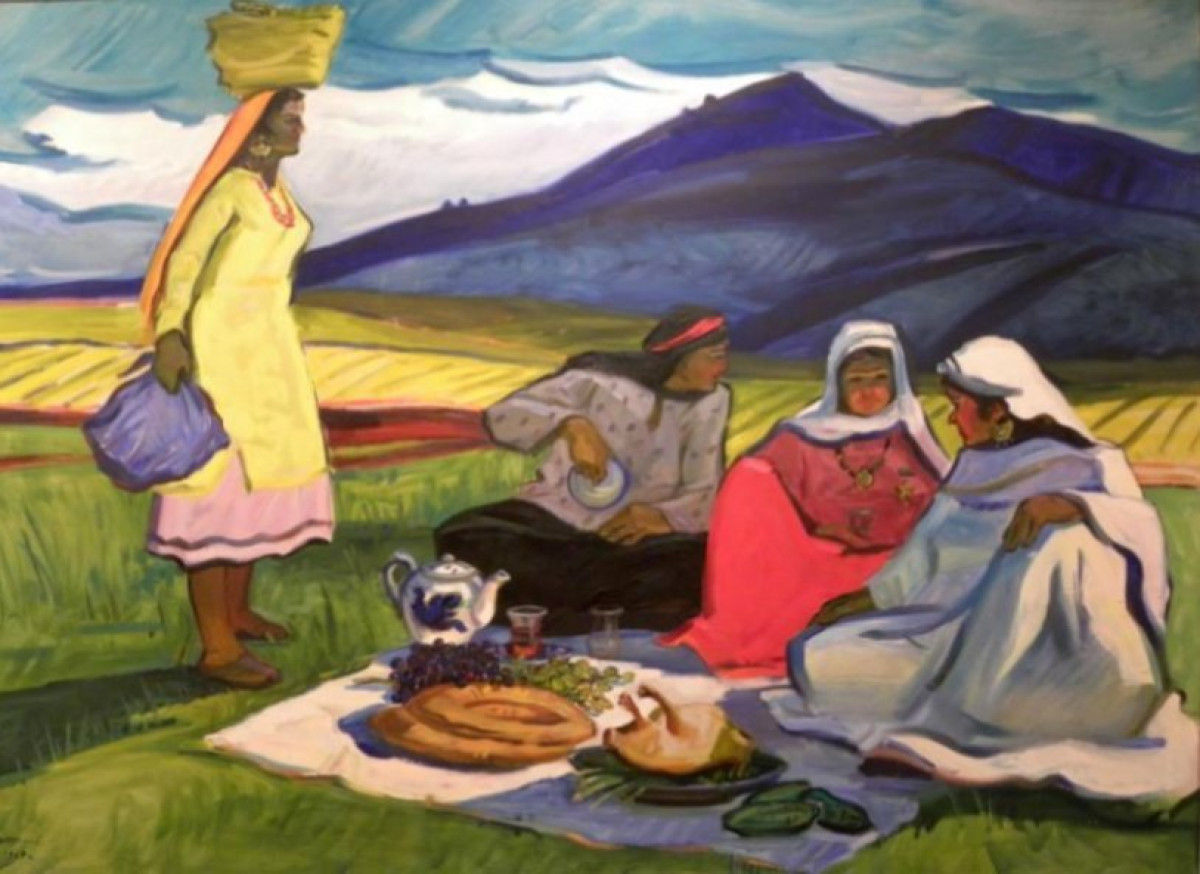
Scenes of everyday life and labour also occupy an important place in his oeuvre. Works such as Family (1965), In the Fields of Azerbaijan (1967), Lankaran Vegetable Growers, and Tea-Leaf Pickers depict people in relation to their surroundings and daily activities. These subjects demonstrate the breadth of his artistic concerns.
Theatre and Cinema
Khanlarov also worked in theatre and cinema. He prepared sketches of men's costumes for the film Peasants (1937), worked as a costume artist on Fatali Khan (1945), and designed the stage setting for Nushaba, a play by Abdulla Shaig, in 1947. This work demonstrates that his visual practice extended beyond easel painting into the applied and performing arts.
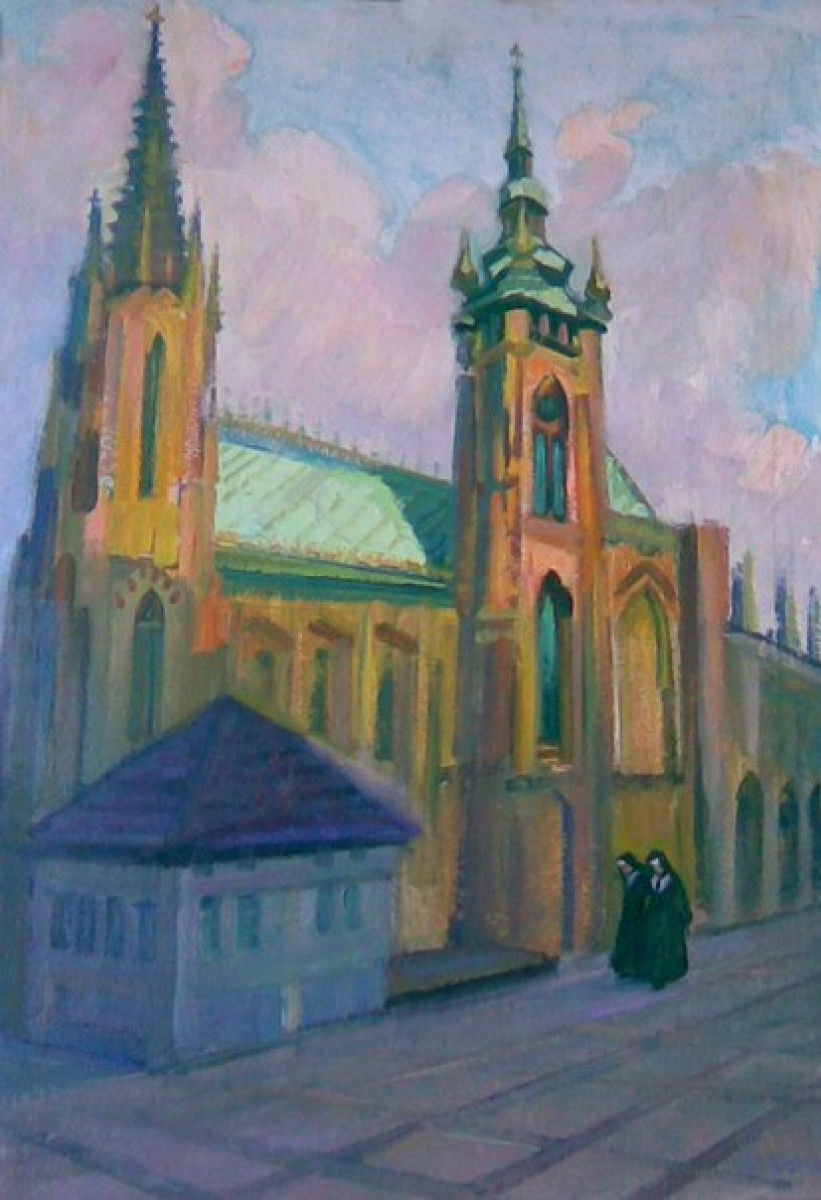
A visit to Czechoslovakia in 1961 introduced new urban settings into his artistic experience. Works associated with this journey include A Street in Prague, A Square in Karlovy Vary, Golden Lane, and A Tower in Prague. These paintings reflect his interest in interpreting unfamiliar architectural environments through his own painterly language. His works were also exhibited in a number of countries.
Artistic Legacy
A defining characteristic of Khanlarov’s work is his ability to maintain an individual artistic approach across different genres. His landscapes express the character of nature through colour; his historical compositions engage with the past; and his narrative paintings explore everyday life and human experience.
His decades of teaching also contributed to the development of Azerbaijani art education. Khanlarov died in Baku in 1996. His legacy remains significant to the study of landscape painting in Azerbaijan, the continuity of national artistic traditions, and the development of individual expression in twentieth-century painting.
Art Space Gallery MEDIA