Individual style, semi-abstract expression and material exploration within the Absheron painting tradition
The development of Azerbaijani painting in the second half of the twentieth century was characterised not only by changes in subject matter but also by a renewed approach to the representation of reality. For artists, depicting nature, human beings and everyday life was no longer limited to reproducing the outward appearance of the observed world. The emotional impact of colour, the free organisation of form and the expressive possibilities of the pictorial surface became important means of individual artistic thought.
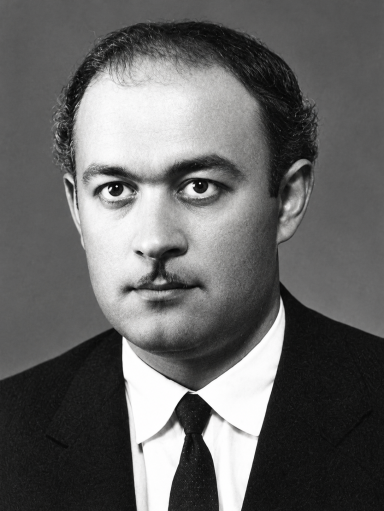
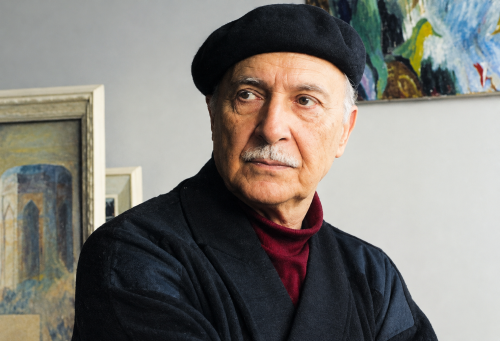
Gennady Brijatyuk’s work offers an interesting example through which to examine these developments. Born in Ganja on 30 January 1935, he studied at the Azim Azimzade State Art School in Baku from 1950 to 1958. His art is studied in connection with the Absheron painting milieu. However, his significance cannot be explained solely by his association with a particular artistic circle. One of the central aspects of his work is the artistic exploration that moves from conventional pictorial structures towards the freer expressive possibilities of colour and material.
From the Depiction of Reality to Individual Artistic Interpretation
During the Soviet period, the Absheron painting milieu was one of the creative environments in which individual styles and unconventional artistic approaches emerged in Azerbaijani visual art. Artists working in this context approached everyday life, human relationships and the local landscape through personal observation. Even under the dominant influence of Socialist Realism, such explorations expanded the possibilities of representation in both subject matter and form.
Women’s portraits, mother-and-child compositions, and landscapes of Baku and Absheron occupy an important place in Brijatyuk’s work. This diversity indicates that his interests extended beyond landscape painting alone. His engagement with different subjects makes it necessary to consider his artistic language not only in terms of what he depicted but also in terms of how he presented it.
An important question in approaching Brijatyuk’s art is not simply which objects and events he chose to depict, but the artistic principles through which he reconstructed them. The same subject can acquire different meanings and emotional effects in the work of different artists. One of the principal factors determining these differences is the artist’s approach to form, colour and composition.
The Expressive Possibilities of Colour
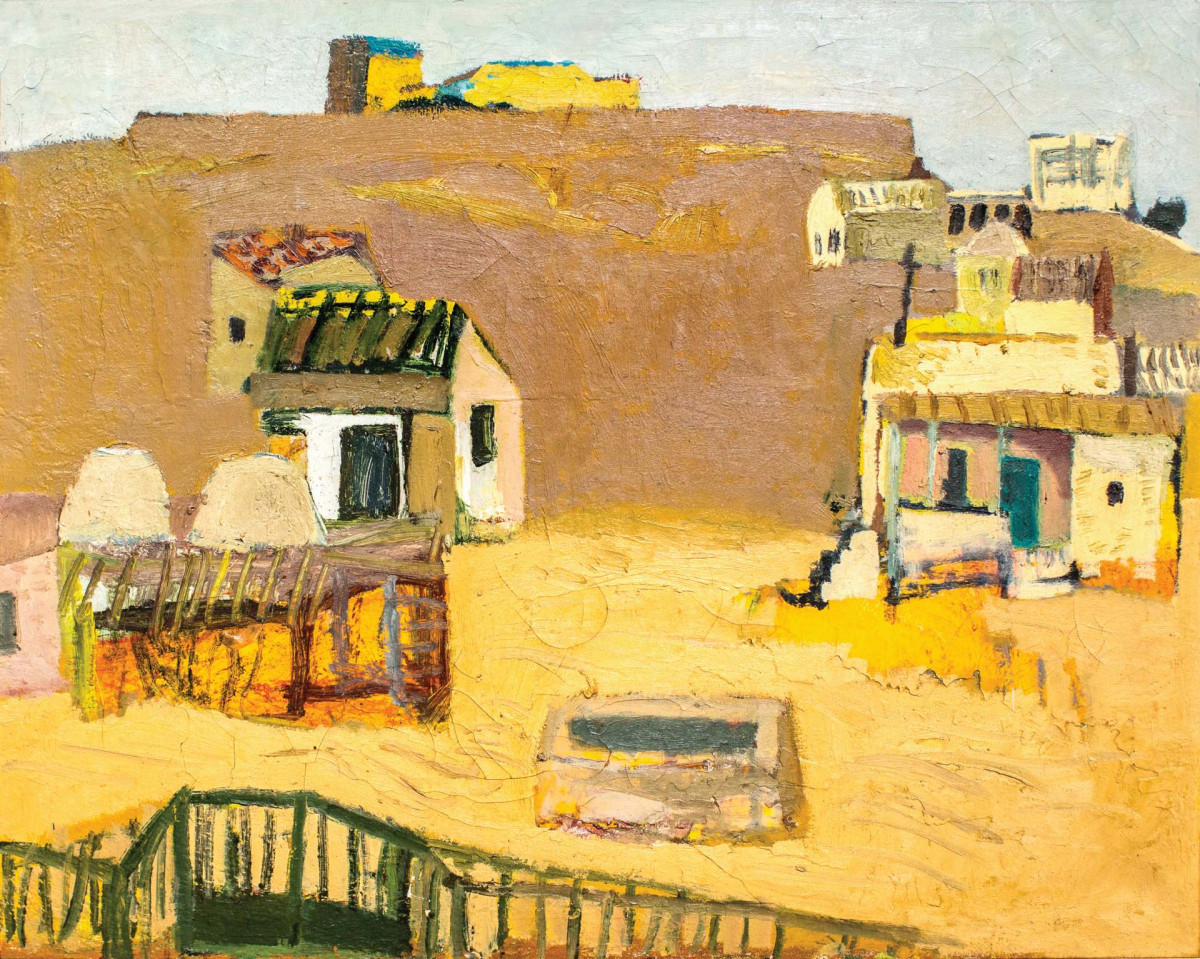
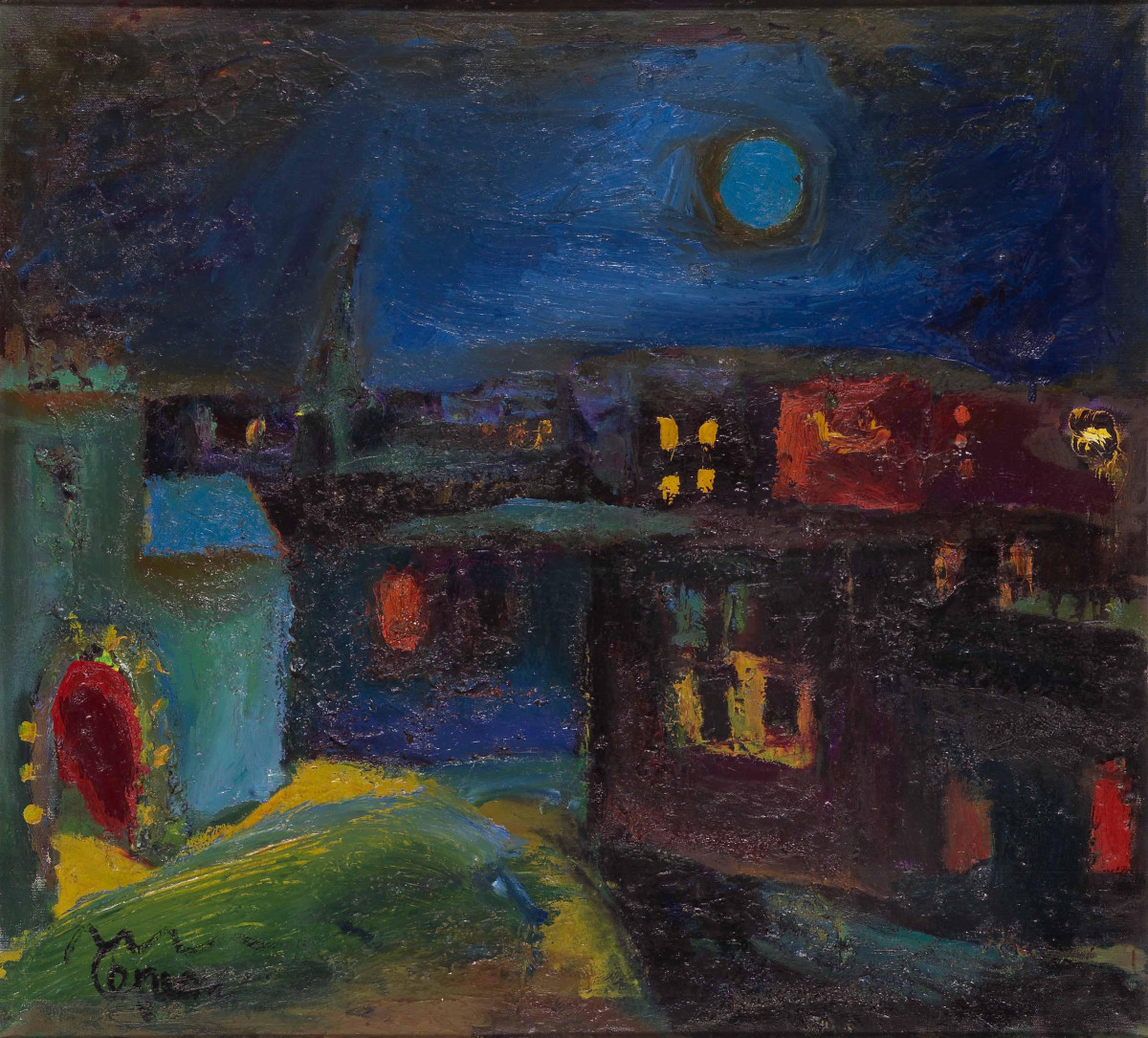
A noteworthy aspect of Brijatyuk’s artistic development is the movement from a realist and decorative approach towards a freer, semi-abstract form of expression. In his later landscapes, the use of a softer palette and broad areas of colour has been associated with his attempts to extend the conventional structure of representation.
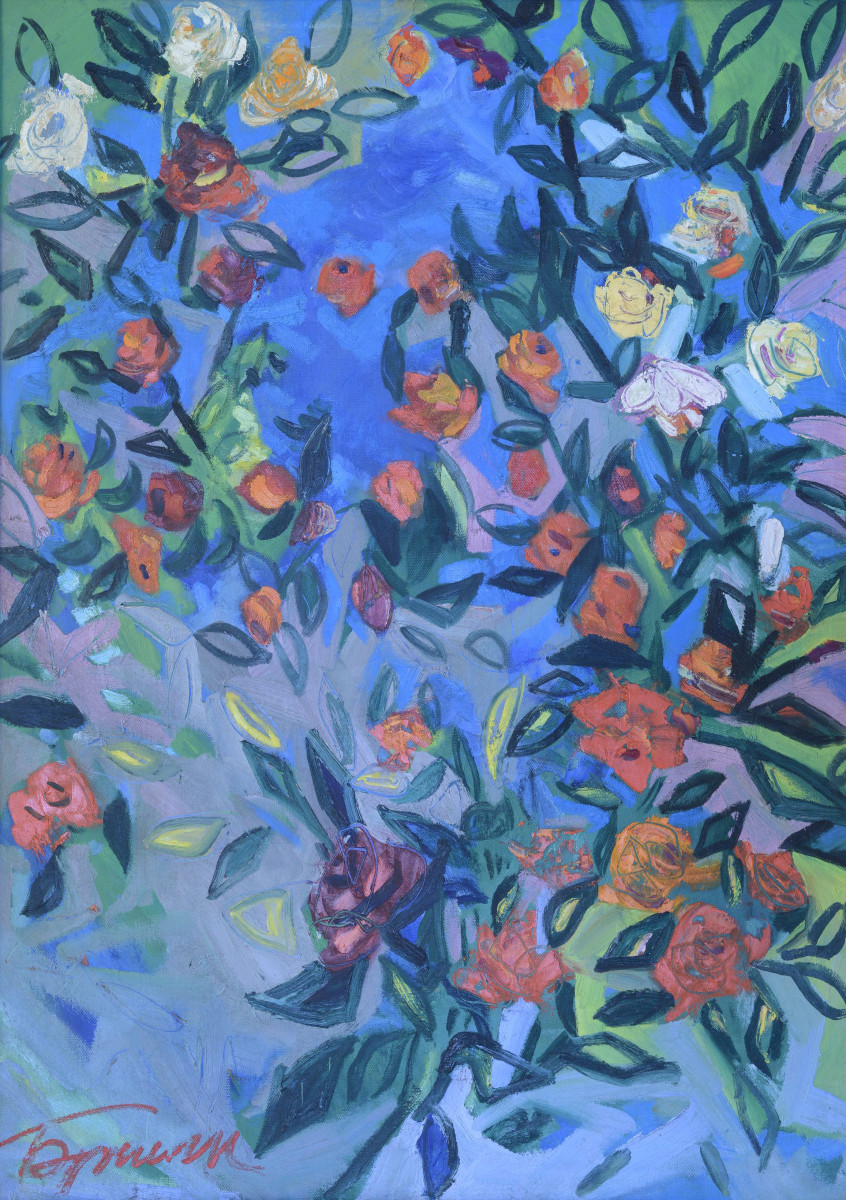
This transition is significant because it changes the function of colour within the image. In traditional realist painting, colour may serve to convey an object’s appearance, material qualities and lighting conditions. In semi-abstract painting, however, a field of colour can move beyond the boundaries of the object it represents and become an independent compositional element. In such works, the overall effect arises not only from the depicted landscape but also from the interaction of colours, their rhythm and the structure of the composition as a whole.
One of the most interesting aspects of Brijatyuk’s work is the relationship between recognisable reality and a freer organisation of colour. The landscape retains its connection to a specific geographical environment, yet its artistic impact is not limited to the precise reproduction of nature’s outward appearance. Colour and form become means of expressing an individual perception of the observed world.
The Artistic Interpretation of Baku and Absheron Landscapes
Brijatyuk’s View of Baku, dated 1978, and Mardakan, created in 1986, are documented examples of his engagement with the subjects of Baku and Absheron. Mardakan is recorded as an oil painting on canvas measuring 80 × 120 centimetres.
The dates of these two works demonstrate that the artist returned to this geographical environment at different points in his career. However, it would be inappropriate to assign them to the same artistic phase solely on the basis of their shared subject matter. To establish the differences between the works, their compositional structures, colour relationships, degree of formal simplification and treatment of the painted surface would need to be examined comparatively.
The natural environment and lived landscape of Absheron can be considered not merely subjects in Brijatyuk’s work but also fields in which his individual artistic perspective took shape. The artistic significance of a landscape does not end with its geographical recognisability; what matters is how it is reconstructed through colour, form and composition.
The Human Figure and the Emotional Impact of Colour
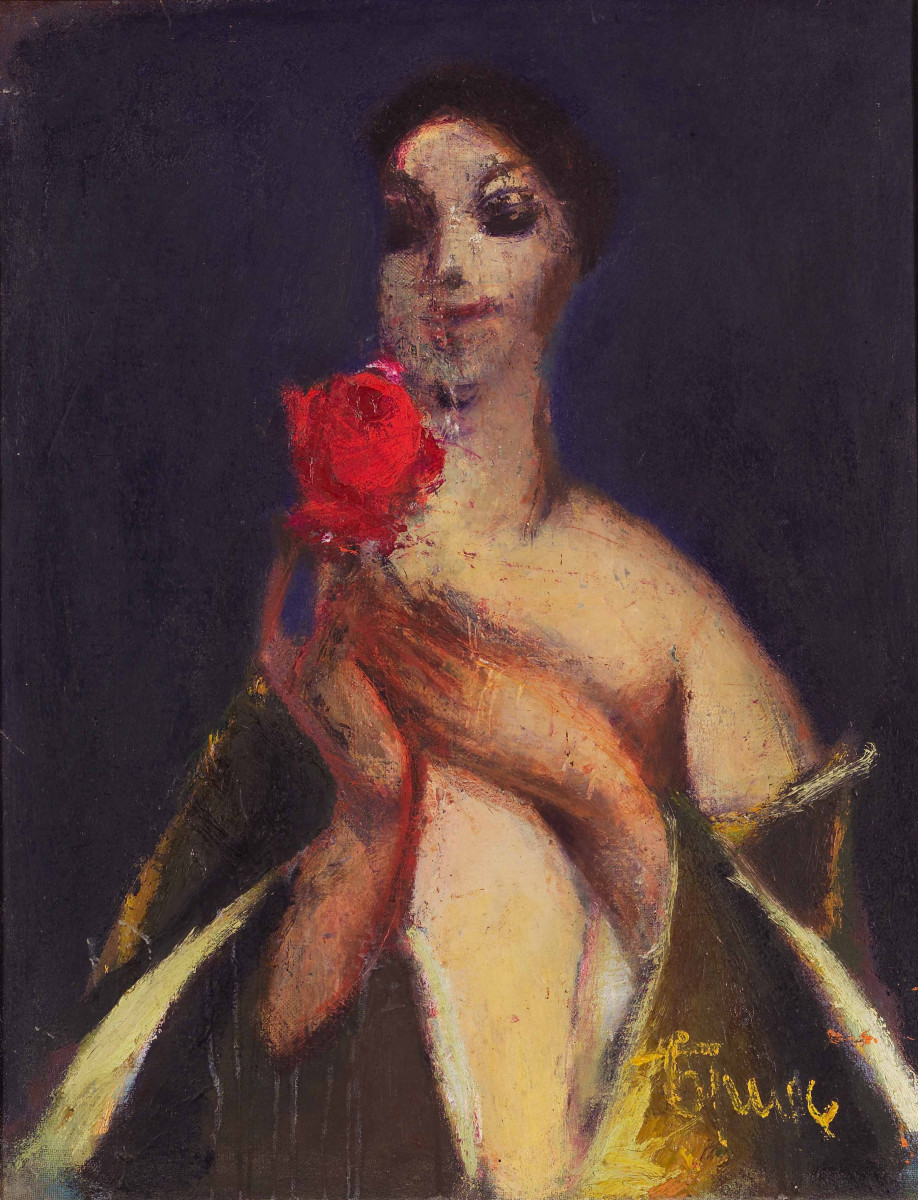
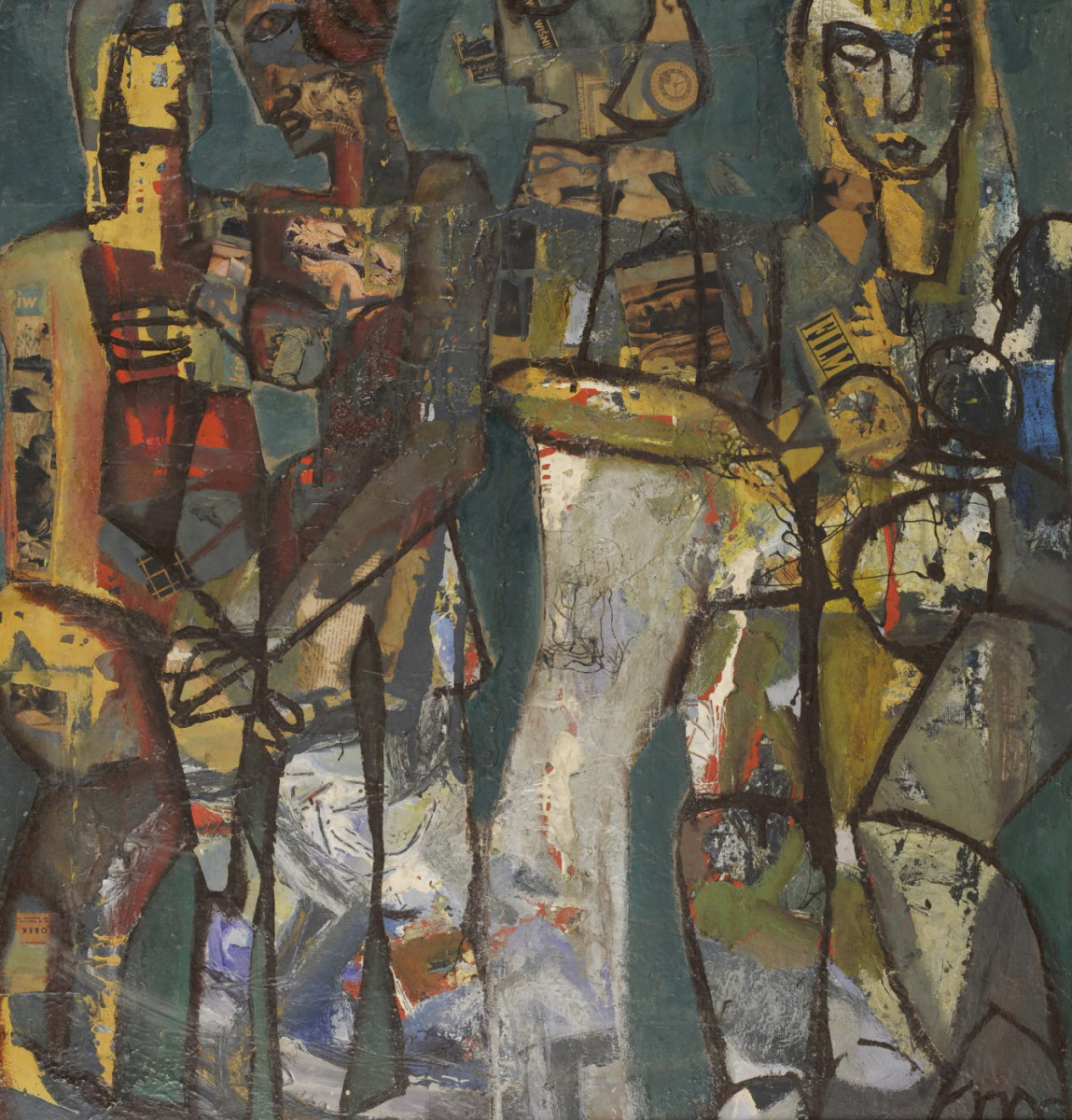
The human figure in Brijatyuk’s work deserves particular attention. His women’s portraits, mother-and-child compositions and engagement with the nude figure indicate an exploration of the different artistic possibilities of the human body and image.
These subjects demonstrate that an approach based solely on theme and genre is insufficient for understanding his art. The relationship between colour and bodily form, the organisation of light and shadow, and the placement of the figure within the composition are among the factors that determine the emotional impact of the human image.
In portraiture and nude painting, an artist’s individual position often emerges through broader considerations than the accuracy of detail alone. The figure’s position within the composition, the character of tonal transitions and the overall visual structure of the image directly influence the viewer’s perception. A comparative analysis of Brijatyuk’s works from this perspective could provide a fuller understanding of his approach to the human figure.
New Possibilities for the Painted Surface
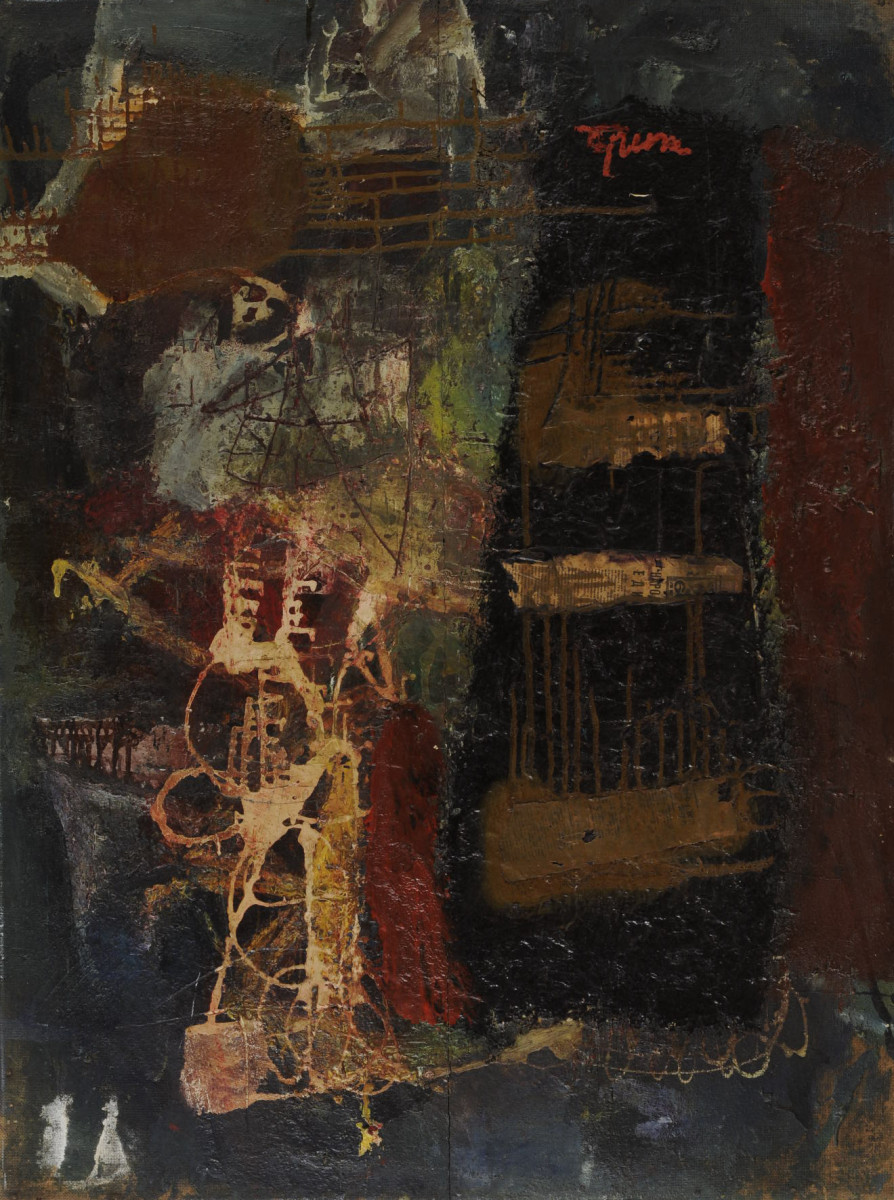
One noteworthy direction in Brijatyuk’s artistic exploration concerns the material properties of the pictorial surface. Available art-historical information indicates that, during the later phase of his career, he incorporated additional materials such as sand and earth into some works. This information points to the significance of his attempts to expand the possibilities of the painted surface.
Introducing additional materials into painting changes not only the visible image but also the physical structure of the work. The relief of the surface can affect the reflection of light, the perception of paint layers and the material presence of the image. The artwork can therefore be considered not merely a visual arrangement of colour and form but a complete object in which the material itself becomes a means of expression.
Brijatyuk’s experiments can be considered in relation to broader artistic tendencies in the second half of the twentieth century that sought to extend the traditional boundaries of painting. Nevertheless, technical research is necessary to establish precisely which materials were used in particular works and how they were applied. Such an approach makes it possible to assess the artist’s innovations on a substantiated basis without exaggerating their significance.
An Individual Position within the Absheron Painting Milieu
The importance of the Absheron painting tradition lies not in the creation of a single unified style but in the emergence of distinct artistic languages within a shared historical context. The strengthening of individual styles and the expansion of experiments with colour and form were among the significant characteristics of Azerbaijani painting during the 1960s, 1970s and 1980s.
Within this context, Brijatyuk’s work merits attention both for its relationship with local artistic traditions and for its exploration of semi-abstract forms of expression. Classifying his art solely under the concept of the “Absheron School” may not fully reveal the particular qualities of his individual style. A more productive approach is to examine his methods across different genres, the role of colour within his compositions and his treatment of materials through specific works.
Such an analysis moves Brijatyuk’s work beyond a general description of style and connects it with the individual artistic explorations that shaped the development of Azerbaijani painting. His significance becomes clearer through identifying the formal means by which these explorations were realised.
The Place of His Work in Art History
Gennady Brijatyuk’s work merits study in relation to the expanding expressive autonomy of colour in Azerbaijani painting, the development of the semi-abstract landscape and changing approaches to the pictorial surface. His paintings offer a basis for examining how individual stylistic explorations within the Soviet artistic environment involved not only the choice of subject but also the formal and material structure of the image.
A fuller assessment of the artist’s work requires comparative visual analysis, documentation of technical characteristics and the establishment of a clearer chronology of his artistic development. These efforts could help define his individual visual language more precisely and substantiate his place in the history of twentieth-century Azerbaijani visual art.
Gennady Brijatyuk died in Baku on 11 July 2008. Systematic research into his legacy can contribute to a deeper understanding of his individual explorations and to a well-grounded presentation of Azerbaijani painting within international art history.
Art Space Gallery MEDIA