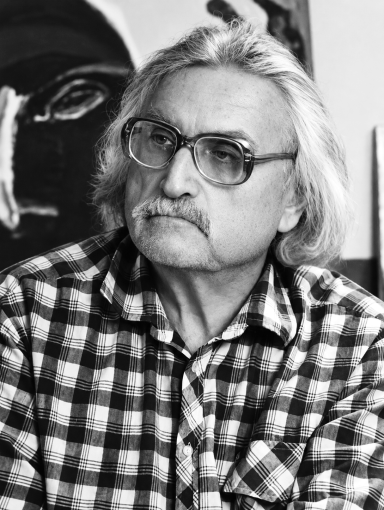
Mythological thought, the transformation of imagery, and the contradictions of human nature
The Formation of an Independent Artistic Vision
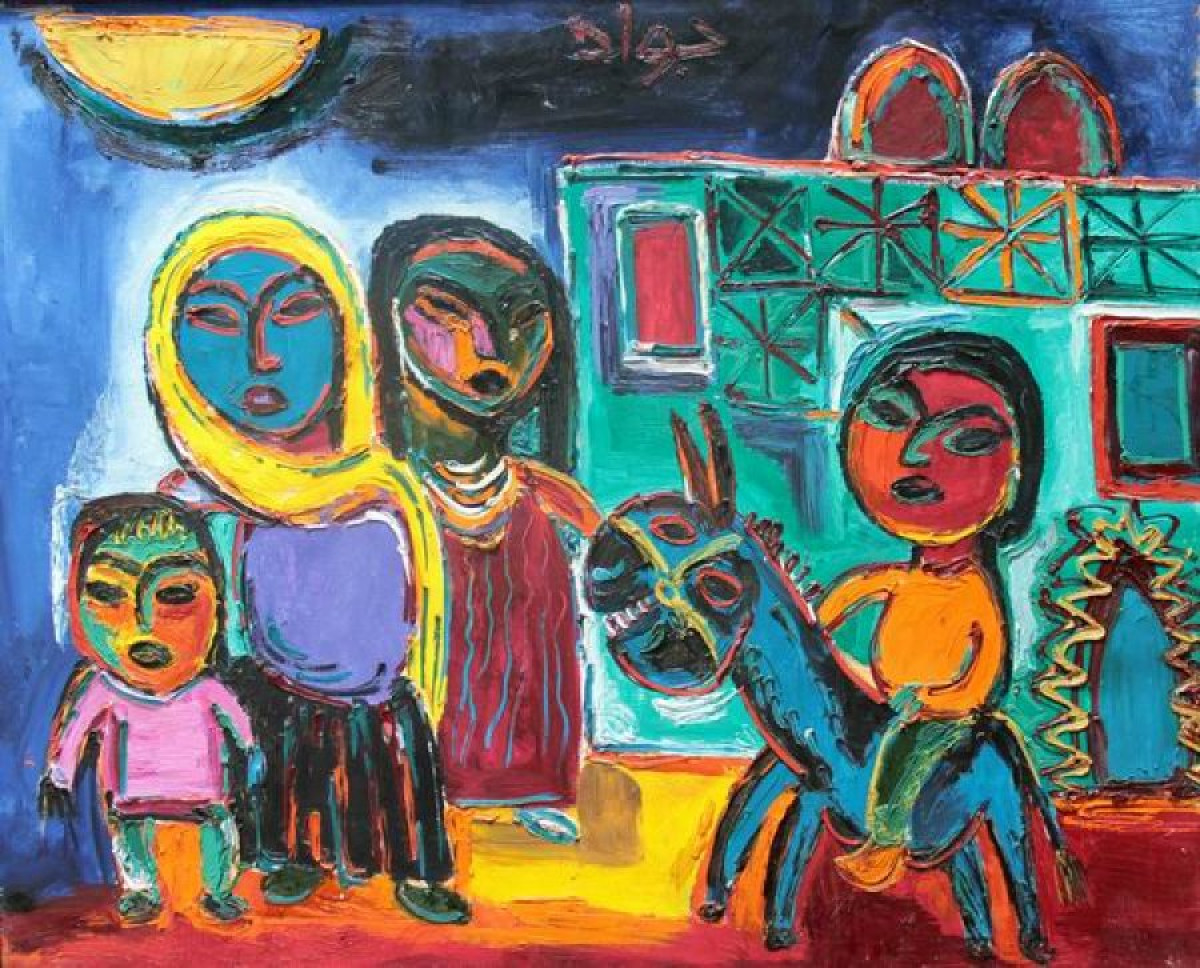
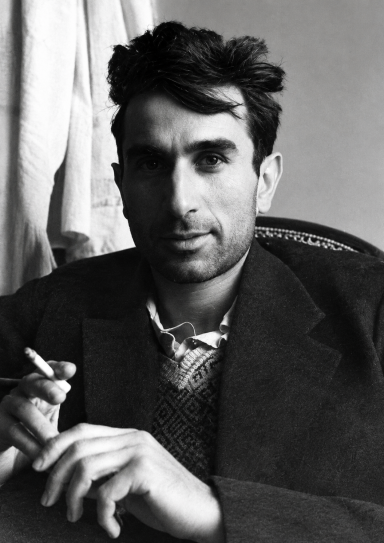
Born in Baku on 19 January 1923, Javad Mirjavadov was one of the artists in Azerbaijani visual art distinguished by his independent artistic thinking, unconventional imagery, and search for freedom of expression. His work is characterised by an effort to move beyond traditional principles of representation and establish a distinctive visual structure. For Mirjavadov, painting was not merely the depiction of visible reality, but an exploration of the spiritual and psychological layers that lie beneath it.
After graduating from the Azim Azimzade Azerbaijan State Art School, the artist lived in Leningrad from 1949 to 1954 and worked at the Hermitage. His encounter with diverse examples of world art there became an important stage in his artistic development. Nevertheless, the defining feature of Mirjavadov’s individual style was not the repetition of existing influences, but his pursuit of original means of artistic expression. Rather than conforming to established aesthetic conventions, his work sought to expand the boundaries of individual perception.
The Modern Interpretation of Mythological Thought
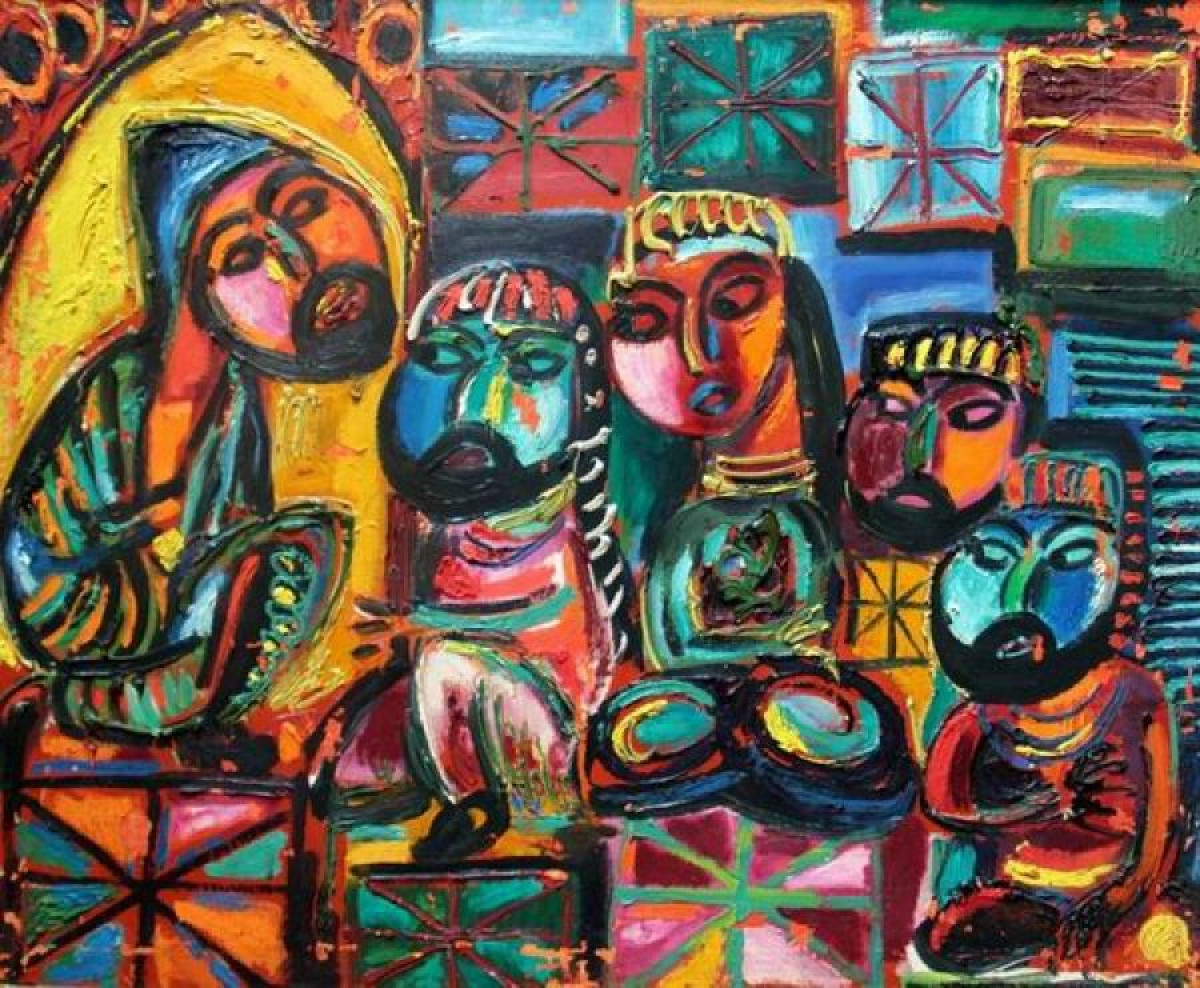
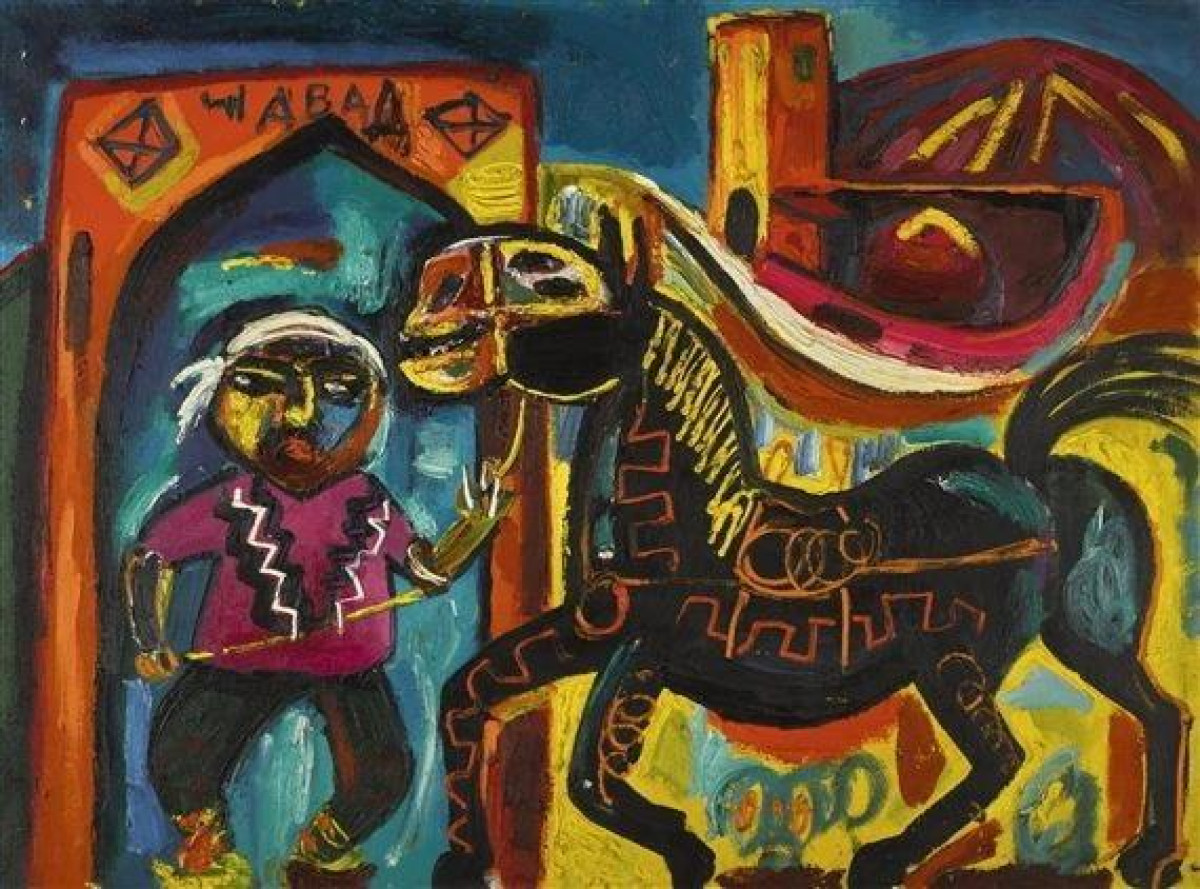
In Mirjavadov’s work, myth and folklore are not simply narratives from the past brought back to life. Reinterpreted through his artistic imagination, these sources become a means of exploring human fears, passions, contradictions, and the complexity of behaviour. Mythological figures retain traces of their origins while acquiring new artistic meanings.
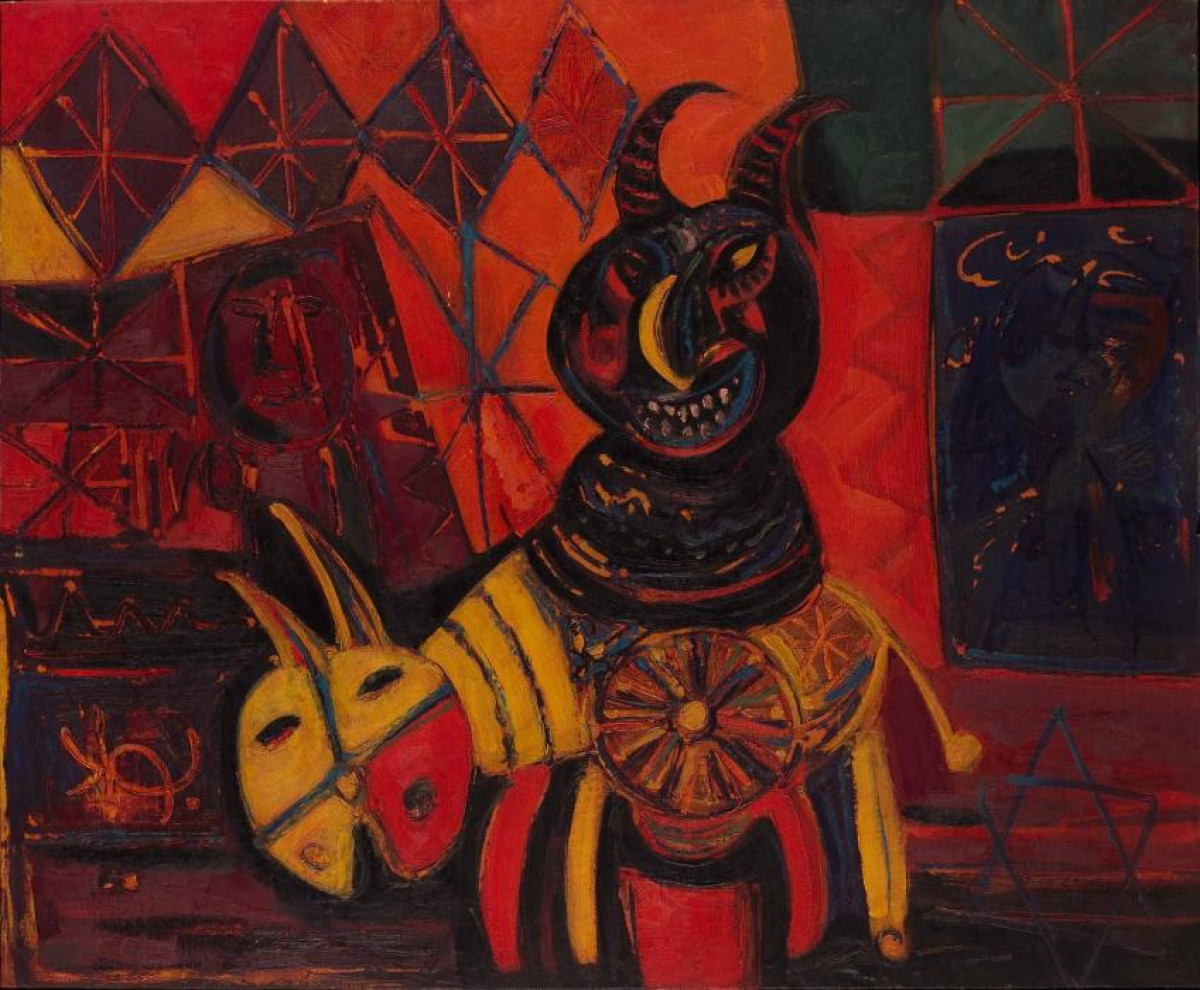
Giants, fantastical creatures, and unconventional human figures do not appear as fixed or easily recognisable images. Through altered bodily structures, unexpected combinations, and unusual visual relationships, they acquire distinctive identities. Their impact derives from more than their fantastic appearance. They unsettle the boundaries between the human and the alien, the alluring and the frightening, the familiar and the incomprehensible.
In Mirjavadov’s art, mythological thought moves beyond the depiction of the past and turns towards the human inner world. Rather than narrating a specific story, the world he creates brings together different psychological and spiritual states through the construction of images. His engagement with myth is therefore not limited to subject matter; myth becomes a way of perceiving and reconstructing reality.
The Grotesque as a Principal Means of Expression
The grotesque occupies an important place in Javad Mirjavadov’s work. The grotesque is an artistic device in which forms are deliberately distorted or exaggerated to intensify an image’s meaning and impact. Yet in his art, the concept cannot be reduced to unusual figures or exaggerated forms alone. Distortion becomes a means of defining an image’s inner content, strengthening its psychological effect, and moving it beyond the limits of ordinary perception.
The alteration of the human body’s conventional structure distances the figure from familiar anatomical representation. Individual forms enter unexpected relationships, creating tension between an image’s outward construction and the impression it produces. The resulting figures belong neither entirely to the real world nor exclusively to the realm of fantasy. This ambiguity gives Mirjavadov’s imagery its particular expressive force.
In the artist’s approach, form is not merely a vehicle for the subject; it is an element of thought with equal significance. How an image is constructed determines what it communicates. For this reason, the unusual visual structures in Mirjavadov’s work cannot be considered separately from their content. His individual style emerges precisely through the interaction of these two dimensions.
The Cry of the Planet — The Scale of Human Tragedy
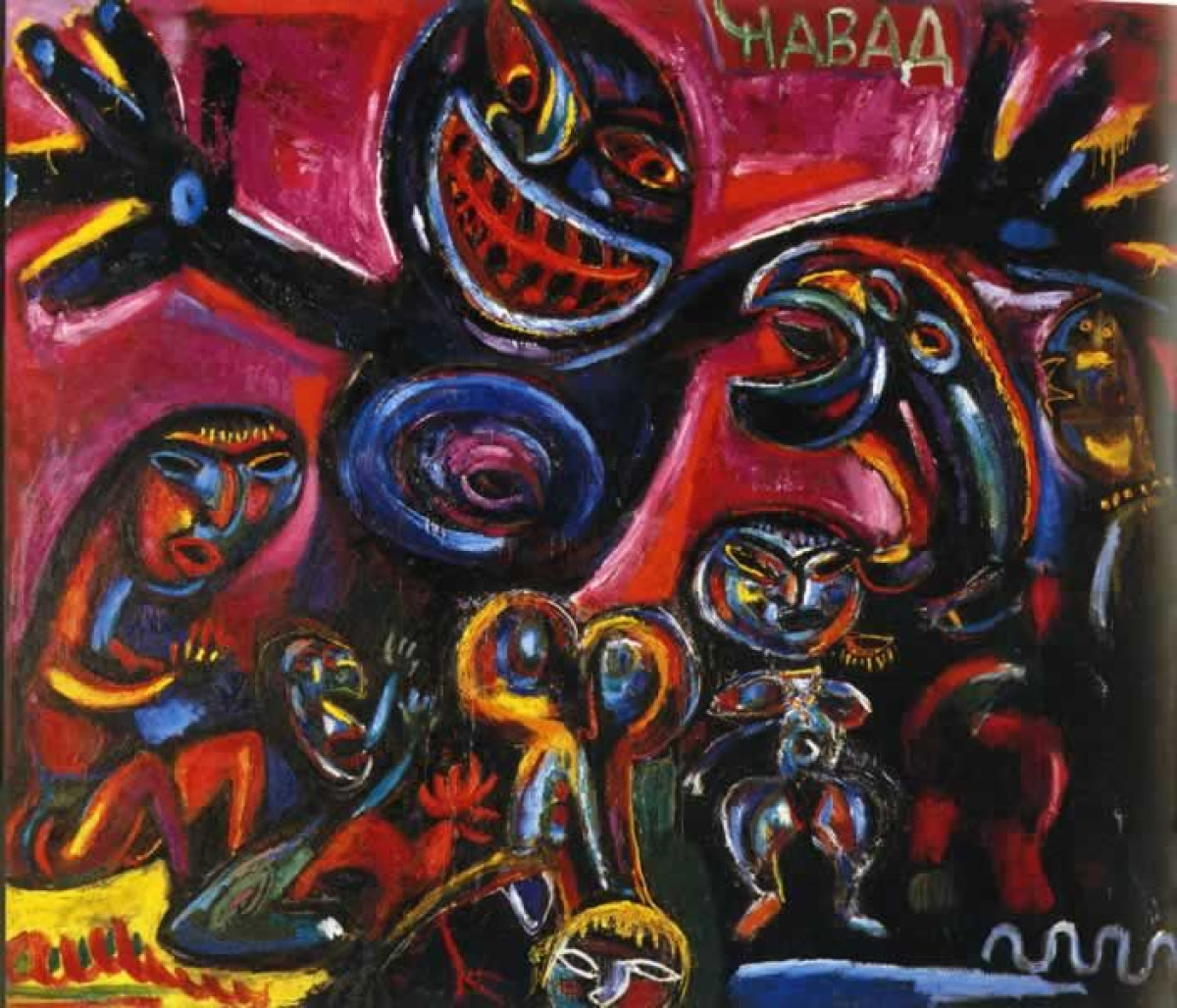
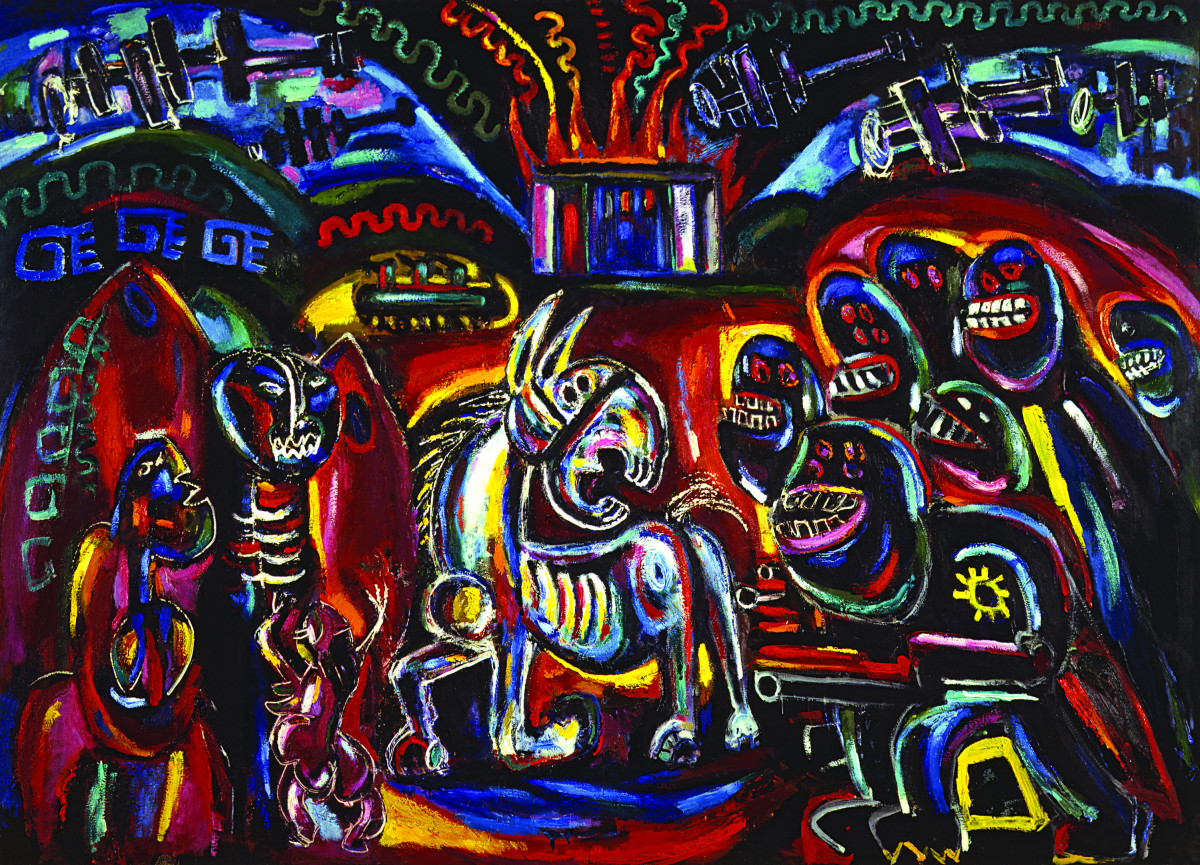
Created in 1978, The Cry of the Planet is an important example of Javad Mirjavadov’s artistic thinking. The work addresses the tragedies caused by war and the struggle between good and evil.
The title’s most striking feature is the expansion of scale from the individual human fate to the entire planet. “Cry” conveys human pain and protest, while “planet” establishes the universal dimension of that emotion. The tragedy thus acquires a meaning beyond the depiction of a specific event: the destruction and violence created by humanity emerge as threats affecting the fate of the world as a whole.
The work’s visual structure intensifies its dramatic character through deformed figures and fantastical imagery. Human tragedy is expressed not through detached observation, but through the unusual construction of the figures and the tension they create. The disruption of form echoes the disruption of moral balance in the world.
The artistic approach evident in this work reveals a significant feature of Mirjavadov’s practice: a major subject can be conveyed not only through narrative, but also through the internal structure of the image. The work’s impact arises from the relationship between its content and its visual resolution.
An Individual Artistic Interpretation of Reality
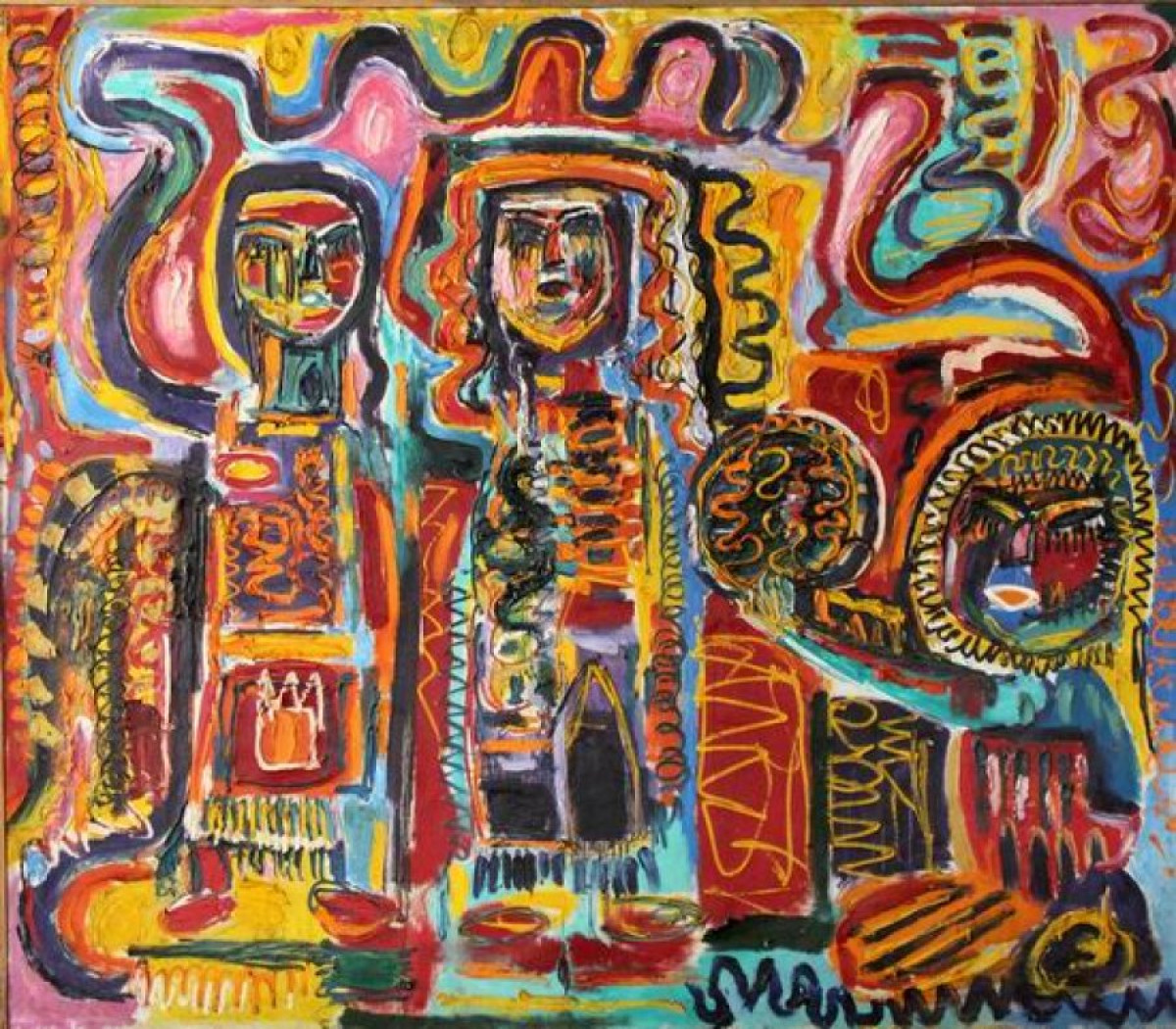
In Mirjavadov’s art, reality is not a collection of events reproduced as they appear or represented solely through outward resemblance. The artist reconstitutes the world he observes through his imagination and individual thought. In this process, reality encounters mythological vision, the human figure meets fantastical elements, and familiar forms enter unexpected visual relationships.
This approach creates a complex system of expression that resists a single, easily defined interpretation. Alongside presenting a particular subject, the images open up broader reflections on the inner contradictions of human nature. Their impact does not depend on the recognition of ready-made symbols, but on the perception of tensions between forms and the unusual relationships established by the images.
This quality makes it impossible to regard Mirjavadov’s work merely as a collection of fantastical representations. In his art, imagination does not serve as an escape from reality; it reveals aspects of reality that remain unseen in its ordinary appearance. Mythological and grotesque imagery consequently carries an independent artistic meaning within his work.
Artistic Independence and His Place in Art History
Javad Mirjavadov’s solo exhibitions were held in Baku and Moscow in 1987. In 1988, he received an honorary title in recognition of his contributions to Azerbaijani art. His work holds significance within the context of nonconformist approaches in Azerbaijani visual art and artistic explorations that move beyond conventional modes of expression.
What distinguishes Mirjavadov’s artistic position is not only his choice of subjects and imagery, but also his method of constructing the image itself. He brings mythological thought into dialogue with modern artistic expression, transforms the conventional appearance of the human figure, and creates new layers of meaning through this transformation. In his work, formal freedom is not an experiment detached from the subject, but a principal means of expressing an individual worldview.
His work offers an example of establishing a distinctive visual system rather than adapting to established representational rules, and of using that system to investigate the complexity of human nature. Here, myth does not remain a relic of the past, nor does the grotesque serve merely as a means of creating unusual appearances. Both converge within a unified artistic approach that expresses the artist’s individual understanding of reality.
Javad Mirjavadov died on 24 June 1992.
Art Space Gallery MEDIA