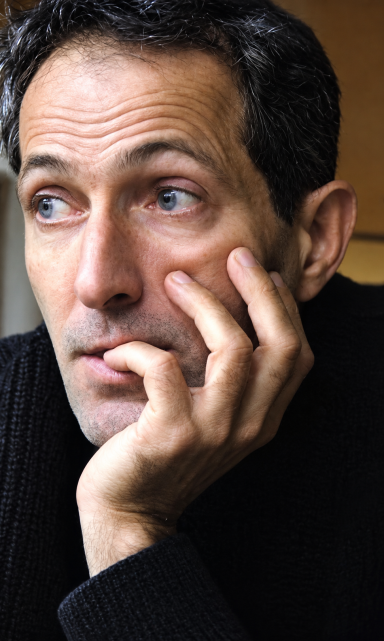
An Individual Artistic Position and the Interpretation of Reality
Zakir Huseynov’s work occupies a distinctive place in Azerbaijani painting through its individual artistic perspective, engagement with diverse subjects, and particular approach to reality. His paintings encompass Absheron landscapes, industrial environments, human figures, still lifes, animal imagery, and thematic compositions. This diversity suggests that his artistic world cannot be adequately understood through a single subject or genre.
To approach Huseynov’s work, it is necessary to look beyond the objects depicted and consider the meanings they acquire within the painting, their relationship to the composition, and the way the artist’s individual vision takes shape. A deeper understanding of his art begins with close attention to individual works and the relationship between subject matter and artistic expression.
Life and Artistic Formation
Zakir Huseynov was born on 23 September 1961 in Amirjan, Baku. He developed an early interest in drawing and acquired his initial artistic knowledge at a drawing studio led by Islam Muzaffarov. From 1979 to 1985, he studied in the textile department of the Azim Azimzade Baku Art School, where his teachers included Shaira Alasgarova and Boyukagha Salahov.
After completing his studies, Huseynov worked at the Baku Iodine Plant and subsequently at the Artistic Production Creative Combine of the Art Fund. He was associated with the Baku Art Centre and, between 1996 and 2003, with the Labyrinth creative circle. From 2006 to 2010, he was connected with the creative group operating at Baku Gallery. In 1997, he became a member of the Azerbaijan Artists’ Union.
His works were exhibited from the 1980s onward. His participation in the All-Union Youth Exhibition in 1988 and exhibitions held in Budapest, Riga, and Moscow in 1989 indicates that his work was presented beyond Azerbaijan as well.
Absheron — An Artistic Interpretation of a Familiar Landscape
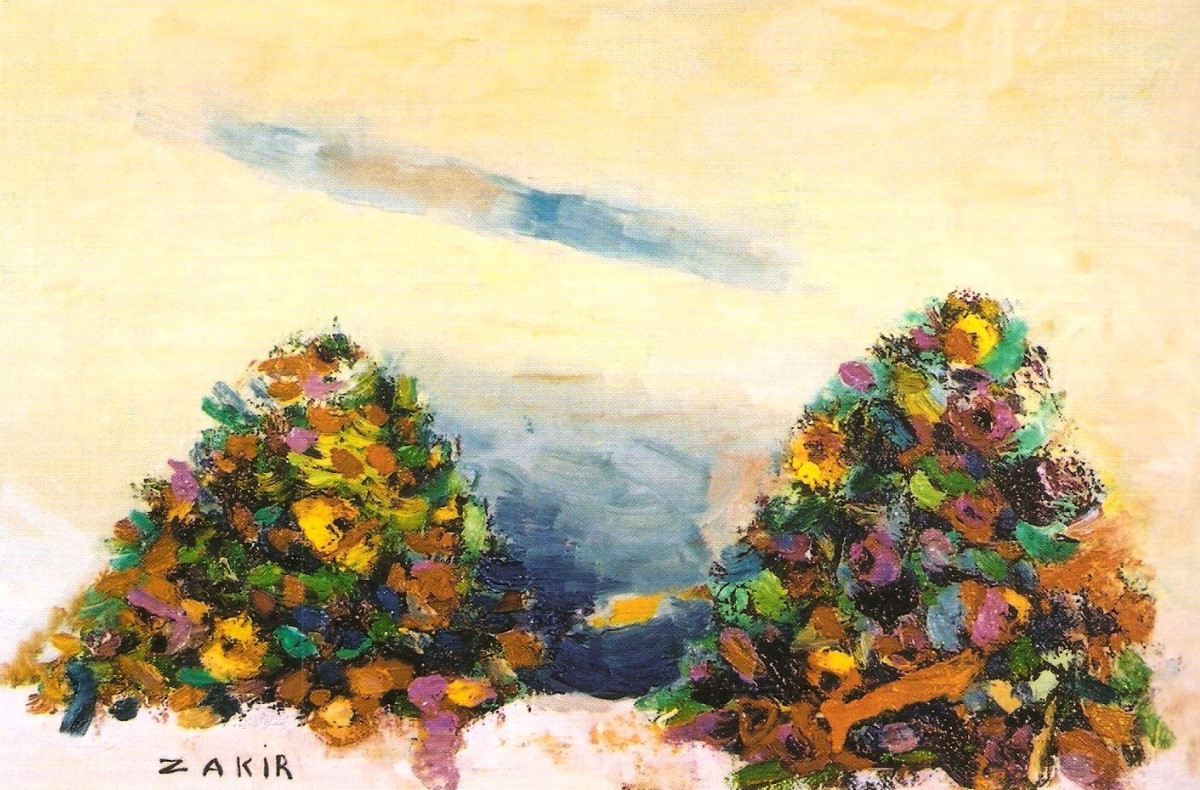
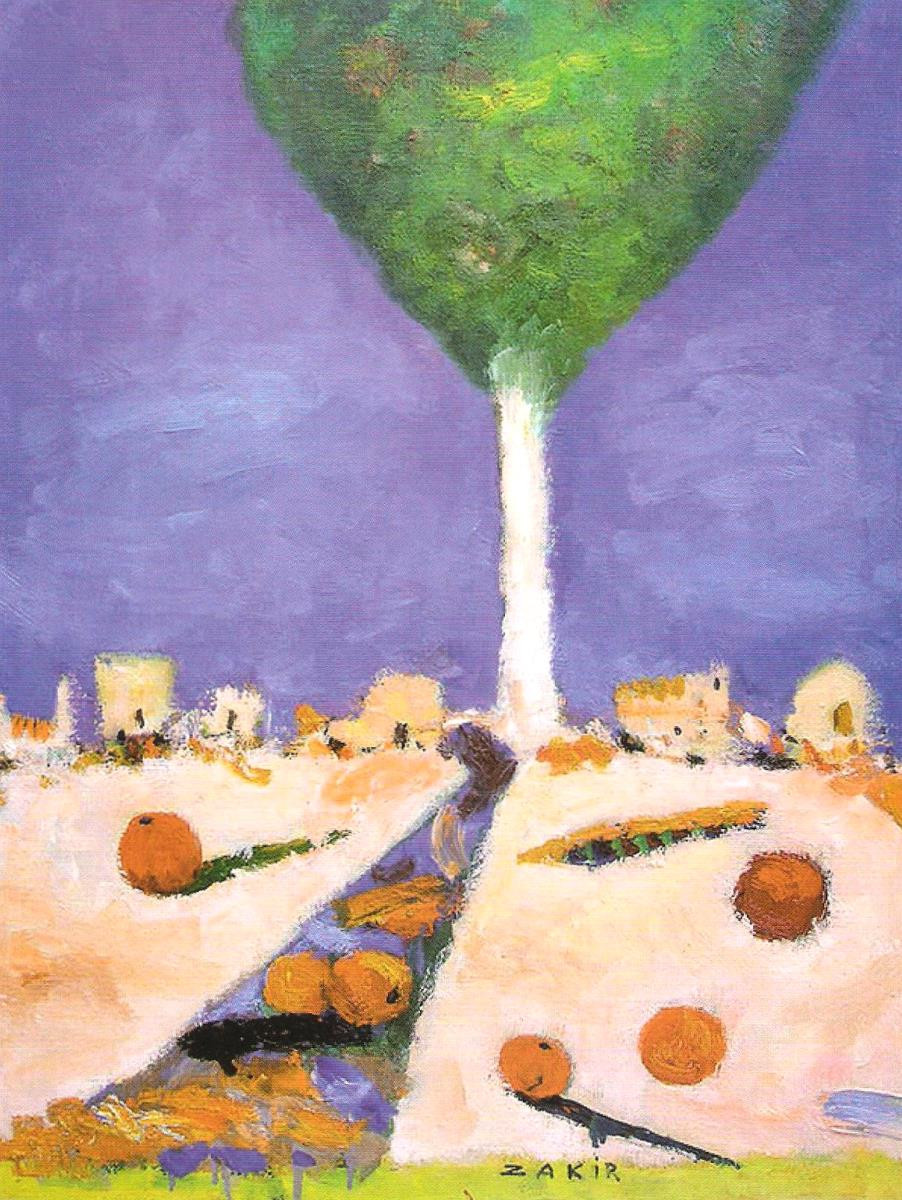
Absheron occupies an important place in Huseynov’s art. Works such as Buzovna and Amirjan reflect the artist’s sustained engagement with his native surroundings. Yet the significance of a landscape extends beyond the recognition of a particular location. The direction of the artistic gaze, the relationships between depicted elements, and the organisation of the composition all shape the way that environment is perceived within the painting.
A landscape is not simply a reproduction of what the artist sees. It is also an act of selection, through which observed reality is presented within a particular artistic framework. In this sense, Absheron represents both the subject of Huseynov’s observation and an environment that informs his individual artistic outlook.
The transformation of a familiar landscape into a work of art involves more than the depiction of its outward appearance. The artist’s choice of viewpoint and compositional approach can establish a different relationship with an otherwise familiar place. Huseynov’s engagement with Absheron deserves to be considered within this broader context.
The Industrial Environment — Another Dimension of Everyday Reality
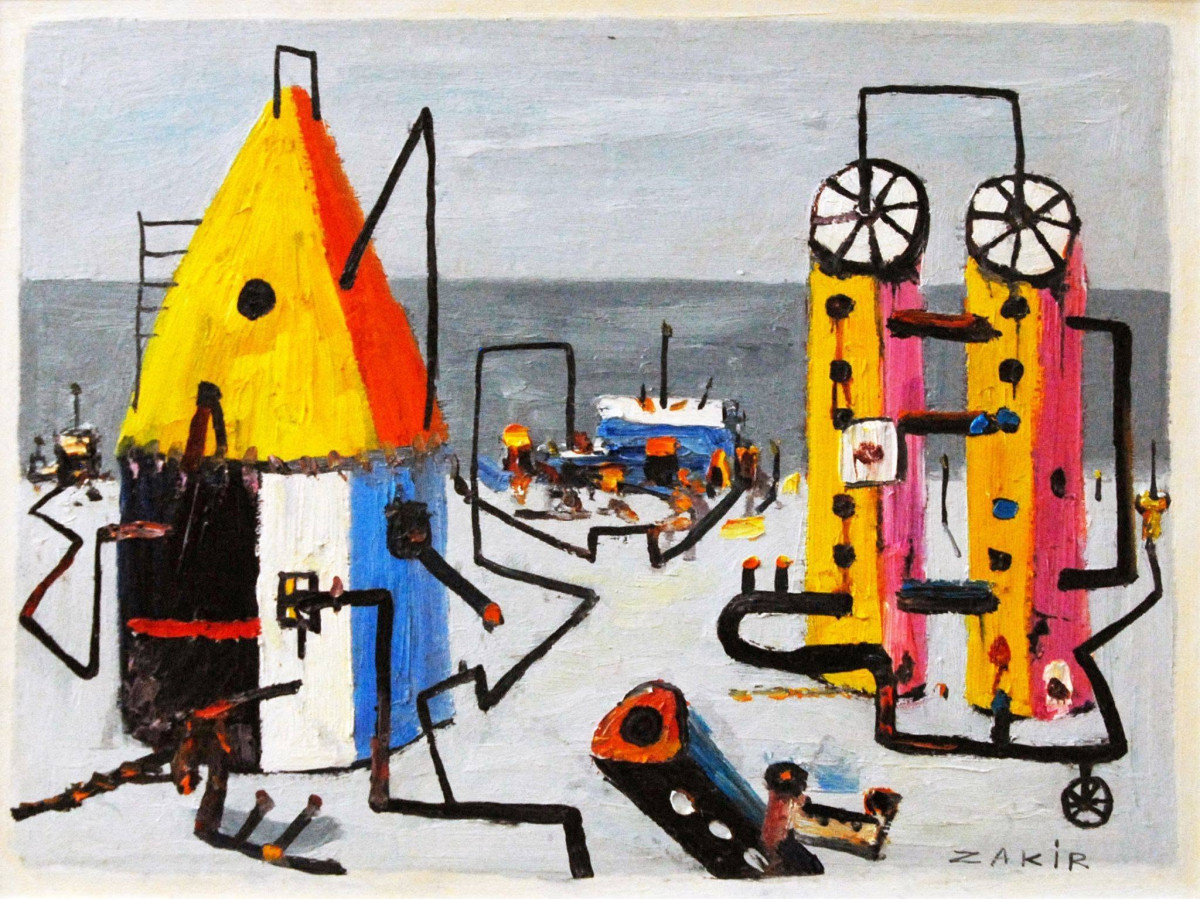
Industrial subjects extend Huseynov’s interpretation of Absheron. Oil Rigs, together with the composition known as Old Enterprise in art-historical writing, demonstrates that industrial environments formed a distinct strand of his work.
The industrial landscape of Absheron cannot be separated from its natural surroundings. Oil installations and production facilities are also part of the region’s history and everyday life. Their presence in painting broadens the representation of the native environment beyond traditional landscape imagery, bringing into view the transformations caused by human activity.
From an art-historical perspective, the essential question is not simply how industrial objects are depicted, but what role they play within the overall composition. The industrial environment thus becomes more than a subject: it offers a way to consider the artist’s relationship with contemporary reality.
The Human Figure — From Appearance to Artistic Character
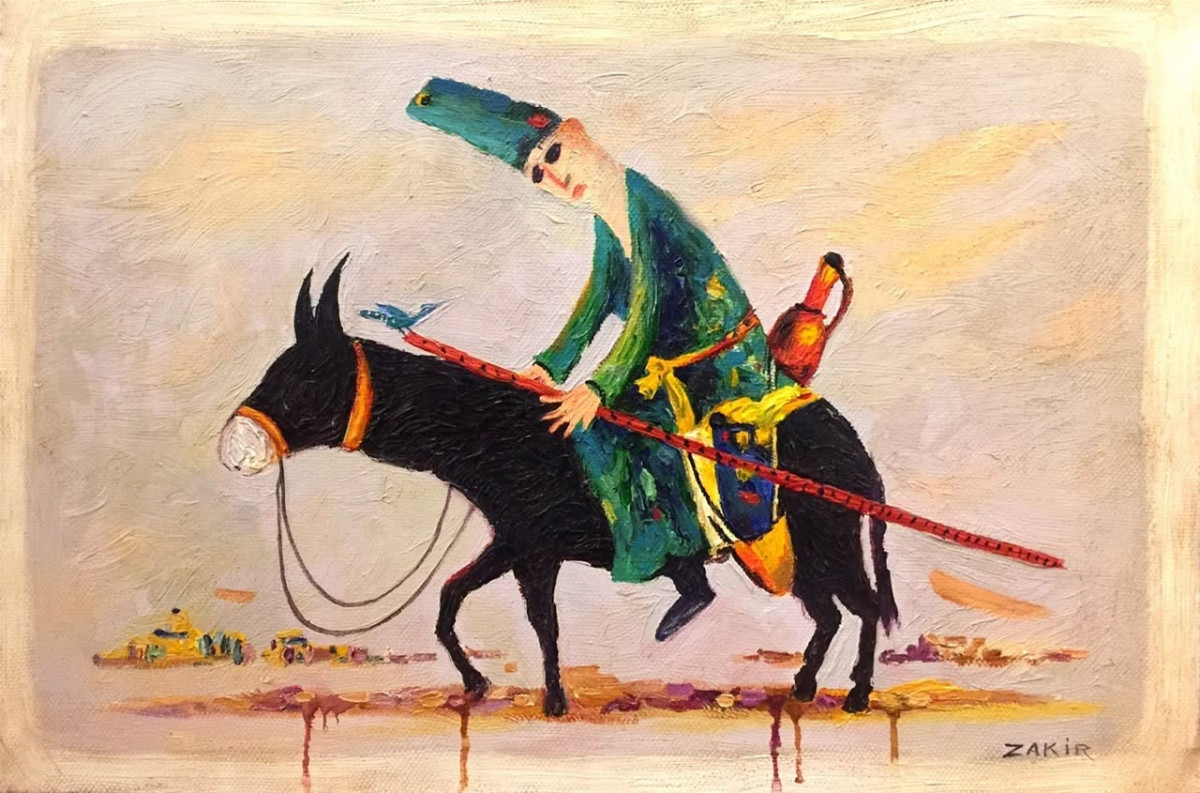
The human figure represents another important direction in Huseynov’s work. Paintings such as Woman with a Fan and Man in a Hat demonstrate his engagement with portraiture. Their artistic significance cannot be reduced to the outward appearance of the individuals portrayed.
The expressive possibilities of portraiture depend not only on physical likeness but also on how the figure is presented, how the composition is organised, and which artistic means the painter employs. The figure’s position within the pictorial space and its relationship to other elements influence how the image is perceived.
Approaching Huseynov’s portraits in this way allows the human subject to be understood not merely as an object of representation, but as an artistic image formed within the language of painting. The aim is not to impose ready-made interpretations, but to examine the specific visual characteristics of each work.
Still Life — A New Meaning for the Everyday Object
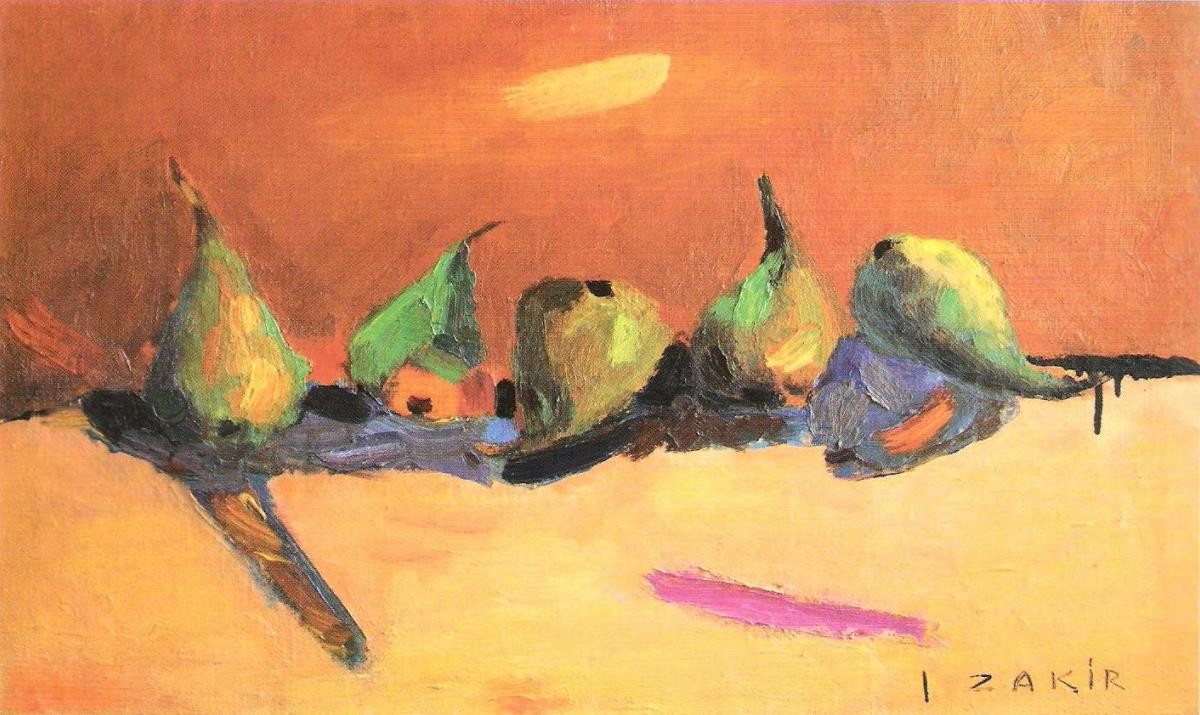
Gramophone is an example of Huseynov’s engagement with the still-life genre. The presentation of an everyday object within a painting raises the question of how a familiar item can be perceived from a different perspective.
An object’s everyday function is not identical to the meaning it acquires in art. The artist’s selection and the organisation of the image can alter our relationship with the object, transforming it into a subject of contemplation beyond its practical use. In this sense, still life is not merely the depiction of objects, but also their reconsideration through artistic vision.
The presence of still lifes in Huseynov’s work demonstrates that his art cannot be adequately described through landscapes and portraits alone. His engagement with different genres reveals the breadth of his subject matter and his interest in diverse artistic questions.
Animal Imagery and Thematic Compositions
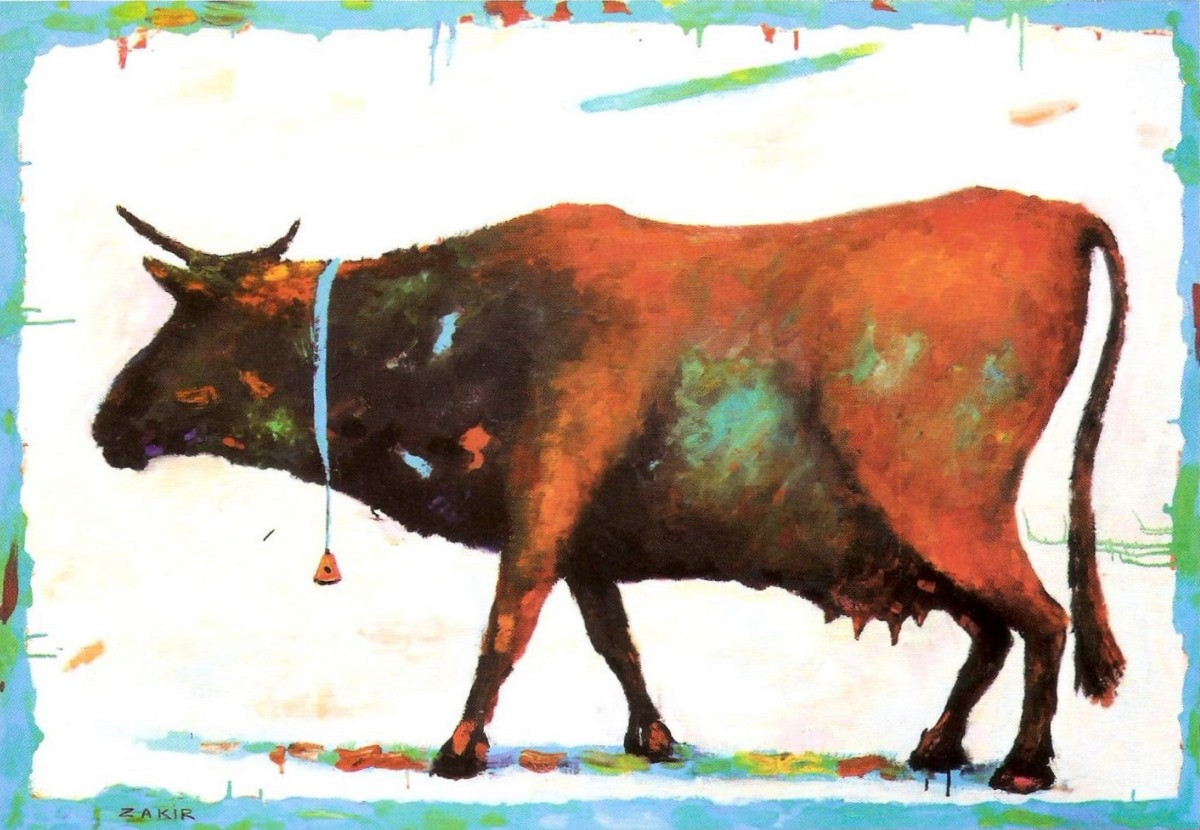
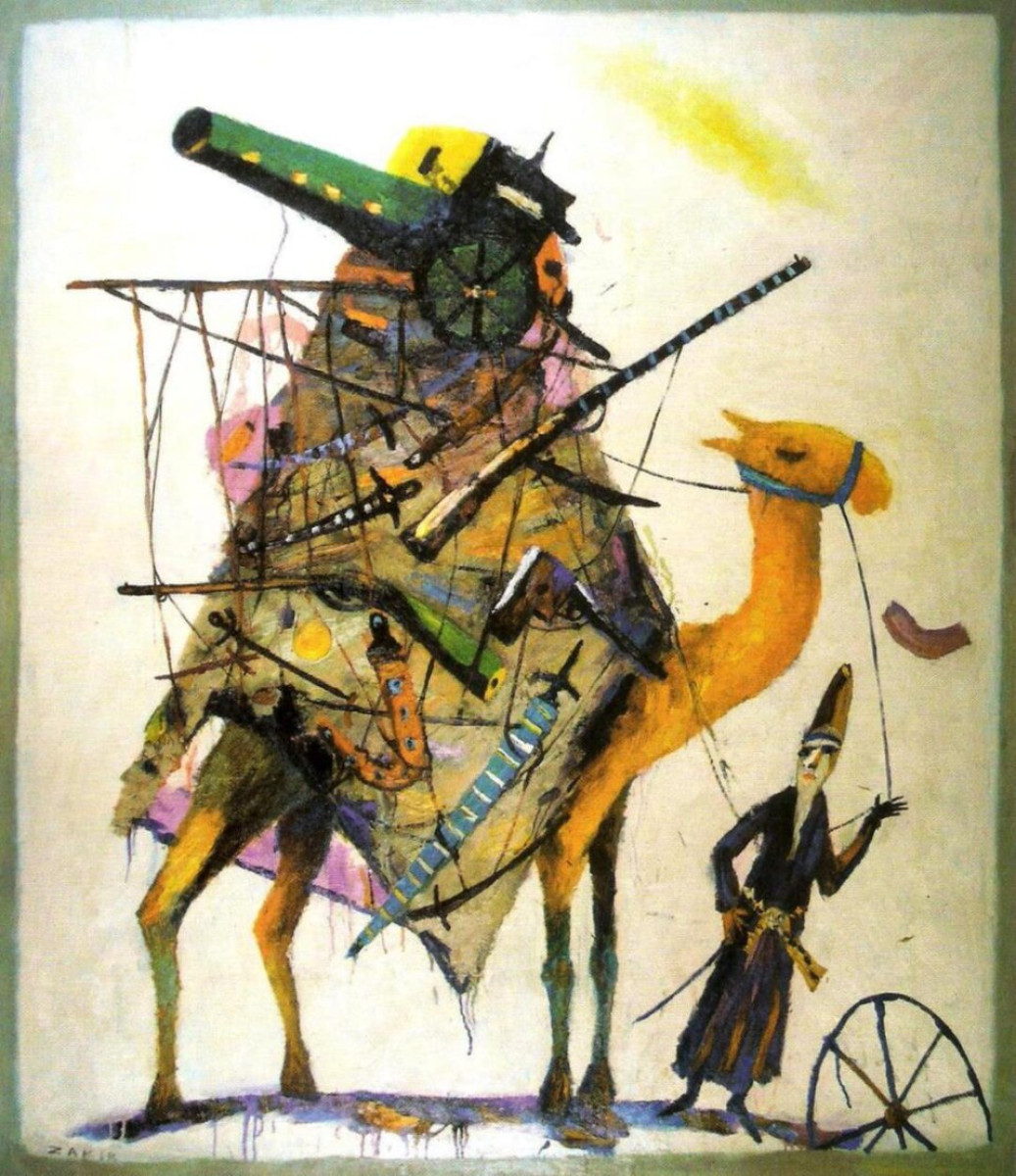
Animal imagery and thematic compositions form another strand of Huseynov’s artistic practice. Bull is one example of this direction. Such works reveal the breadth of his observation while also inviting closer consideration of how an image is constructed.
The artistic significance of an animal image is not necessarily limited to the creature being depicted. Its presentation, position within the composition, and relationship to other elements may influence the meaning of the work as a whole. Any specific symbolic interpretation, however, should be grounded in the visual evidence of the painting.
The same principle applies to thematic compositions: a work cannot be fully understood through its subject alone. The artist’s choices, the relationships between figures or objects, and the structure of the composition all contribute to its artistic meaning.
An Independent Artistic Position
The description of Zakir Huseynov as the “lone warrior of Azerbaijani painting” has become one of the memorable characterisations associated with his artistic path. In 2011, art historian Ziyadkhan Aliyev published The Lone Warrior — Zakir Huseynov, a book-album devoted to the painter’s life and work.
In an artistic context, the notion of being alone may be considered in terms of an individual path and a personal search for expression. The development of an independent perspective, the choice of diverse subjects, and the decisions made within each work are important to understanding Huseynov’s art. The phrase should not, however, be treated as a definitive judgement on his personal life or character. It is more productive to regard it as one possible interpretive approach to his artistic legacy.
What distinguishes Huseynov’s work is not simply its range of genres. The more important question is how an individual artistic vision emerges across these different subjects. Such connections become clearer through the examination of specific compositional and visual characteristics than through general stylistic labels.
Reconsidering the Artistic Legacy
Zakir Huseynov’s work merits attention in the study of individual expression in Azerbaijani painting, the artistic interpretation of Absheron, and the possibilities offered by different genres. A renewed consideration of his art requires more than biographical information or a list of subjects.
A deeper understanding of his legacy depends on close examination of the structure of individual works, their visual means, and the relationship between subject matter and artistic expression. This approach moves beyond predetermined conclusions and makes it possible to explore the painter’s individual position through the works themselves.
Zakir Huseynov died on 31 October 2010, at the age of 49. His work remains a noteworthy part of Azerbaijani painting, particularly in relation to individual artistic vision, the interpretation of the native environment, and the exploration of different forms of expression. The significance of his legacy lies not only in remembering the past, but also in returning to the paintings with renewed attention and a deeper understanding of their artistic qualities.
Art Space Gallery MEDIA