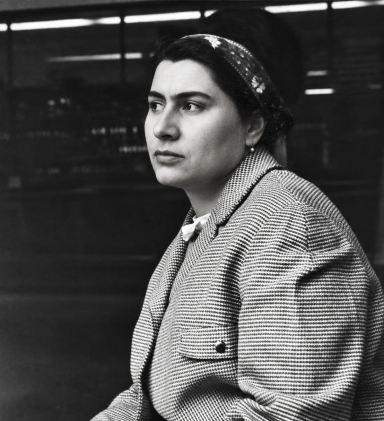
Elmira Habibulla qizi Shahtakhtinskaya was born in Baku on 25 October 1930. She studied at the Azerbaijan State Art School named after Azim Azimzade and at the Moscow Art Institute named after V.I. Surikov. In 1963, she was awarded the honorary title of Honored Art Worker, and in 1977, the title of People's Artist of the Azerbaijan SSR. Poster and easel graphics formed the principal areas of her artistic practice, while portraiture and landscape also held an important place in her work.
More Than a Depiction of History
Looking at Elmira Shahtakhtinskaya's work today, what first attracts attention is not so much the breadth of her subject matter as the way she transformed these subjects into visual form. Poster, portrait and landscape were not separate fields for her, but different means of constructing an image.
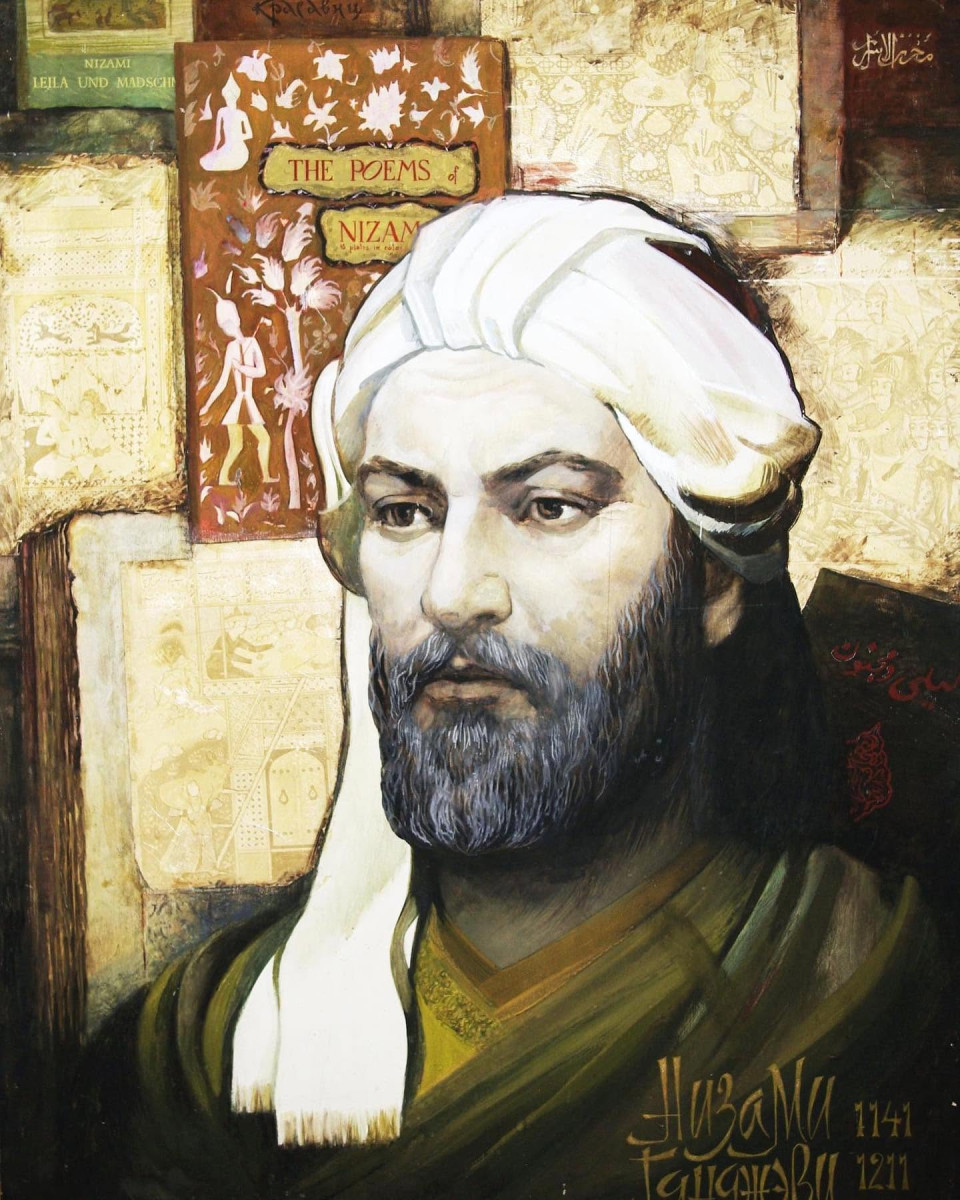
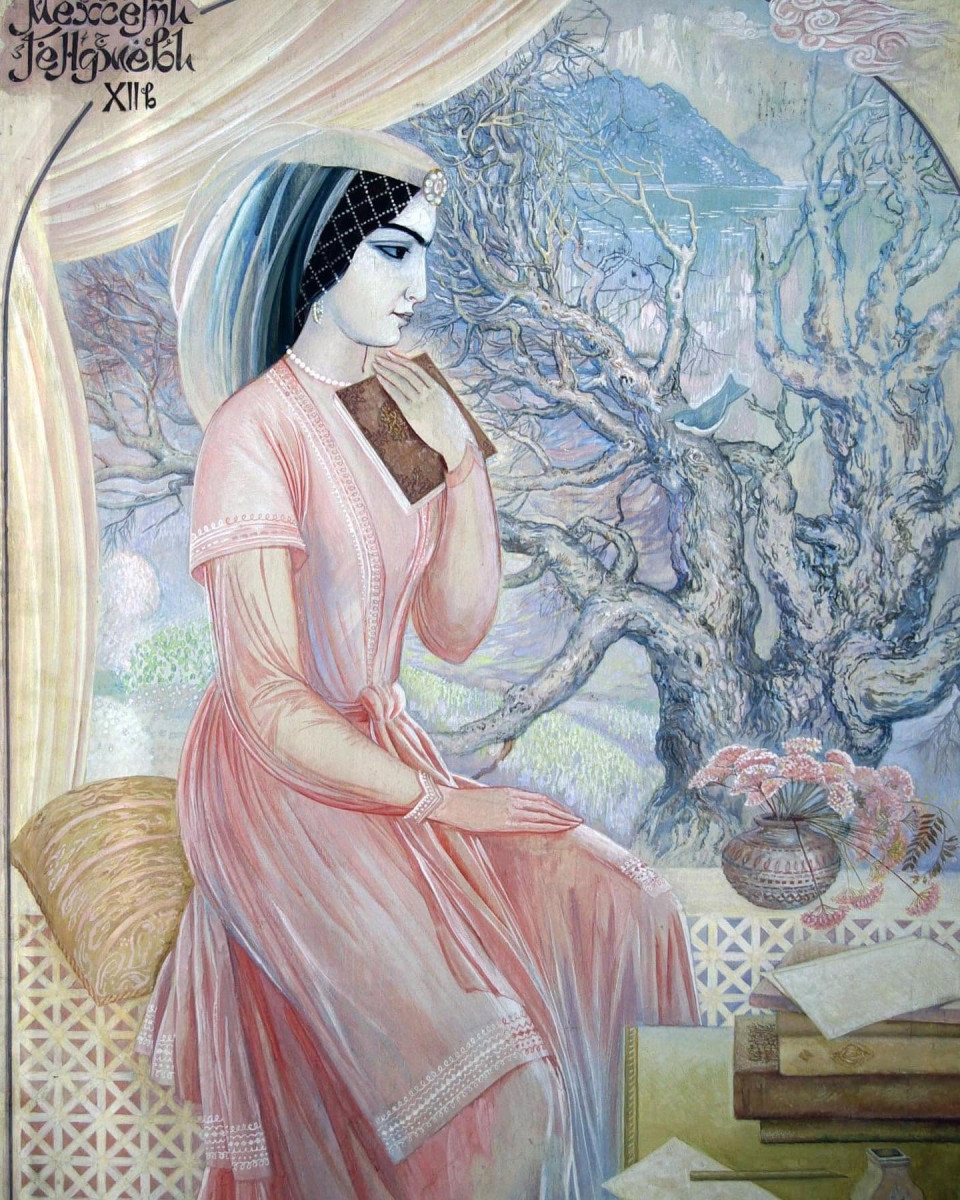
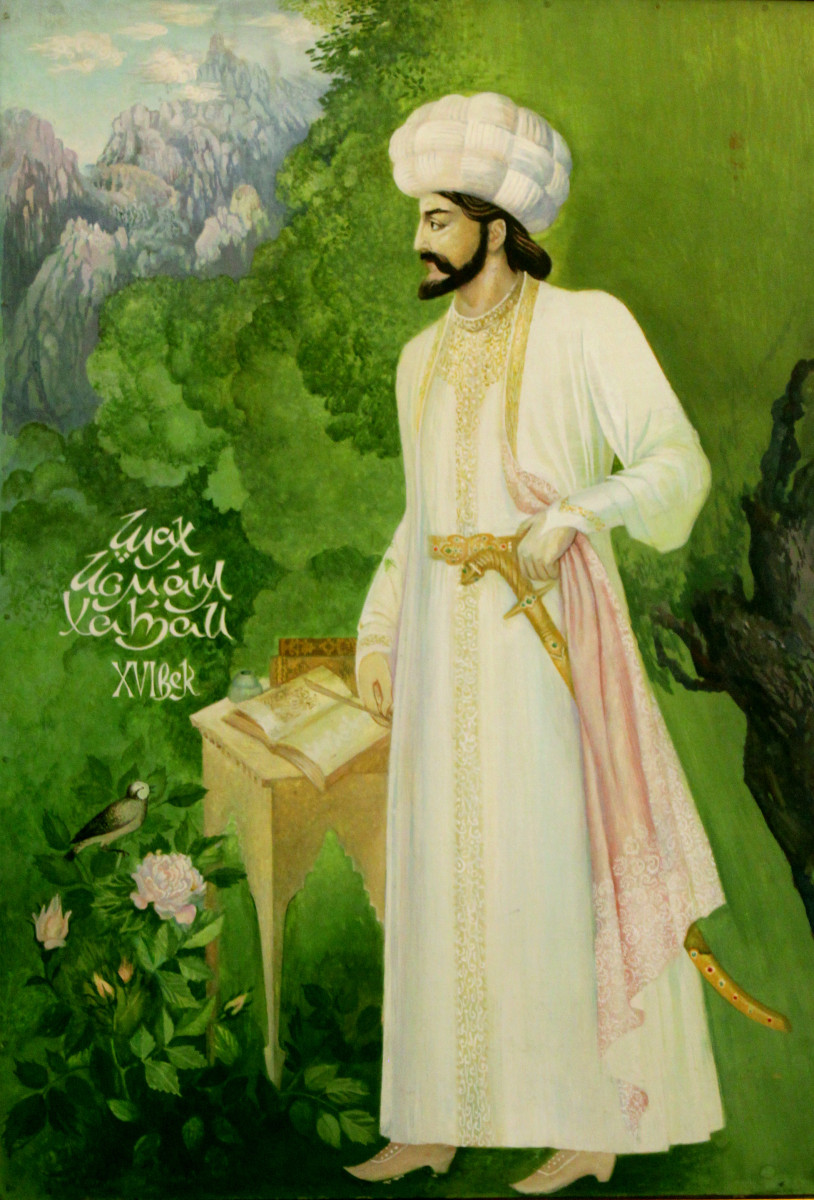
This approach becomes particularly evident in her works devoted to historical figures. In the 1970s, the artist created the poster series “Azerbaijan Is an Ancient Land of Culture,” turning to such figures as Nasir al-Din al-Tusi, Nizami Ganjavi, Imadaddin Nasimi, Muhammad Fuzuli, Ajami Nakhchivani and Sultan Muhammad. In her later work, she also created portraits of representatives of Azerbaijani culture, including Uzeyir Hajibeyli, Huseyn Javid, Samad Vurgun, Sattar Bahlulzade, Gara Garayev and Fikret Amirov.
Here, the historical figure does not remain merely the subject of a portrait. Bringing together figures belonging to different periods and cultural fields allows them to be perceived as parts of a broader historical and cultural landscape rather than as isolated biographies.
The Construction of the Image
In Shahtakhtinskaya's art, the image is not based solely on outward resemblance. Line, silhouette, environment and composition work together to establish the character of the person or place depicted. This allows a concise graphic form to carry a broader meaning.
Her work is also distinguished by a decorative structure and an engagement with national form. The concision of the poster, the individuality of the portrait and the sense of space in the landscape appear differently across genres, yet all remain connected by the principle of constructing a clear and coherent image.
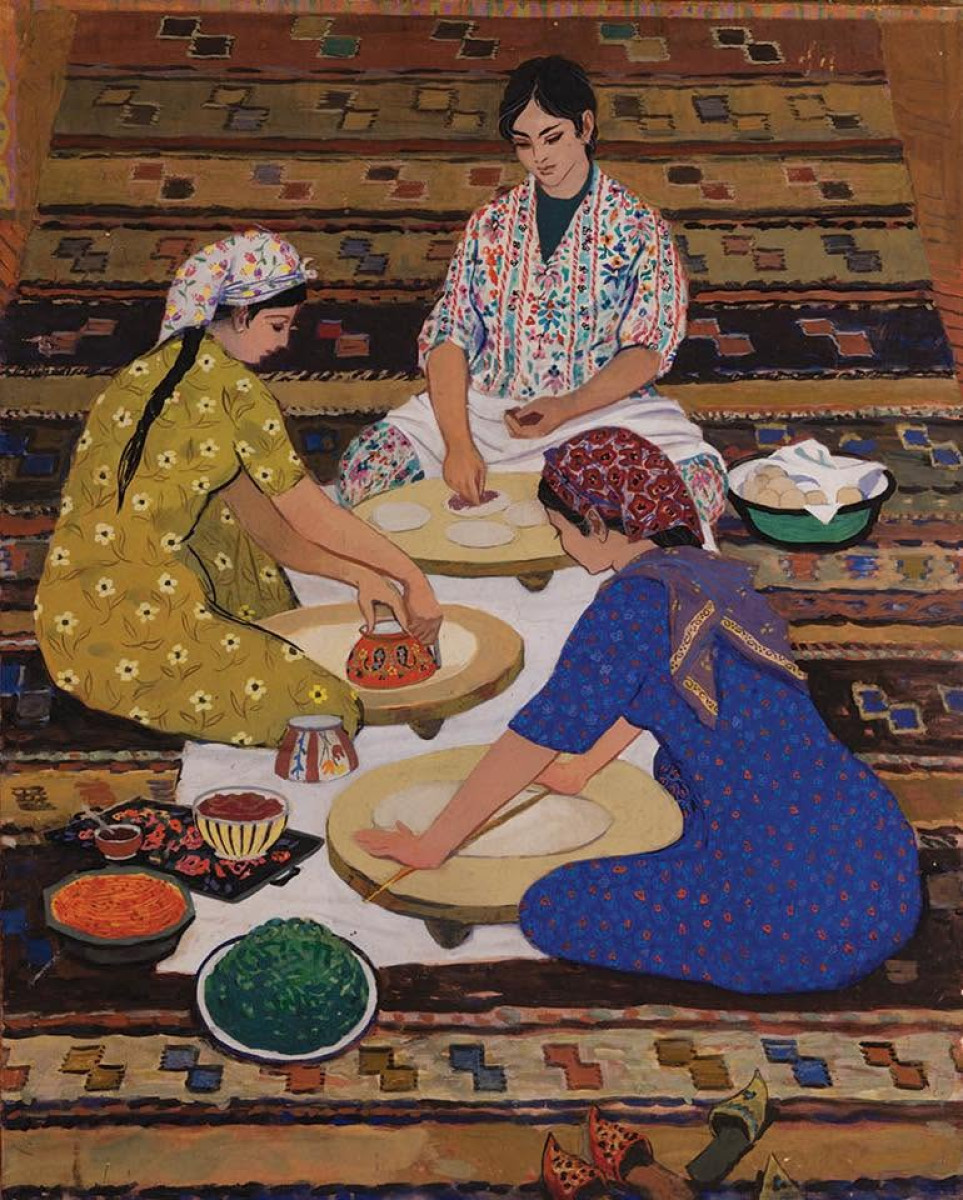
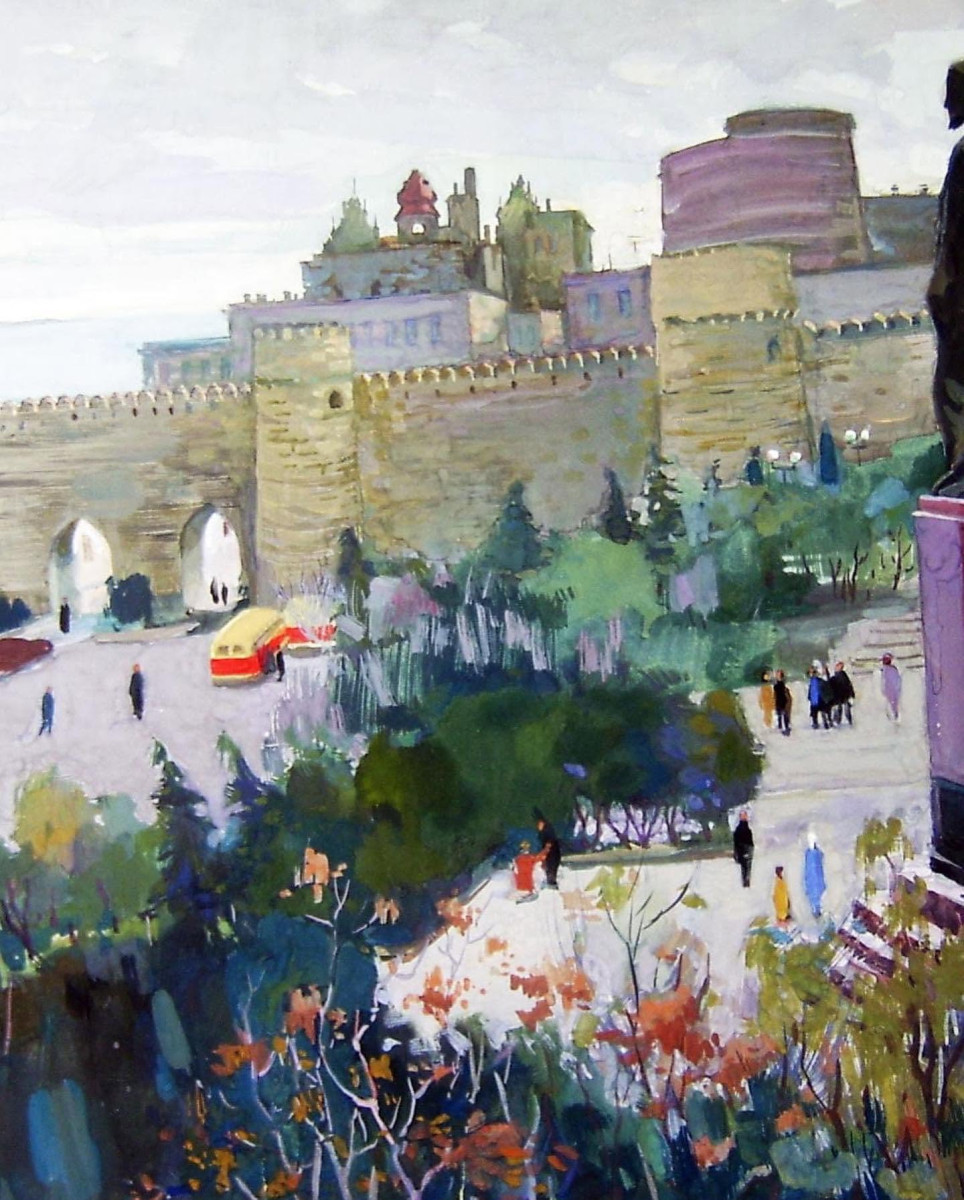
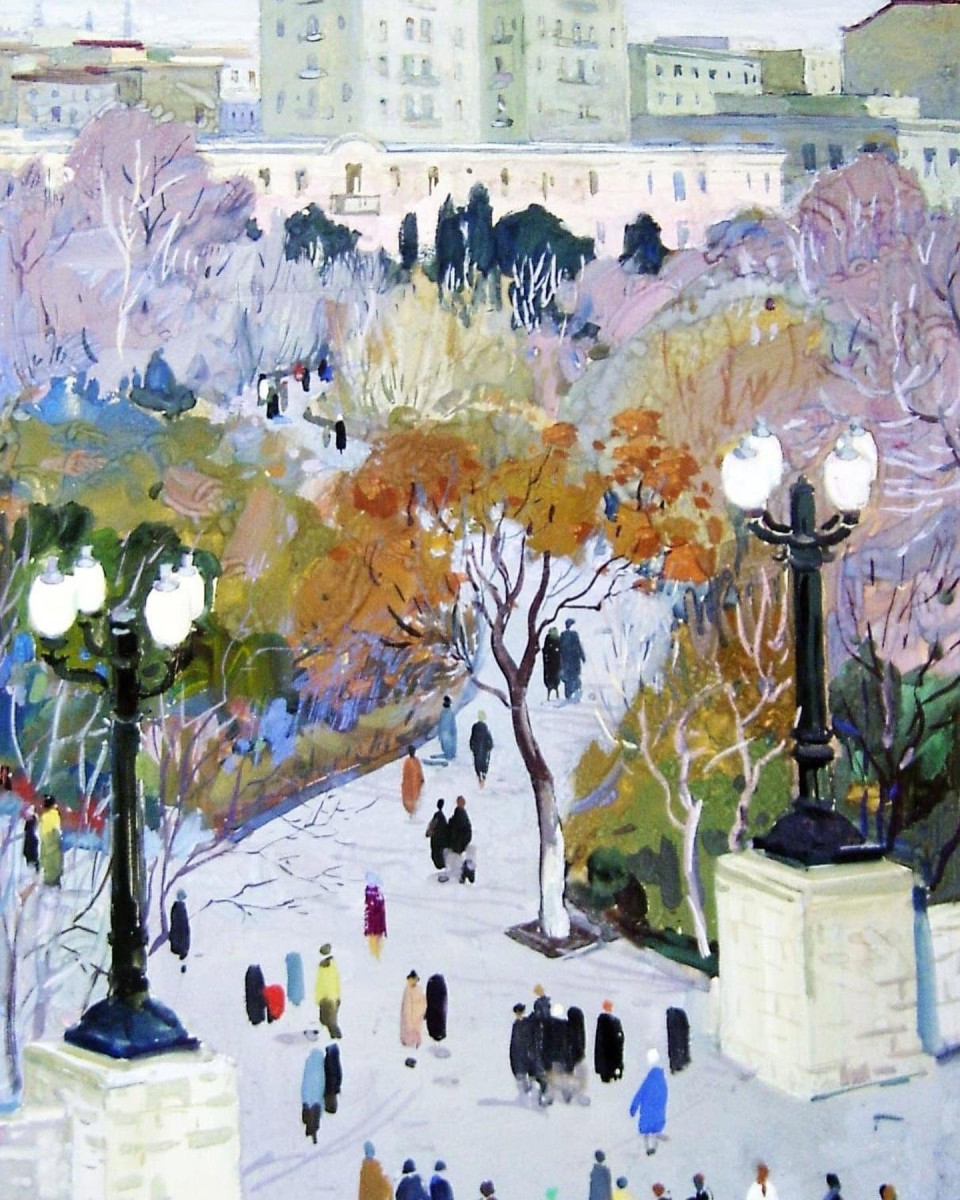
This approach is also evident in her treatment of everyday and urban subjects. The Azerbaijan National Museum of Art holds the 1966 work “Qutablar,” a graphic work executed in gouache on paper. Another work in the museum's collection, “Karl Marx Park. From the ‘Baku’ Series,” is likewise catalogued as a graphic work executed in gouache on paper.
These works demonstrate that Shahtakhtinskaya's attention was not limited to historical subjects. Everyday life and the urban environment also became subjects of her graphic observation.
From Baku to History
Baku occupies a distinctive place in Shahtakhtinskaya's art. A work from the “Baku” series transforms a specific urban setting into a graphic image. The city here is not merely a background; it becomes an environment observed and translated into artistic form.
Her work also establishes a relationship between place and personality. In portraits of historical figures, the period is perceived through the human image, while in urban and landscape subjects it emerges through place. Despite their different themes, both directions are united by an observational form of graphic thinking.
Graphic Memory
To assess Shahtakhtinskaya's work solely within the framework of poster art would limit the scope of her artistic contribution. In her practice, graphic art provides a broad means of observation, portraiture and the visual organization of historical subject matter.
The series “Azerbaijan Is an Ancient Land of Culture” is particularly significant in this respect. Different historical and cultural figures are presented within a unified graphic conception. Alongside Nasir al-Din al-Tusi, Nizami Ganjavi, Nasimi, Fuzuli, Ajami Nakhchivani and Sultan Muhammad, the broader panorama also includes figures from Azerbaijani art and literature such as Uzeyir Hajibeyli, Huseyn Javid, Samad Vurgun, Sattar Bahlulzade, Gara Garayev and Fikret Amirov.
As a result, individual portraits become more than presentations of separate personalities; together they create a coherent visual sequence connecting different periods and cultural fields.
Reading Shahtakhtinskaya Today
A contemporary reading of Elmira Shahtakhtinskaya's work is compelling not simply because of the range of her subjects, but because of the function she assigned to graphic form. Historical figures, urban environments, landscapes and everyday life constitute different themes in her art, yet each is characterized by a clear and concise construction of the image.
In 2013, the monographic publication “Elmira Shahtakhtinskaya: 1930–1996: Graphics, Painting, Poster” was published. Its inclusion in the catalogue of the Presidential Library indicates that the artist's body of work has been systematically documented at the level of a dedicated publication.
In Shahtakhtinskaya's art, graphic form is not merely descriptive. It is a visual structure that connects people, places and historical subjects. It is precisely this quality that makes her work a noteworthy chapter in the history of Azerbaijani graphic art.
Elmira Shahtakhtinskaya died on 13 October 1996.
Art Space Gallery MEDIA