A changing gaze between nature, the human figure and the city in Azerbaijani painting
Khalida Alakbar Safarova was born on 25 August 1926 in Ganja. She studied at the A. Azimzade Azerbaijan State Art School and later graduated from the Arts Faculty of the All-Union State Institute of Cinematography in Moscow. Her professional formation in Baku and Moscow provided the foundation for a practice that would eventually encompass landscape, still life, portraiture, figurative composition and urban imagery.
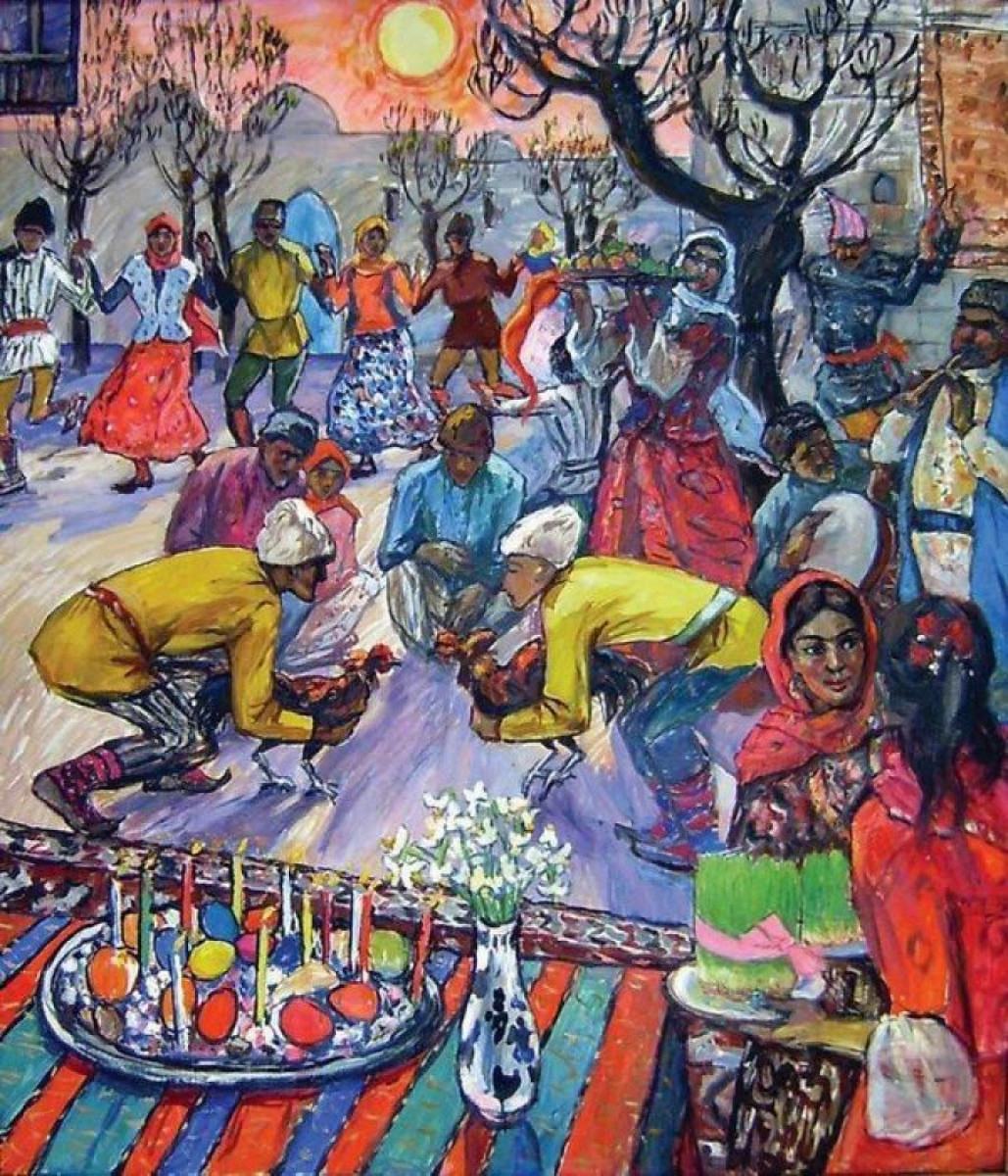
Viewed as a whole, Safarova’s oeuvre is marked by a continual movement between subjects and environments. Landscape, still life, portraiture, multi-figure compositions and city scenes appear as distinct fields of work, yet they are connected by a more persistent concern: the way a place changes through the artist’s act of looking.
From this perspective, Safarova’s work can be approached not simply as a succession of genres, but as a developing relationship with different environments and the visual conditions they create.
The Early Stage: Constructing the Image
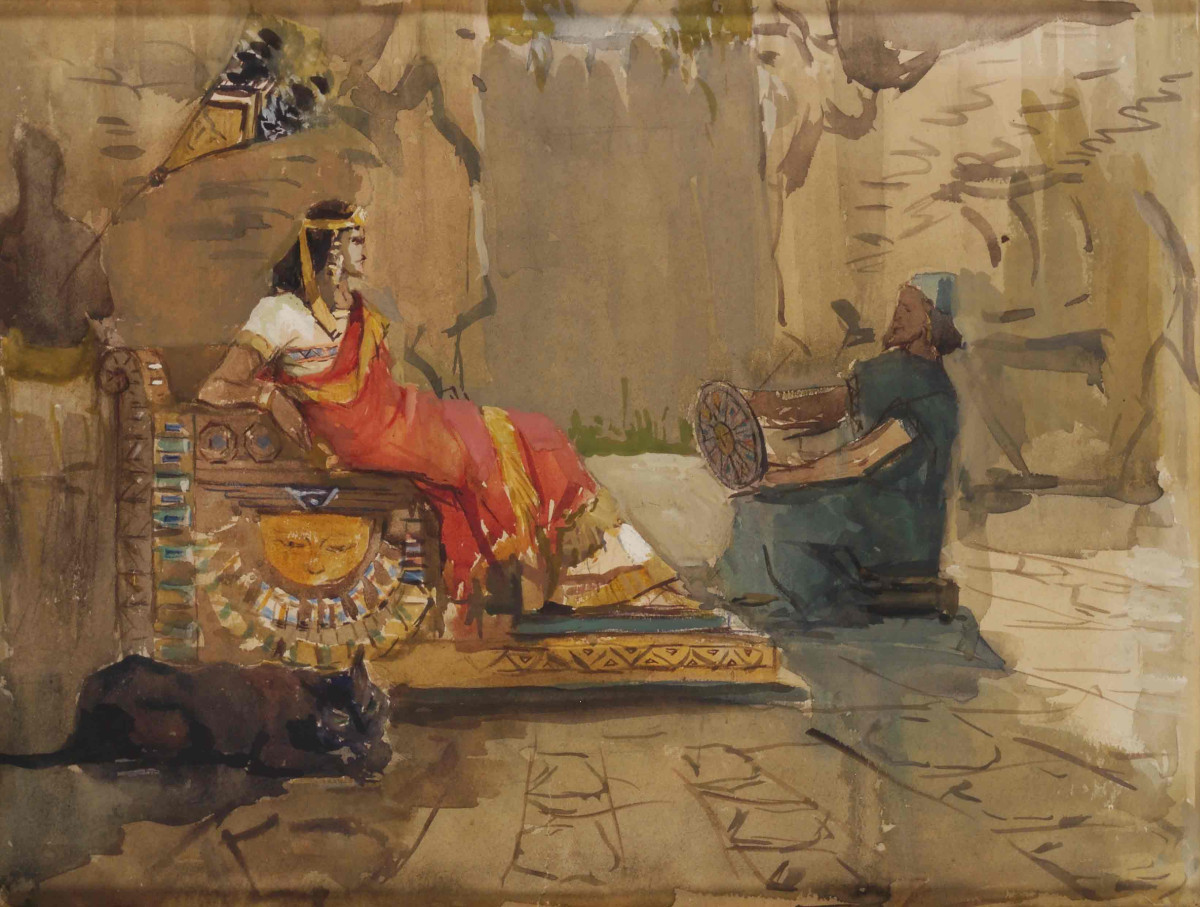
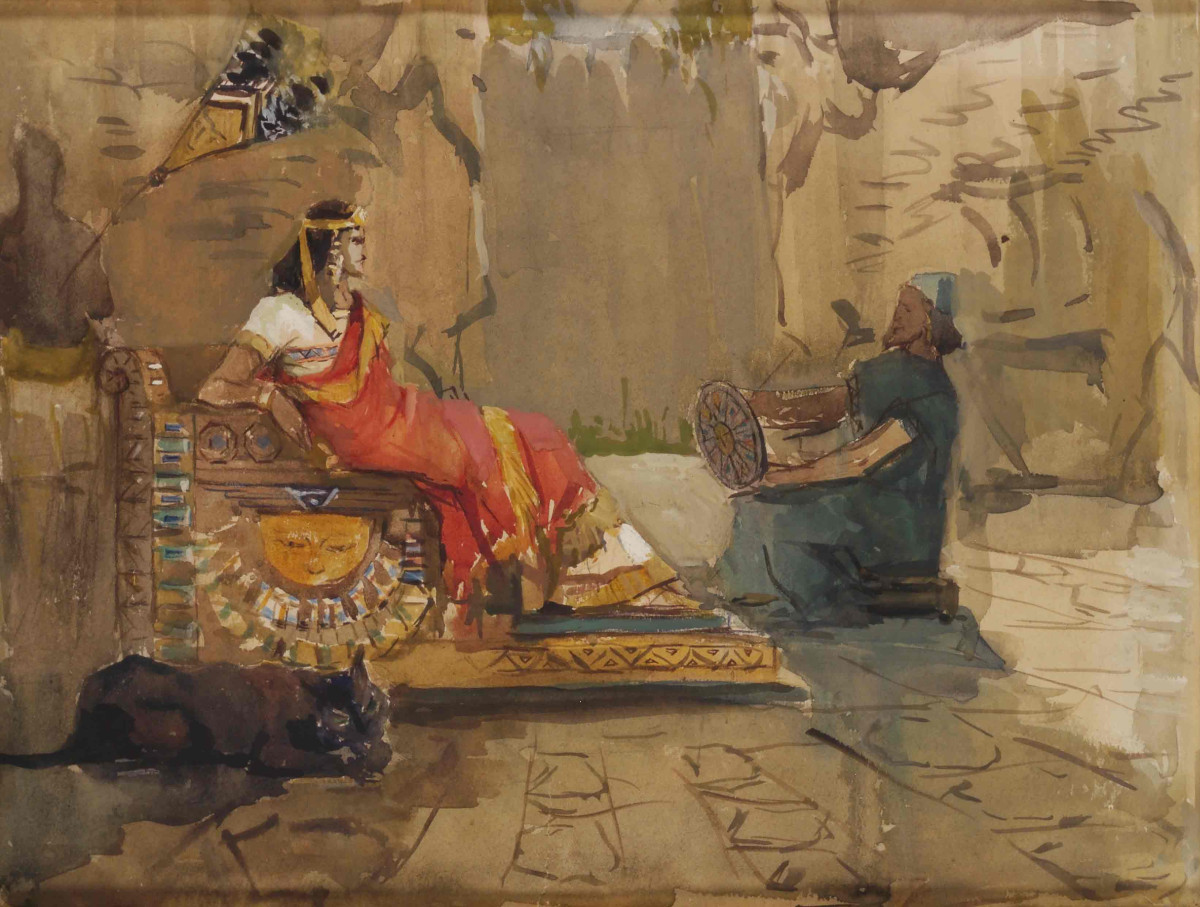
Safarova’s early work reflects the professional training she received. Her first diploma work was Letter from the Front, while her second diploma project consisted of illustrations for Nizami Ganjavi’s Khosrov and Shirin.
The literary subject gradually gave way to a more direct engagement with observation. Rather than relying primarily on a predetermined narrative, Safarova increasingly turned her attention towards the way people, objects and natural surroundings could be constructed within the pictorial field.
This transition is significant. The subject itself gradually became less important than the artist’s individual way of seeing it.
Landscape: Following the Changing View
Landscape occupies a sustained position in Safarova’s artistic development. Yet her landscapes are not limited to the identification of a particular geographical location.
Works such as After the Rain, Misty Morning, Spring in the Meadow and Autumn Sun point towards specific states of the natural environment. Nature is not presented as something fixed; its appearance shifts with atmosphere, light and time.
Safarova’s landscapes from different regions of Azerbaijan and the Absheron landscape can therefore be considered not merely as geographical representations, but as observations of particular visual conditions.
The place changes from one painting to another, while observation remains a constant.
Still Life: Within a Limited Space
The broad spatial field of the landscape is reduced in Safarova’s still lifes to a more concentrated compositional environment.
Flowers and everyday objects become elements through which relationships within the picture are established. Their position, distance from one another, surrounding space and interaction with light determine the structure of the composition.
The Azerbaijan National Museum of Art lists Safarova’s Irises among its collection works, dated 1965 and executed in oil on canvas.
Rather than relying on the complexity of the subject, the still life allows Safarova to concentrate on the internal organisation of the pictorial surface. The limited number of objects becomes an opportunity to examine proportion, space and visual balance.
The Human Figure and Movement
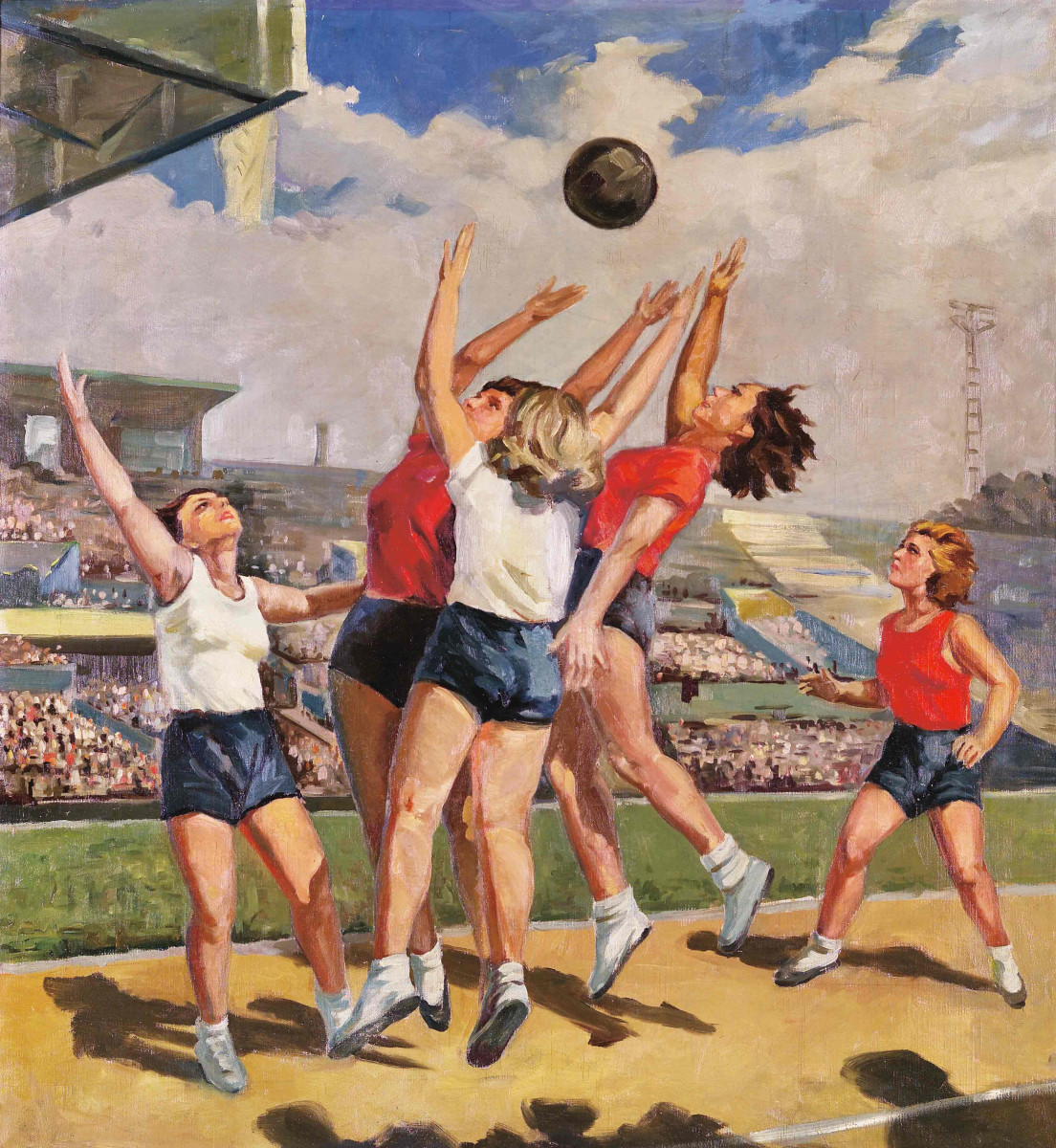
The human figure in Safarova’s work extends beyond portraiture. Her engagement with sports subjects in the 1960s introduces another dimension to her treatment of the figure.
Works such as Gymnasts, Relay, Cyclist, Football Players and Chovgan place figures within situations where movement becomes part of the composition. The direction of the bodies and their relationship to one another contribute directly to the organisation of the pictorial space. Safarova’s Cyclist, for example, is dated 1969 in the catalogue of the Azerbaijan State Art Gallery.
The space of the painting is therefore not merely a setting. It becomes something constructed through movement.
My Land: Space and Time
The triptych My Land, created in the 1970s, offers a more complex expression of this relationship. The central panel, Sultry Heat, is accompanied by Morning and Evening.
Three different states are brought together within a single composition. Morning and evening suggest different moments of the day, while Sultry Heat introduces another atmospheric condition.
The triptych consequently presents landscape as something capable of transformation. The same environment acquires a different appearance according to time and atmospheric circumstance.
A New Gaze: Paris
Safarova’s journey to France in 1985 introduced a new geographical dimension to her work. Paris, the Seine, Marseille, Arles and Provence became subjects of her subsequent paintings and works on paper. Her French subjects continued to appear in later exhibitions, including her 2002 solo exhibition at the French Embassy in Baku.
The importance of this period lies not simply in the change of location. A gaze formed through years of observing Azerbaijani landscapes was now confronted with a fundamentally different urban and cultural environment.
Works such as Arles Café, Marseille Harbour, Autumn in Provence, Seine Embankment and various Paris views record this encounter with a new geography.
Art-historical research has also examined the relationship between Safarova’s Paris works and Impressionism. Rather than reducing these paintings to a stylistic classification, however, it is more productive to consider how the new environment prompted the artist to reconsider her established ways of observing space and light.
Portrait: The Figure Within Its Surroundings
Portraiture forms another important field of observation in Safarova’s work. Portraits of figures such as Leyla Vakilova, Maral Rahmanzade and Mahmud Taghiyev focus attention on the individual, while the positioning of the figure remains an integral part of the composition.
The surrounding space may be more restrained than in a landscape, but it continues to influence the presentation of the sitter. The relationship between figure, surrounding area and direction of the gaze contributes to the construction of the portrait.
In this sense, portraiture remains connected to the broader spatial concerns visible throughout Safarova’s work.
One Gaze, Different Geographies
Seen across her career, Safarova’s work reveals a consistent interest beneath its changing subjects.
From literary illustration to landscape, from still life to sports compositions, from portraiture to Parisian views, each new subject presents a different visual problem.
The place changes.
The figure changes.
Movement changes.
Light changes.
What remains is the act of looking — the attempt to understand how the visible world appears at a particular moment and to reconstruct that experience within painting.
This continuity allows Safarova’s oeuvre to be viewed not simply through its variety of genres, but as a process in which the artist repeatedly tests her gaze against different spaces.
The Light of Space
The Light of Space is therefore more than a poetic title. It offers a way of reading Safarova’s artistic development.
For the artist, a change of place also means a change in appearance. Morning and evening, rain and heat, an Azerbaijani landscape and a distant European city all produce different visual conditions.
Safarova explored these differences through a range of subjects and forms. Landscape expands the field of vision; still life concentrates it; portraiture brings it closer to the human figure; sports compositions introduce movement; and the Paris works open it onto another geography.
Across these different forms, one underlying question remains:
How can a particular moment in the visible world be transformed into the language of painting?
Khalida Safarova was awarded the honorary title of Honoured Artist of the Azerbaijan SSR in 1977 and People’s Artist of the Azerbaijan SSR in 1989. She was granted a Presidential individual pension in 2002. Safarova died in Baku on 23 December 2005.
Art Space Gallery MEDIA