A broad creative trajectory shaped by the relationship between people, life and geography in 20th-century Azerbaijani painting
Early Years and the Formation of Artistic Principles
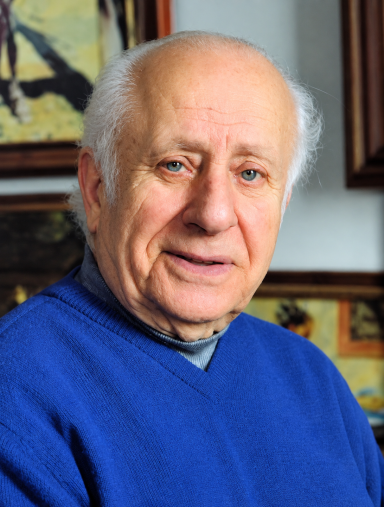
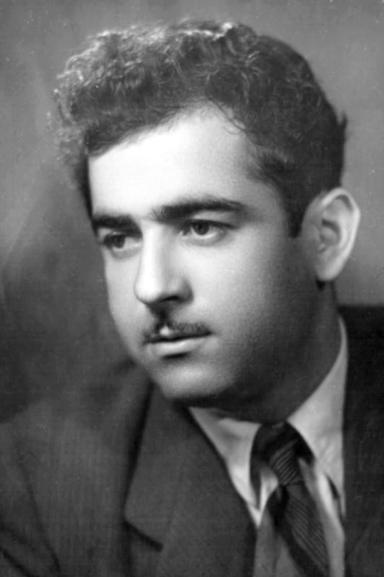
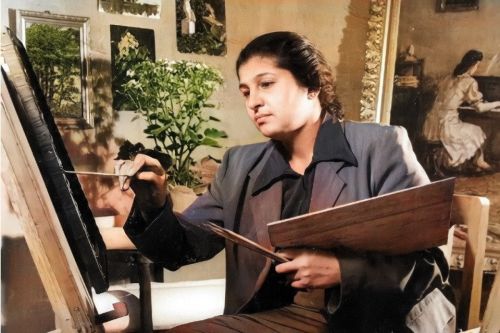
Born in Baku on March 7, 1908, Salam Salamzadeh worked across portraiture, landscape, genre composition and still life throughout his long artistic career.
From 1925 to 1929, he studied at the Azerbaijan State Art Technical School and later continued his education at the Azerbaijan State Pedagogical Institute. The early period of his career was closely connected with observations of the social and economic changes taking place in Azerbaijan. His journeys to Ganja, Lankaran and other regions of the country played an important role in broadening his range of subjects.
Works such as “Spinning Mill” (1930) and “At the Ganja Textile Factory” (1932) demonstrate how the working environment and human relationships became central themes in his art during the 1930s. In these paintings, the industrial setting is not merely a backdrop; the daily activities of the workers determine the fundamental structure of the composition.
During the same period, Salamzadeh also turned to historical and socially oriented multi-figure compositions. Works such as “The Suppression of the Demonstration” and “Strike in Balakhani” reveal his movement from the individual human figure toward broader scenes of collective life.
Salam Salamzadeh's activities extended beyond painting. From the early 1930s, he wrote about art and conducted research into earlier periods of Azerbaijani art.
Portraiture and the Individualization of the Human Figure
Portraiture occupies a significant place in Salamzadeh's oeuvre. Over different periods, he portrayed artists, writers, scholars, workers and public figures. In these works, the individual is presented not only through physical appearance but also in relation to the surrounding environment.
“Portrait of Uzeyir Hajibeyli” (1941) is among the early examples of this direction. From the 1950s onward, portraiture assumed an increasingly prominent position in his work. The structure of the pose, the direction of the gaze and the placement of the figure within the surrounding space became important means of revealing character.
In Salamzadeh's portraits, the central concern was not simply physical resemblance, but the expression of the sitter's individual character through the means of painting. This quality established portraiture as a distinct direction within his broader artistic practice.
Labour and Everyday Life
From the 1950s through the 1970s, rural life, labour, nature and scenes of everyday existence occupied an important place in Salamzadeh's subject matter. Works such as “Under the Sun” (1958), “Sovkhoz Fields” (1959), “Women Going for Water” (1968), “Tea Plantation” (1970), “Girlfriends” (1970), “At Sunset” (1973), “Those Going to the Wedding”, “Reservoirs” (1976) and “Lankaran Tea Growers” (1977) present people and their surroundings as an inseparable whole.
Labour in these works is not presented merely as a record of production. The spaces inhabited by people, rural and urban environments, open landscapes and everyday activities become integral to the structure of the compositions.
This direction further clarifies the relationship between the human figure and place that runs through Salamzadeh's work.
Landscape as an Independent Subject
During the 1970s, landscape acquired a more independent position in Salam Salamzadeh's oeuvre. Nature, which in earlier works had often formed part of the setting for human activity, increasingly became an independent subject of observation and representation.
Works such as “Red Mountains” (1972), “River” (1972), “Fields in Belokan” (1973), “At the Foot of the Sheki Mountains” (1973), “Forest Corner” (1973), “Before Sunset” (1973), “Sheki Mountains” (1974), “Two Ranges of Mountains” (1974) and “Mountains” (1977) belong to this period.
In these works, mountains, forests, rivers and fields are no longer simply elements accompanying human figures. Natural space becomes the core of the composition and establishes geography as an independent artistic concern.
This stage of Salamzadeh's landscape painting represents not only an expansion of subject matter, but also the continuation of observations accumulated during earlier periods through a new artistic direction.
Beyond Azerbaijan
Salam Salamzadeh's artistic geography later extended beyond the borders of Azerbaijan. His journeys to countries of the Near and Middle East introduced new subjects and fields of observation into his work, including city streets, local populations, labour and everyday life, as well as historical architectural environments.
The series “In Arab Countries” addressed subjects connected with Iraq, Egypt, Syria and Lebanon. Works such as “Baghdad. Rashidiyah Street” reflect observations made beyond the Azerbaijani environment, bringing together urban space and human presence.
These journeys expanded not only the geographical scope of Salamzadeh's work but also his perspective on the relationship between people and place. In 1974, he was awarded the international Nasser Prize.
Painter, Educator and Art Scholar
Salam Salamzadeh's artistic career cannot be understood solely through his paintings. He wrote on art, studied the work of earlier generations of Azerbaijani artists and was also engaged in teaching.
His museum work formed another important part of his professional activity. Salam Salamzadeh served as director of the National Art Museum of Azerbaijan and the Nizami Ganjavi Museum of Azerbaijani Literature.
According to research based on archival documents, Salam Salamzadeh was appointed the first director of the Nizami Museum on October 1, 1939, and served in that position until March 31, 1940. On September 25, 1943, he returned to the position of museum director.
These different areas of activity demonstrate his engagement with art not only as a painter, but also as a researcher, educator and cultural administrator.
The Human and the Place in Salam Salamzadeh's Art
Viewed as a whole, Salam Salamzadeh's artistic career reveals a consistent thread beneath its diverse genres and subjects: the relationship between people and the spaces in which they live and work.
In his early works, this relationship emerges within industrial and labour environments. In his portraits, space complements the presentation of character. In scenes of rural and everyday life, nature and labour are brought together within a single composition. As landscape gained greater independence in the 1970s, place itself could become the principal subject. In works based on foreign journeys, this field of observation expanded to other cities and environments.
This continuity allows Salamzadeh's oeuvre to be understood not simply as a sequence of genres and subjects, but as the development of an expanding field of observation. In his art, the human and the place are not isolated themes; they are two fundamental directions whose meanings are mutually connected.
Salam Salamzadeh's position within Azerbaijani painting can also be seen through this broad scope of observation: from city to countryside, from scenes of labour to portraiture, and from Azerbaijani landscapes to the cities and geographies of the Near and Middle East, his artistic trajectory reflects an important dimension of 20th-century Azerbaijani painting.
The Mature and Later Period of His Career
The 1970s and 1980s represented an intensive and mature period in Salamzadeh's artistic career. During these decades, he continued to work actively in portraiture, landscape and genre composition, developing subjects and observations accumulated throughout his earlier career.
In 1982, Salam Salamzadeh was awarded the honorary title of People's Artist of the Azerbaijan SSR.
His artistic activity continued in the following years. In 1987, he held a solo exhibition titled “In Libya”, presenting works based on his observations of Libya. The exhibition demonstrates that his interest in foreign geographies and different human environments remained an active part of his artistic practice during the later period of his career.
In 1988, Salamzadeh was awarded the Order of Friendship of Peoples.
His creative career therefore did not end in the early 1980s. During the subsequent years of his life, he remained connected with art and continued to develop the principal directions that had emerged throughout his long artistic career.
Salam Salamzadeh died in Baku on May 12, 1997.
Art Space Gallery MEDIA