A short artistic journey from Baku to Moscow, from portraiture to thematic compositions and landscape
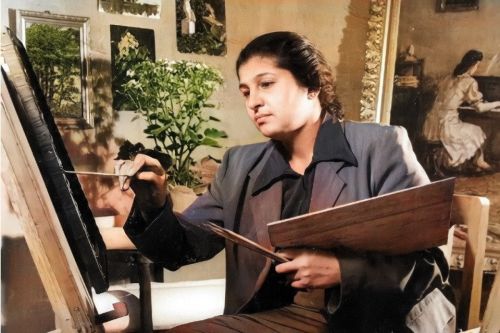
Vajiha Ali gizi Samadova was born in Baku on 24 November 1924. In 1939, she entered the Azerbaijan State Art School named after Azim Azimzade and graduated in 1944. She then continued her studies in painting at the Moscow State Academic Art Institute named after V. I. Surikov, where she worked in the studios of Vasily Yakovlev and Pavel Korin.
The Moscow years became one of the principal stages in Samadova’s professional formation as an artist. In 1951, she completed her diploma painting, “Azerbaijani Composers,” at the institute. The work depicts Uzeyir Hajibeyli together with young composers. According to material from the National Library of Azerbaijan, the painting was exhibited in Moscow in 1951 and was created under the supervision of Pavel Korin.
“Azerbaijani Composers” is an important example of Samadova’s early engagement with multi-figure composition. Alongside Uzeyir Hajibeyli, the painting presents young figures of Fikret Amirov, Jahangir Jahangirov, Said Rustamov and Afrasiyab Huseynzade. The National Library’s material also discusses the composition, transitions of colour and treatment of light in the work.
After graduating in 1951, Samadova continued her education and spent another three years in postgraduate study. Although she was offered the opportunity to remain at the institute as a teacher, she returned to Baku. Her principal artistic activity subsequently continued in Azerbaijan.
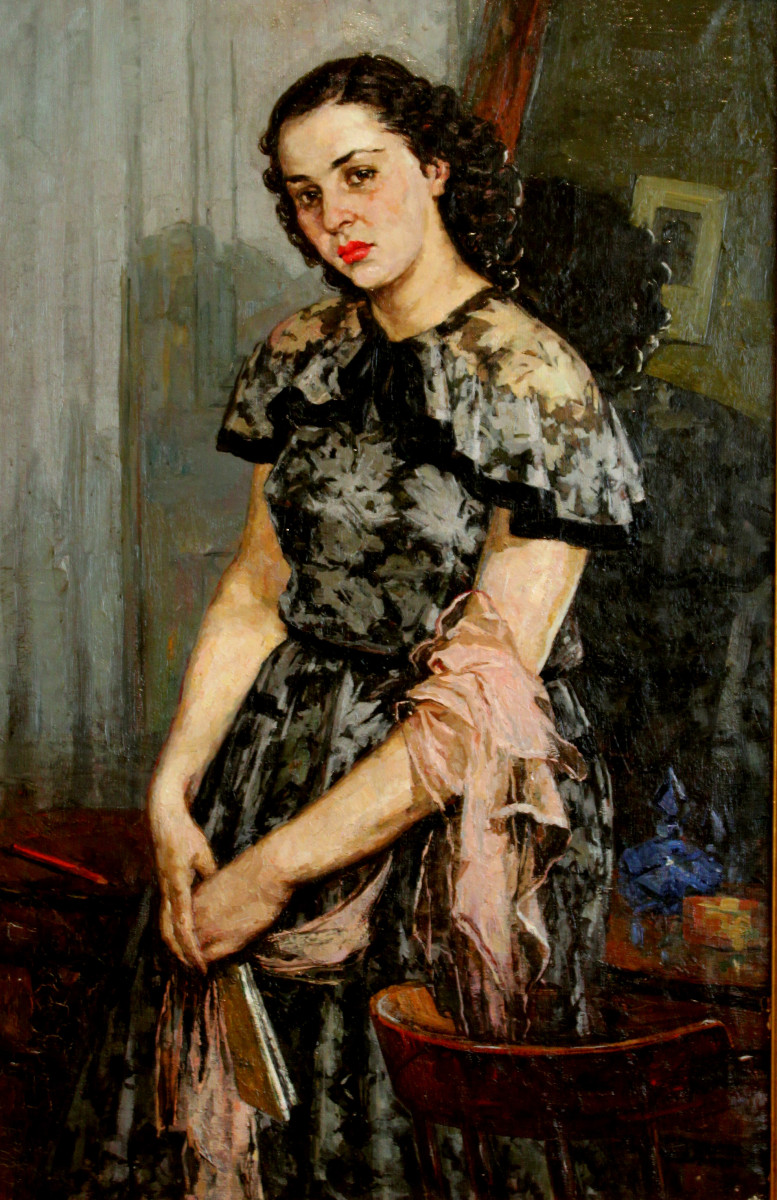
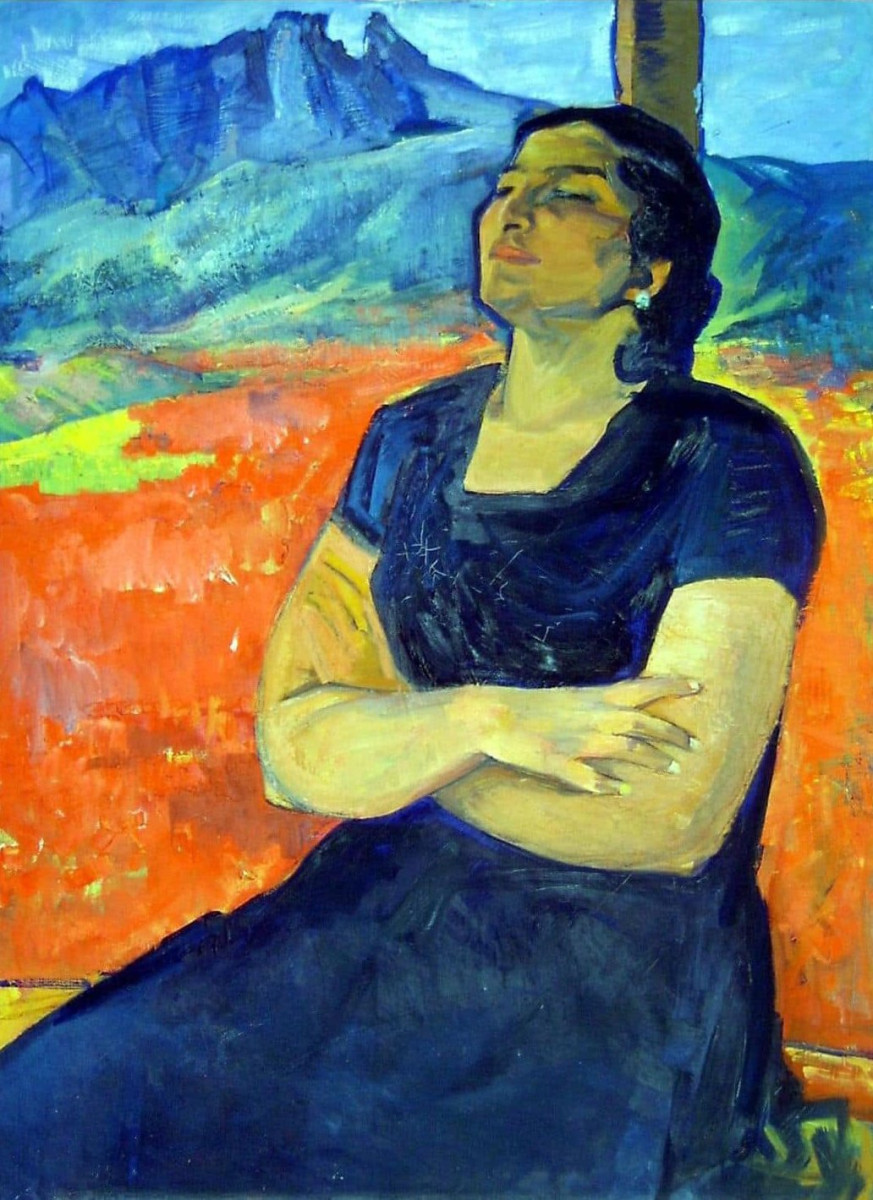
In Baku, Samadova worked in several genres. Portraiture, thematic composition and landscape became major directions of her artistic practice. The Azerbaijan State Art Gallery lists among her portraits “Self-Portrait,” “Portrait of Actress Leyla Badirbeyli,” “Portrait of Surayya Karimova,” “Portrait of Sohbat Ibrahimova” and other works.
Samadova portrayed people from different professions and social backgrounds. Leyla Badirbeyli, Surayya Karimova, Shamama Hasanovna and geologist Minira Mammadbeyli are among the figures represented in her portrait works. “Portrait of Geologist Minira Mammadbeyli” is dated to 1960.
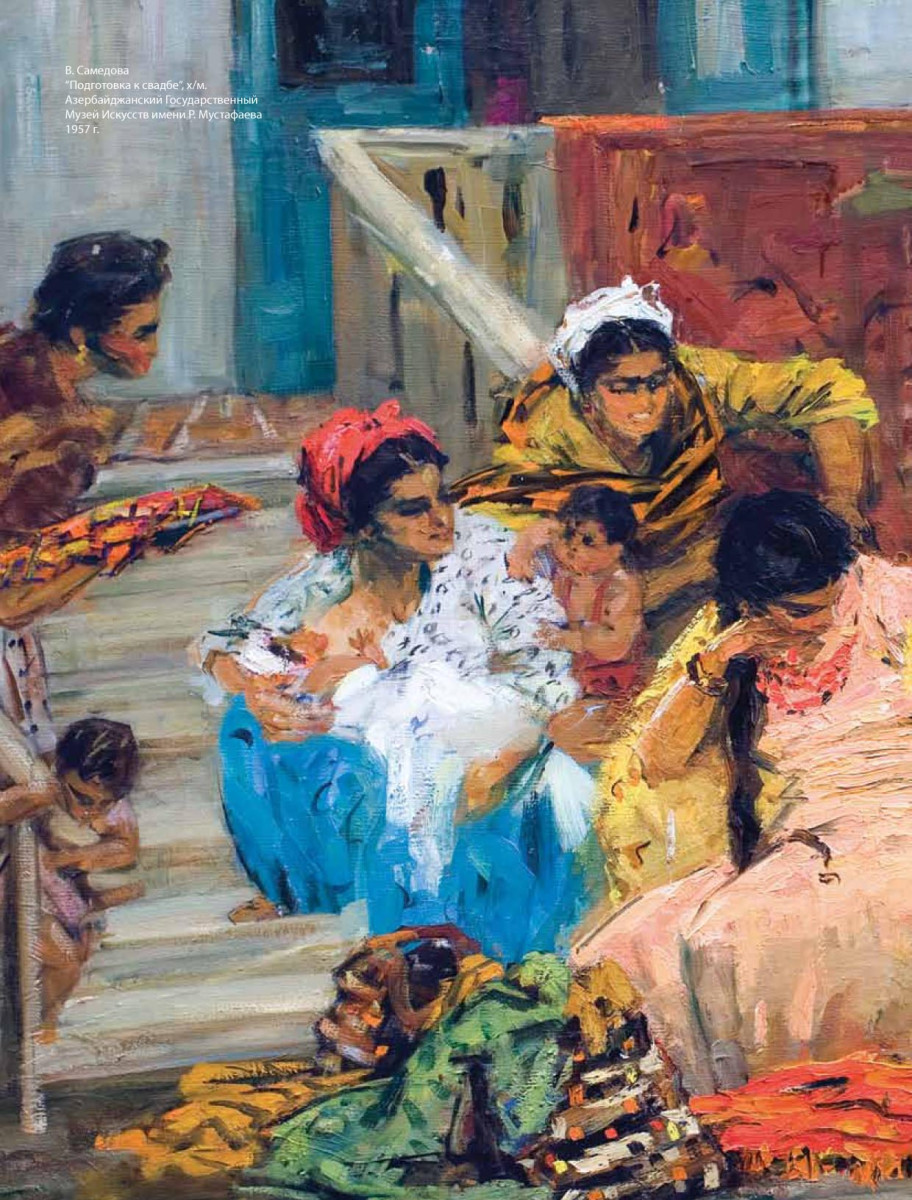
Thematic compositions also occupy an important place in Samadova’s oeuvre. In works such as “Song,” “On the Banks of the Kura,” “Waiting,” “Preparing for the Wedding,” “Those Waiting for News” and “Before the Examination,” she turned to different scenes from everyday life. Materials of the National Library of Azerbaijan also document her work in landscape painting.
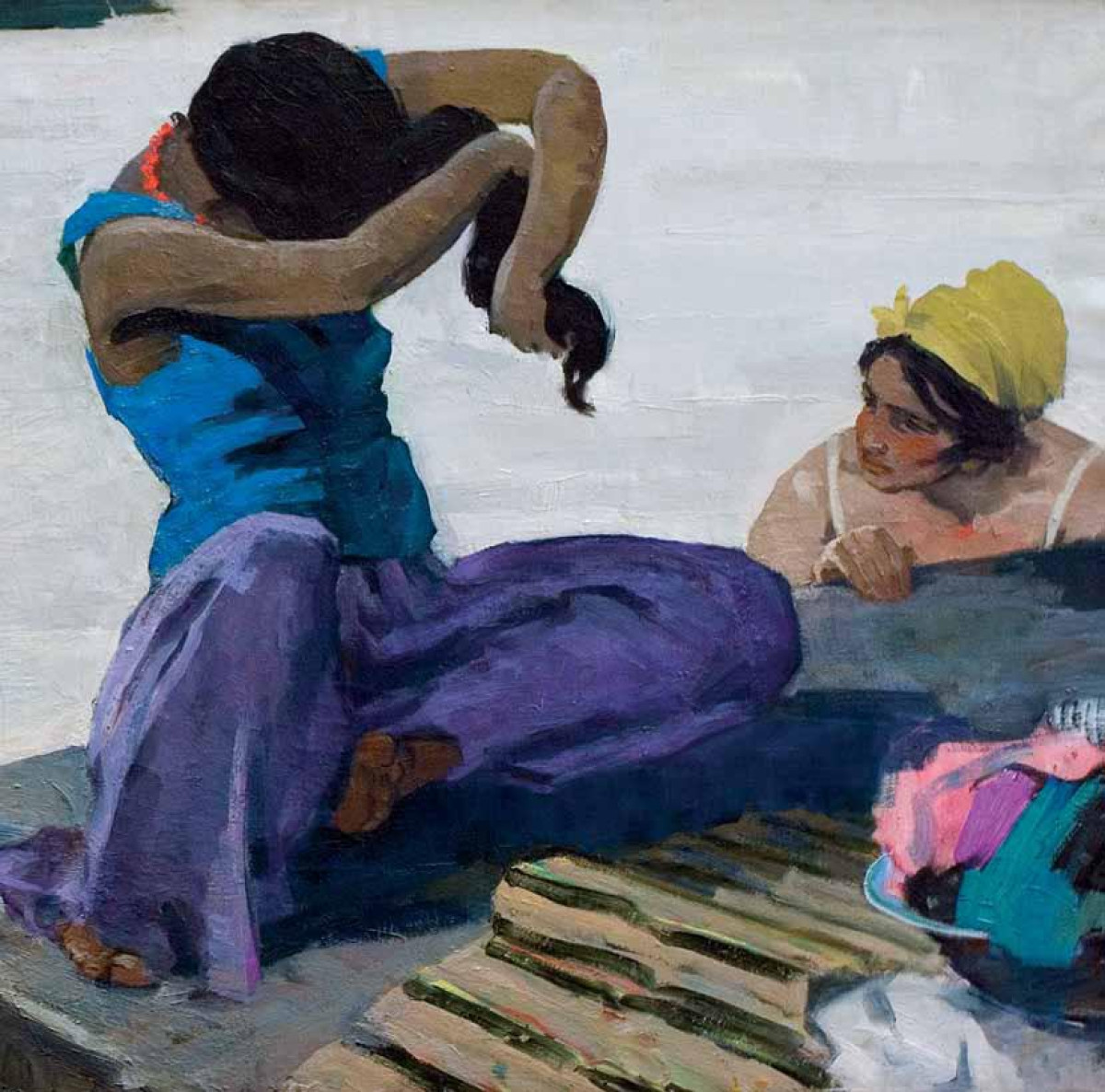
Painted in 1961, “On the Banks of the Kura” is one of the notable works of Samadova’s oeuvre. The oil painting on canvas is held in the collection of the Azerbaijan National Art Museum. According to the museum, the work depicts women washing clothes and bathing on the banks of the Kura River. Evening light and the reflection of the moon on the surface of the water are important elements of the composition.
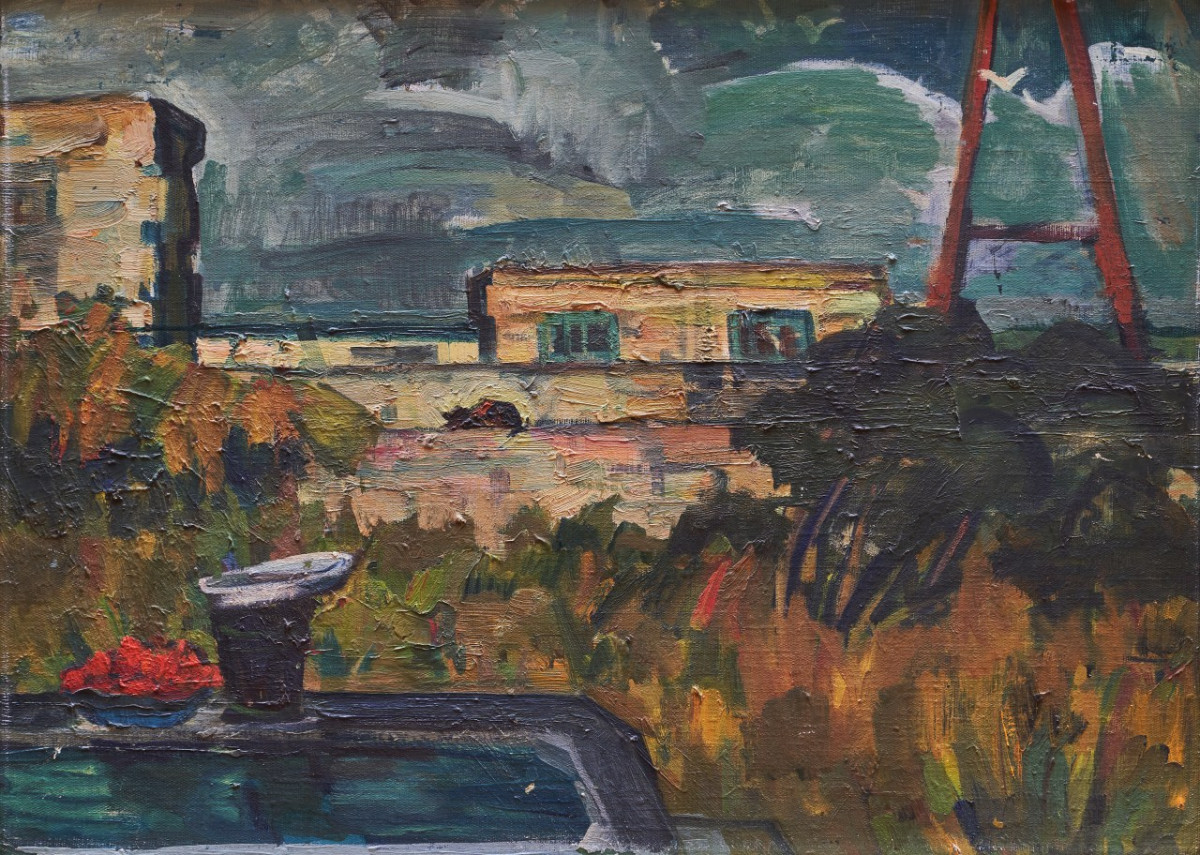
Landscape occupied a substantial place in Samadova’s artistic practice. Works such as “Lake Goygol,” “Mount Kapaz,” “On the Banks of the Kura,” “Zigh,” “Tents” and “At the Goshgar Summer Pasture” address different natural environments and geographical locations. Sources also record that Samadova travelled to various regions of Azerbaijan with her husband and fellow artist Latif Feyzullayev, and that these journeys found expression in her works.
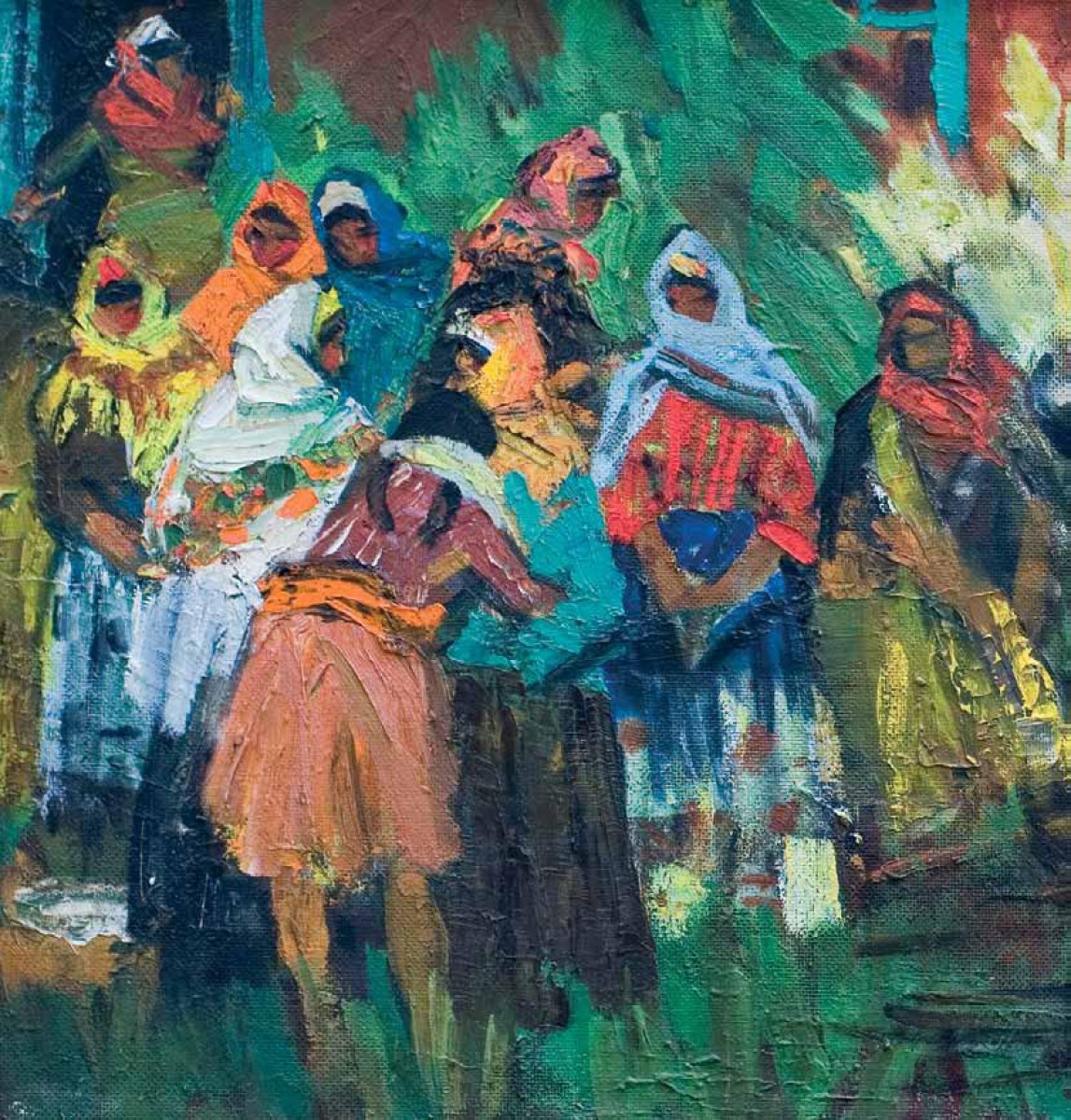
In 1962, Samadova travelled to Bulgaria on an artistic trip. Following the journey, she created works including “Market in Sofia,” “Turkish Girl,” “Tarnovo,” “Celebration” and others. These works were subsequently exhibited at a solo exhibition in Baku.
Alongside her artistic practice, Samadova was also involved in teaching. She worked as a teacher at the Azim Azimzade Art School, where she had received her own early professional education. Her career therefore included both artistic work and the training of younger artists.
In 1965, Vajiha Samadova was awarded the honorary title of Honoured Art Worker of the Azerbaijan SSR.
Vajiha Samadova died in Baku on 24 October 1965. Although her artistic career spanned only a few decades, during this period she produced a substantial body of work in portraiture, thematic composition and landscape. The Azerbaijan State Art Gallery characterizes her work through its approach to form and content, composition, colour, transitions of tone, and the relationship between light and shadow.
Samadova’s artistic legacy forms an important part of the development of Azerbaijani painting in the 1950s and 1960s. From “Azerbaijani Composers” to her portraits, from thematic compositions to works such as “On the Banks of the Kura” and her Azerbaijani landscapes, her oeuvre represents a coherent artistic journey across several genres.
Art Space Gallery MEDIA