An extensive creative journey through glass-ceramics, monumental art, graphics and painting
The Early Years That Led to Art
Tofig Mammadali oglu Agababayev was born in Baku on 8 September 1928. From 1946 to 1951, he studied at the Azim Azimzade State Art School of Azerbaijan. In 1953, he entered the Glass-Ceramics Department of the former V. Mukhina Higher School of Art and Industry in Saint Petersburg and completed his studies in 1959.
This education provided Agababayev with professional training not only in painting but also in decorative art and working with different materials. The coexistence of glass-ceramics, mosaic, monumental-decorative art, graphics and painting in his later practice became an important feature of his artistic career.
Ceramics and Monumental Art
Glass-ceramics occupied an important place in the early period of Agababayev’s career. His triptych “Azerbaijani Lyricism”, created in 1960, is among the significant works of this period.
During the 1960s, his practice expanded into monumental-decorative art. The mosaic “Azerbaijani Circus”, created for the interior of the Baku State Circus, belongs to this stage. In 1967, the work received an award from the Council of Ministers of the Azerbaijan SSR.
Agababayev also created mosaic works for the State Statistics Committee and the sports hall of the Azerbaijan University of Architecture and Construction. In 1970, he created the panel “Spring”, using marble and smalt.
These works belong to a period in which monumental scale and architectural space acquired a distinct place in Agababayev’s artistic practice.
Baku and Absheron
Agababayev spent most of his life in Baku. The city was not simply the place of his birth, but also one of the principal spaces of observation that shaped his artistic work.
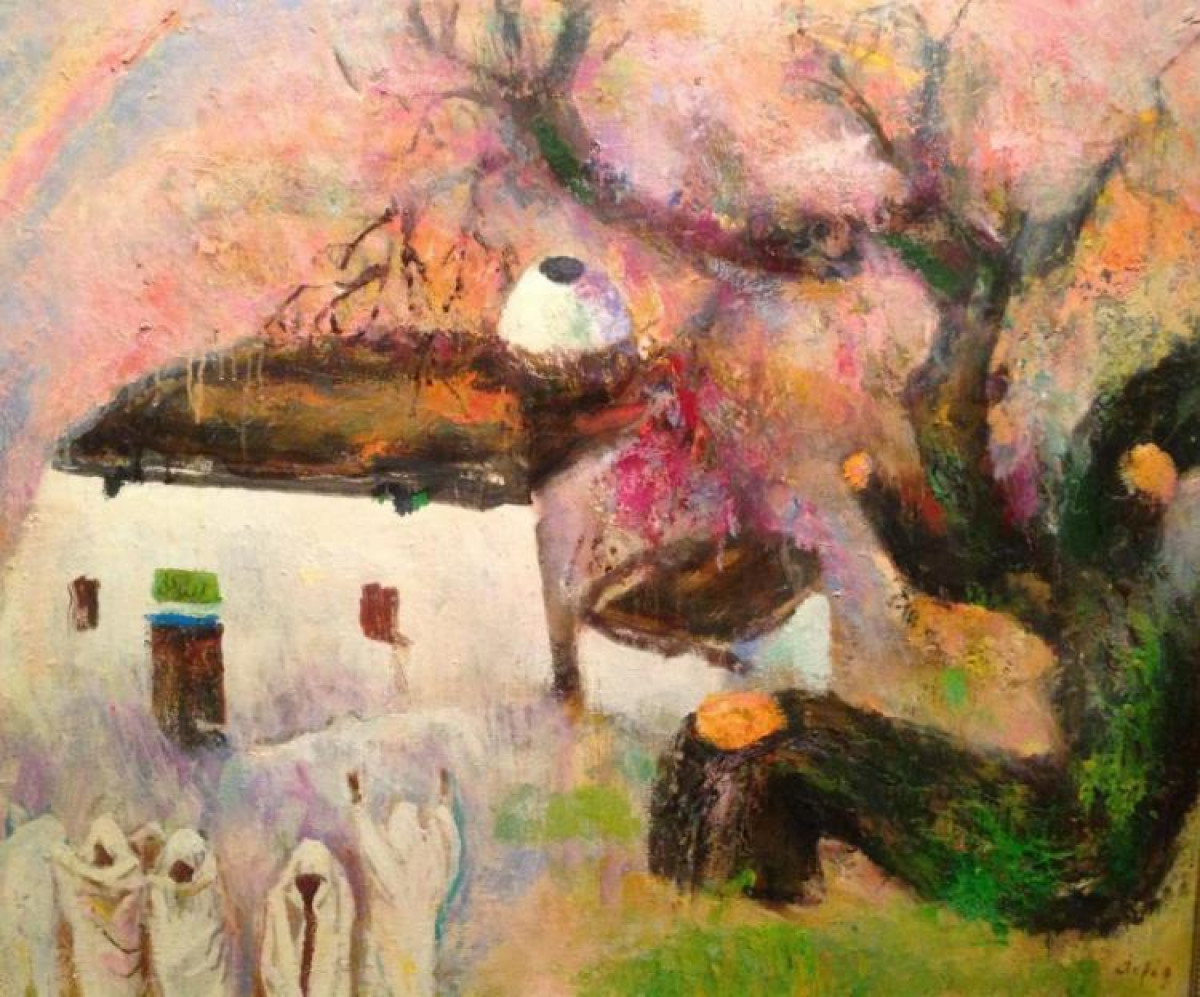
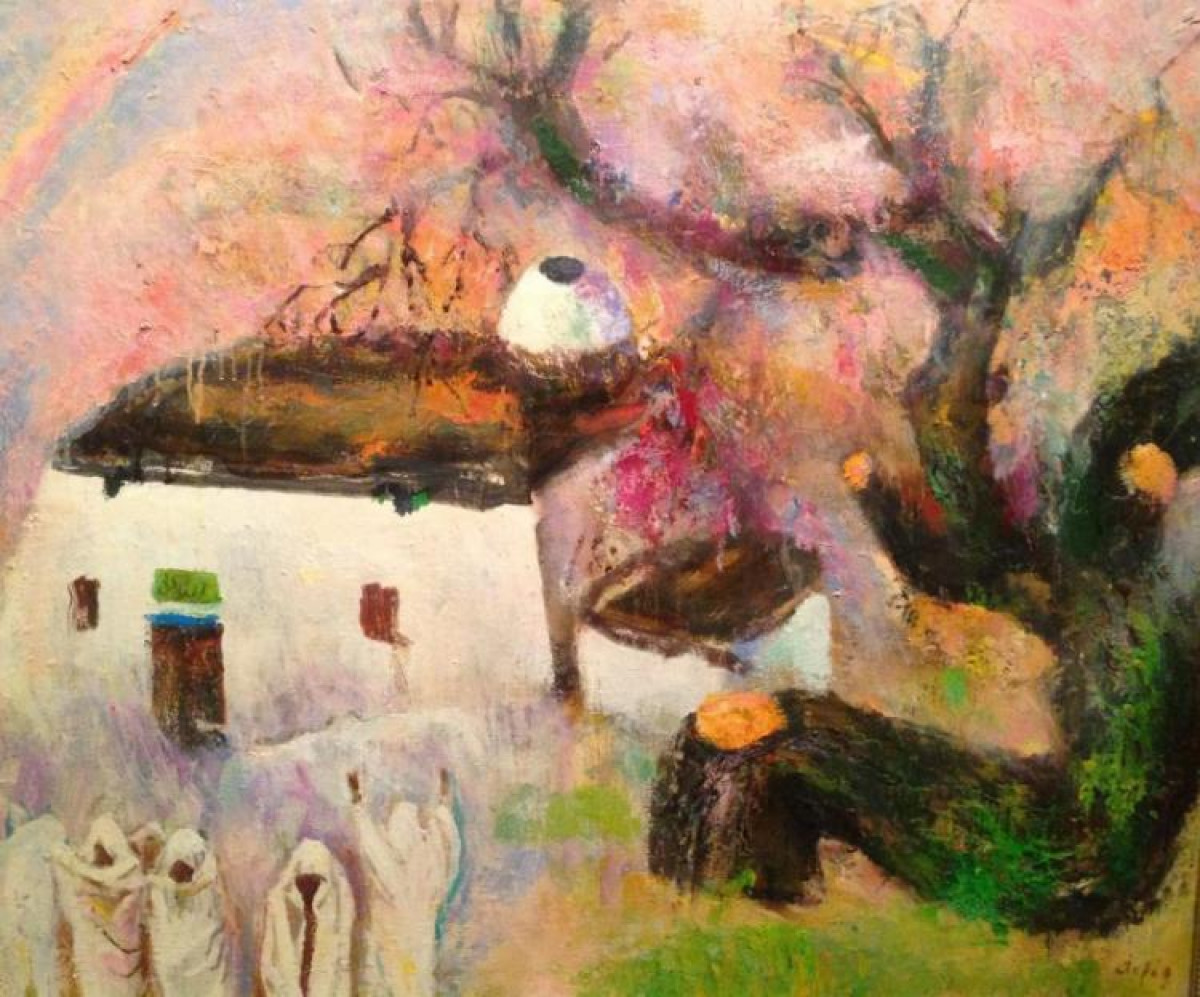
This relationship is particularly evident in his treatment of Absheron. Works such as “The Old Baku Bathhouse”, “Absheron Village”, “Khazri in Absheron”, “Nardaran Shrine”, “Zira Vegetable Garden” and “Oil Gusher in the Old Baku Oil Fields” demonstrate the continuing presence of this landscape in his artistic work.
The same direction can be seen in works such as “Absheron Reserve”, “Baku Oil to the Front”, “Forester”, “Breath of the Earth” and “May 1945, Baku”. Alongside landscape, labour, urban life and historical events also entered the artist’s field of attention.
From 1966 to 1968, Agababayev served as the first Chief Artist of Baku. During this period, he participated in projects related to the artistic design of the city, including the restoration of the emblem on the Baku Soviet building and the creation of the symbolic key to the city.
Painting and Graphics
Agababayev’s artistic practice was not limited to monumental art. Painting and graphics remained among the principal fields of his work for many decades.
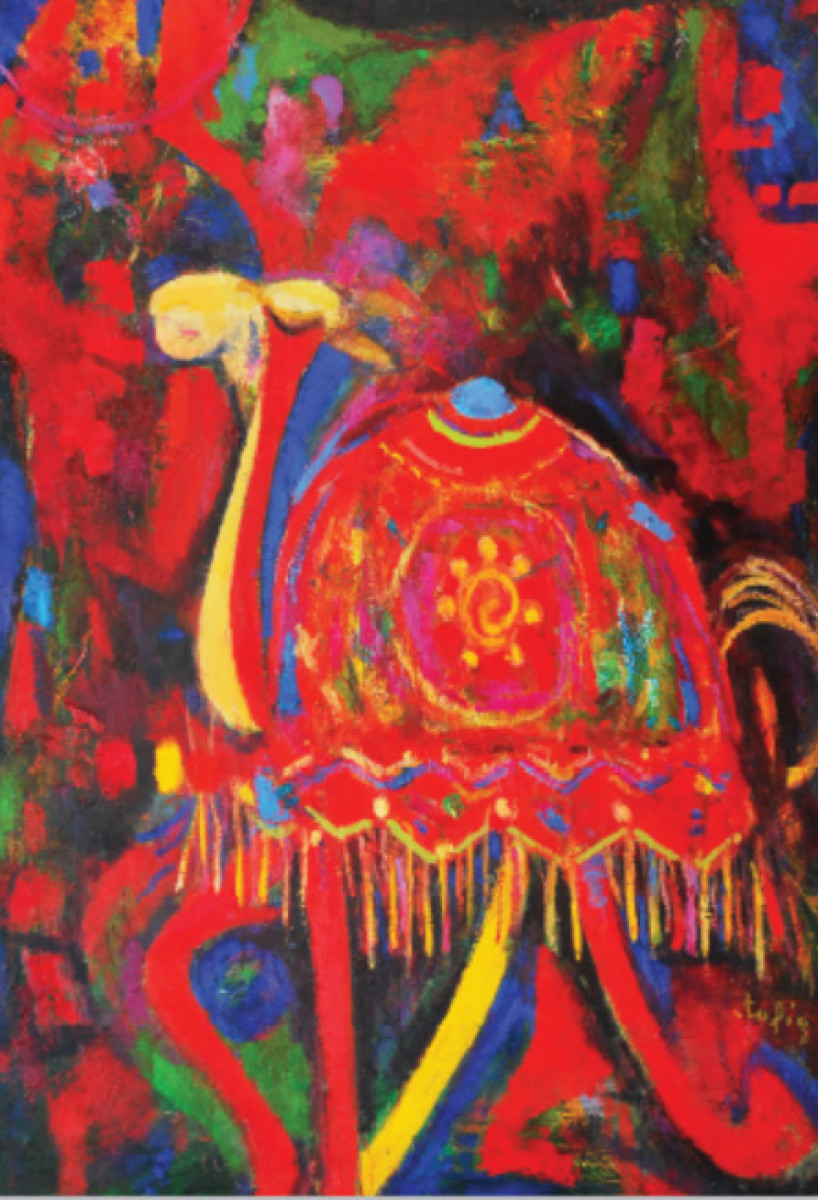
Landscape, portraiture, still life and various forms of composition occupy a place alongside one another in his paintings. Works such as “Colours of Hope”, “Without Words”, “Song of Spring”, “Eastern Motif” and “Breath of Spring” belong to different stages of this direction.
His subjects also developed across a broad range, from Baku and Absheron landscapes to everyday life, labour and historical events.
Portraiture
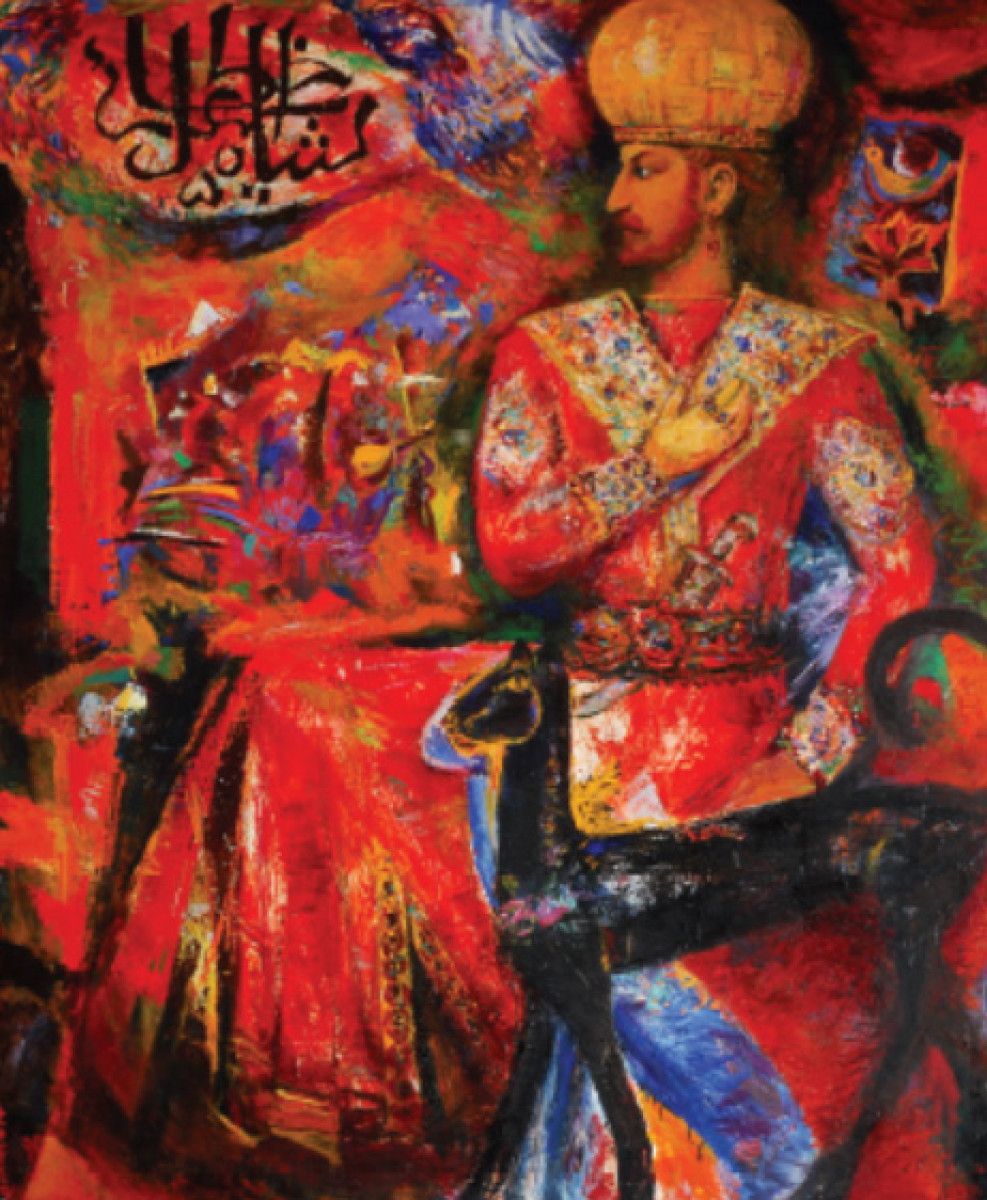
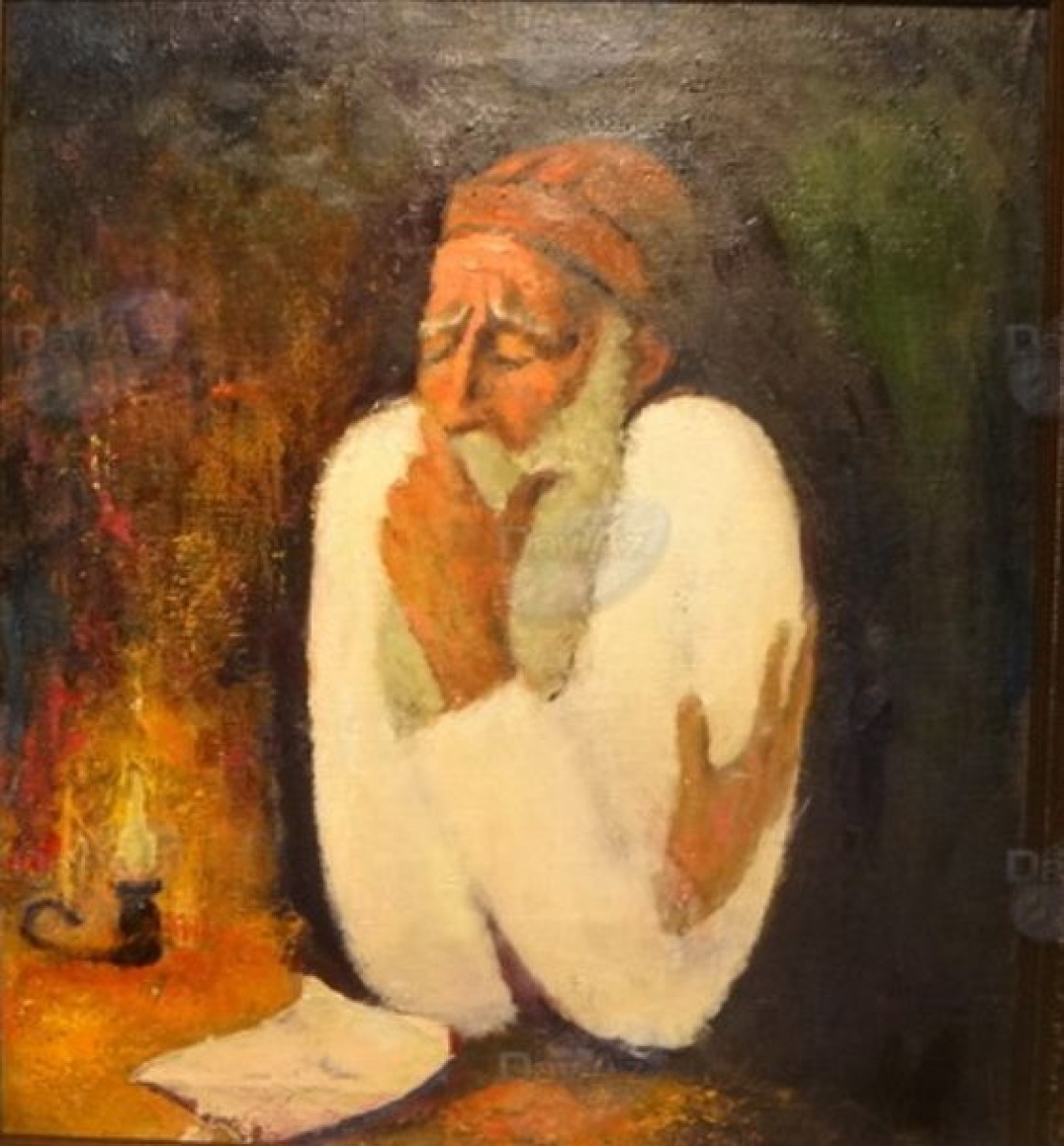
The human image represents a distinct direction within Agababayev’s artistic legacy. Among his portraits from different periods are “Student Girl” (1972), “Academician Z. Buniyatov” (1978), “Academician I. Orujova” (1978), “Shah Ismail” (1988–1989) and “U. Hajibeyli” (1992).
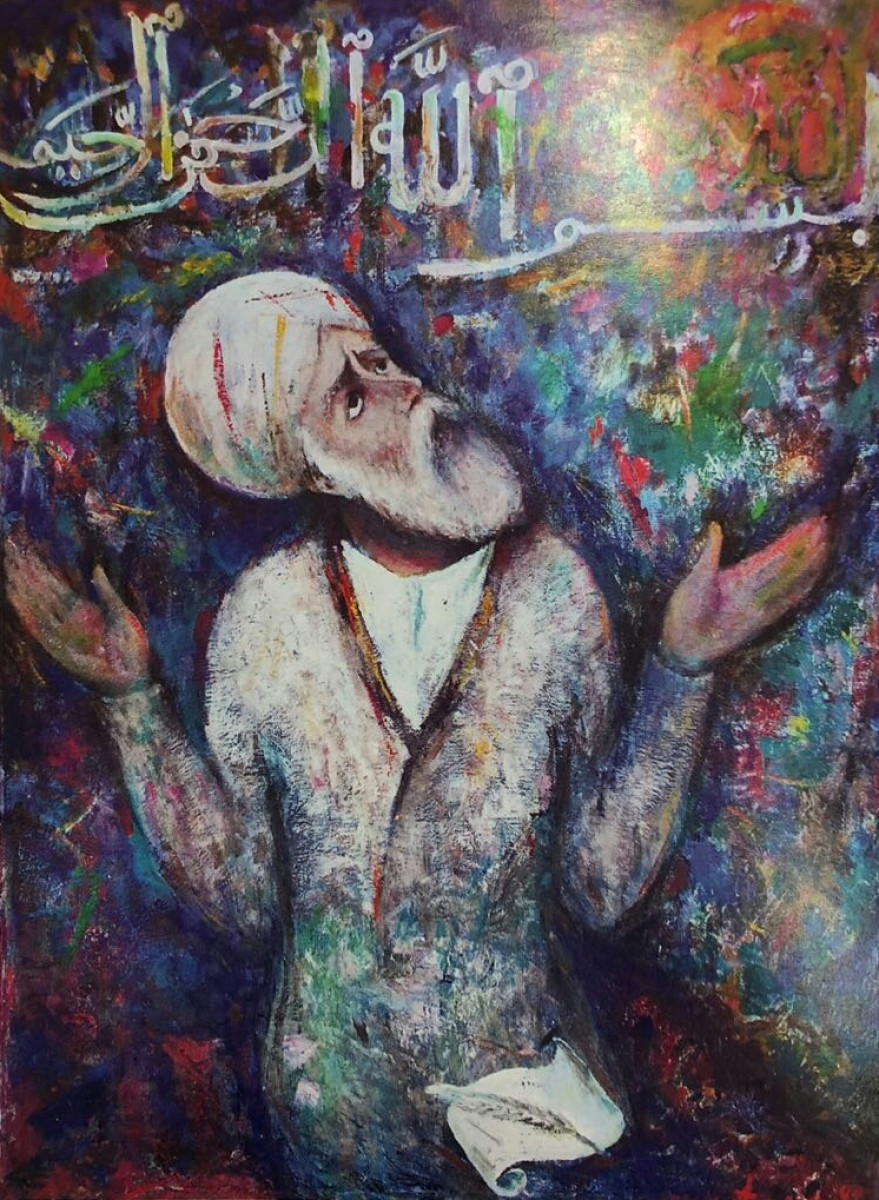
The artist also turned to historical and cultural figures. Muhammad Fuzuli, Shah Ismail Khatai, Dada Gorgud, Uzeyir Hajibeyli, Ziya Buniyatov and Ilyas Afandiyev are among the personalities represented in his portrait work.
The subject of Fuzuli held a particular place in Agababayev’s work. He returned to the image several times and created works entitled “Muhammad Fuzuli”.
Artist and Educator
Teaching was another important part of Agababayev’s professional life. He worked for many years at the Azerbaijan Academy of Arts and contributed to the professional education of students from different generations.
From 2005 to 2008, he headed the Department of Drawing. His professional activity therefore extended beyond his own artistic practice to the field of art education.
A Long Artistic Life
Agababayev’s creative career spanned more than half a century. Beginning with his art education in the late 1940s, he worked across glass-ceramics, monumental art, mosaic, graphics and painting over the following decades.
In 1992, he was awarded the honorary title of Honoured Artist; in 2006, he was named People’s Artist. In 2008, he was granted a Presidential Individual Pension. In 2023, he was awarded the “Shohrat” Order for his services to the development of Azerbaijani painting.
Tofig Agababayev died on 20 December 2024.
His artistic legacy encompasses a long creative journey in which different techniques and subjects came together. Painting education stands at its beginning; glass-ceramics and monumental art form important stages, while graphics, painting and portraiture became major fields of his later practice.
From Ceramics to the Colours of Baku
Agababayev’s artistic path began with glass-ceramics and later expanded into monumental compositions, mosaic, graphics and painting. Although each of these stages represents a distinct area of his practice, Baku and Absheron, where he spent much of his life, remained among the important subjects of his work.
In this sense, “From Ceramics to the Colours of Baku” reflects the principal direction of Agababayev’s artistic journey: a movement from material to colour, from monumental space to the individual work, and from formal education to a long and independent artistic practice.
Art Space Gallery MEDIA