How observations rooted in the everyday life of Baku and Absheron evolved into an individual artistic language through graphic art, painting and mythological imagery
THE BEGINNING — BAKU AND THE EARLY ARTISTIC ENVIRONMENT
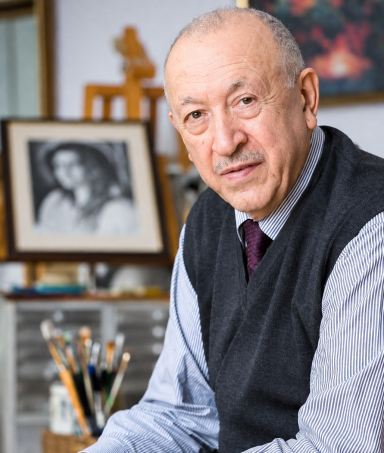
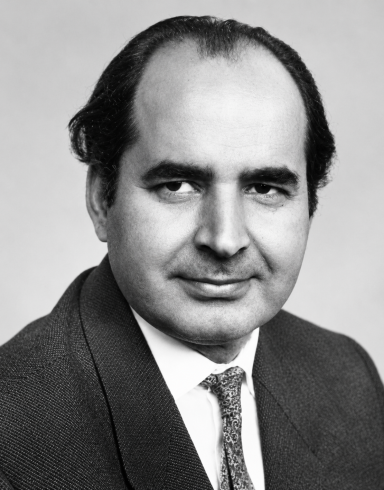
Rasim Hanif oglu Babayev was born in Baku on 31 December 1927. His path into art began with the years of childhood and youth spent in the cultural environment of Baku. In 1945, he entered the Azerbaijan Art School named after Azim Azimzade and completed his studies in 1949. That same year, he continued his education at the V. I. Surikov Moscow Art Institute, completing this stage in 1955.
The Moscow years became an important stage in his professional development. Alongside academic drawing and composition, the principles of the classical art school contributed to the formation of his artistic thinking. Yet Babayev's creative path was not simply a continuation of his academic training. Over time, he began moving beyond established methods of representation in search of his own means of expression.
FROM GRAPHIC ART TO PAINTING
One of the important early directions of Babayev's artistic career was graphic art. His work in book design, illustration and linocut developed a particular sensitivity to line, rhythm and the construction of an image.
His illustrations for S. S. Akhundov's “Scary Tales”, Muhammad Fuzuli's “The Debate of the Fruits”, and Abdulla Shaig's “Tiq-Tiq Khanum” and “Jirdan” were among the notable examples of his work in book illustration.
The experience he gained in graphic art continued to influence his painting. For Babayev, line was not merely a means of defining form; it became one of the principal artistic elements shaping character, movement and the inner rhythm of a composition.
During the 1950s and 1960s, different subjects and artistic approaches developed simultaneously in his work. In such works as “The Year of the Dragon”, “Dream”, “Sinbad's Ships” and “The Fugitives”, the depiction of reality and the freedom of imagination come together.
ABSHERON — FROM OBSERVATION TO IMAGE
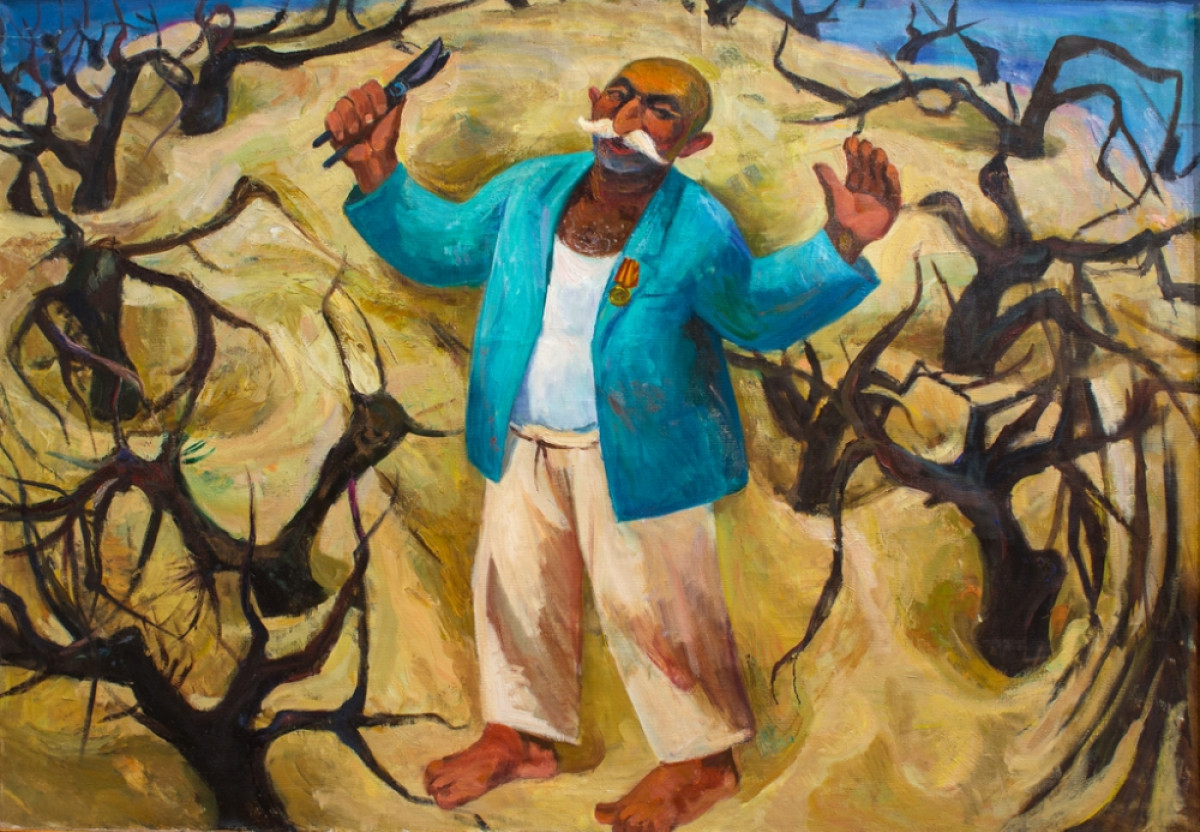
Baku and Absheron were not simply geographical locations in Babayev's art, but a broad artistic environment in which he observed life. People, land, nature, the city and everyday existence gradually became more than subjects of observation, evolving into elements of a broader visual world.
The linocut series “Sumgait”, “Dashkasan” and “Absheron”, as well as works such as “Gobustan”, “Khinalig”, “Trees”, “Mountains”, “My Garden” and “Neft Dashlari”, reveal his distinctive approach to different landscapes and environments.
For Babayev, landscape was never merely a reproduction of what he saw. Real places were simplified in his work, forms were transformed, and new relationships emerged between line and colour. In this way, a specific geographical environment gradually became part of the artist's personal vision.
THE SEARCH FOR HIS OWN VOICE
One of the defining characteristics of Babayev's artistic path was his search for individual expression. After his education in Moscow, a transition from academic conventions toward a freer artistic structure became increasingly apparent in his work.
His diploma work “Fishermen”, created at the Surikov Institute, occupies a particular place in this development. The fate of the work became one of the notable episodes of his student years. According to Babayev's own recollections, the commission did not accept the work, and the awarding of his diploma was delayed.
This episode alone cannot explain his entire artistic career. Yet when considered alongside the freedom with which he later approached form, colour and imagery, it reflects his determination to develop his artistic language without restricting himself to established aesthetic frameworks.
THE TRANSFORMATION OF THE IMAGE
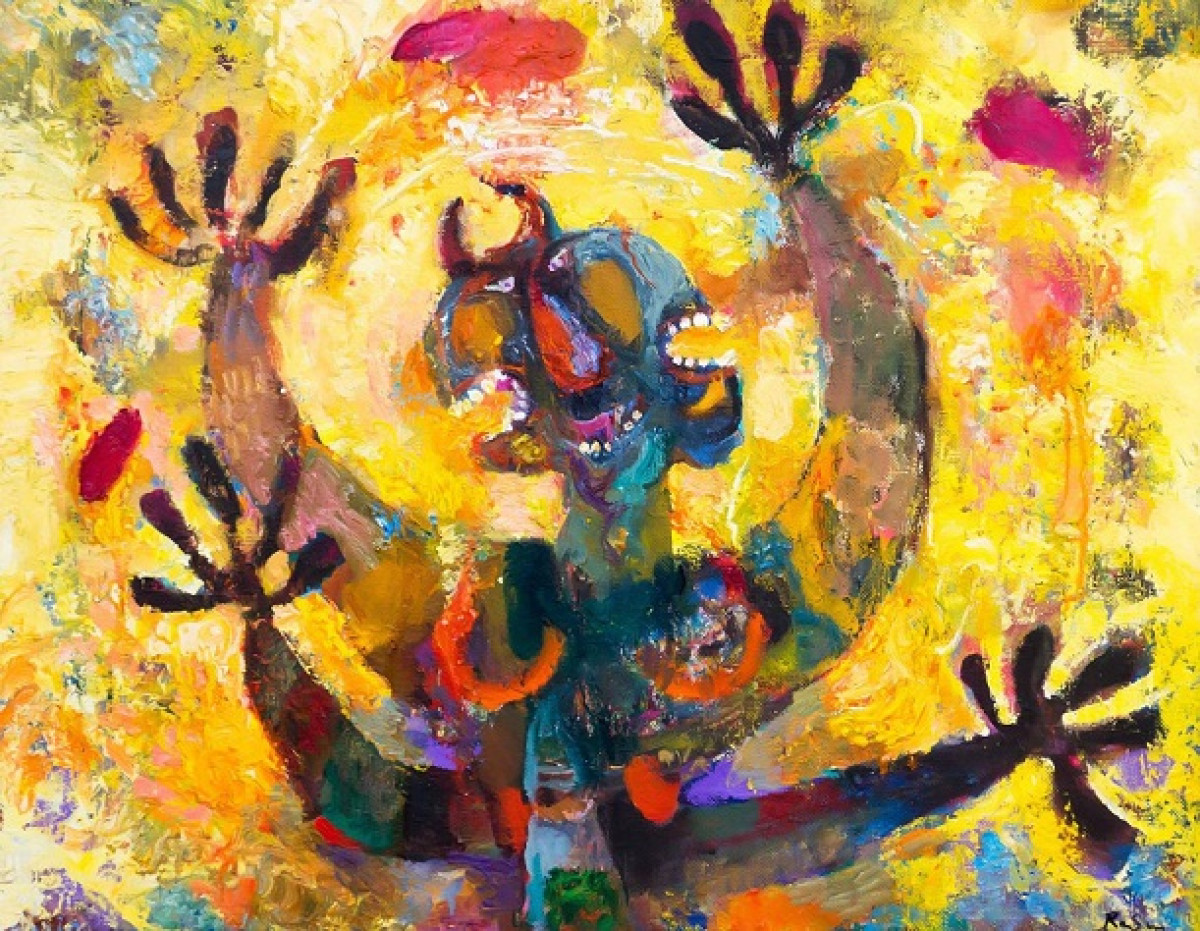
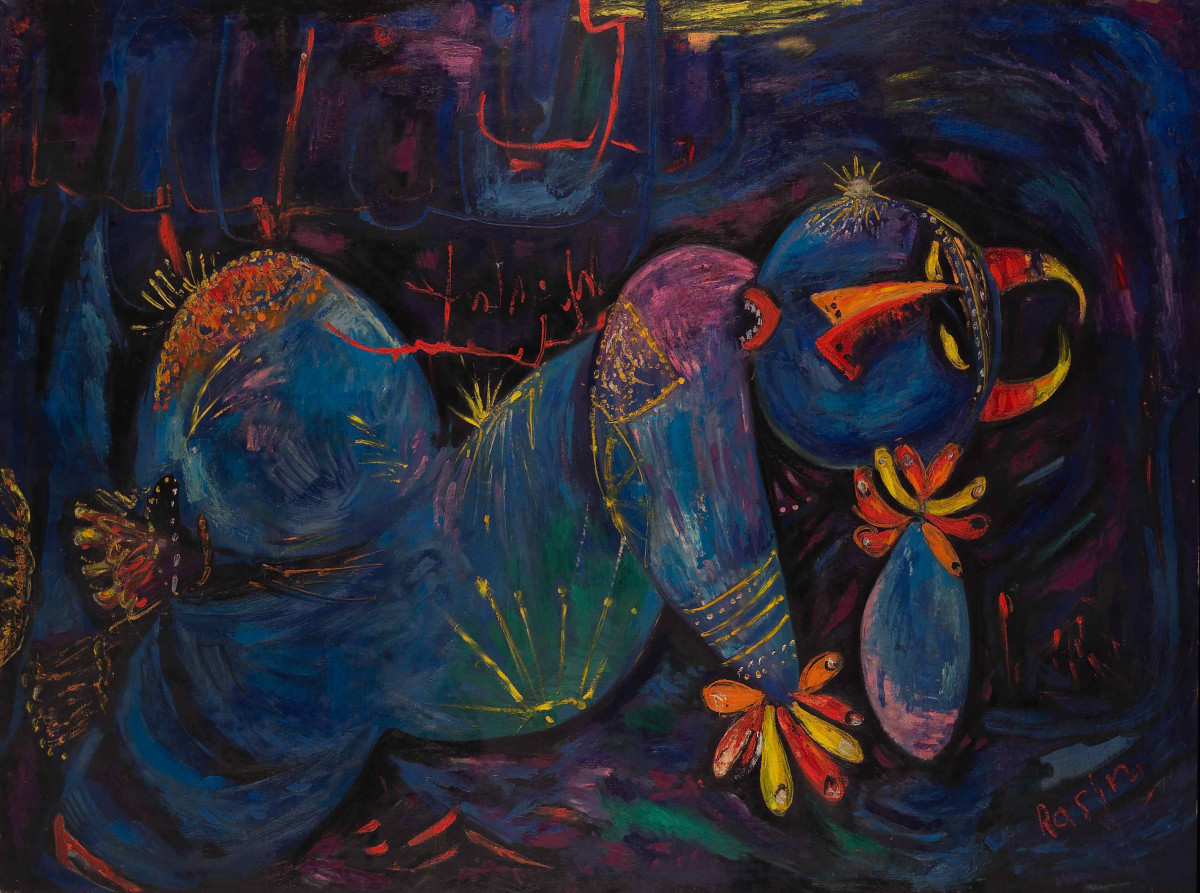
Over time, the human figure and surrounding environment in Babayev's work moved beyond the boundaries of literal representation. Distortion of form, altered proportions, a conditional sense of space and liberated relationships between colours became characteristic elements of his individual artistic language.
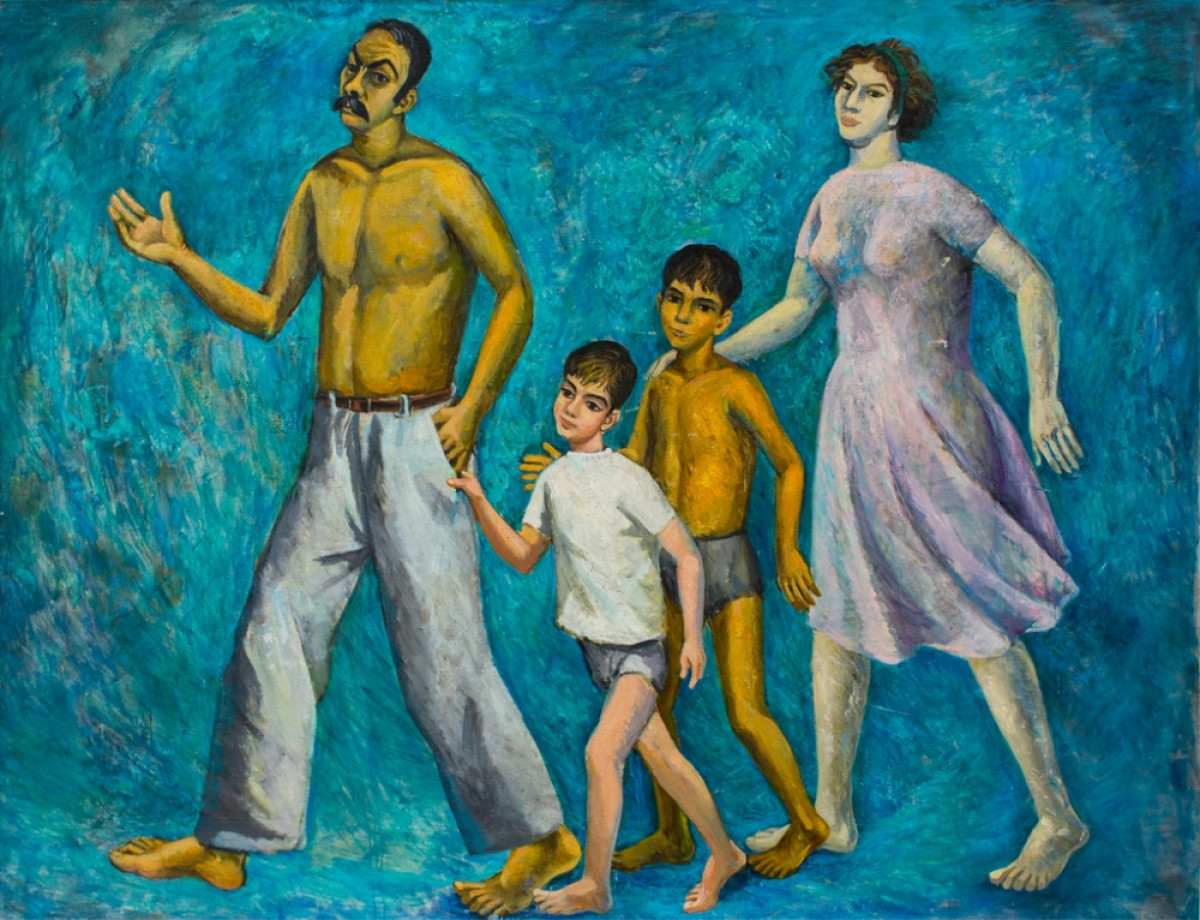
This transformation did not mean a departure from reality. Rather, it provided a different way of expressing it. The people and events he observed in everyday life passed through his imagination and became more generalized images.
The human figure thus moved beyond the portrait of a particular individual, becoming a carrier of character, behaviour, emotion and a specific human situation.
“DEVILS” AND THE MYTHOLOGICAL WORLD
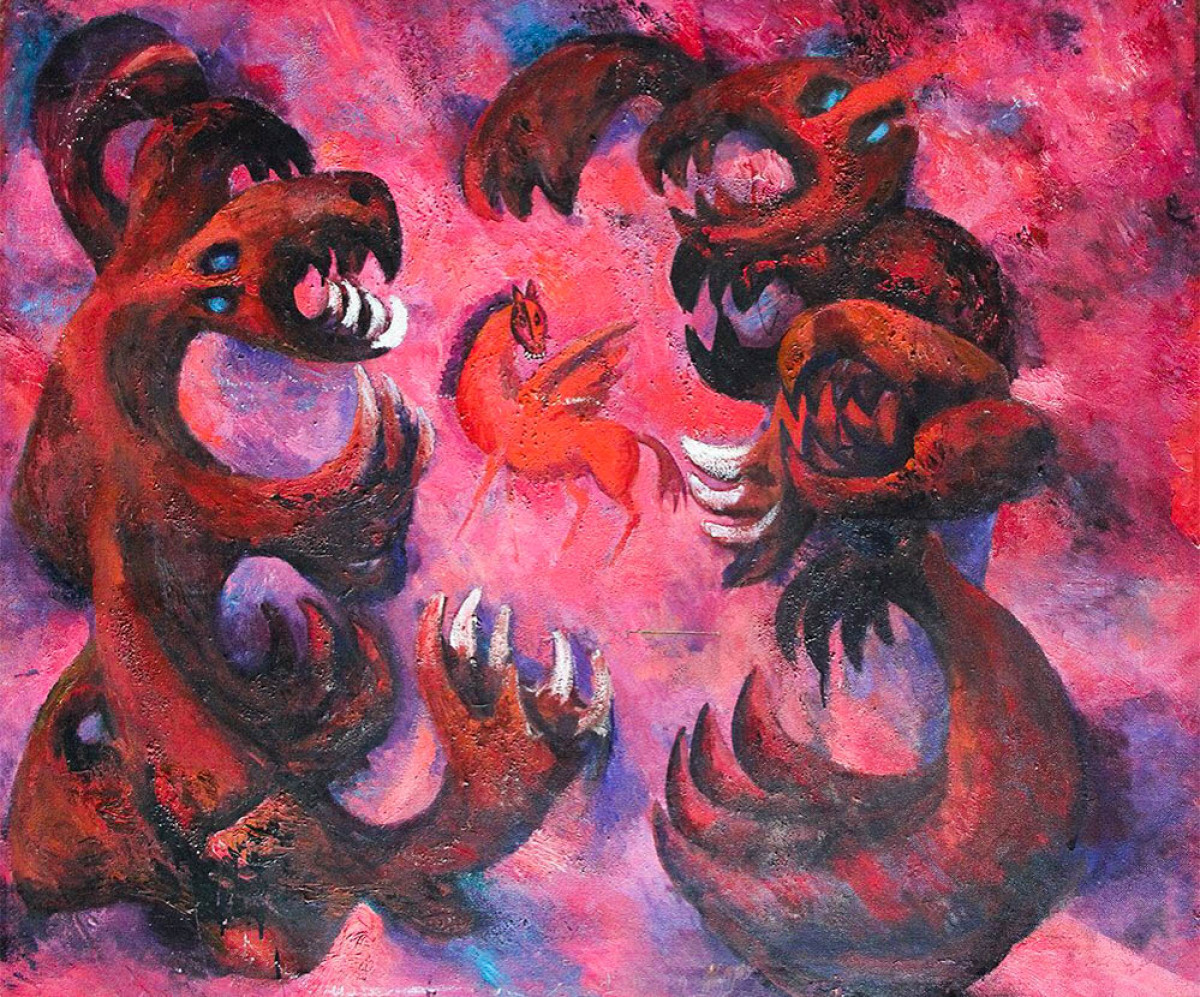
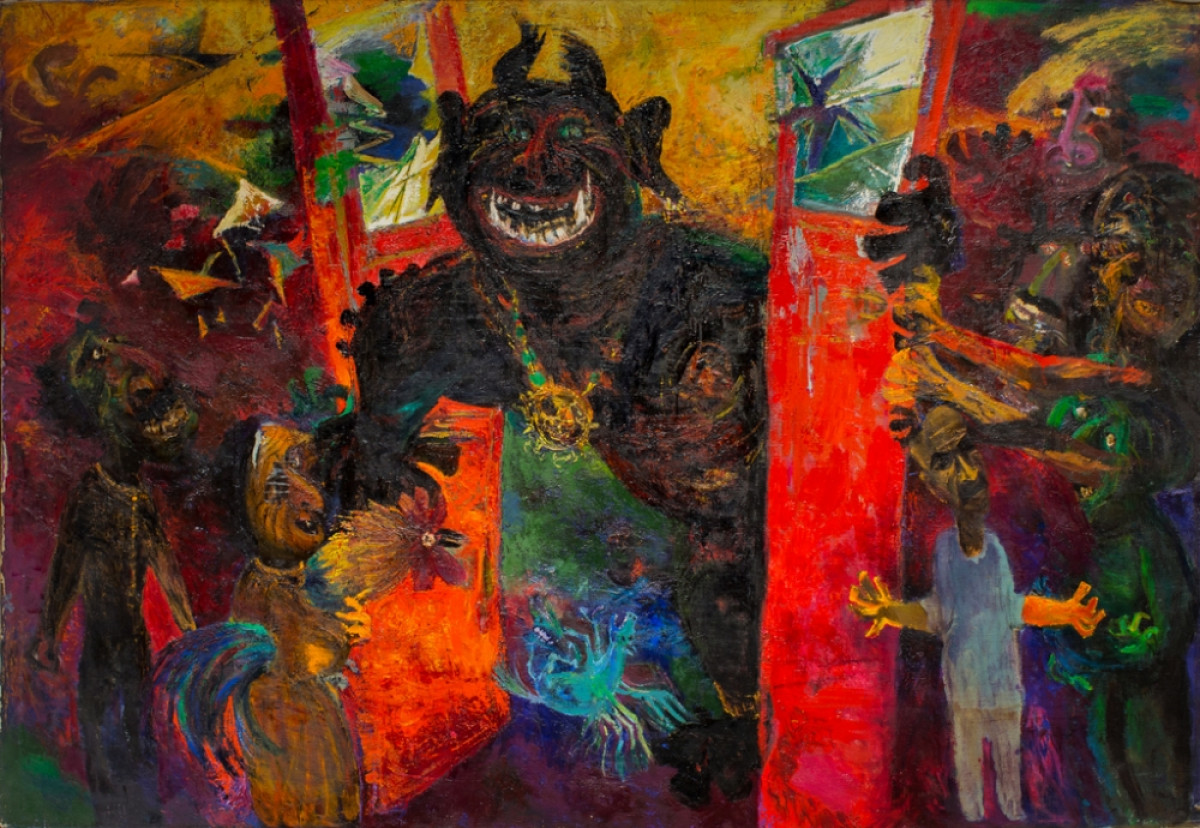
The emergence of the devil figure in Babayev's art formed one of the most distinctive directions of his artistic language. In his work, the devil is not simply a fantastic creature inherited from folklore. Through this figure, different aspects of human character, everyday behaviour and the contradictions of life are expressed with greater freedom.
In works such as “Devil and Woman”, “The Devil's Dream”, “Angry Devil”, “Devil with a Goblet”, “Dancing Devil” and “Thoughtful Devil”, the same mythological figure appears in entirely different situations. At times tense, at times ironic, at times contemplative, and at times almost like an ordinary person within everyday life.
In Babayev's art, it is precisely here that the boundary between the mythological image and real life begins to disappear. The devil is no longer merely a character from an ancient tale; it becomes a contemporary artistic image through which human character, weakness, strength, anger and irony can be expressed.
HISTORY AND THE HUMAN BEING
The human figure in Babayev's work was not limited to mythological characters. Everyday life, portraiture, landscape and historical subjects emerged not as isolated directions, but as different expressions of the same artistic way of thinking.
In works created in the late 1980s and early 1990s, the traces of war, violence and historical tragedy became more pronounced. “Bloody General”, “Let There Be No War”, “Berlin-63” and “Death Camp” are among the works that belong to this direction.
In “Bloody General”, the weight of historical tragedy moves beyond the depiction of a particular event into a broader emotional dimension. The distorted figure, tense composition and confrontation of colours express the subject with directness and intensity.
COLOUR, LINE AND INDIVIDUAL LANGUAGE
Although the subjects of Babayev's work changed throughout his career, his relationship with line and colour remained one of the foundations of his art.
In graphic art, the precision and rhythm of line; in painting, the independent expressive power of colour — both shaped his approach to constructing images. At times, line carries the entire character of a figure; at others, colour alters the boundaries of form. Their interaction gives Babayev's works both graphic intensity and painterly freedom.
His art cannot be confined to the framework of realistic representation, grotesque or mythological subject matter alone. Graphic art, illustration, landscape, portraiture and painting became different modes of expression at different stages, yet behind them all lies the same search: to transform reality through a personal vision and create a new image.
THE LATER STAGE OF HIS CREATIVE JOURNEY
In Babayev's later works, the boundaries between people, nature, mythological figures, history and everyday life become increasingly fluid. Earlier experiences come together not as separate subjects, but as parts of a unified visual world.
Reality is not transferred directly into his works. It is first observed, then reconstructed through the artist's memory, imagination and personal worldview. Through this process, ordinary events become extraordinary images, while real places are transformed into a distinctive artistic world.
THE ARTISTIC JOURNEY
Rasim Babayev's artistic path is not a straight progression from one style to another. It is a sequence of expanding explorations — from graphic art to painting, from book illustration to freely constructed imagery, from observations of Baku and Absheron to a mythological world, and from human character to the expression of historical events.
The defining quality of this journey lies less in the variety of subjects than in the uniqueness of his way of seeing them. Rather than simply reproducing the world around him, Babayev transformed, simplified and distorted it, creating new forms of imagery.
In his art, the boundary between reality and imagination gradually loses its importance. The everyday life of Baku and Absheron, human character, mythological figures and historical events come together within a single individual artistic language.
Rasim Babayev died in Baku on 24 April 2007. His creative legacy represents a distinctive approach within Azerbaijani painting and graphic art, shaped by the attempt to reconstruct reality through personal vision, liberated form, line, colour and imagery.
Art Space Gallery MEDIA