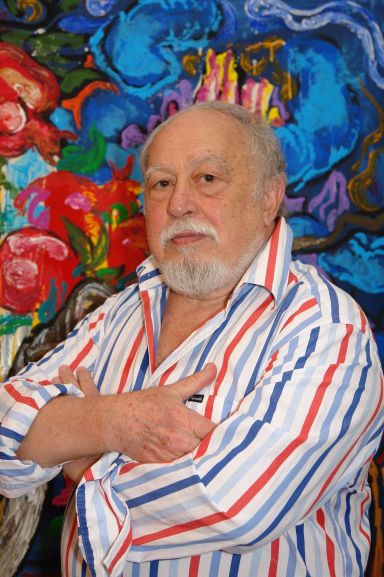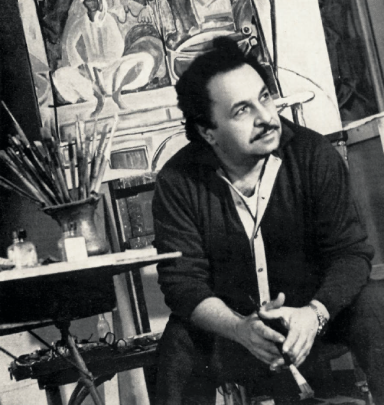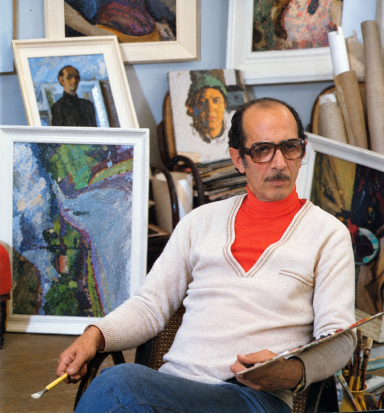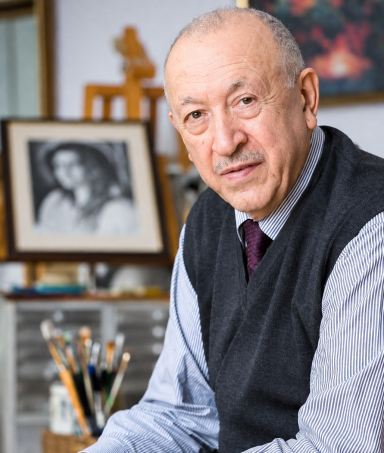
Tahir Salakhov is one of the most prominent figures in Azerbaijani painting. Labour, portraiture, the Caspian Sea and Absheron, as well as the theme of space, occupy an important place in his work. Although these subjects are diverse, Salakhov brought them together through his distinctive use of colour, line and composition.
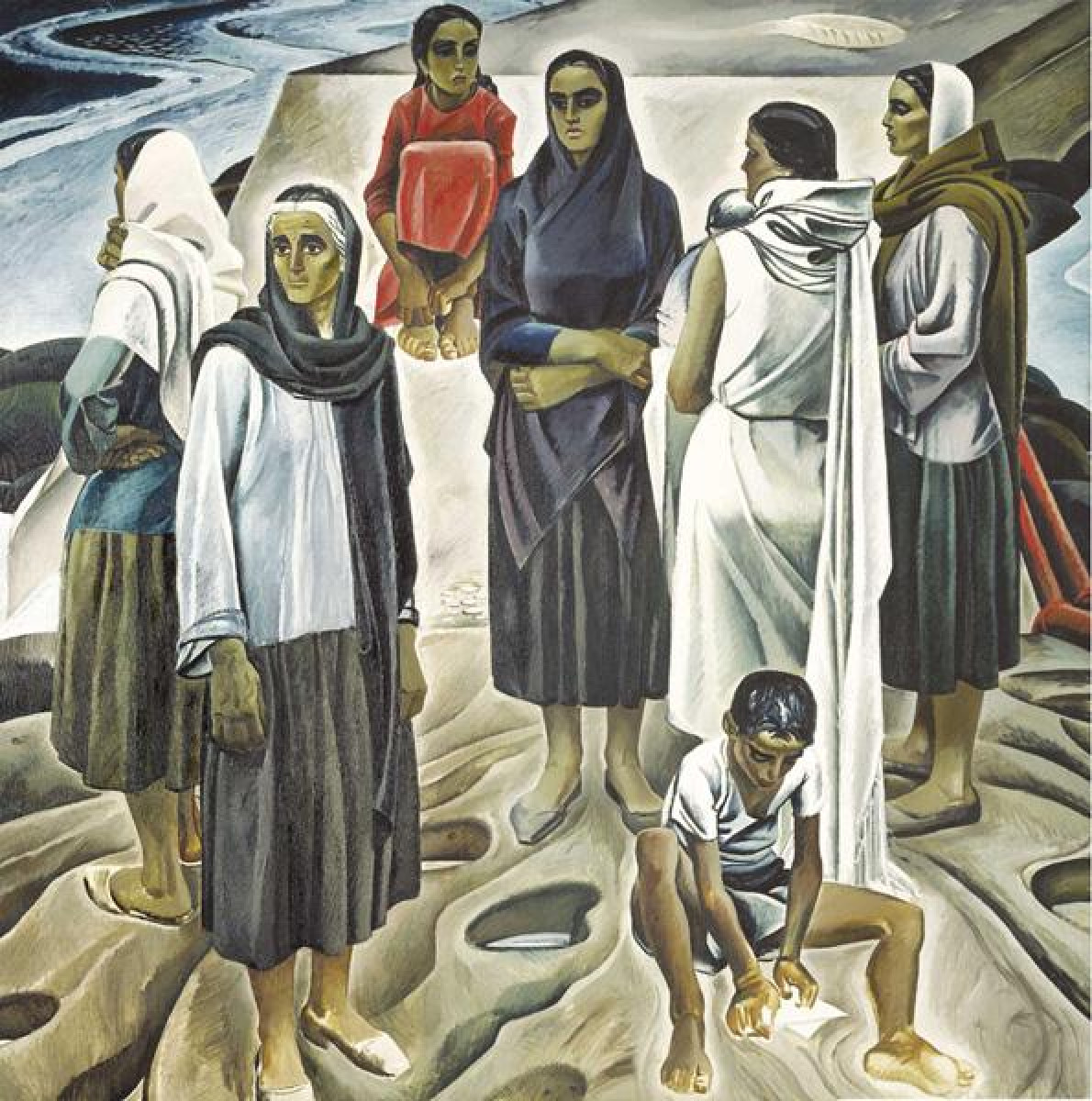
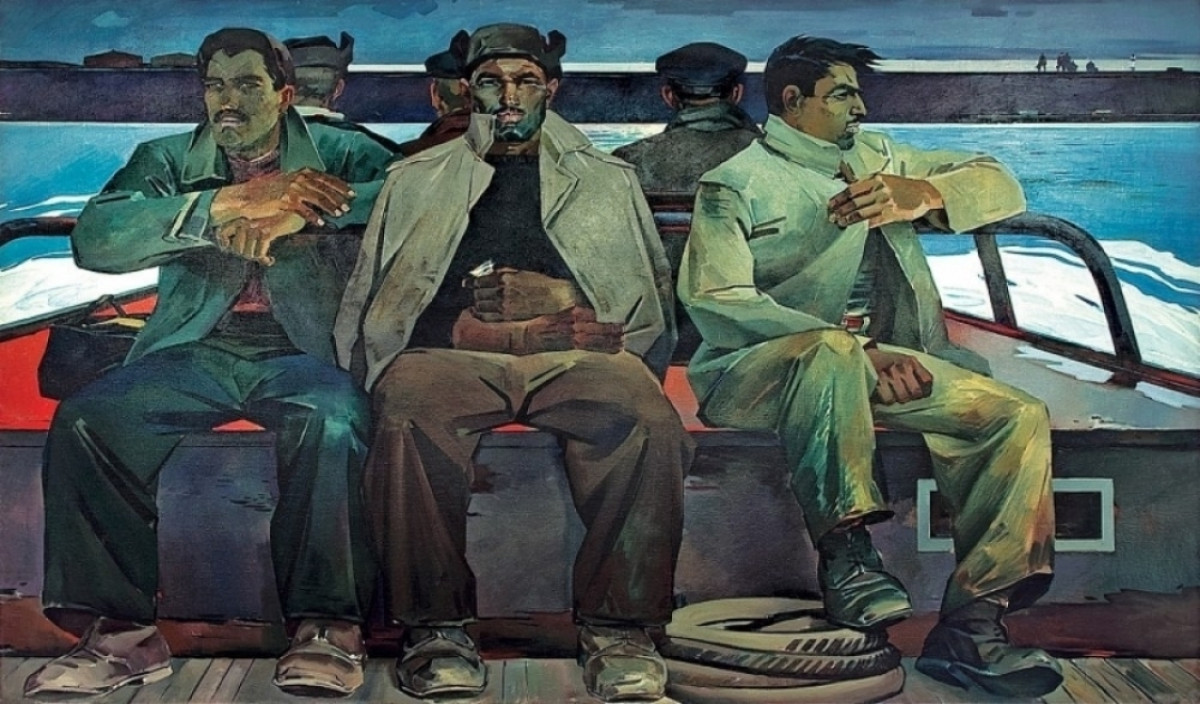
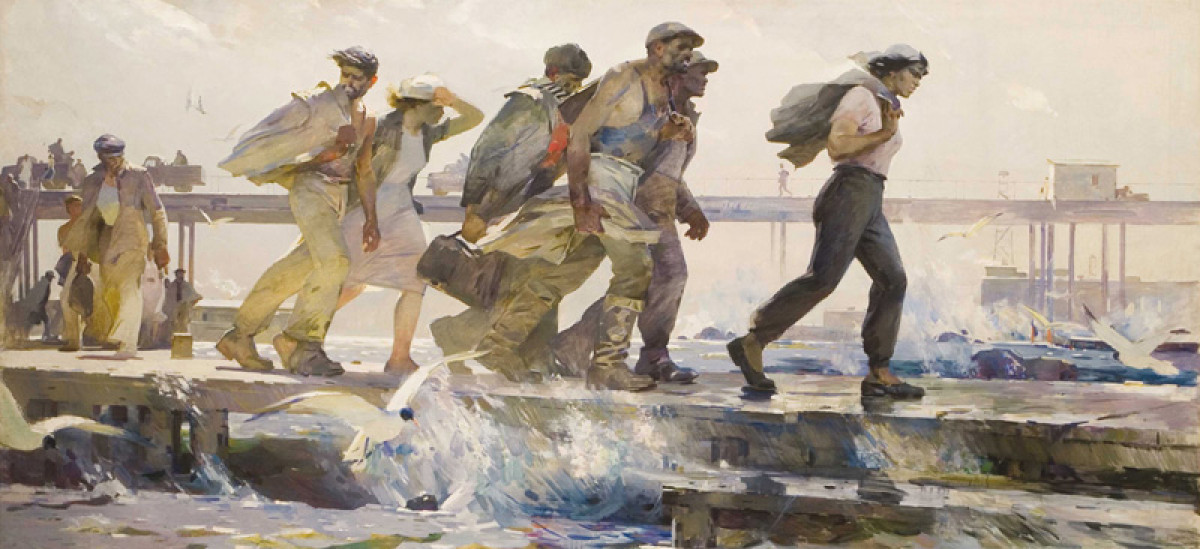
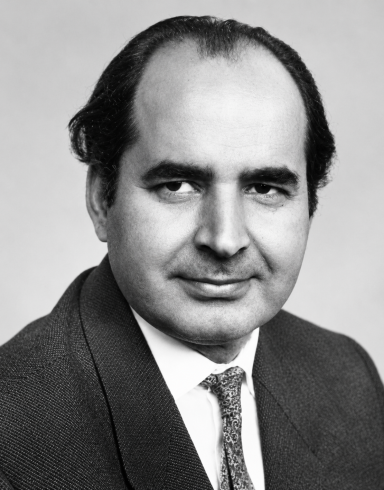
Born in Baku on 29 November 1928, Salakhov graduated from the Azim Azimzade Baku Art School in 1950. He later studied at the Leningrad Higher School of Art and Industry and, from 1951 to 1957, at the V. I. Surikov Moscow State Institute of Fine Arts. Among the important early works of his career are “The Wave” and “The Oil Derrick” (1955), as well as “Those Returning from the Shift”, presented as his diploma work in 1957.
A VISION THAT BEGAN IN BAKU
Baku played an important role in Salakhov’s formation as an artist. The industrial life of the city, the Caspian Sea, the landscape of Absheron and the daily work of oil workers became recurring subjects in his art.
From the mid-1950s, the theme of labour began to occupy an increasingly important place in his work. Yet Salakhov was not interested merely in depicting industrial environments. His attention was directed towards the people who worked within them. In works such as “Those Returning from the Shift”, “The Morning Train”, “Reservoir Park” and others, he portrayed oil workers in the midst of their everyday lives.
These works convey a sense of fatigue, responsibility and restraint. Without concealing the difficulty of labour, Salakhov brought the human presence behind it to the forefront.
“THE SEVERE STYLE” — A NEW LANGUAGE OF PAINTING
During the 1960s, Tahir Salakhov’s work became closely associated with what came to be known as the “Severe Style”. In his paintings, this approach was expressed through restrained compositions, expressive contours and strong contrasts of colour.
Salakhov moved away from excessive detail, constructing figures on a larger and clearer scale and using a deliberately limited palette. The contrast between dark and light tones gave his works a serious and powerful visual character.
This approach is particularly evident in his paintings devoted to oil workers. By presenting them in a simple, restrained and monumental manner, Salakhov brought the weight of labour and the realities of everyday life into focus.
“TO YOU, HUMANITY!” — A NEW HORIZON
Created in 1961, “To You, Humanity!” occupies an important place in Tahir Salakhov’s artistic development. The work was first exhibited in Baku on 12 April of that year at a republican art exhibition. The date coincided with Yuri Gagarin’s first flight into space.
Through the theme of space, the painting conveys the excitement of a new era and the possibilities opening before humanity. Just as the worker had been at the centre of Salakhov’s earlier paintings, here his attention turns to the individual standing before a major historical event.
The subject changes, but Salakhov’s central interest remains: the relationship between the individual and his or her time.
PORTRAITS: FROM LIKENESS TO CHARACTER
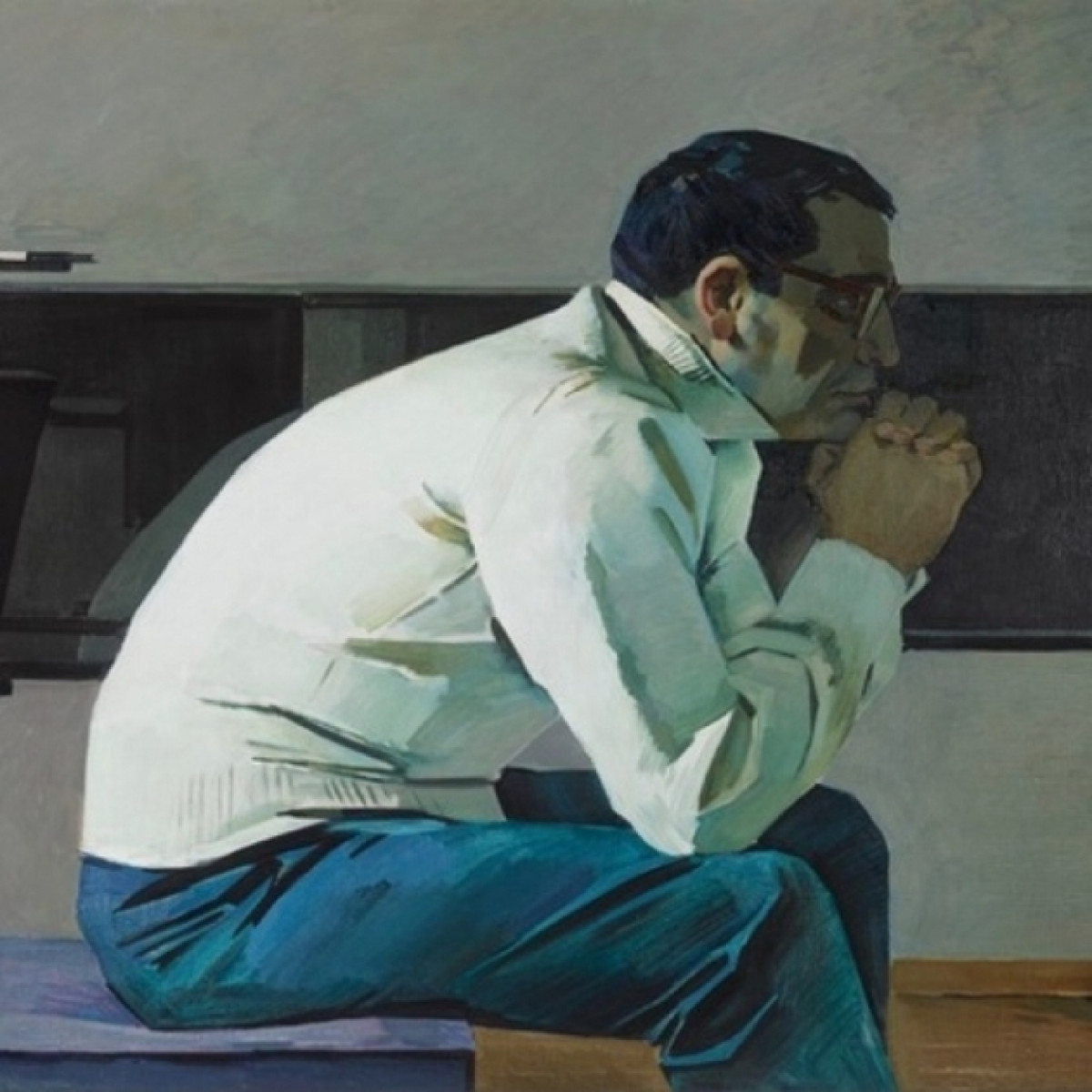
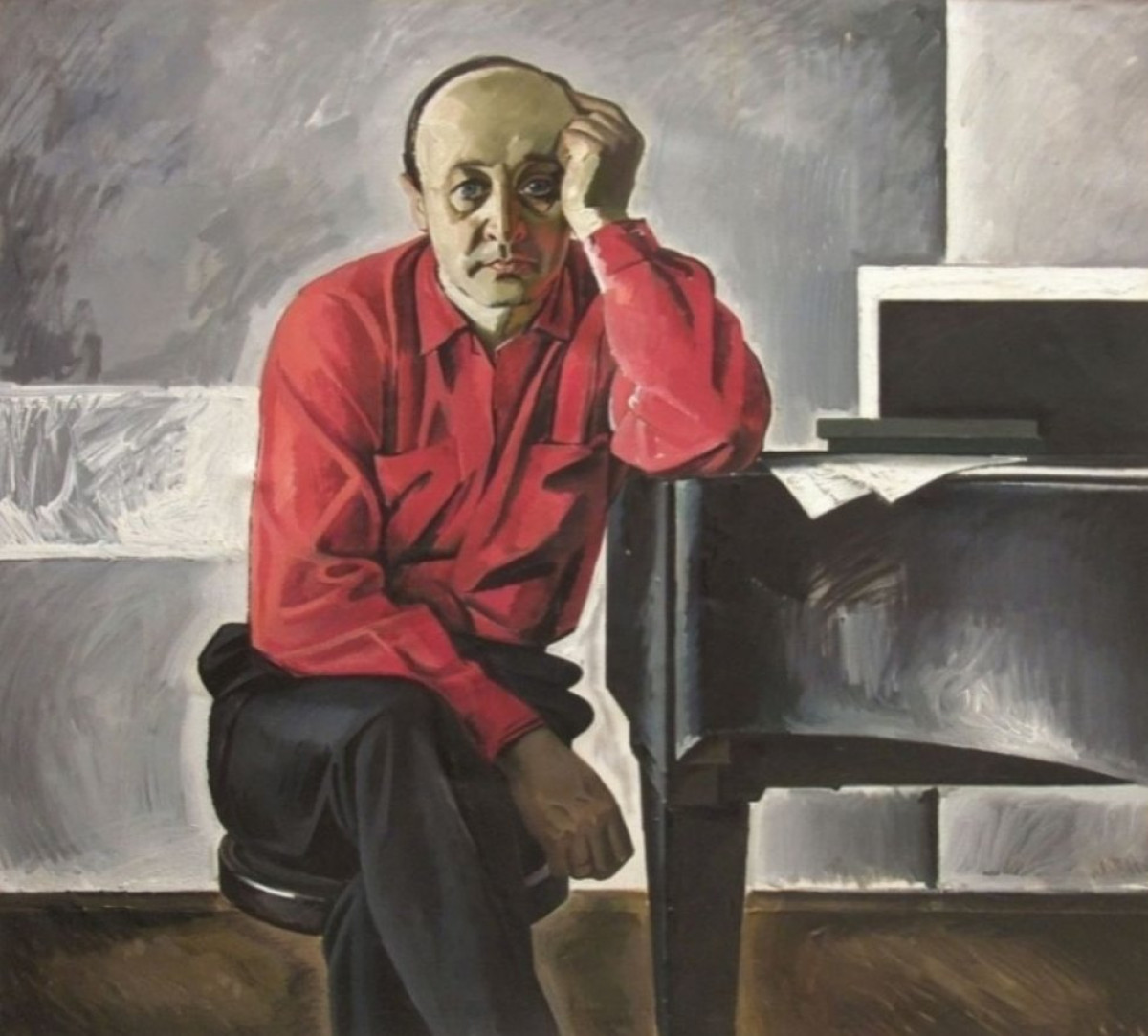
Portraiture occupies a special place in Salakhov’s work. In portraits of figures such as Gara Garayev, Dmitri Shostakovich, Fikret Amirov and Rasul Rza, the artist sought more than physical resemblance. His aim was also to convey the character and intellectual world of the sitter.
His 1960 portrait of Gara Garayev is a notable example. Salakhov became more familiar with the composer’s creative world by attending his rehearsals and performances and listening to his music. This preparation allowed the portrait to communicate not only Garayev’s appearance but also something of his artistic personality.
A similar approach can be seen in the portrait of Dmitri Shostakovich, created in 1976. For Salakhov, a portrait was not simply an image of a person; it was a way of creating an understanding of that person.
THE CASPIAN SEA AND ABSHERON
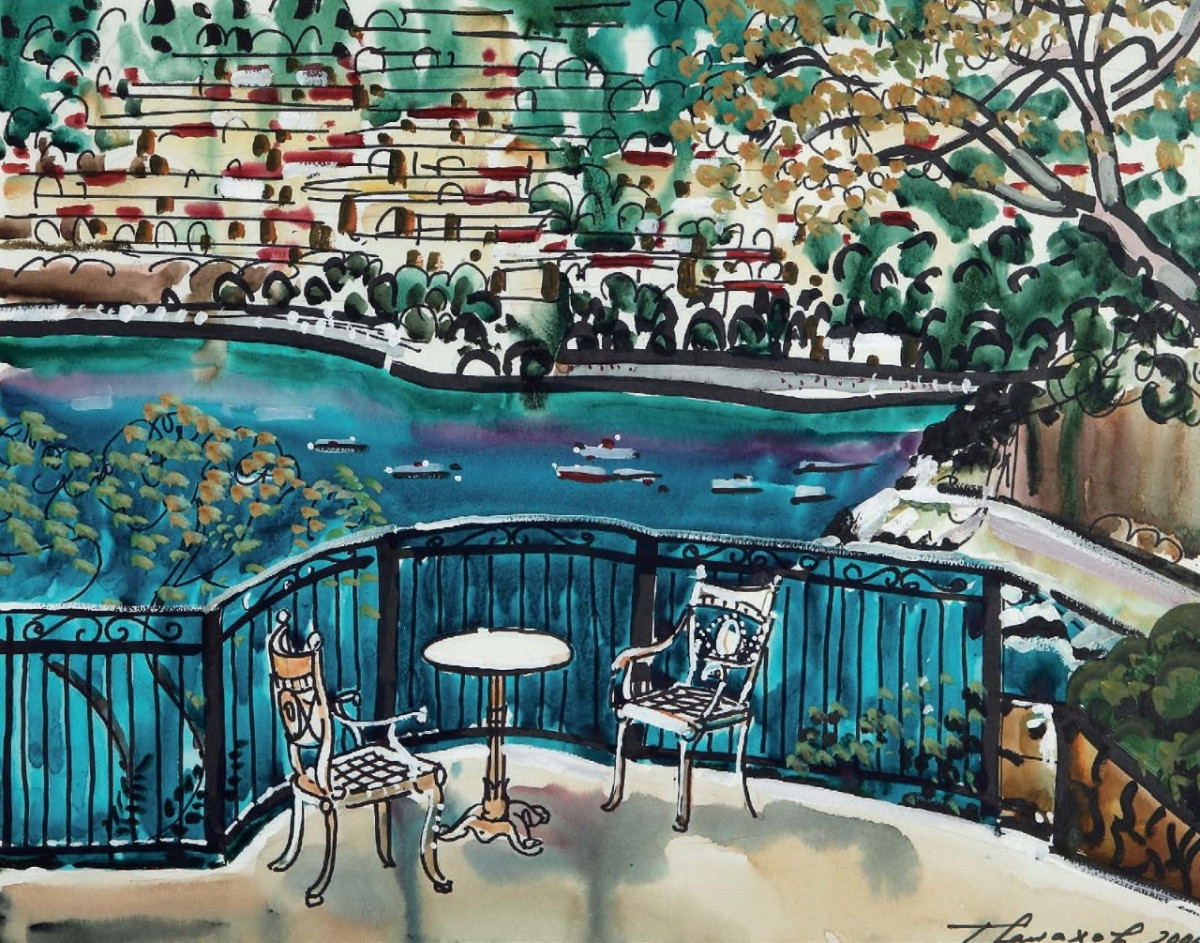
The Caspian Sea and Absheron occupy an important place in Salakhov’s artistic world. For him, this landscape was both the environment he had known since childhood and a subject to which he returned throughout his career.
In “Caspian Night”, the nocturnal sea creates a calm and somewhat melancholic atmosphere. The contrast between dark and light tones, expressive lines and the broad horizon form some of the work’s defining characteristics.
Salakhov’s relationship with the Caspian changed over the years, yet the sea remained a living subject in his painting. The light, wind, stone and industrial landscapes of Absheron also became important sources for his sense of colour and visual language.
THE ARTIST AND THE TEACHER
Alongside painting, Salakhov was also active as an educator. At different periods, he taught at the Azerbaijan State Institute of Theatre and at the V. I. Surikov Moscow State Institute of Fine Arts. During the 1980s, he headed the Department of Painting and Composition at the Surikov Institute.
One of the central aspects of his teaching was the importance of allowing a young artist to find an individual path. Salakhov’s own career provides an example of this approach: although he addressed the subjects of his time, he presented them through his own vision and artistic language.
A LASTING TRACE IN ART
Tahir Salakhov died in Berlin on 20 May 2021 at the age of 92. Throughout his career, the range of his subjects expanded—from oil workers to space, from the landscapes of Absheron to portraiture.
What connects this diversity is his attentive observation of life. Rather than simply reproducing the people, places and events he encountered, he transformed them through his own artistic language.
In his oil-worker paintings, labour comes to the forefront; in his portraits, character; in his depictions of the Caspian, his connection to his native landscape; and in his space-themed works, the excitement of a new era.
This continuous search is what gives coherence to his artistic legacy: observing his time, identifying its essential subjects and expressing them through a distinctive language of colour, line and composition.
Art Space Gallery MEDIA