A journey of artistic creation extending from Baku to India, from Azerbaijani life to the imaginative world of classical literature
Observations That Began in Baku
Mikayil Huseyn oglu Abdullayev was born in Baku on 19 December 1921. His interest in painting emerged at an early age. In 1935, he began studying at the Azerbaijan Art College, where he attended Sattar Bahlulzade’s class and graduated in 1939.
He later continued his education at the V. I. Surikov Moscow State Art Institute. There, his artistic formation took place within an environment shaped by figures such as Igor Grabar, Sergey Gerasimov, Aristarkh Lentulov and Grigory Shegal.
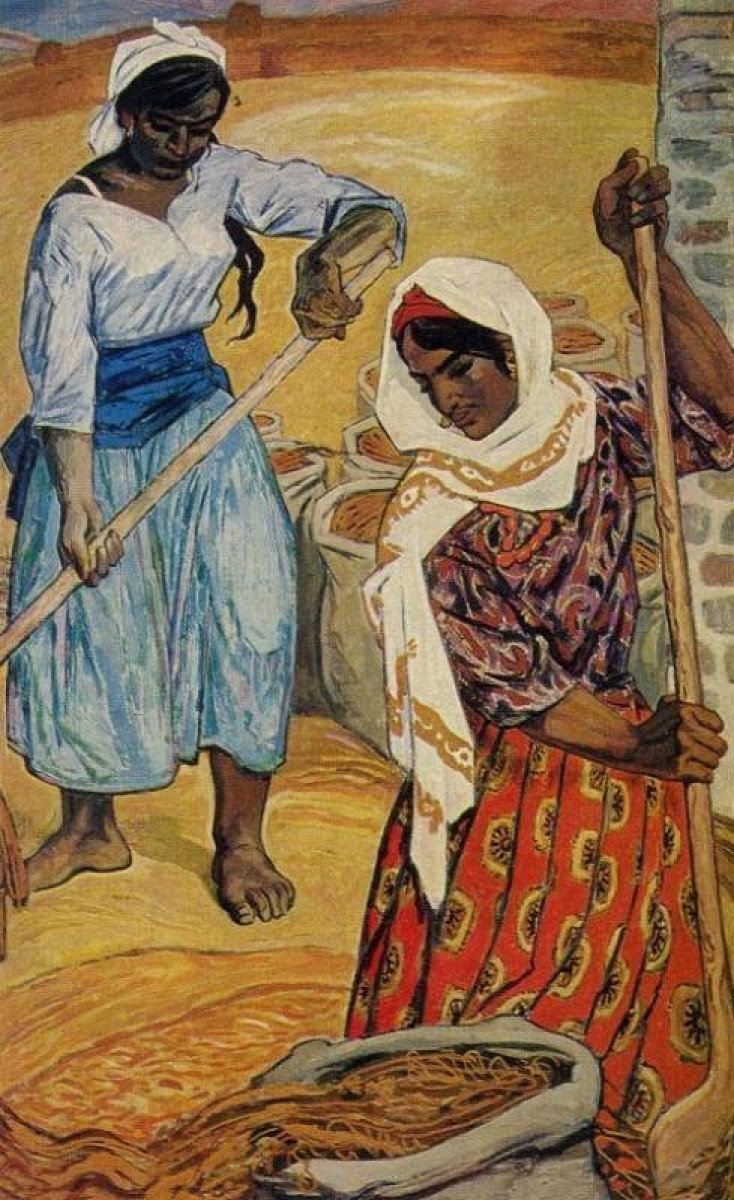
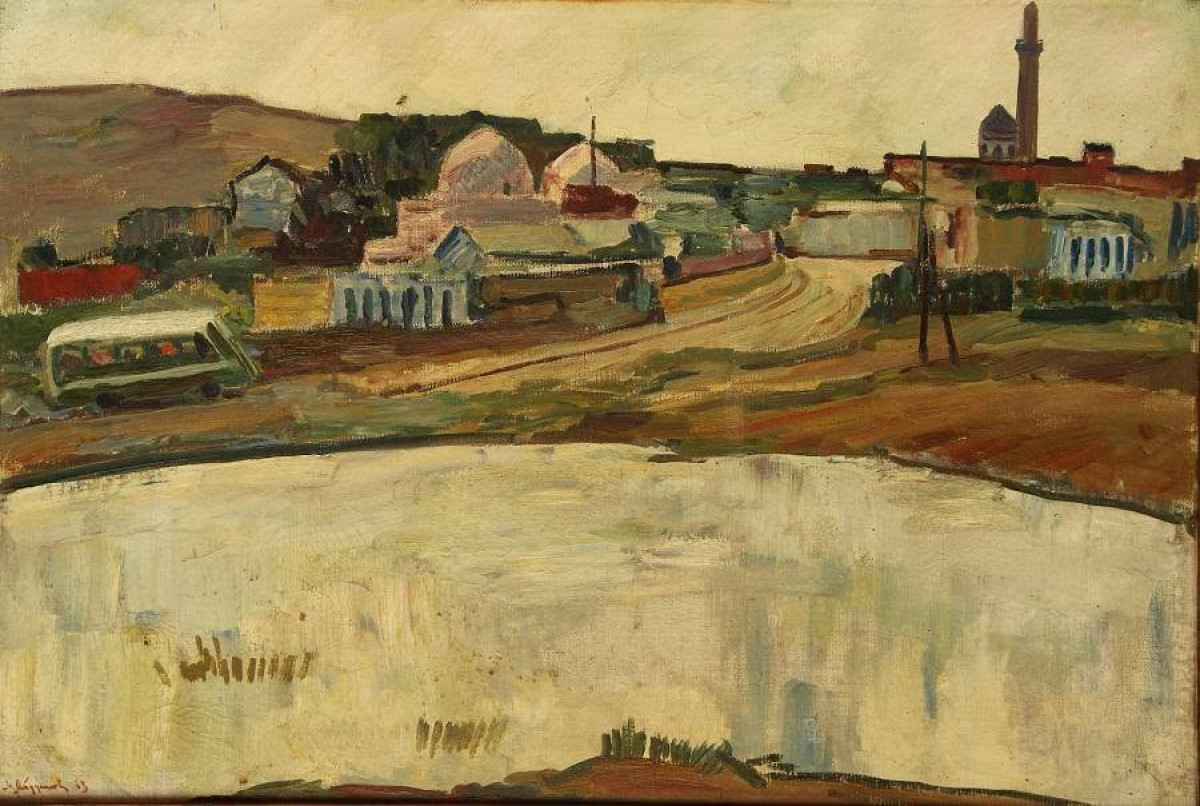
During his early years, Absheron landscapes, scenes of everyday life, historical subjects and literary themes occupied an important place in his work. Paintings such as “The Invaders”, “Hasan bey Zardabi at Moscow University” and “Advice”, based on Nizami Ganjavi’s “Iskandarnameh”, reflect the range of subjects that attracted his attention during this period.
Painting was gradually becoming a broad field in which different subjects and forms of expression could be explored.
Mingachevir: Depicting a New City
In the late 1940s and early 1950s, Mingachevir began to occupy a particular place in Mikayil Abdullayev’s work. The construction of the new city, labour and everyday life became among the subjects he observed closely.
His 1951 painting “Builders of Happiness” places the process of construction at the centre of the composition. Workers, a young couple and the emerging city in the background are brought together within a single visual structure.
Mingachevir is not merely a setting in these works. The city itself becomes part of a changing life and a newly forming social environment.
Portraits: From the Individual to the Image
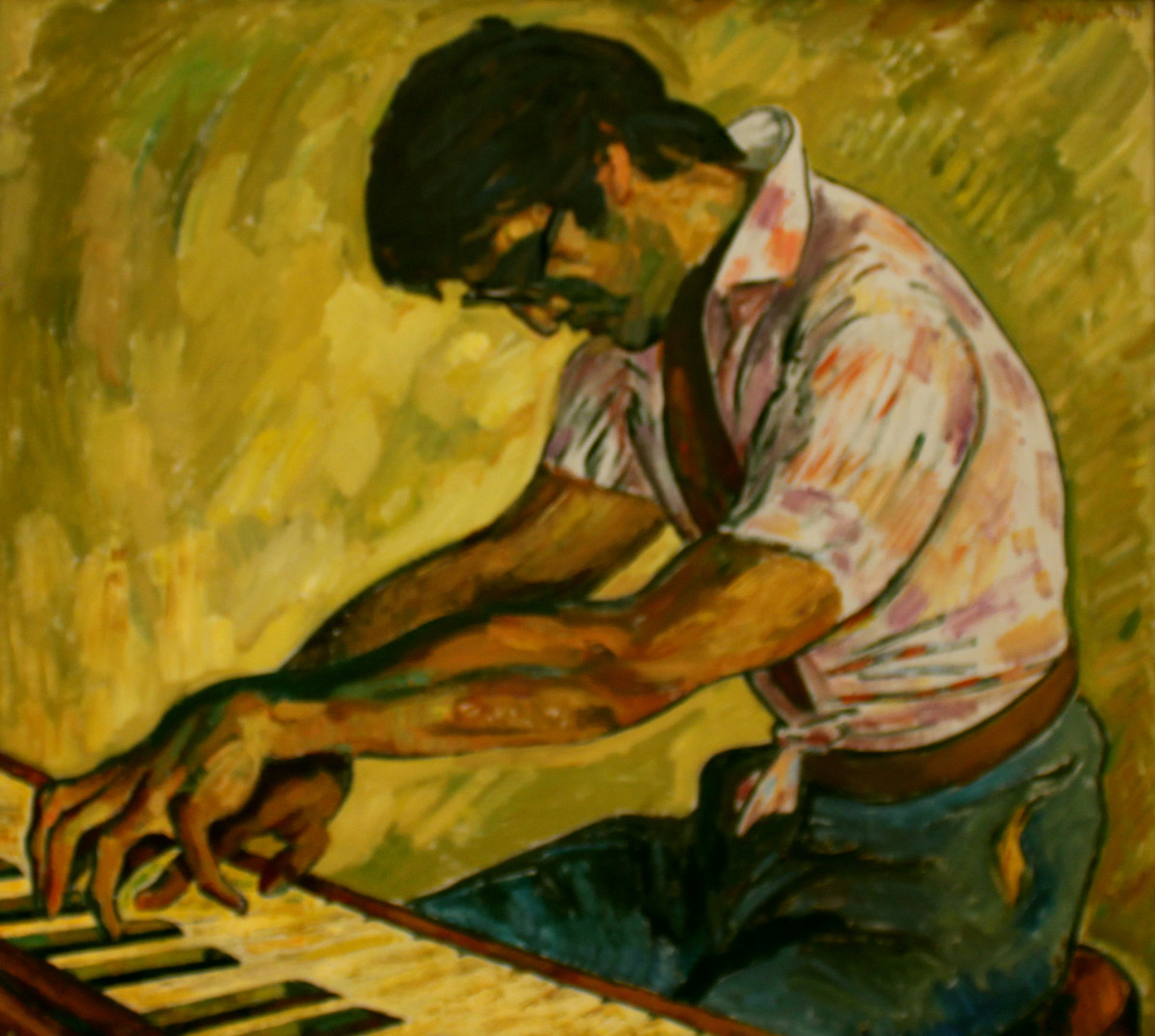
Portraiture was another important direction in Mikayil Abdullayev’s artistic practice. Figures such as Uzeyir Hajibeyli, Jafar Jabbarly, Samad Vurgun, Imadaddin Nasimi, Molla Panah Vagif, Ashig Alasgar and Mirza Fatali Akhundzadeh occupy a significant place among the historical and cultural personalities he portrayed.
In these portraits, the central concern is not simply physical likeness. The artist seeks to connect the human figure with his creative legacy, intellectual world and cultural identity.
His approach to the image of Imadaddin Nasimi is particularly notable in this respect. The portrait is constructed not only as the likeness of a historical individual, but also as an image carrying a particular spiritual and intellectual dimension.
A Line Emerging from Fuzuli
Classical Azerbaijani literature forms a distinct strand within Mikayil Abdullayev’s work. Translating literary texts into the language of visual art opened different artistic questions for him.
His 1972 work “Lovers. Illustration for Muhammad Fuzuli’s poem ‘Leyli and Majnun’” is one example of this direction. Executed in tempera on silk and cardboard, the work presents Fuzuli’s poetic world through visual imagery.
For the artist, the subject of “Leyli and Majnun” was more than an illustration of a literary narrative. The central issue was the transformation of words into images and of literary text into visual composition.
India: Encountering a Distant Culture
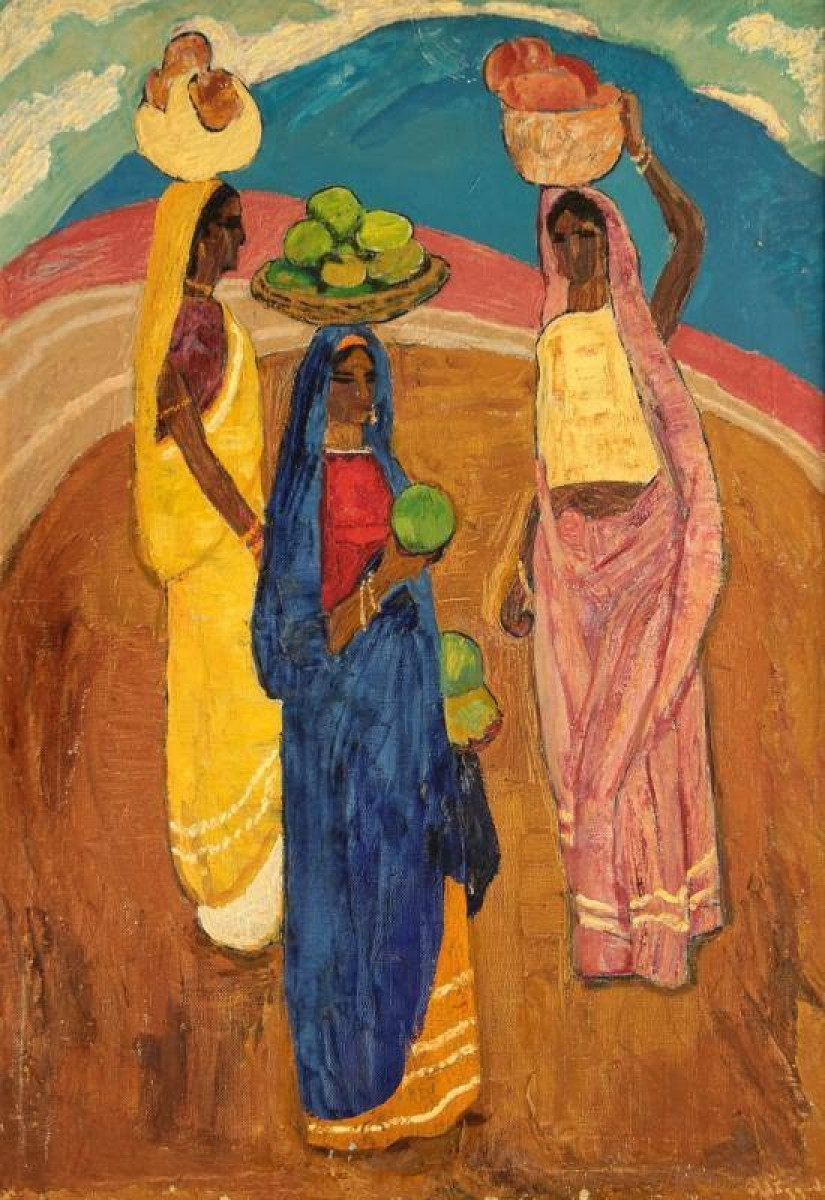
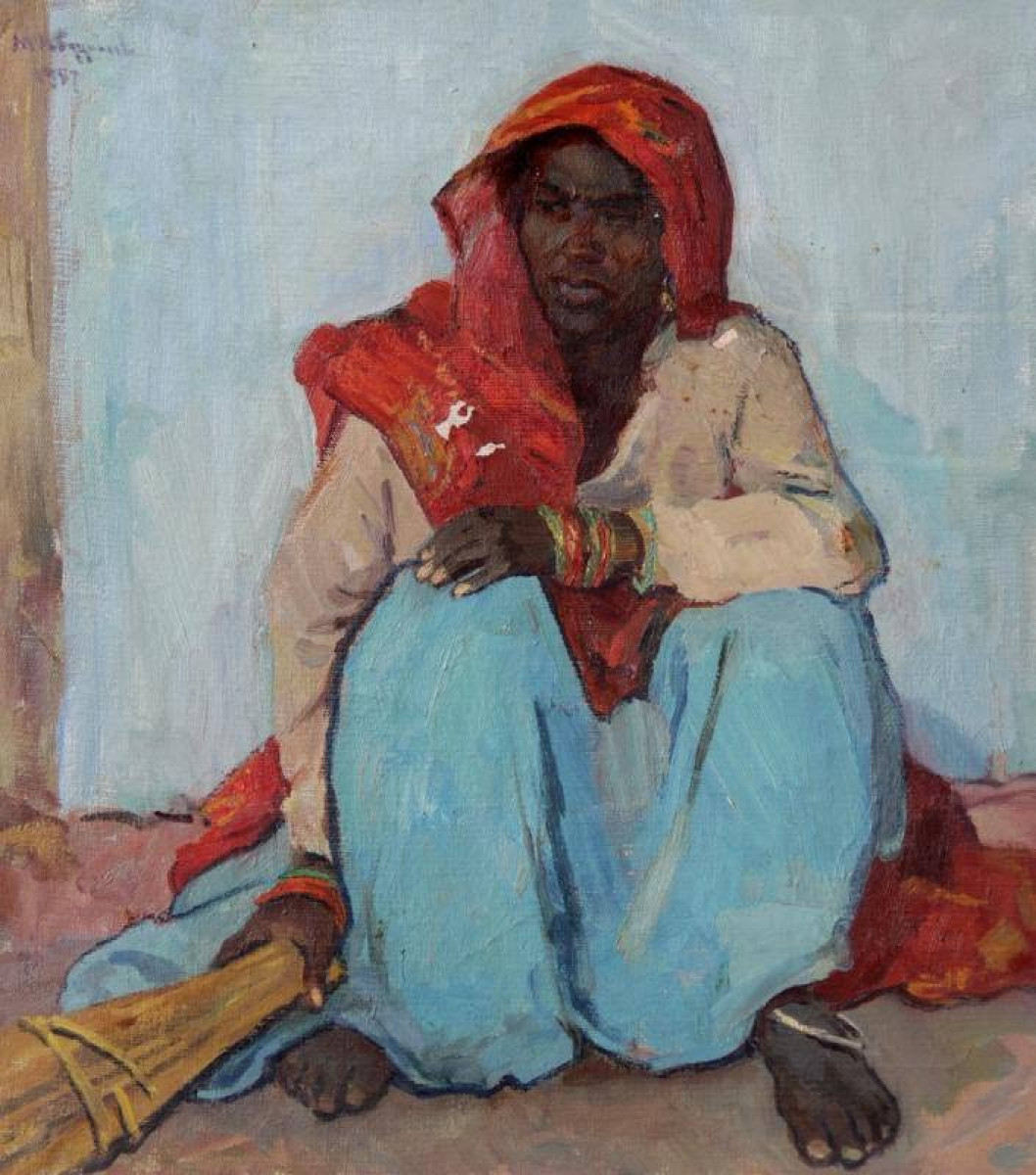
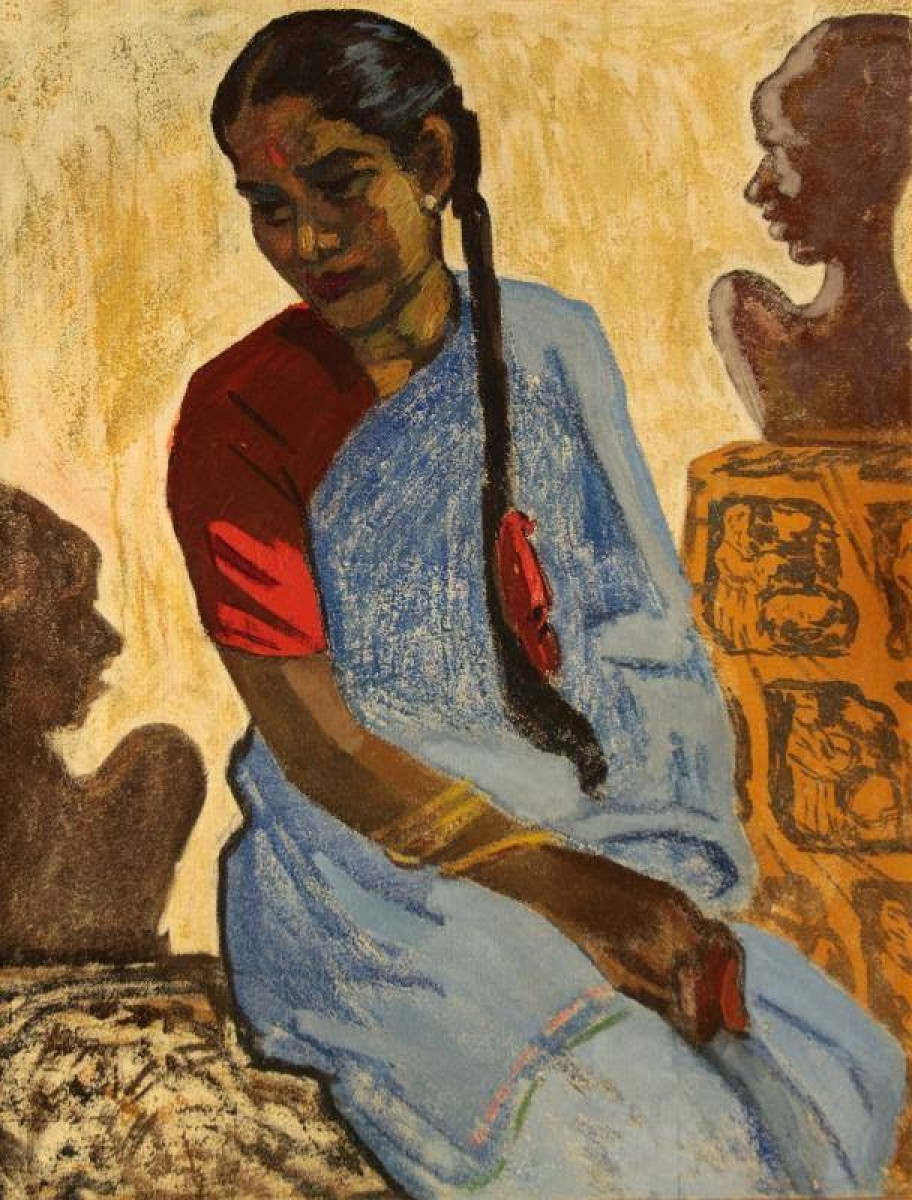
In 1957, Mikayil Abdullayev travelled to India, where he stayed for approximately three months. The resulting “India Series” became an important stage in his artistic development.
Works such as “Student Girl from Calcutta”, “Bengali Girls”, “Little Chandra”, “Women of Jaipur”, “On the Banks of the Ganges”, “Sweeper Champa”, “Those Returning from Work”, “In Distant Jaipur” and “Women of Rajasthan” record his observations of Indian people, everyday life, clothing, urban and architectural environments, and elements of folk culture.
The significance of this journey was not simply geographical. In India, the artist encountered a different social and cultural environment directly, observed it closely and translated those observations into his own artistic language.
Materials gathered during journeys to Italy, Hungary, Afghanistan and other countries also contributed to the expansion of the geographical range of his creative experience.
From the Page of a Book to the Walls of the City
Monumental art represents another important stage in Mikayil Abdullayev’s career. One of its best-known examples is the artistic design of Nizami Station of the Baku Metro.
Opened on 31 December 1976, the station features a mosaic portrait of Nizami Ganjavi in its interior. Eighteen panels based on themes from the poet’s “Khamsa” depict a range of literary scenes. The panels were created by Mikayil Abdullayev.
Here, the narratives of “Khamsa” no longer remain confined to the pages of a book. Literary images enter the everyday urban environment, bringing painting and architectural space together.
It Is Not the Geography That Changes, but the Range of Subjects
Looking at Mikayil Abdullayev’s work only as a chronological sequence does not fully reveal the character of his artistic journey.
Baku’s urban environment, the construction of Mingachevir, portraiture, the works of Fuzuli and Nizami, observations of India and monumental compositions may appear to be entirely different subjects. Yet each of them presented the artist with a different artistic challenge.
In this sense, his creative path is not simply a succession of changing subjects. It is a process through which different environments and worlds of imagery were absorbed and transformed through the language of painting.
A Creative Legacy Preserved in Documents
Mikayil Abdullayev’s artistic legacy survives not only in the works themselves, but also in publications, exhibition materials, catalogues, articles and reproductions devoted to his work.
A bibliographic publication prepared in 2022 systematizes books, exhibition and art catalogues, periodical materials, reproductions and other documents published about the artist between 1943 and 2021.
Such materials make it possible to follow Abdullayev’s artistic journey not only through individual works, but as a broader creative legacy formed over time.
A Final View
Seen as a whole, Mikayil Abdullayev’s artistic journey reveals how one painter entered different worlds through changing subjects and artistic challenges.
Baku and Azerbaijani life formed the environment of his early observations. Mingachevir became a subject of a new city and its construction. Portraiture focused attention on the human face and inner image. Fuzuli and Nizami brought the challenge of translating literary texts into visual form. India introduced direct observation of a different social and cultural environment. At Nizami Station, the monumental compositions demonstrate a stage in which painting became integrated with architectural space.
Abdullayev’s career is therefore more than a sequence of individual works. It is a long process in which subjects, environments and artistic questions continually changed, while the line of the artist’s observation and search remained continuous.
His changing horizons can be seen precisely in these transitions.
Art Space Gallery MEDIA
Other news