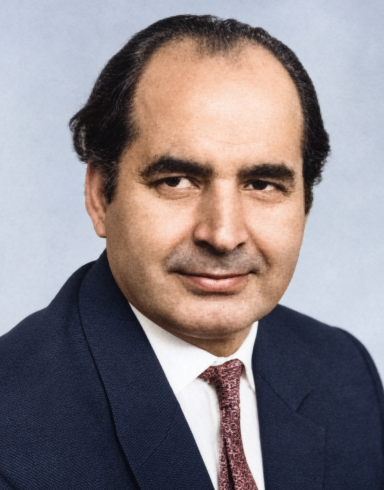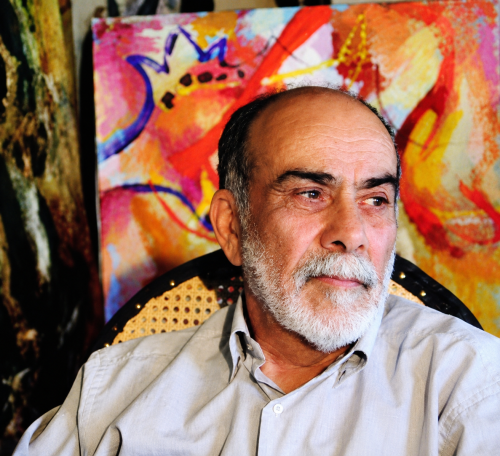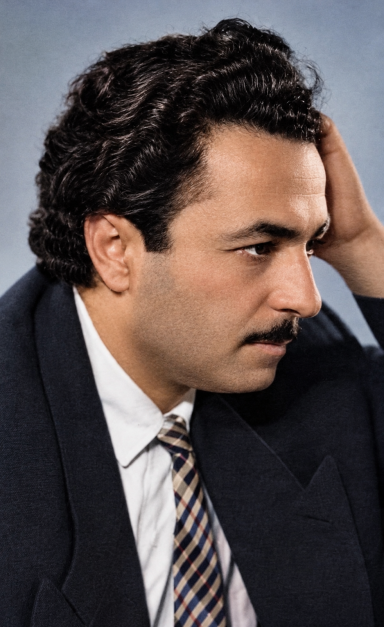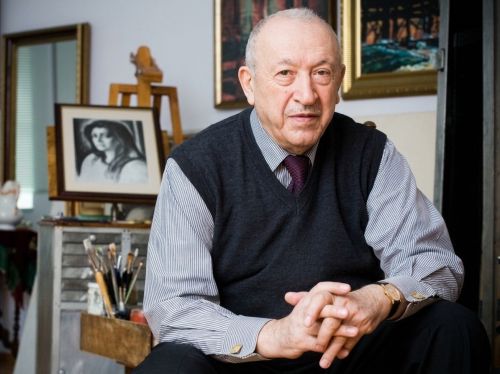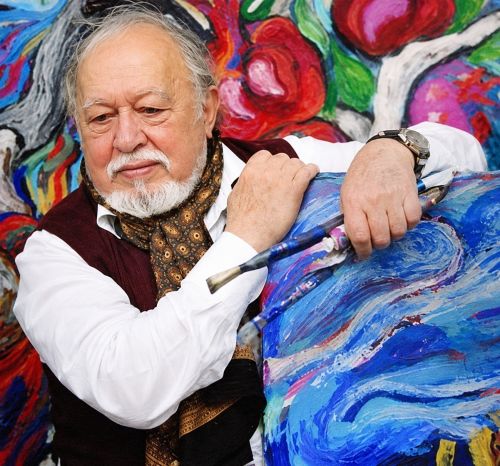
Born in Baku on 7 August 1930, Toghrul Farman oglu Narimanbekov graduated from the A. Azimzadeh Azerbaijan Art School in 1950 and the Lithuanian State Art Institute in Vilnius in 1955. Elected to the Union of Artists of Azerbaijan in 1955, he received the titles of Honoured Artist of the Azerbaijan SSR in 1964, People’s Artist of the Azerbaijan SSR in 1967 and People’s Artist of the USSR in 1989. He was awarded the State Prize of the Azerbaijan SSR in 1974 and the USSR State Prize in 1980, as well as the Istiglal Order in 2000 and the Sharaf Order in 2010. In 2002, he became a Corresponding Member of the Russian Academy of Arts. Working across painting, monumental art, theatre design, book illustration and music, Narimanbekov developed a distinctive artistic language that brought several forms of visual expression into a coherent creative world.
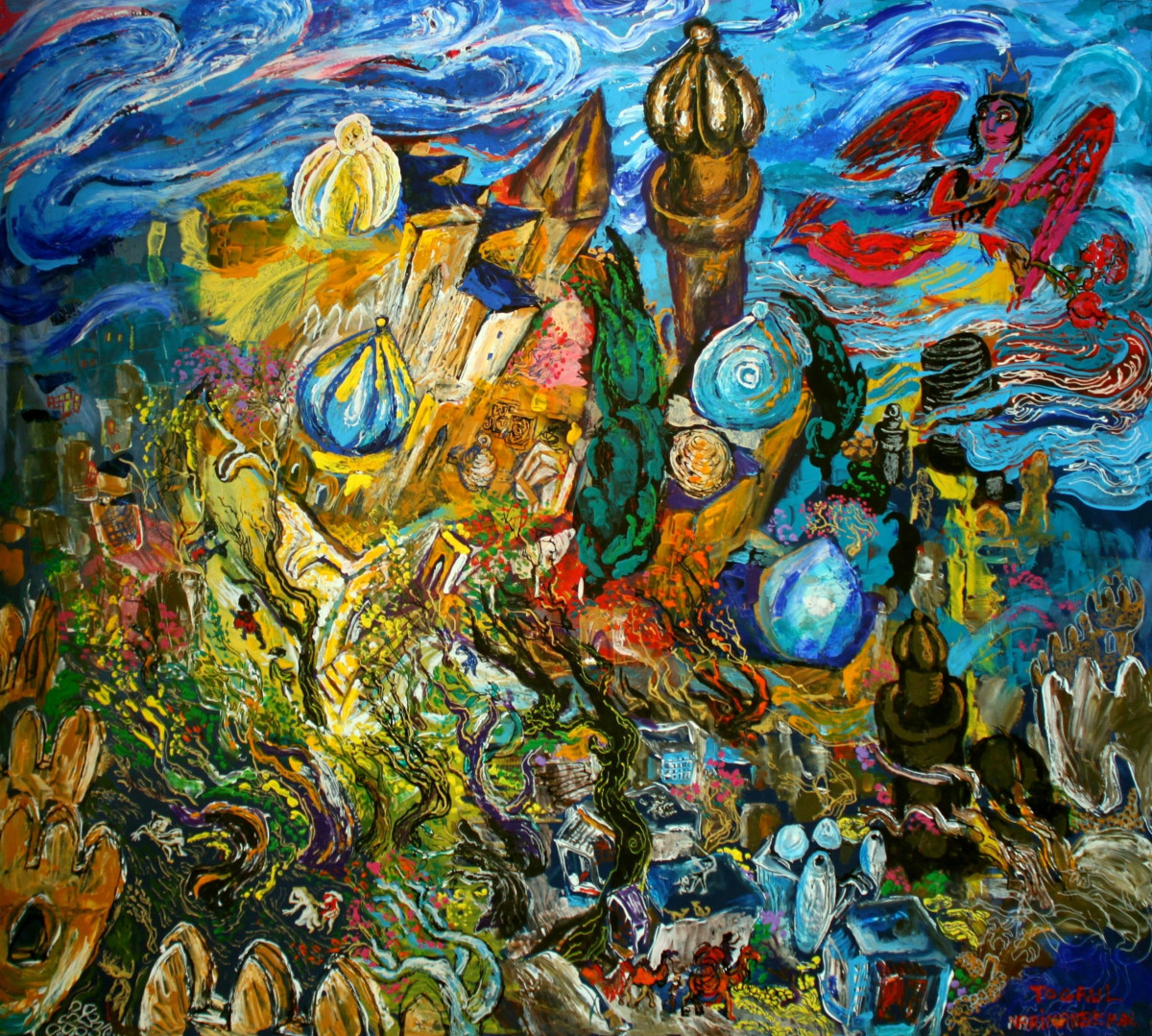
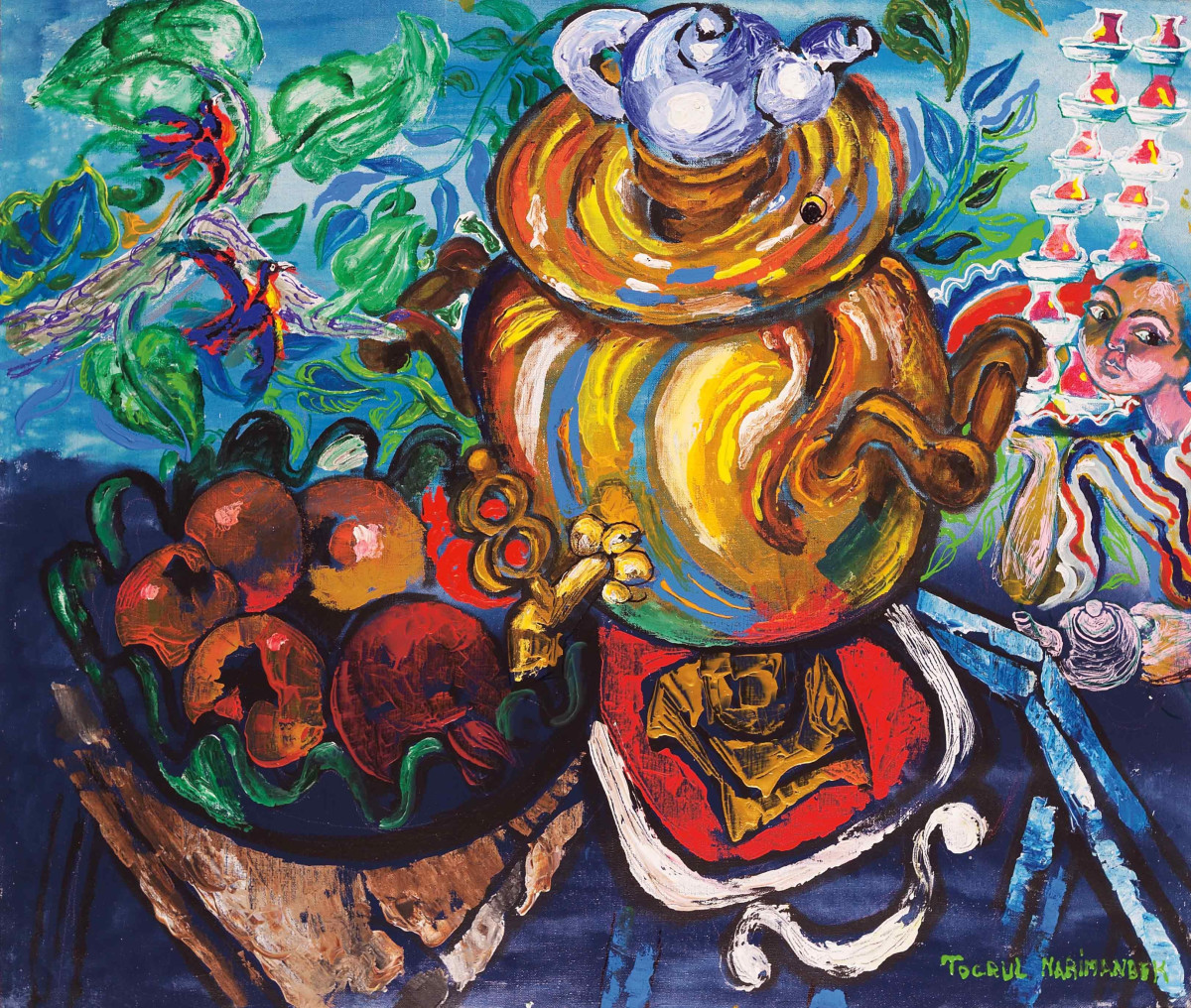
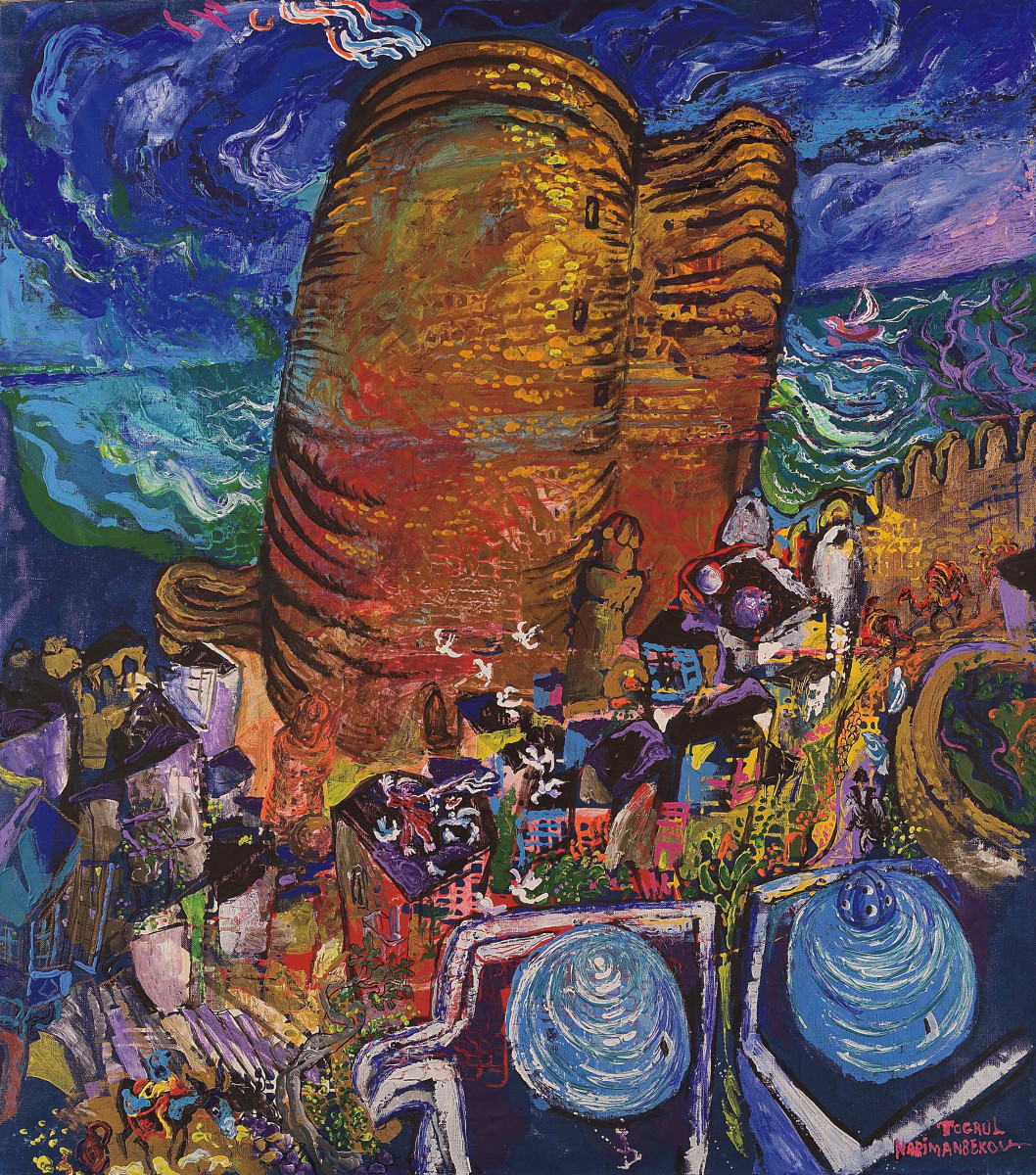
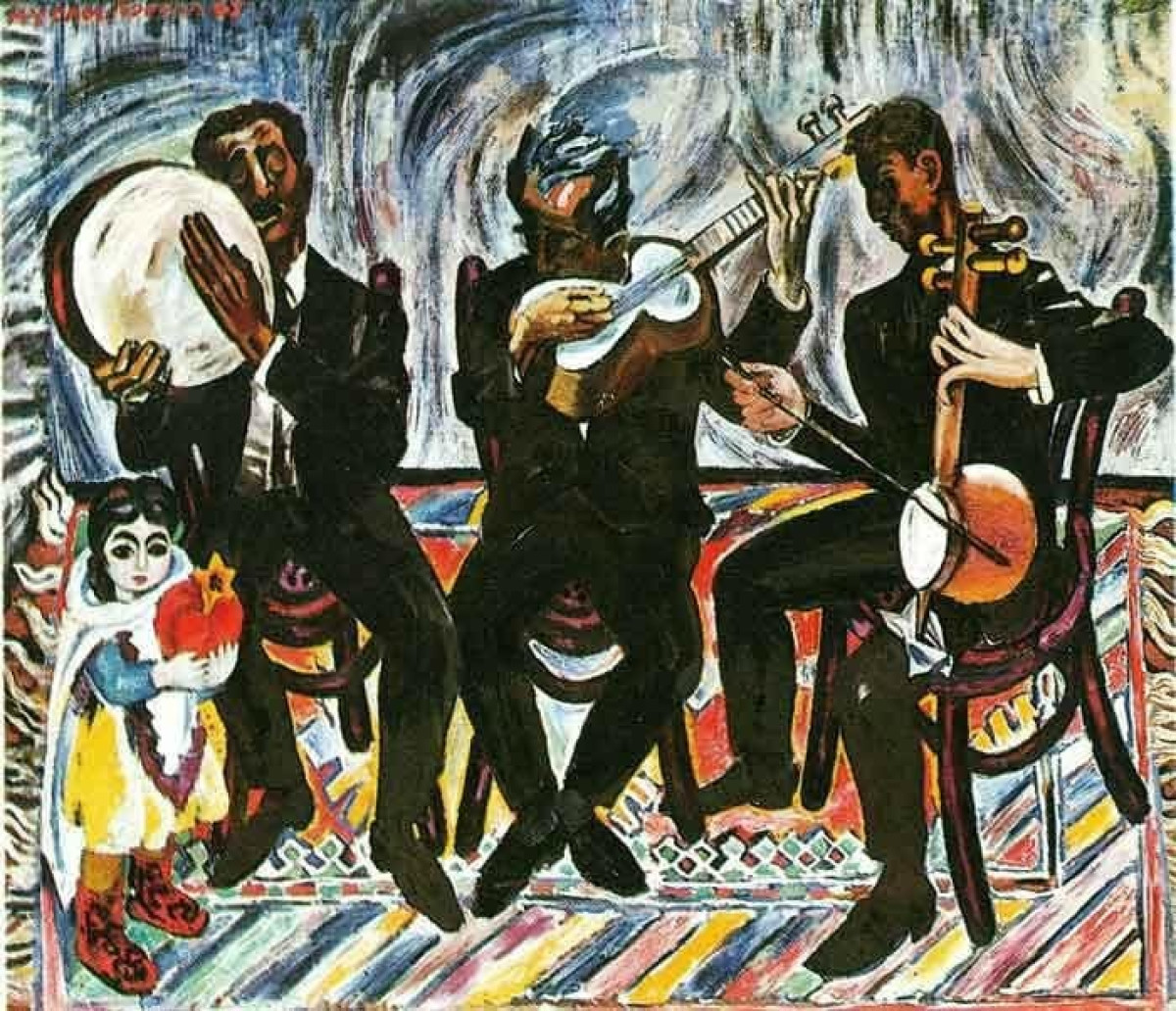
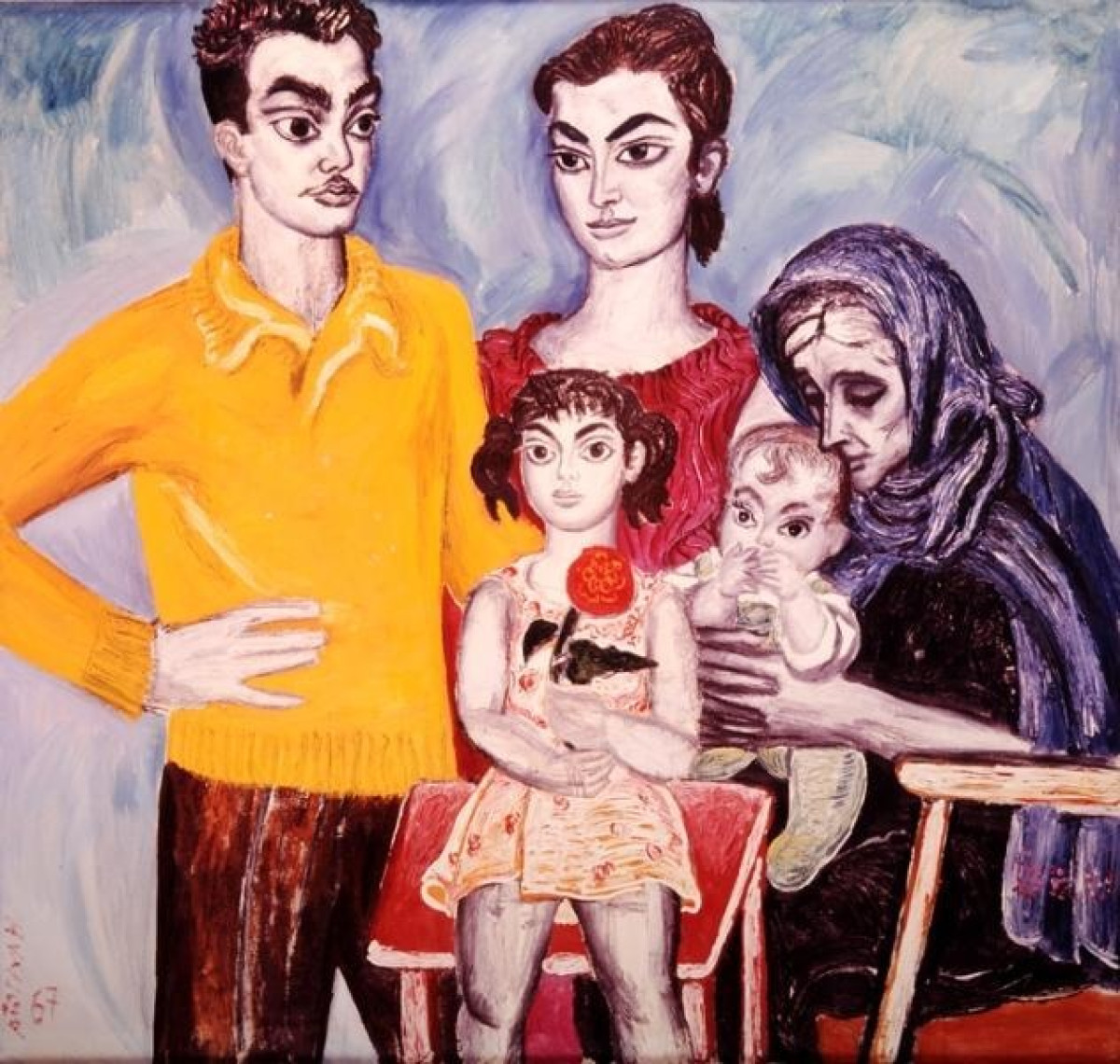
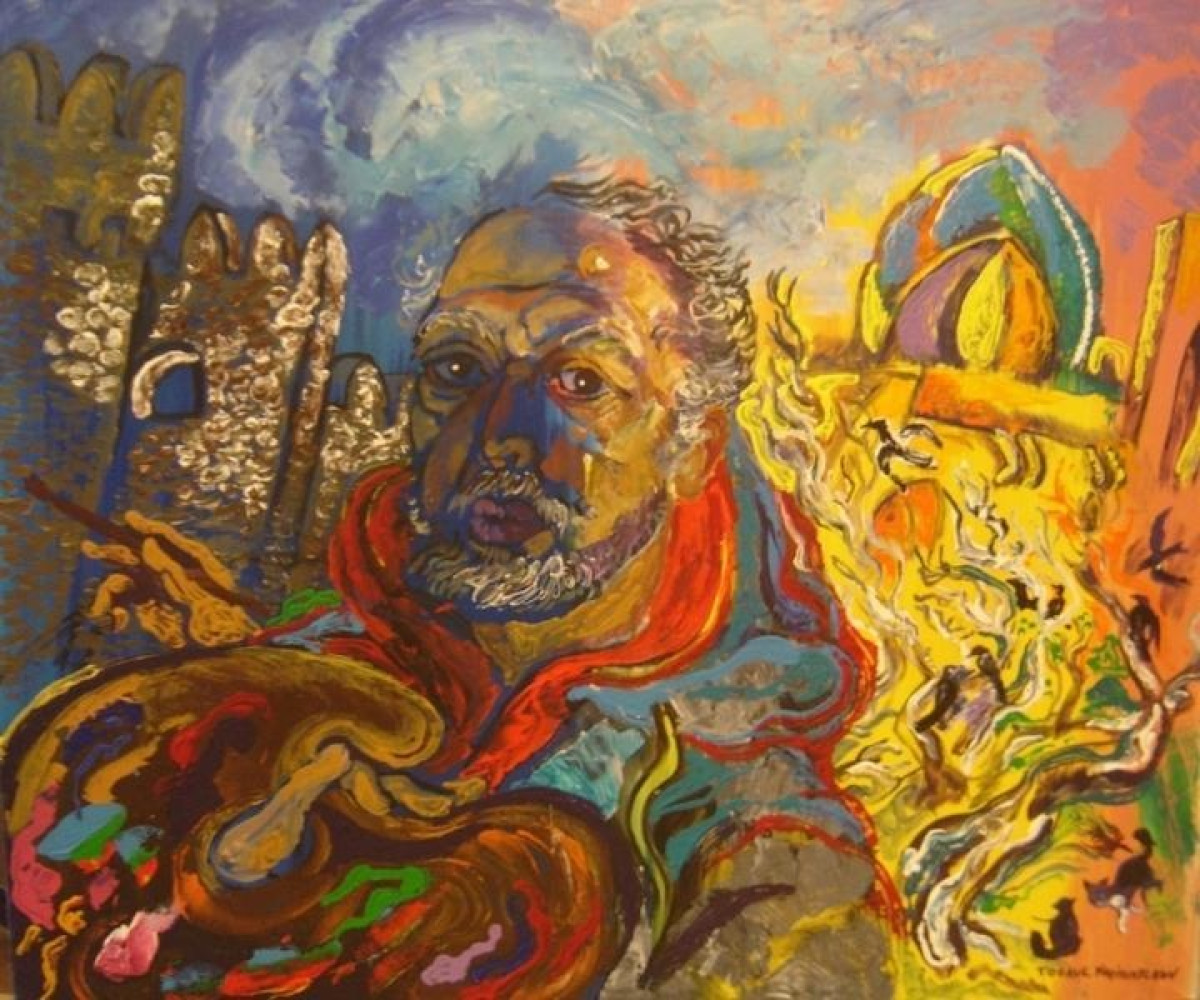
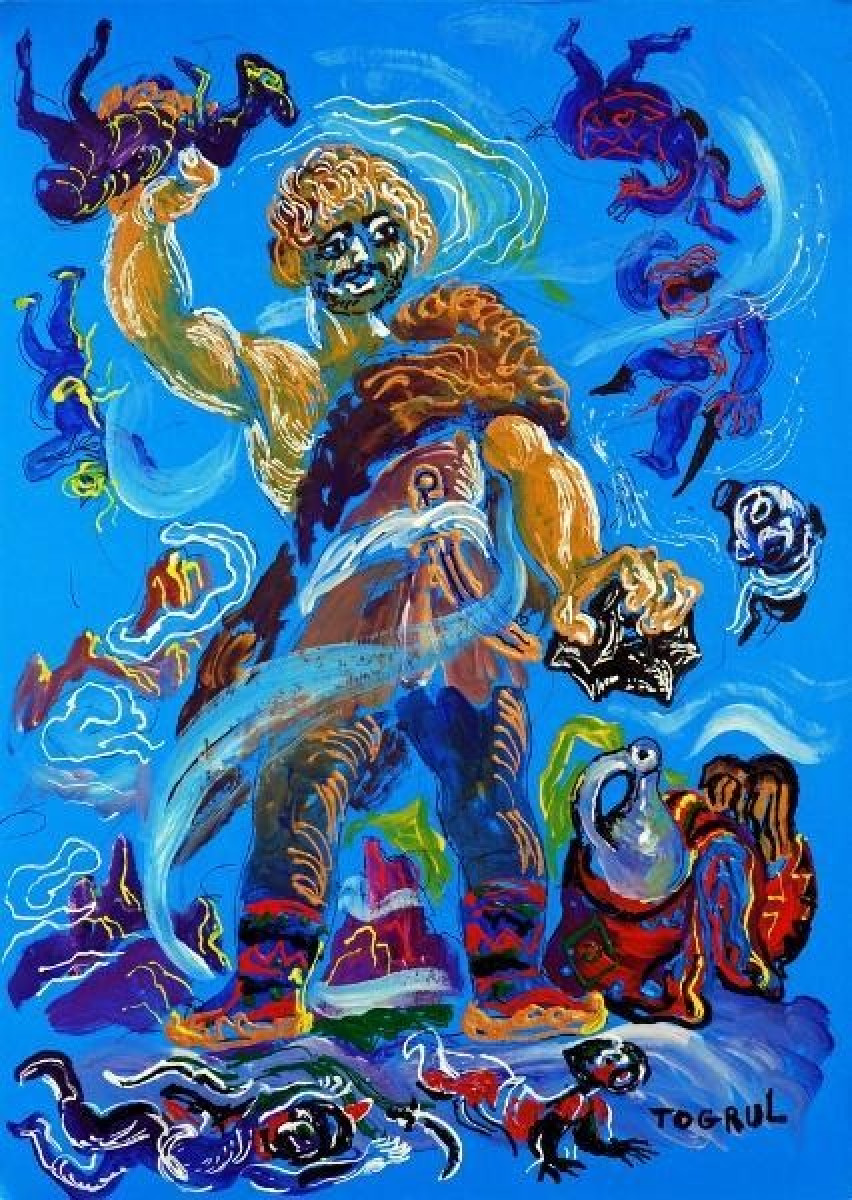
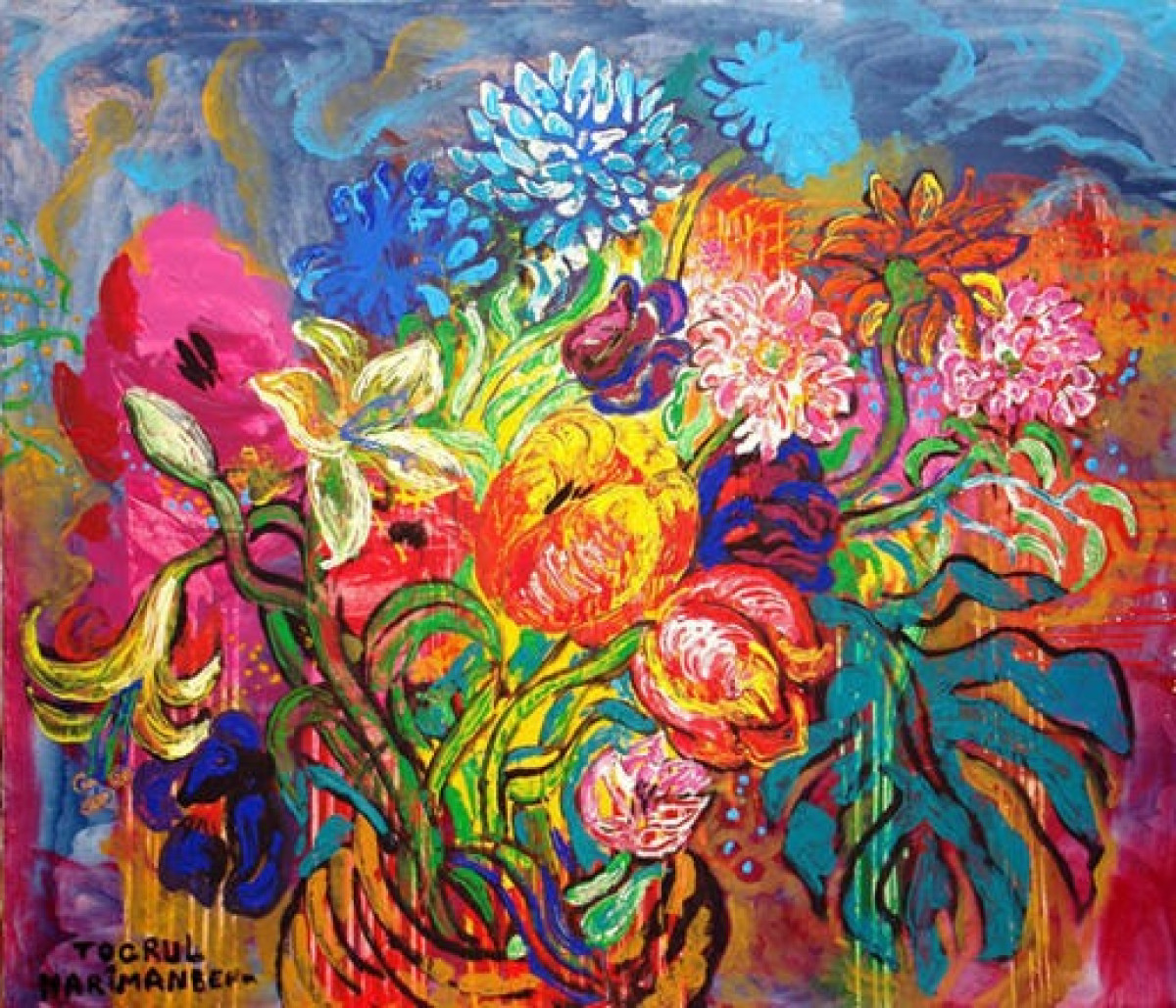
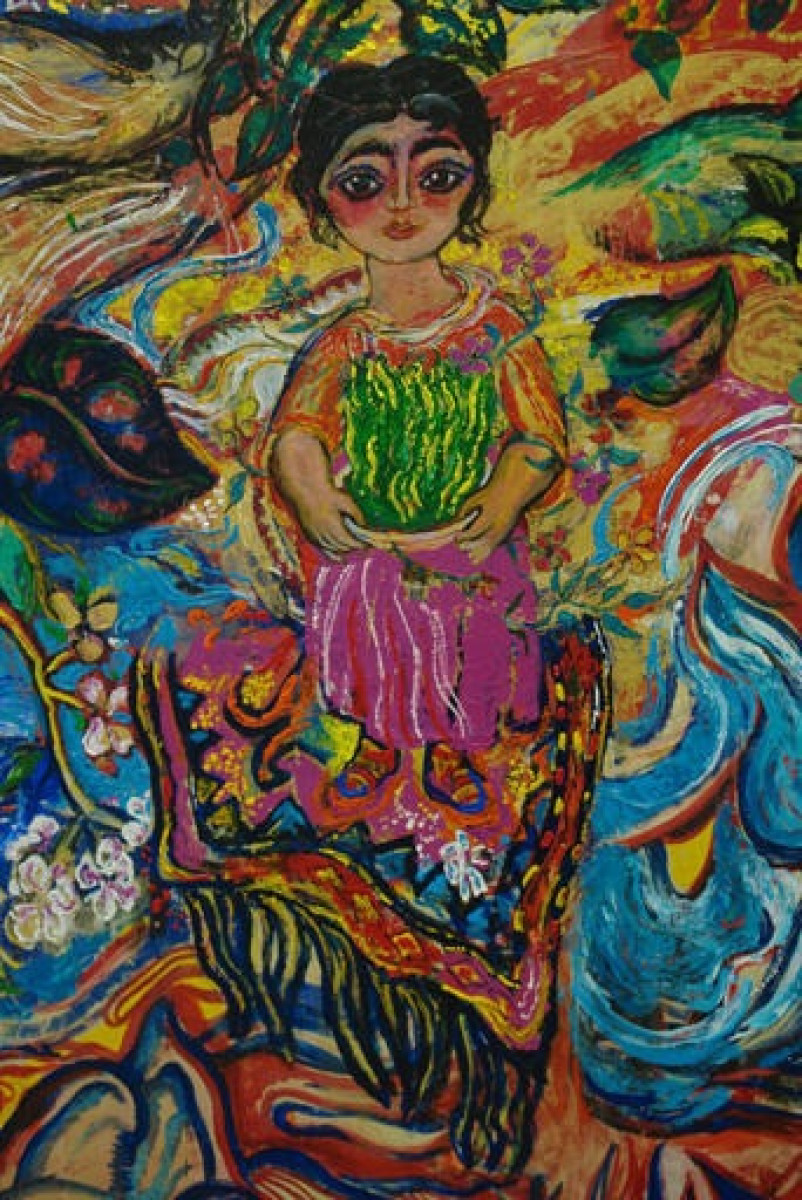
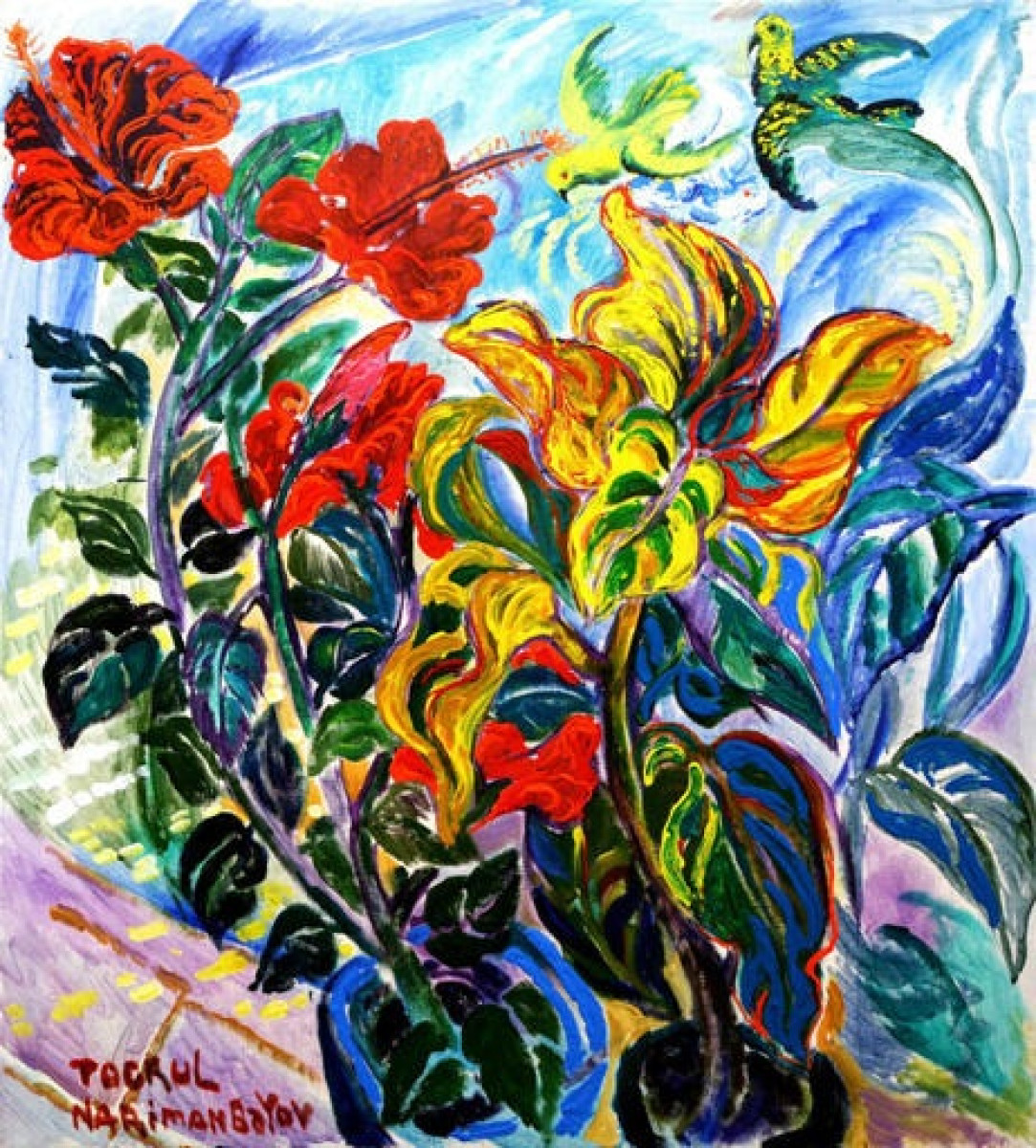
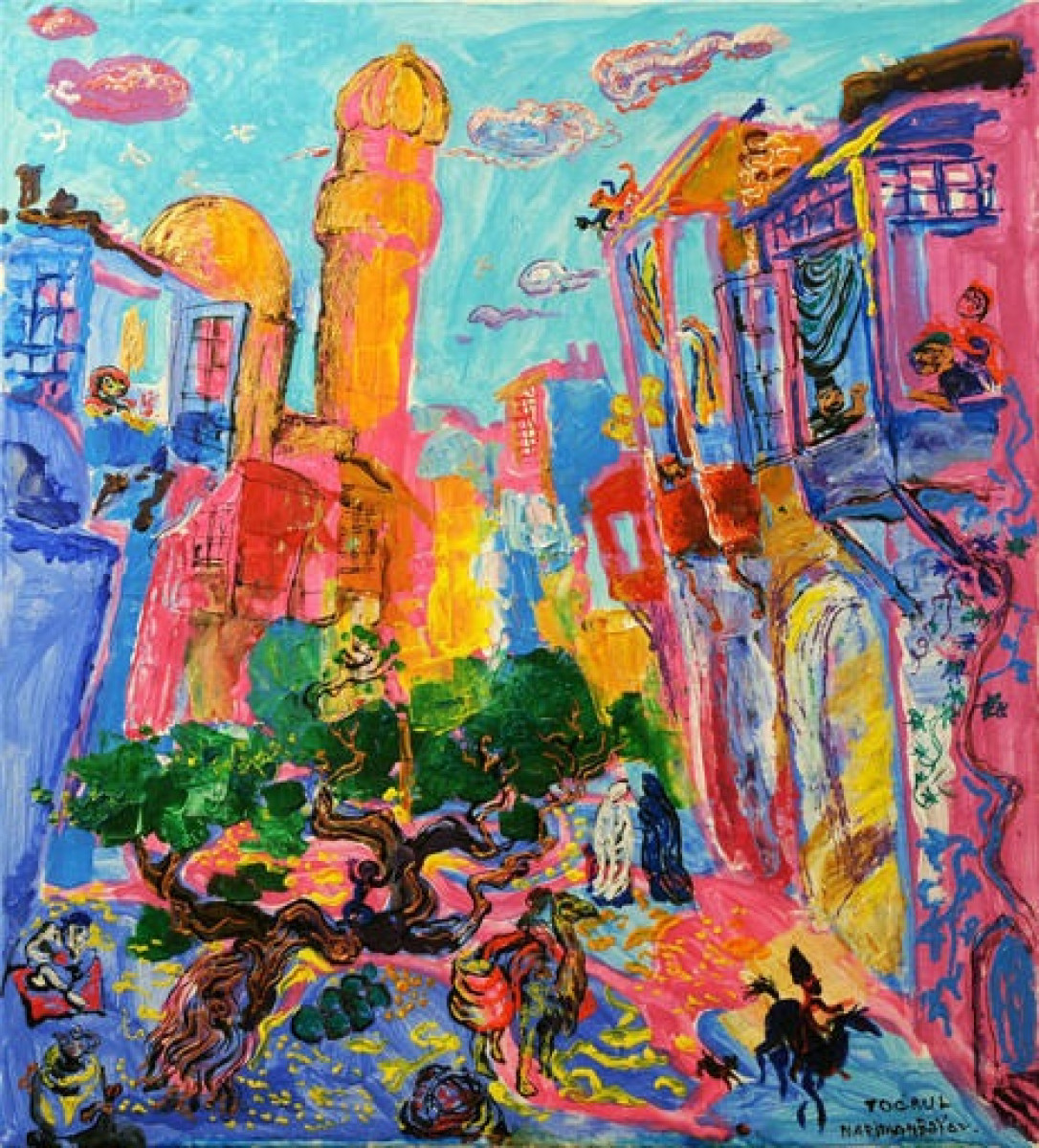
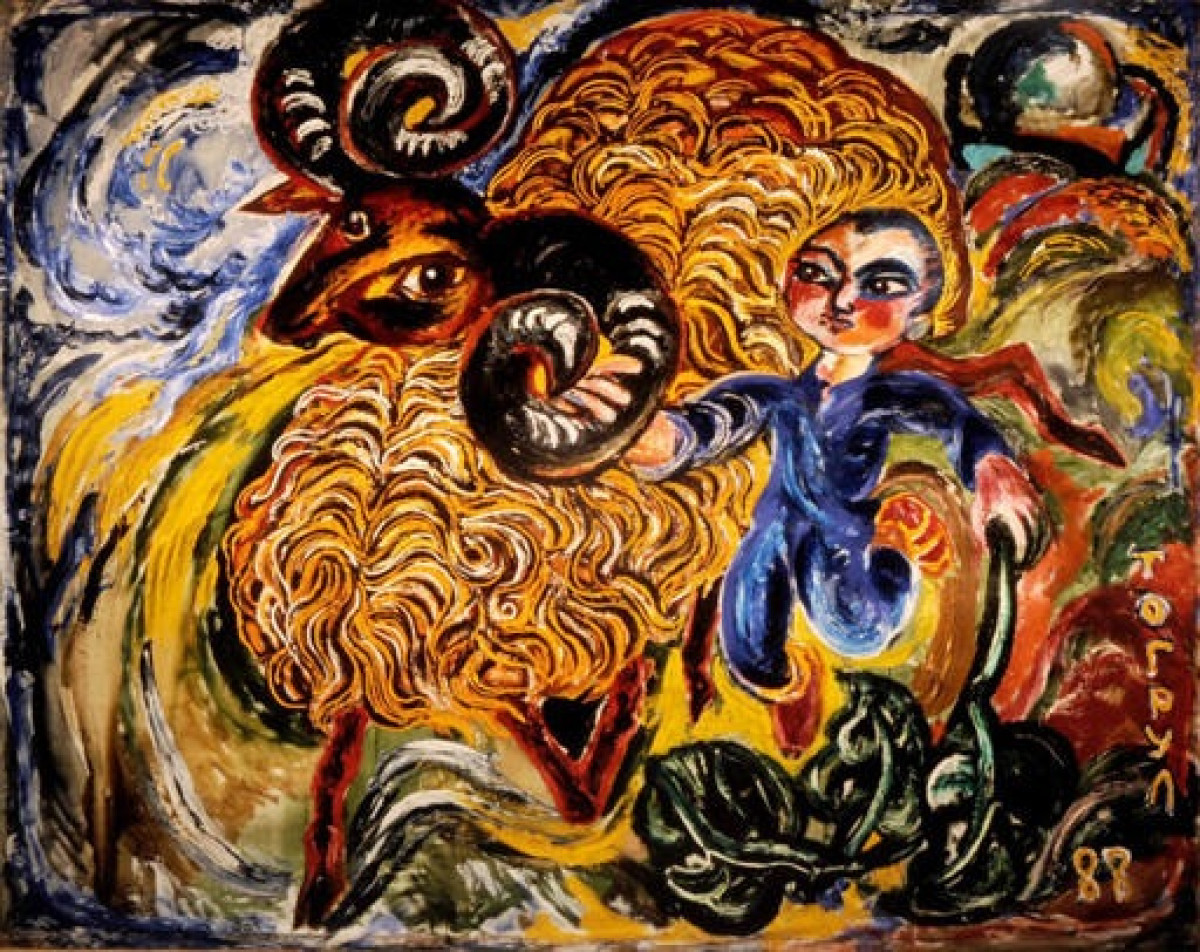
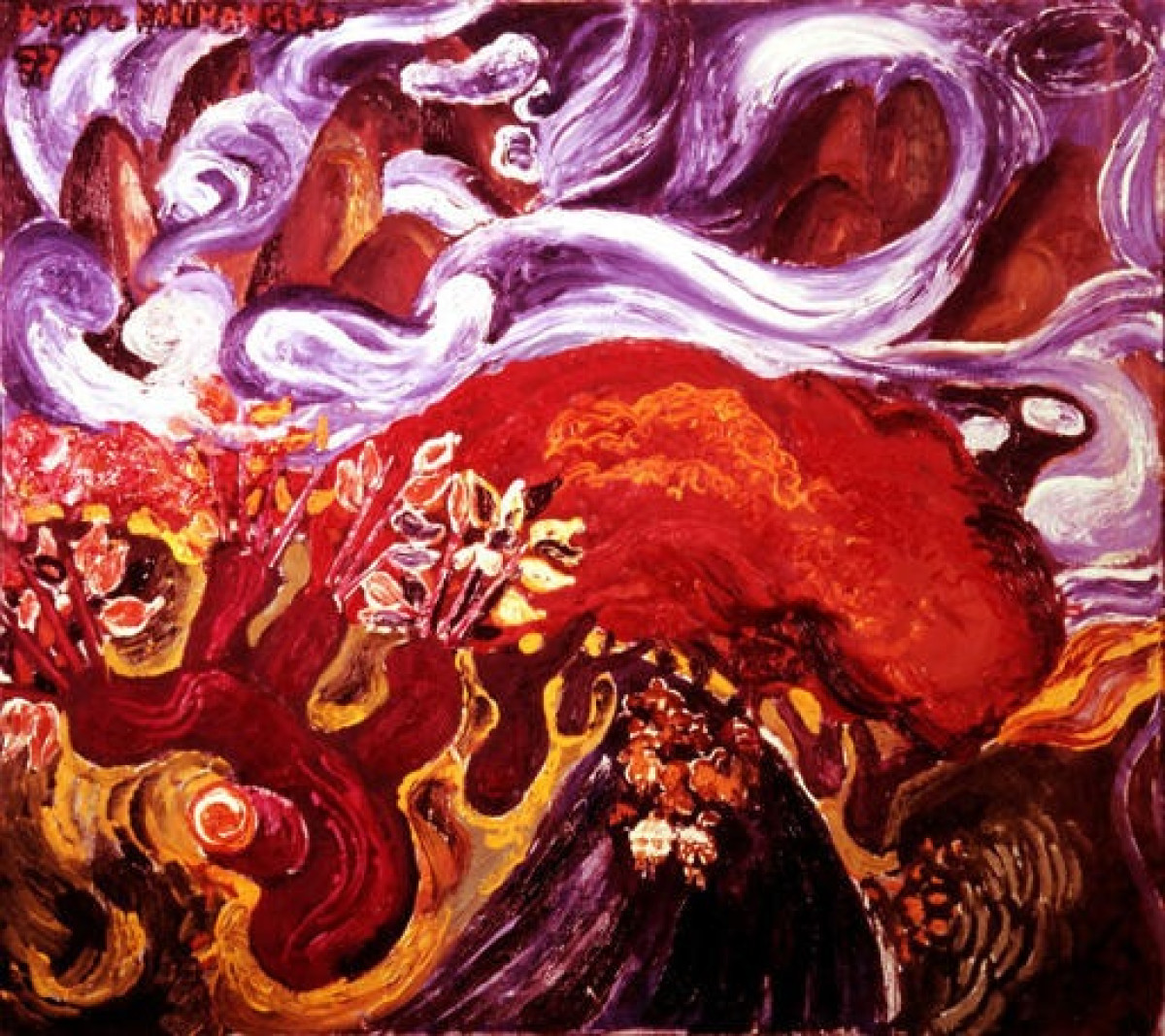
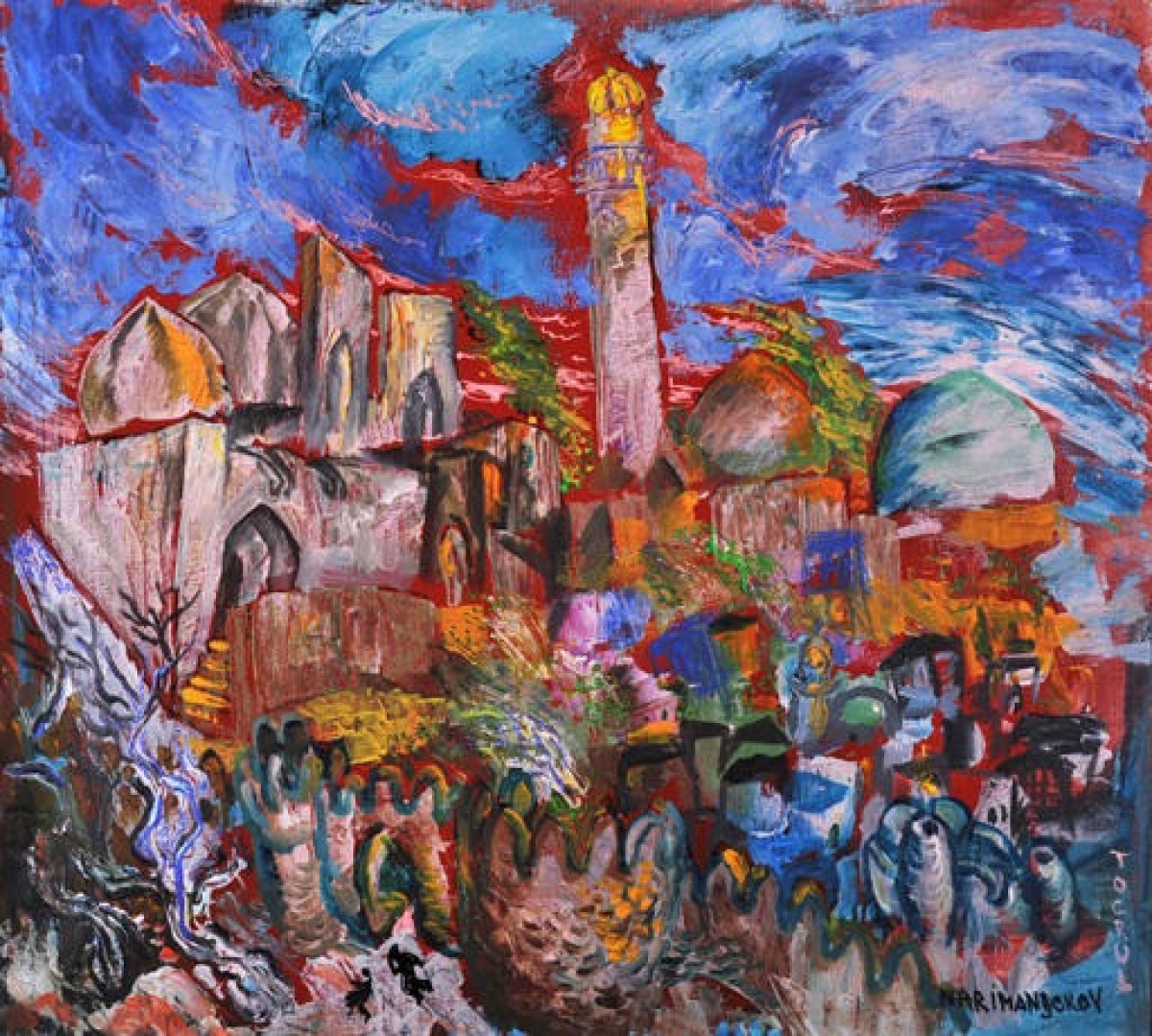
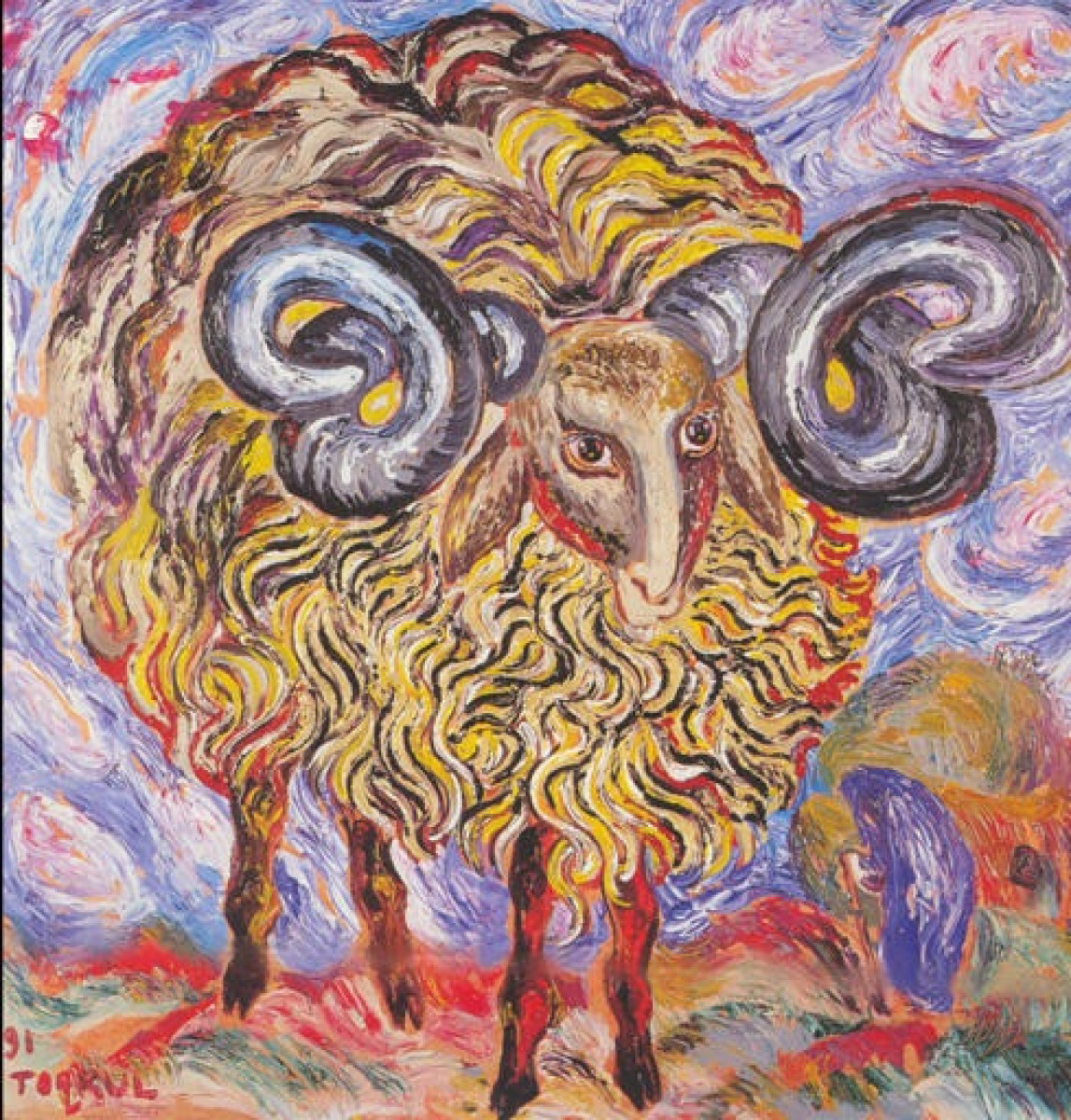
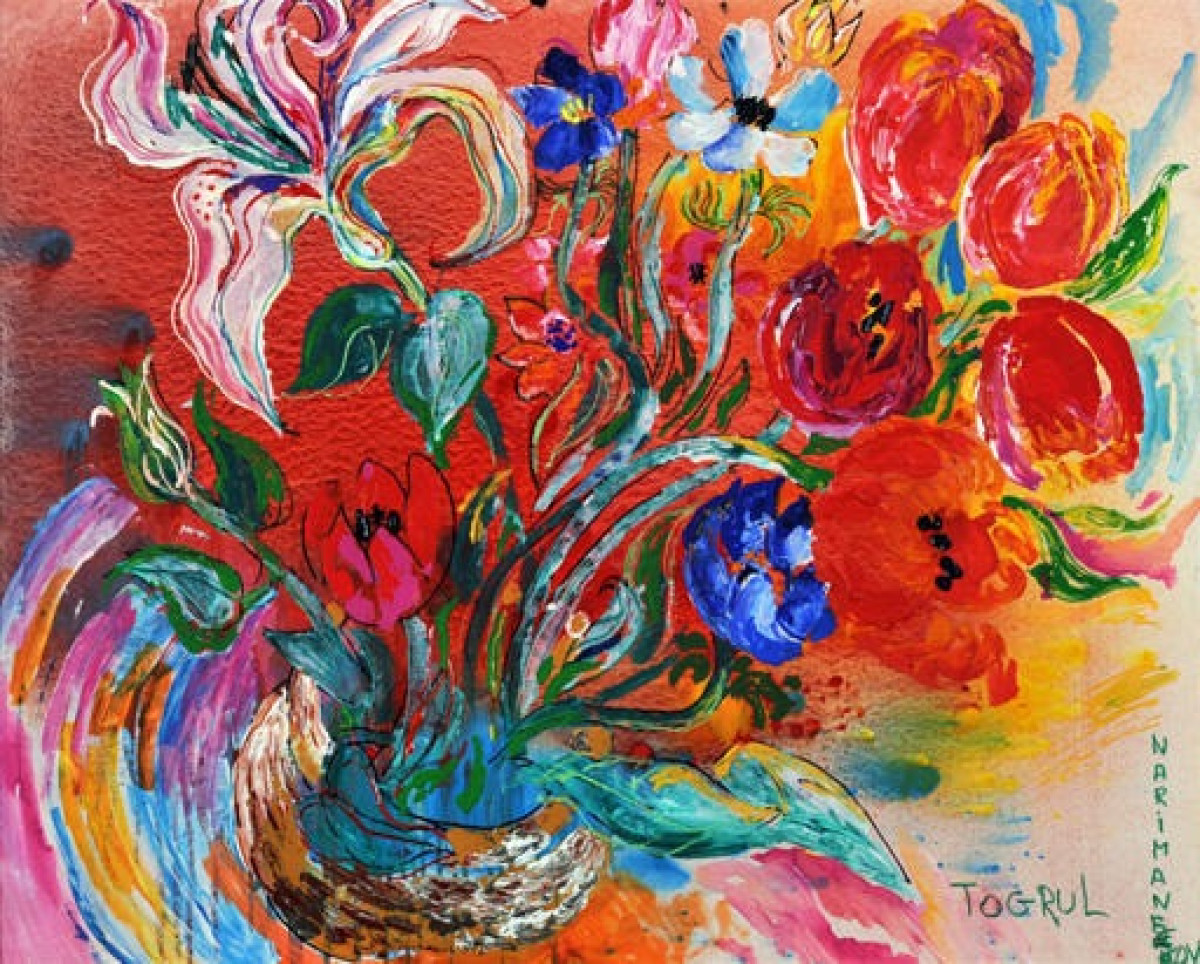
The defining quality of Narimanbekov’s painting lies in his understanding of colour as more than a means of describing appearances. Colour establishes the internal rhythm of a composition, intensifies the relationships between figures and gives the depicted environment a sense of movement. Vivid contrasts, energetic forms and a deliberate departure from strict naturalistic proportion reveal an artist concerned less with reproducing the visible world than with translating its emotional intensity into visual form. His work occupies a distinctive territory between recognisable representation and expressive transformation.
In early paintings such as Fishermen of the Baltic (1955), Dawn over the Caspian (1957), For a Better Future (1959), Stronger than a Storm (1960) and Happiness (1961), human figures are placed in active relation to their surroundings and to the experience of collective labour. The vitality of these compositions is conveyed not only through their subjects but also through their formal construction. The energetic use of colour and the movement of figures anticipate the more individual and expansive visual language of his later work. His portrait of Sattar Bahlulzade (1965), in turn, demonstrates his ability to convey an artistic personality through the emotional structure of the image rather than through likeness alone.
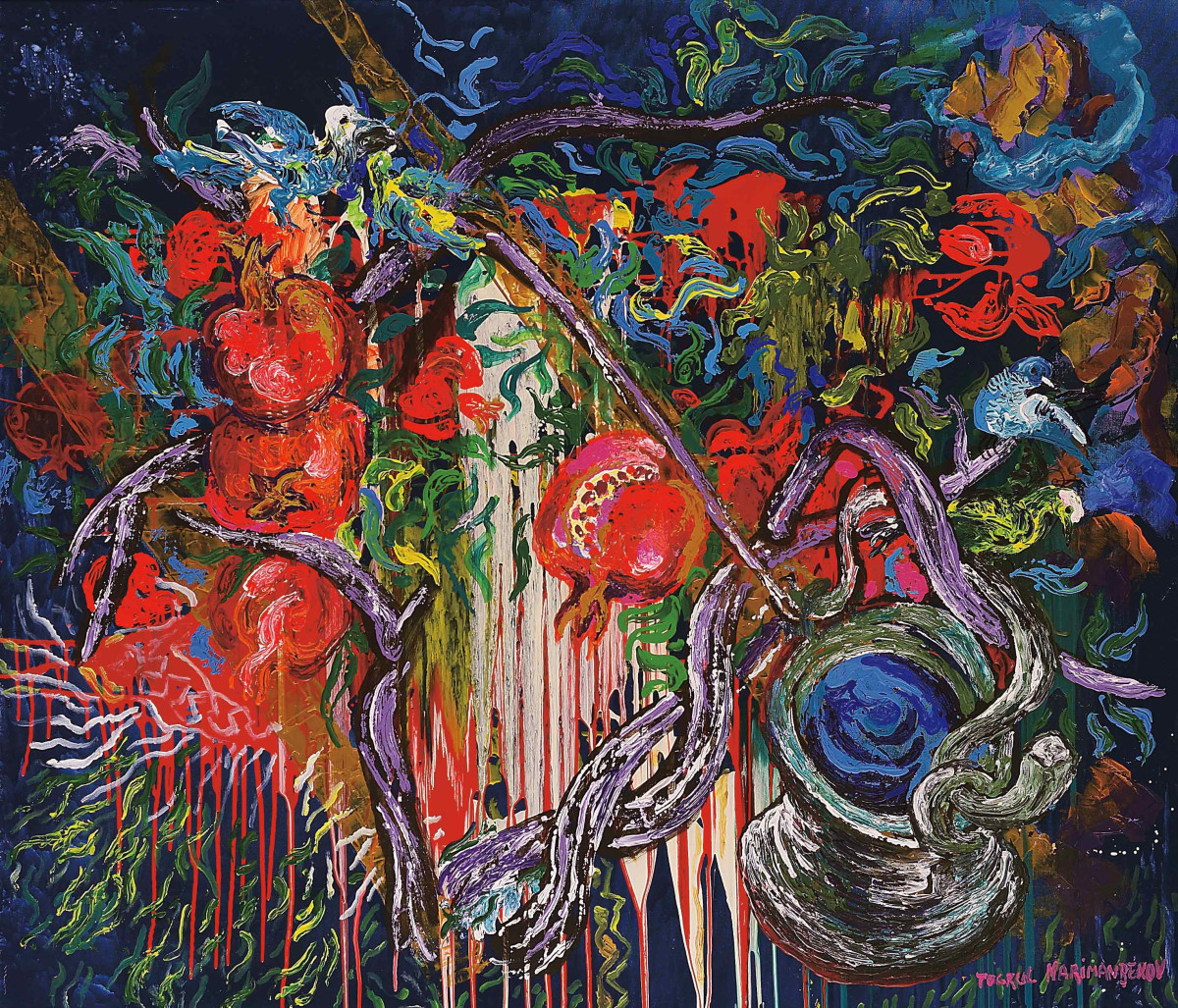
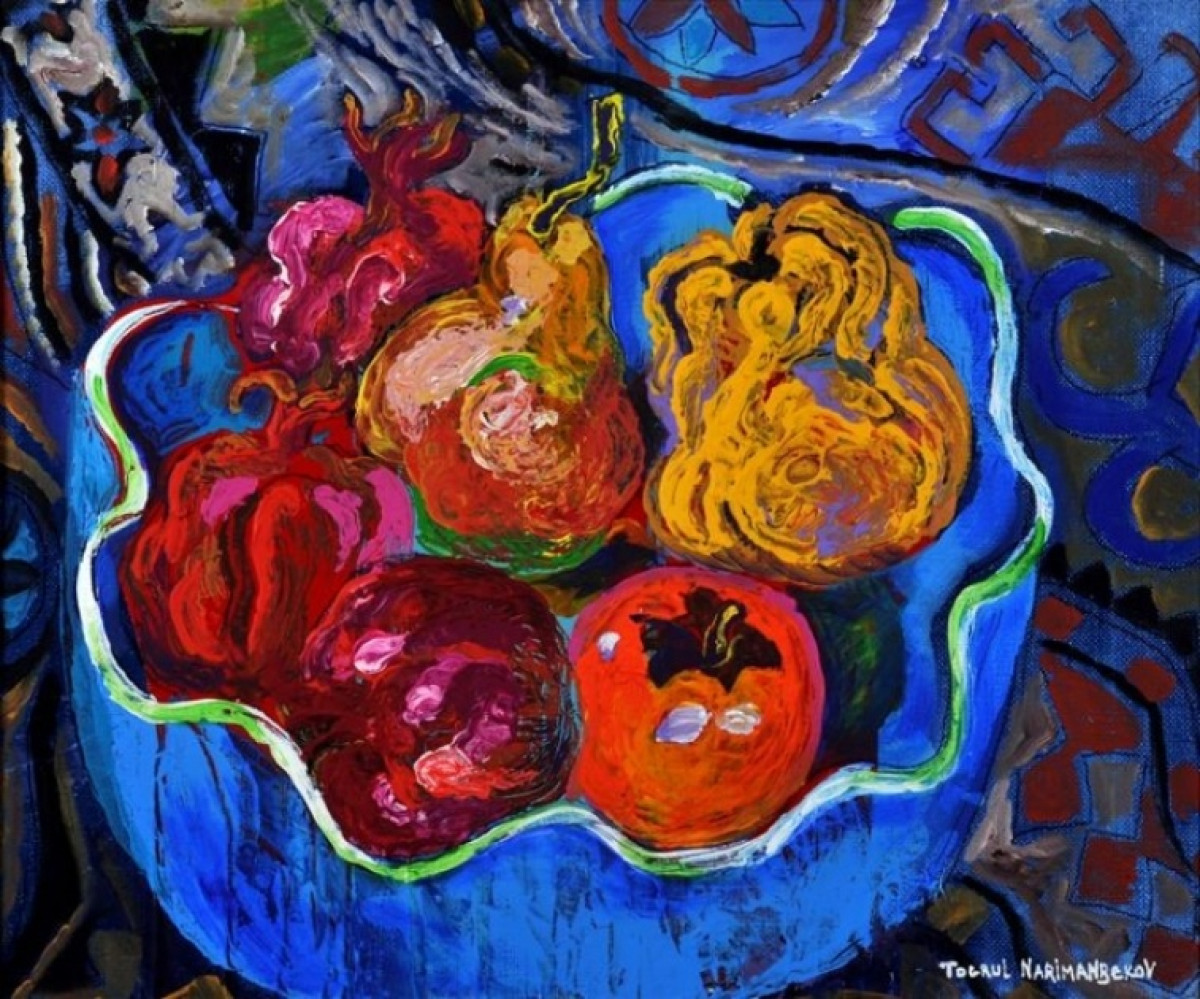
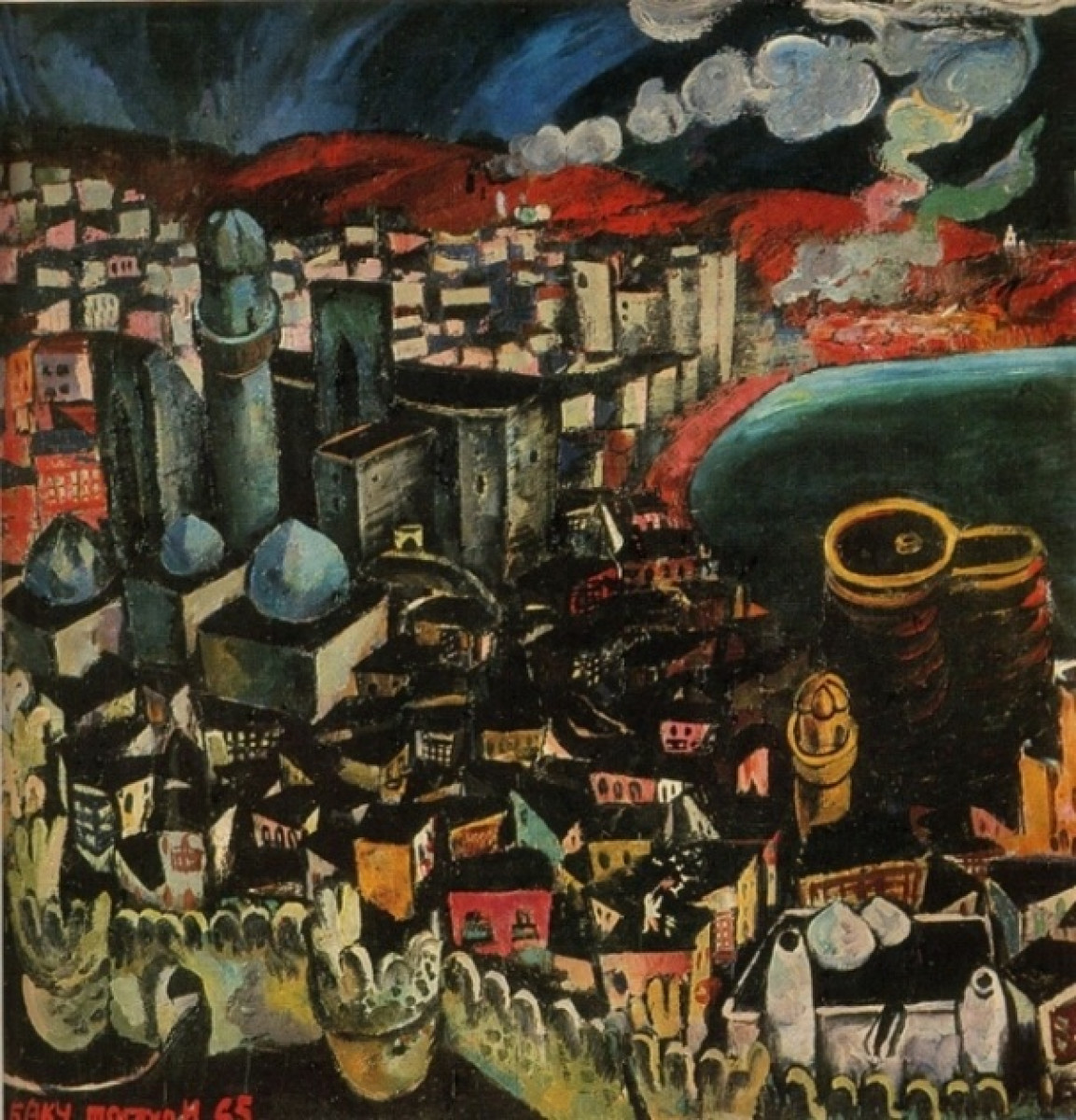
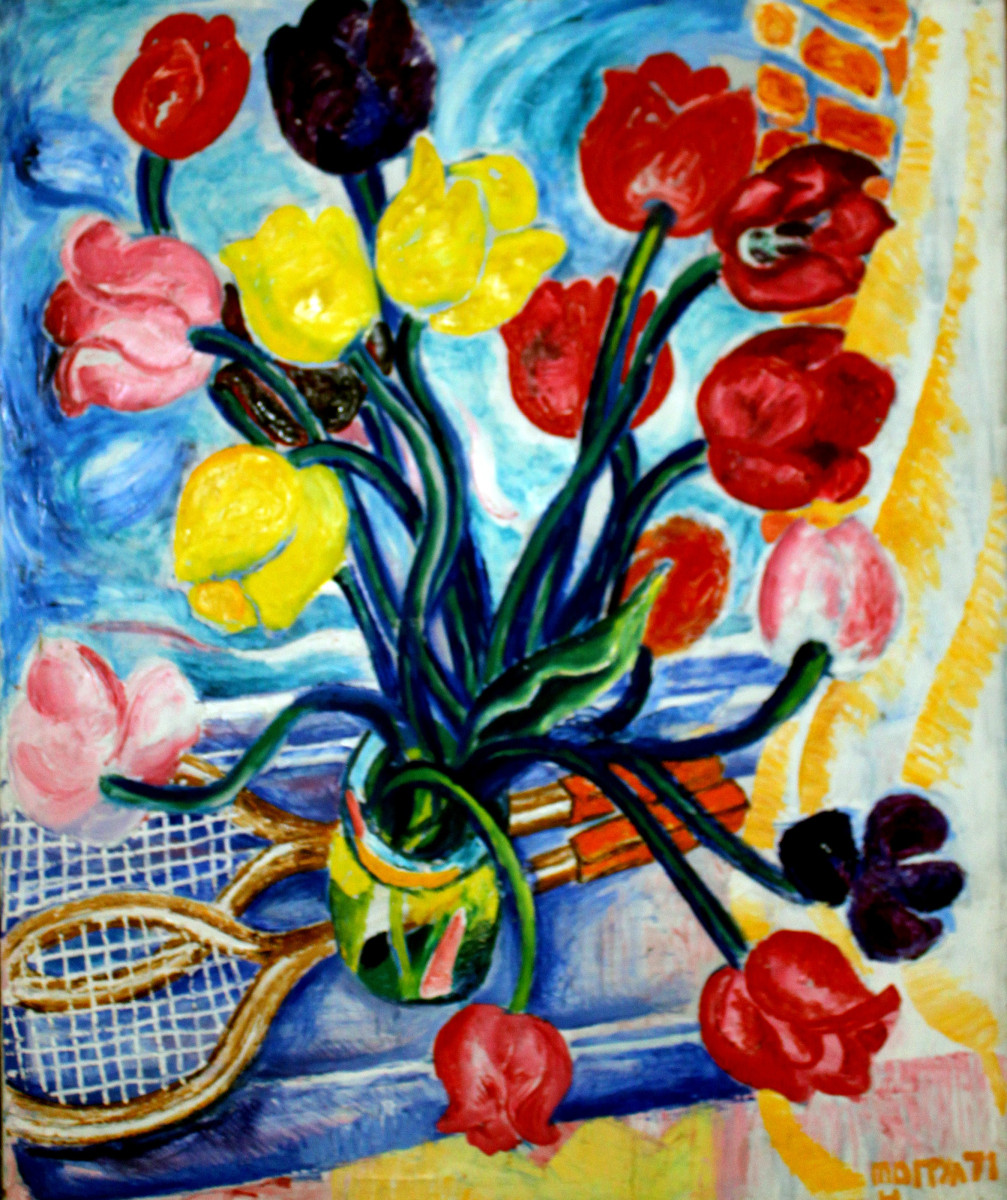
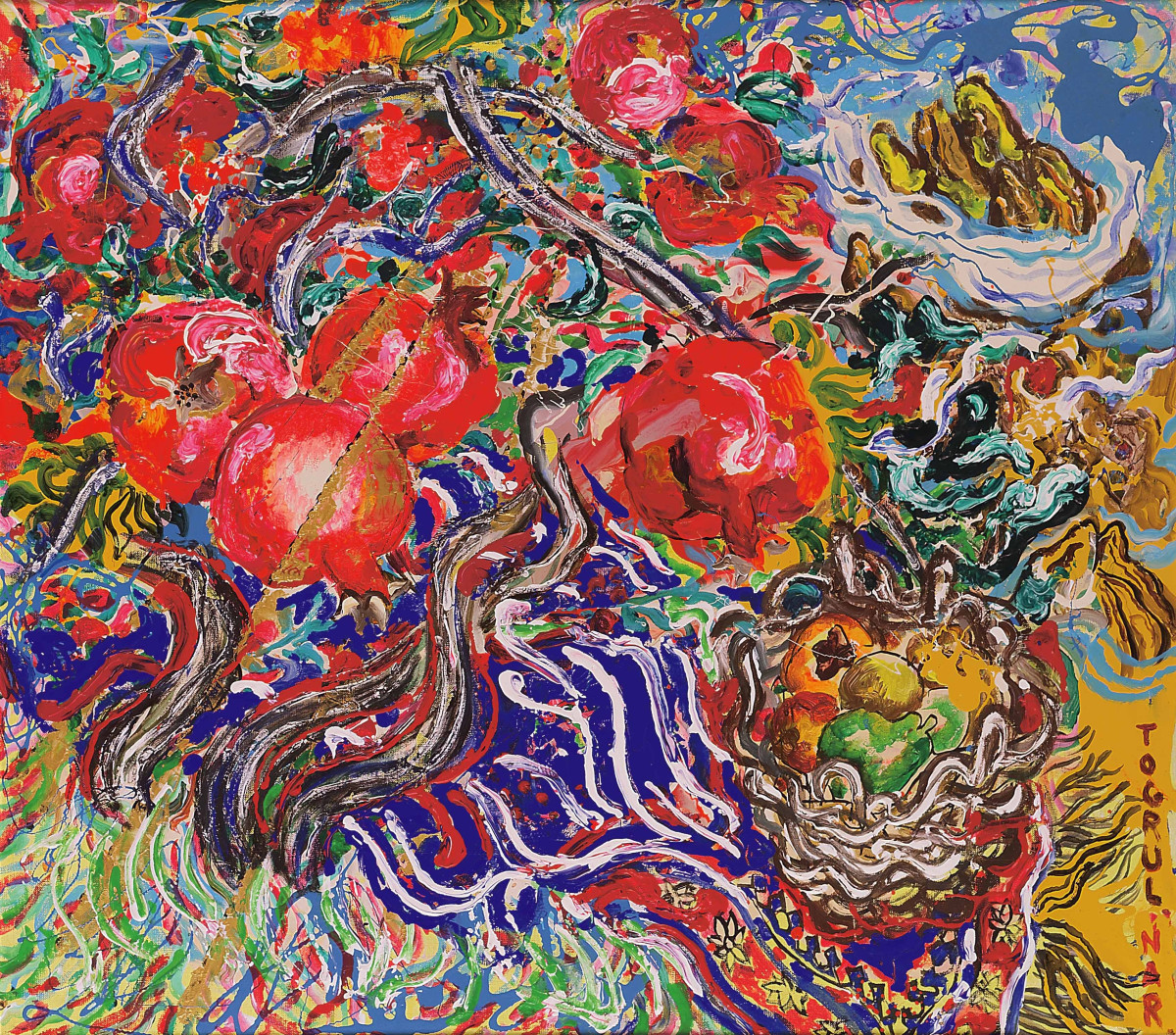
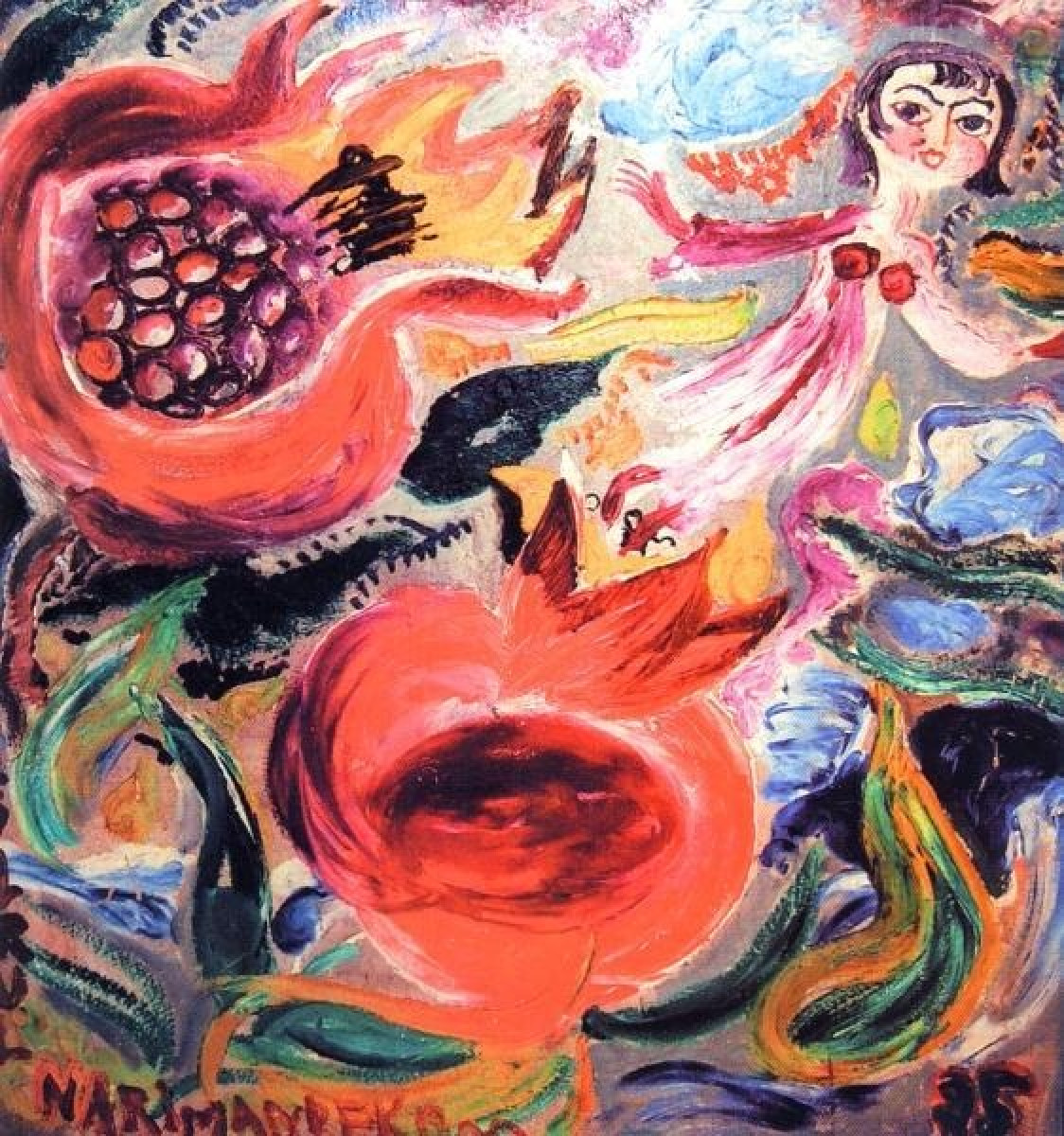
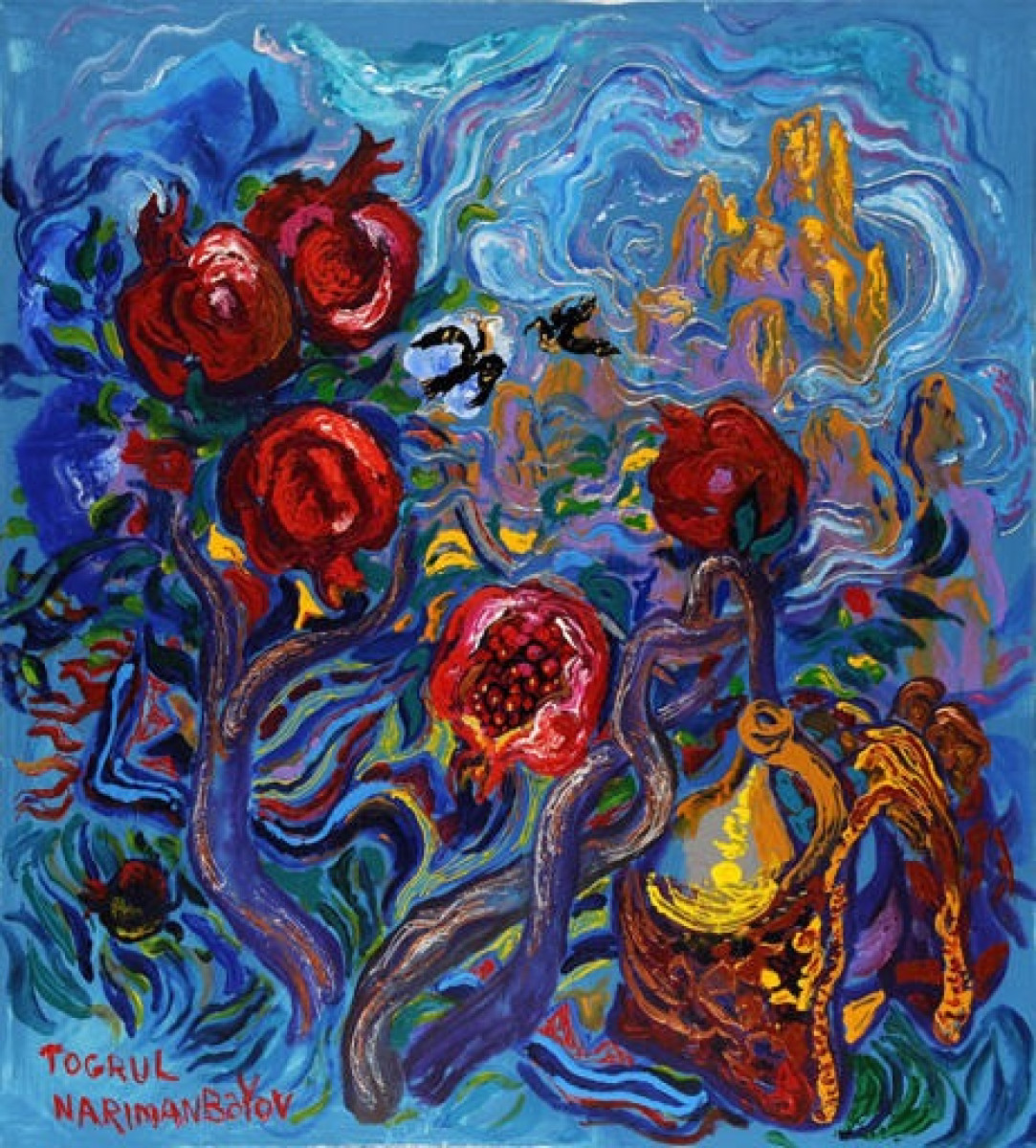
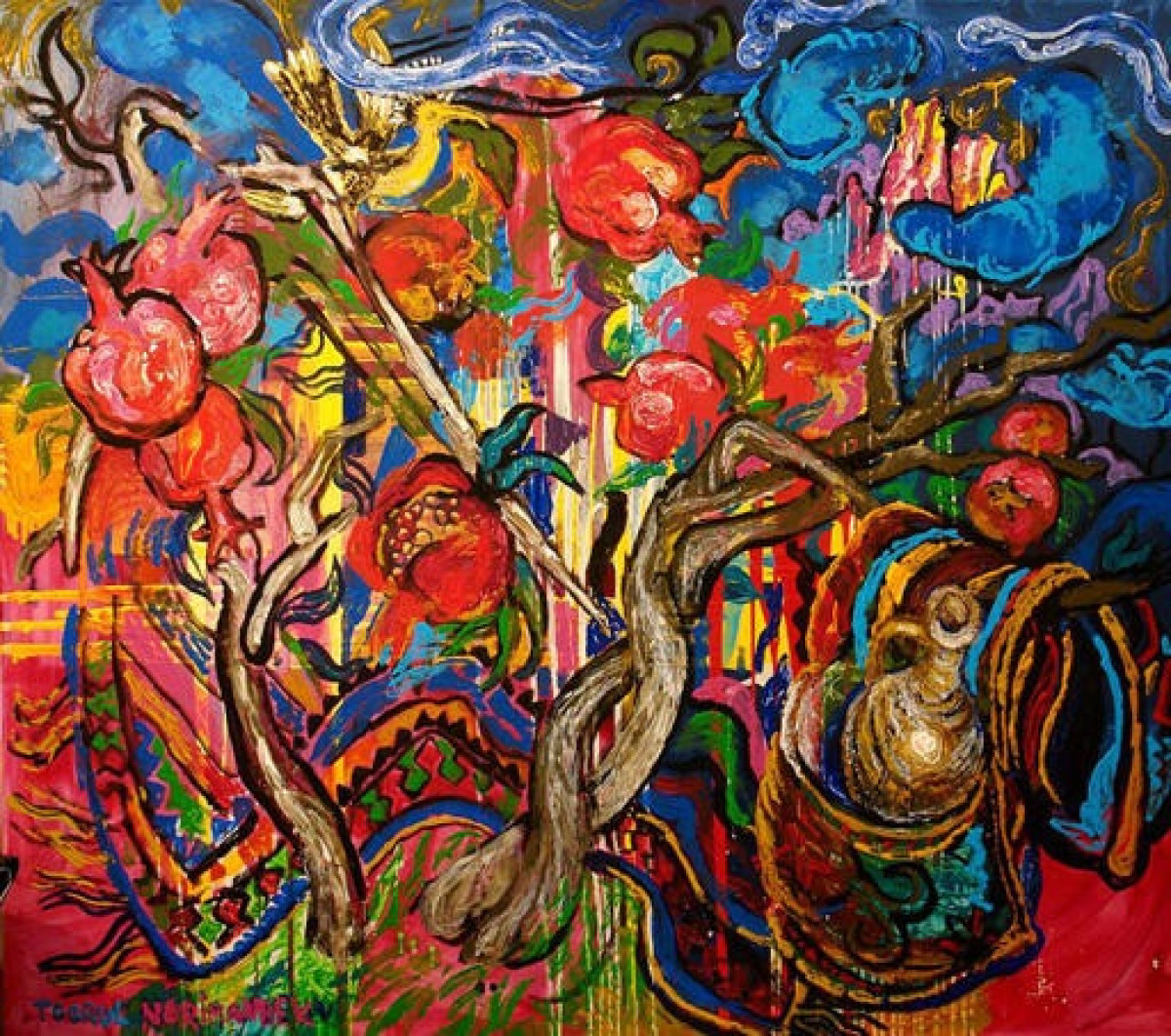
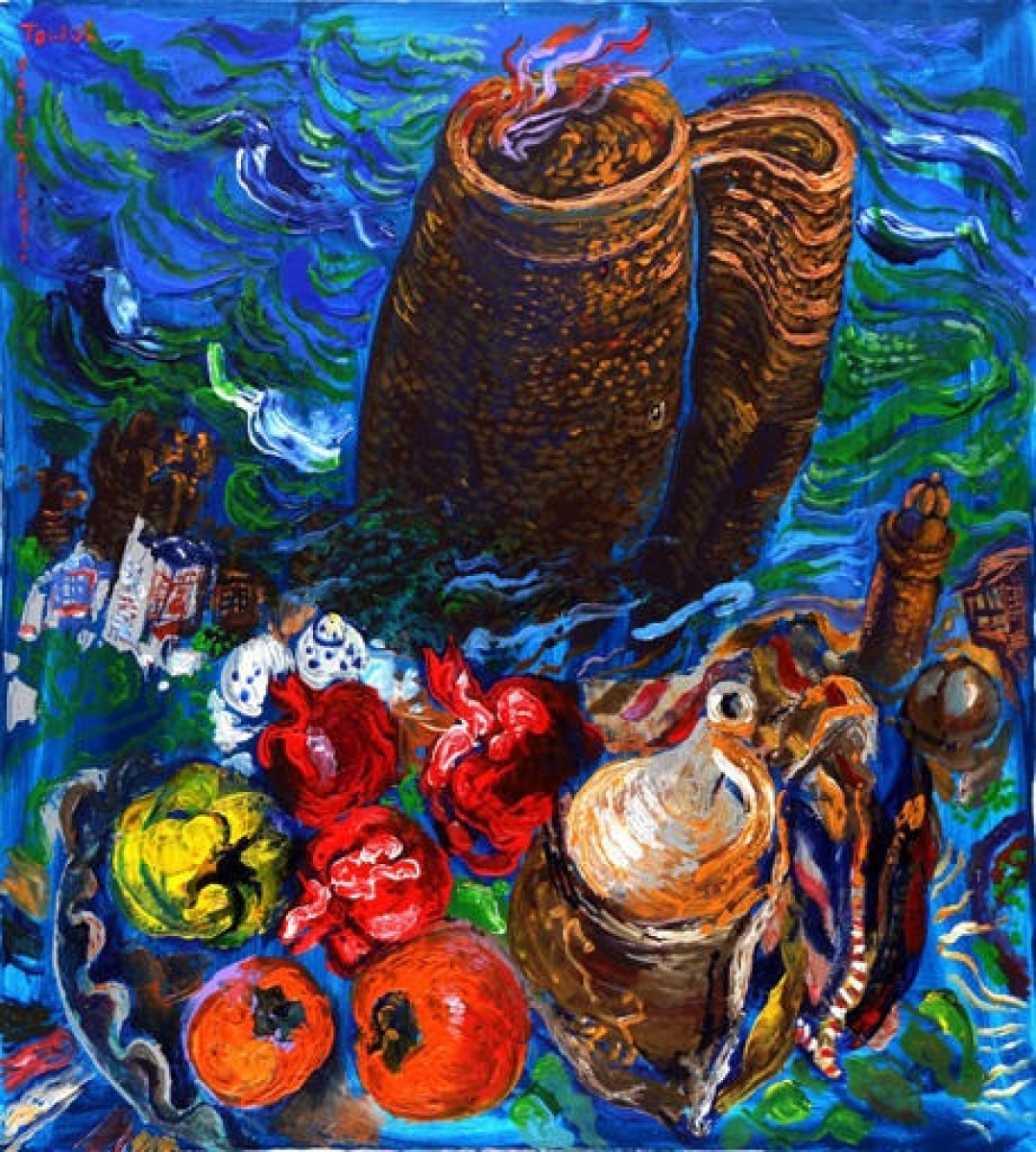
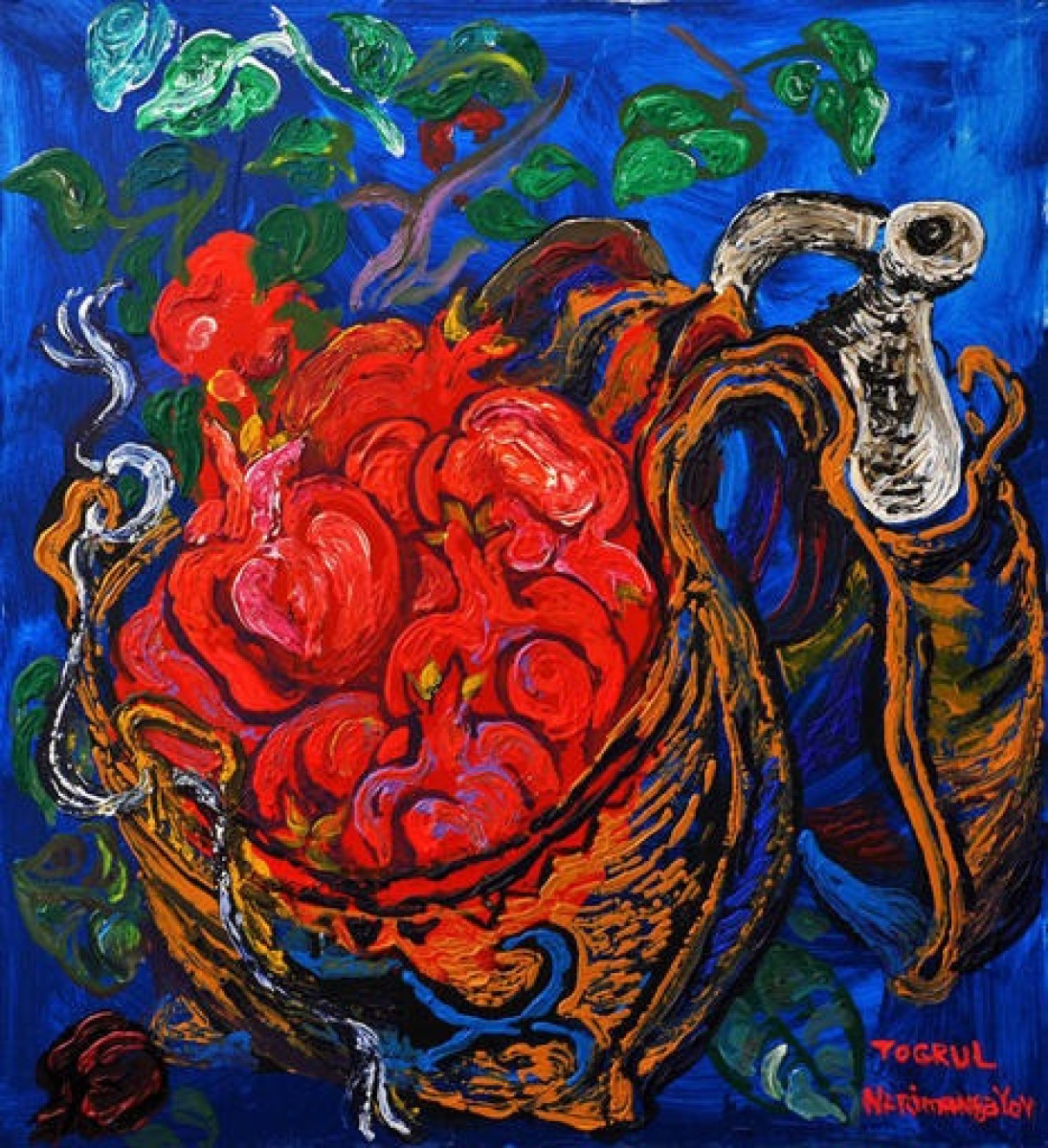
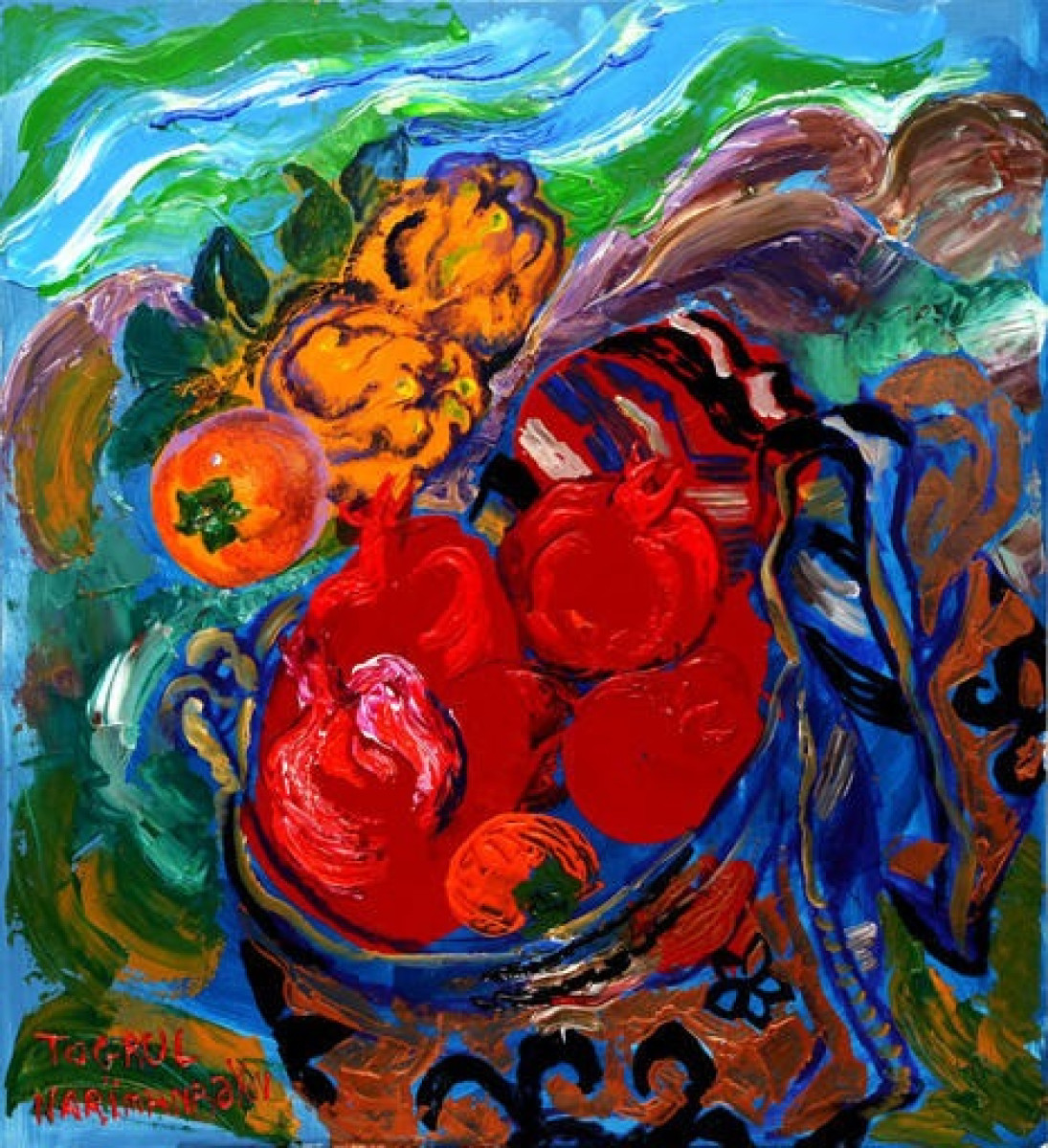
In his still lifes and landscapes, the natural and cultural environment of Azerbaijan becomes a source of visual memory. Works including Pomegranates (1957 and 1959), Pomegranates and Pears (1961), and paintings devoted to the gardens of Goychay and old plane trees transform familiar subjects into compositions with a broader expressive charge. Objects are not merely arranged for visual description; their colour, scale and relationship establish an atmosphere of abundance, continuity and rootedness. The pomegranate is particularly significant in this respect. Its physical presence is inseparable from the cultural associations it carries within Azerbaijani life.
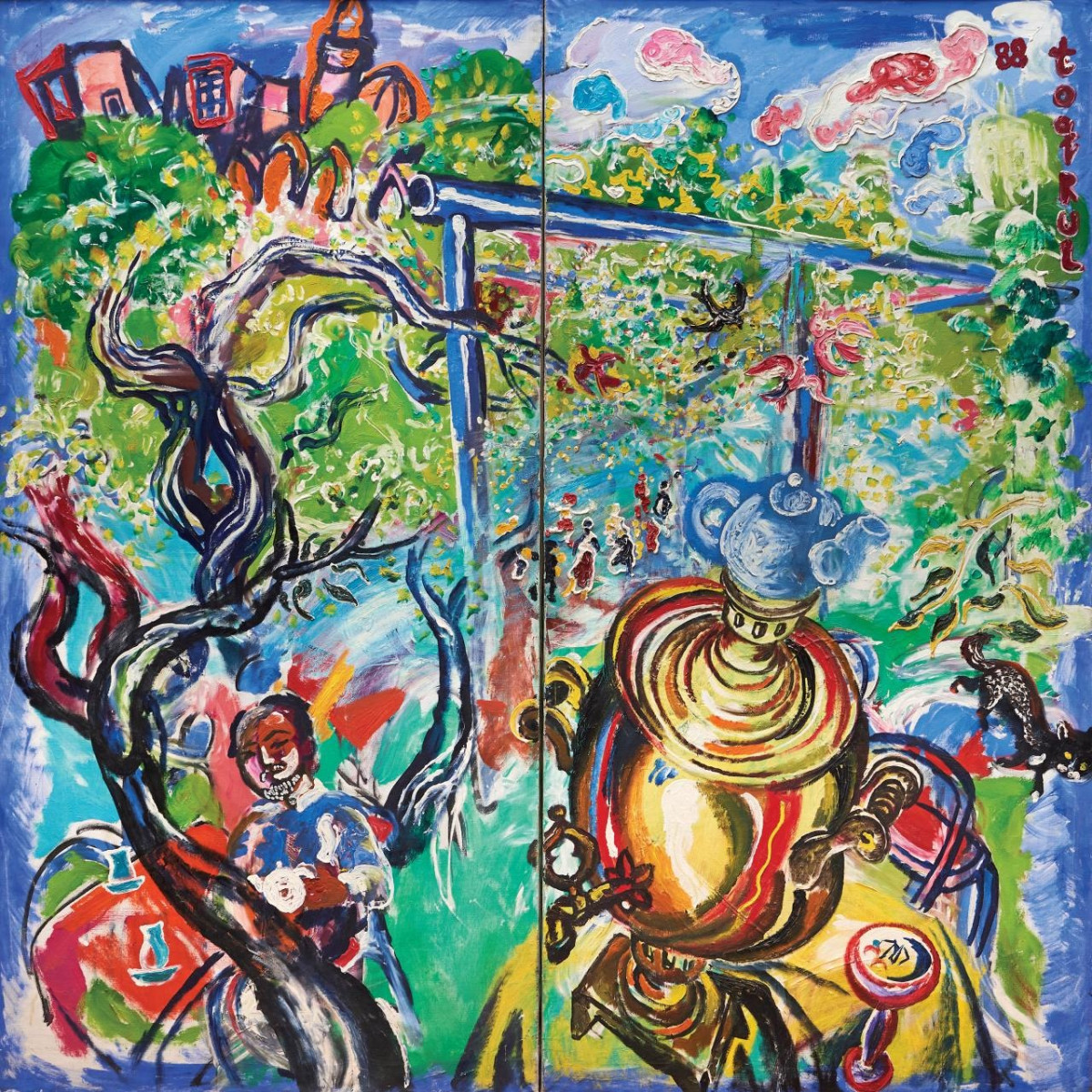
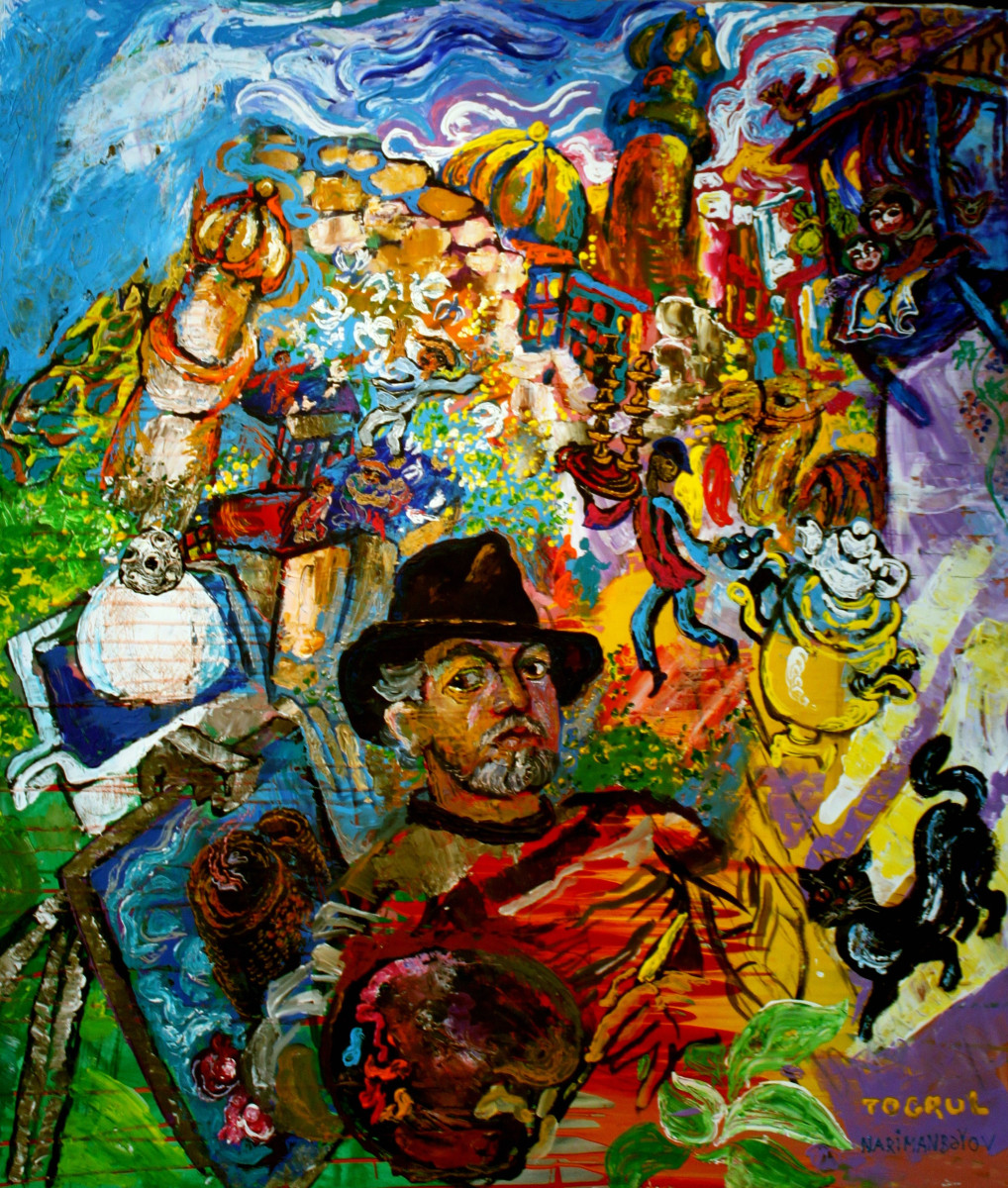
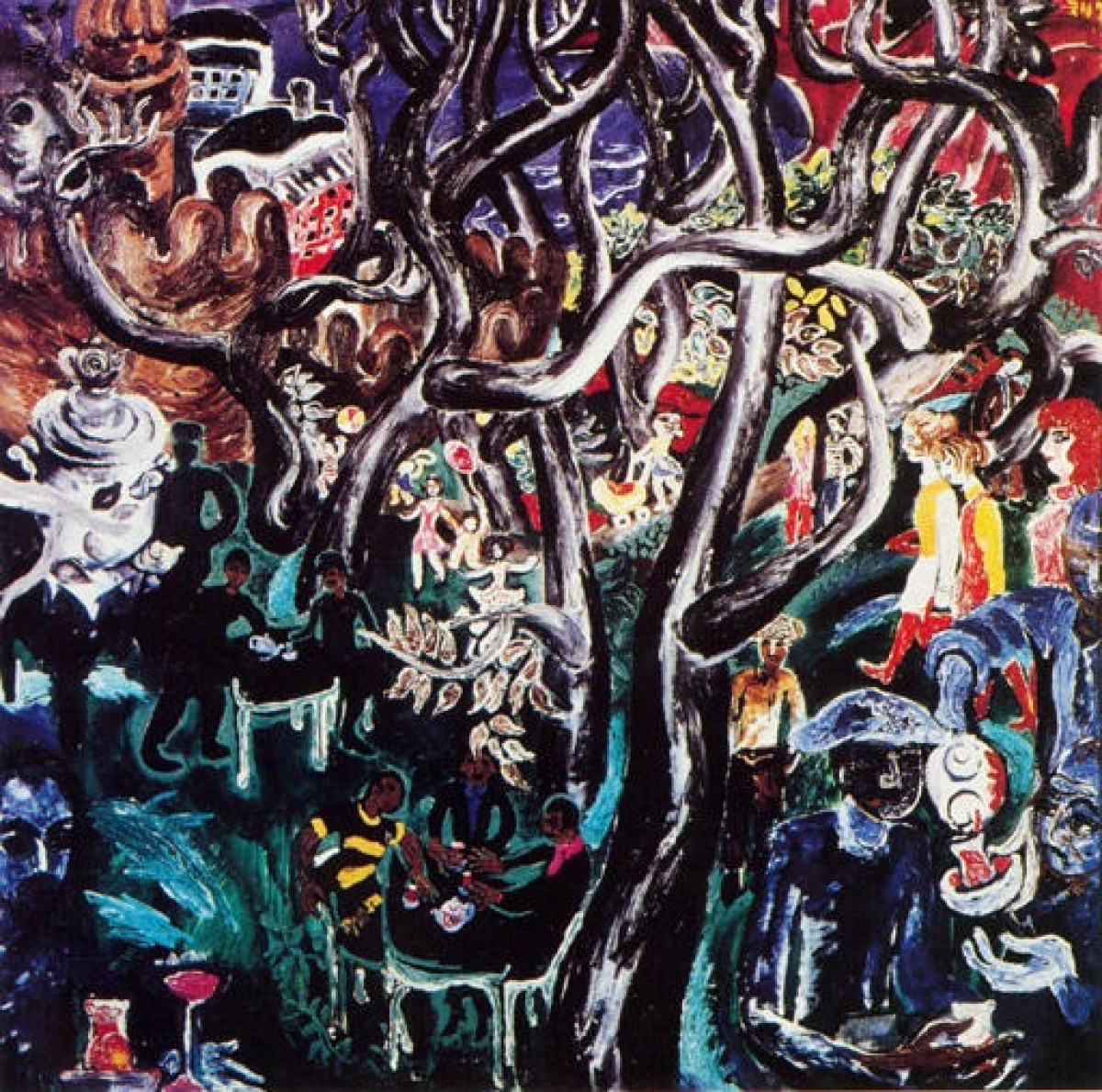
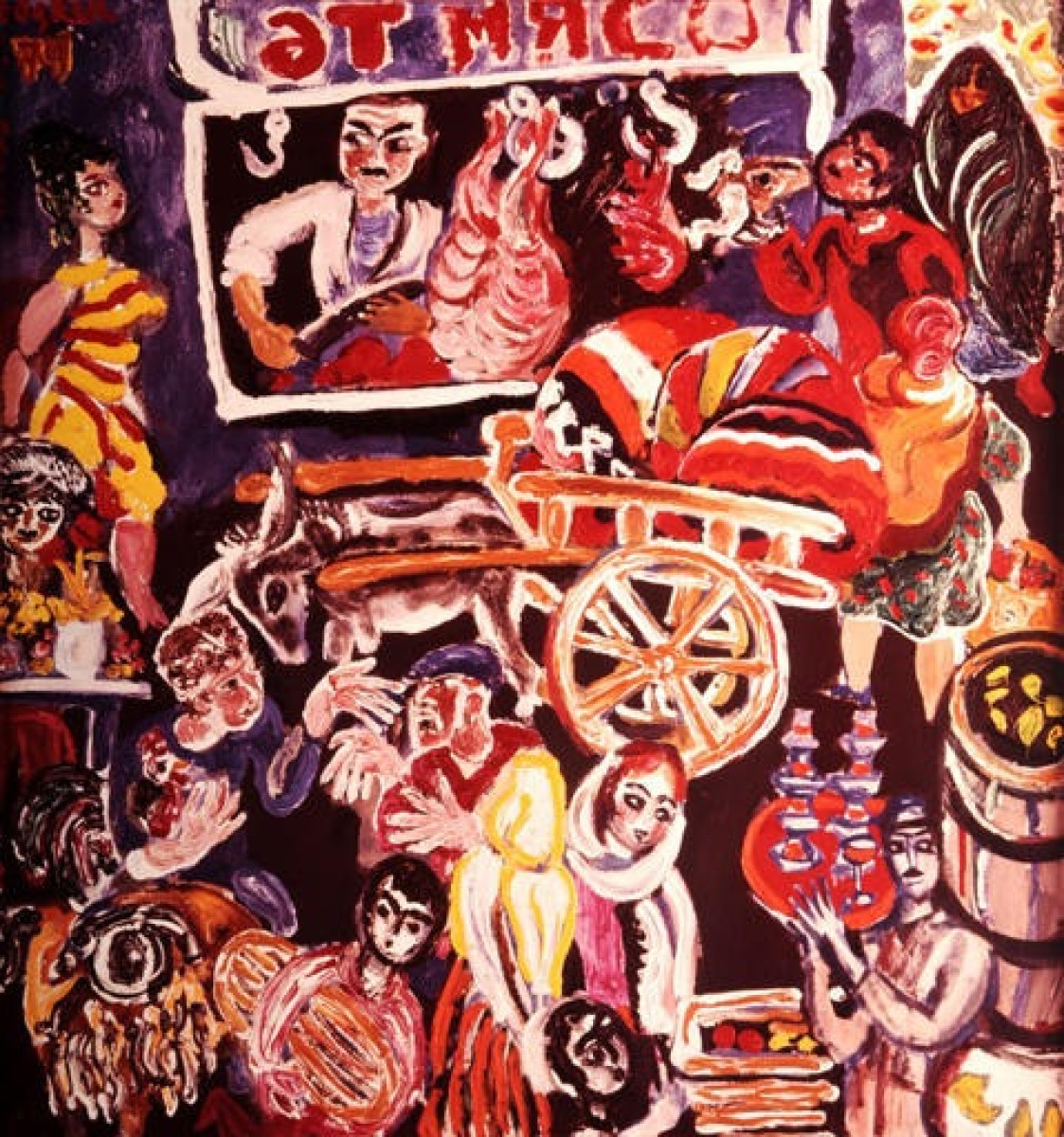
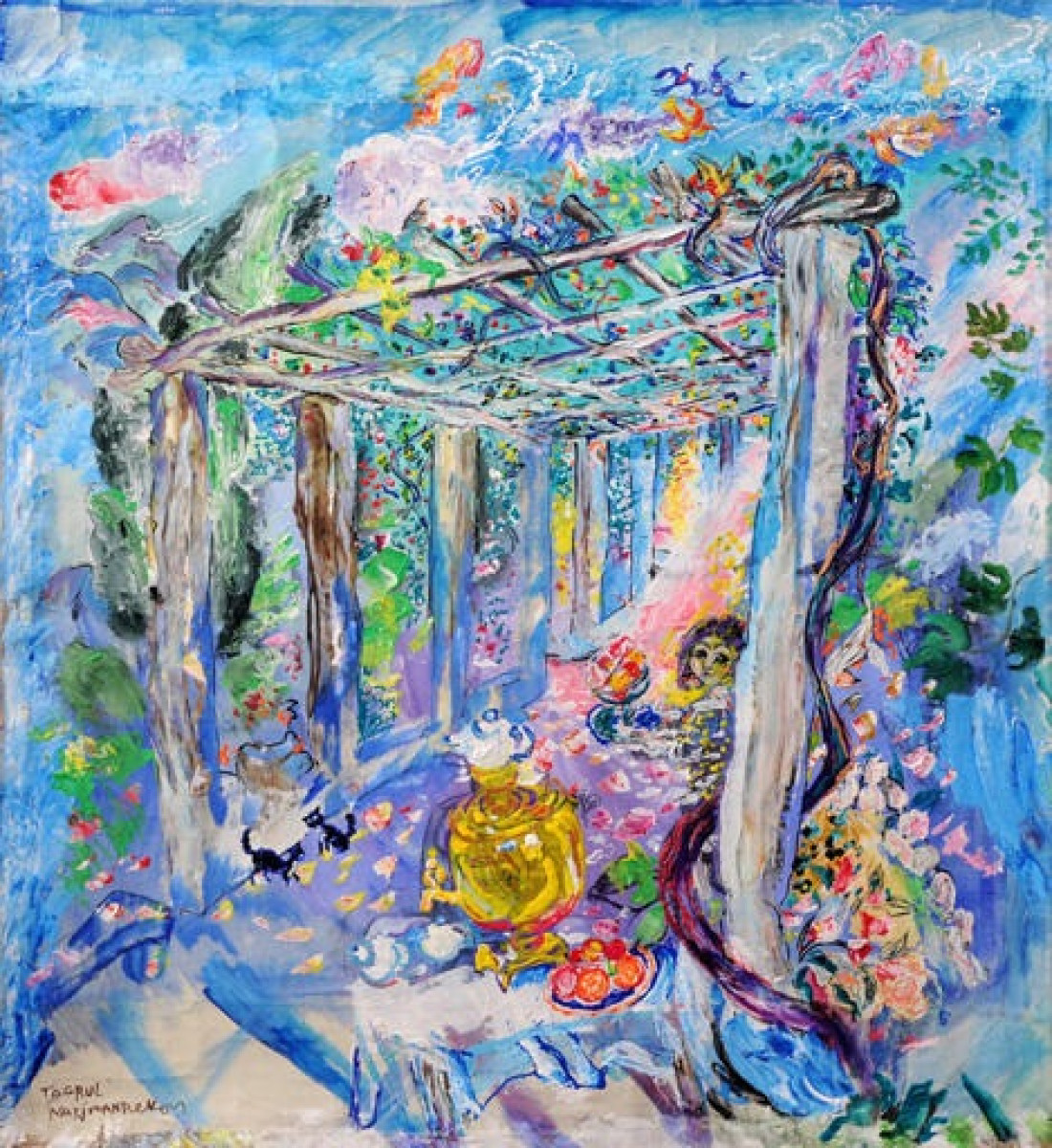
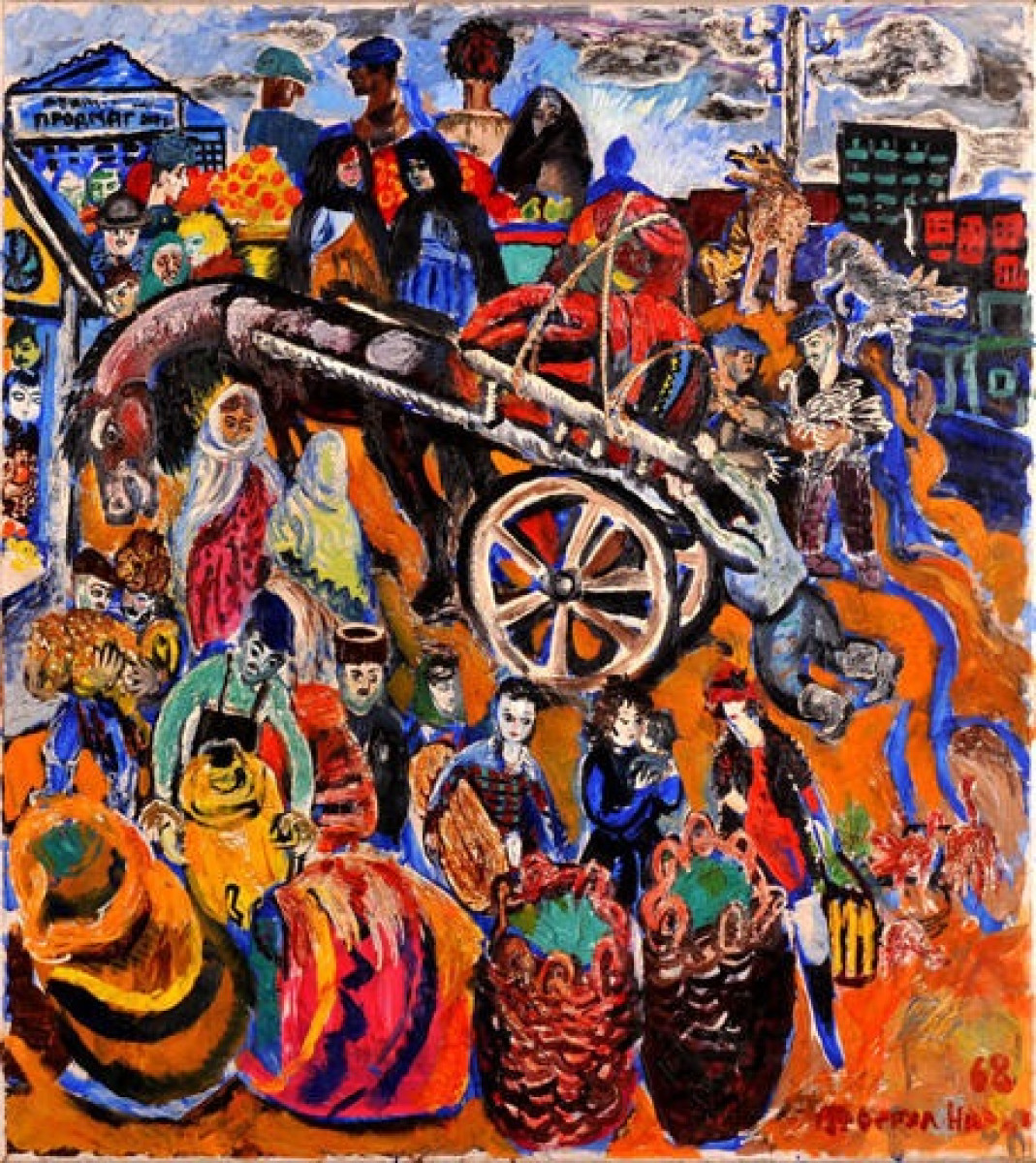
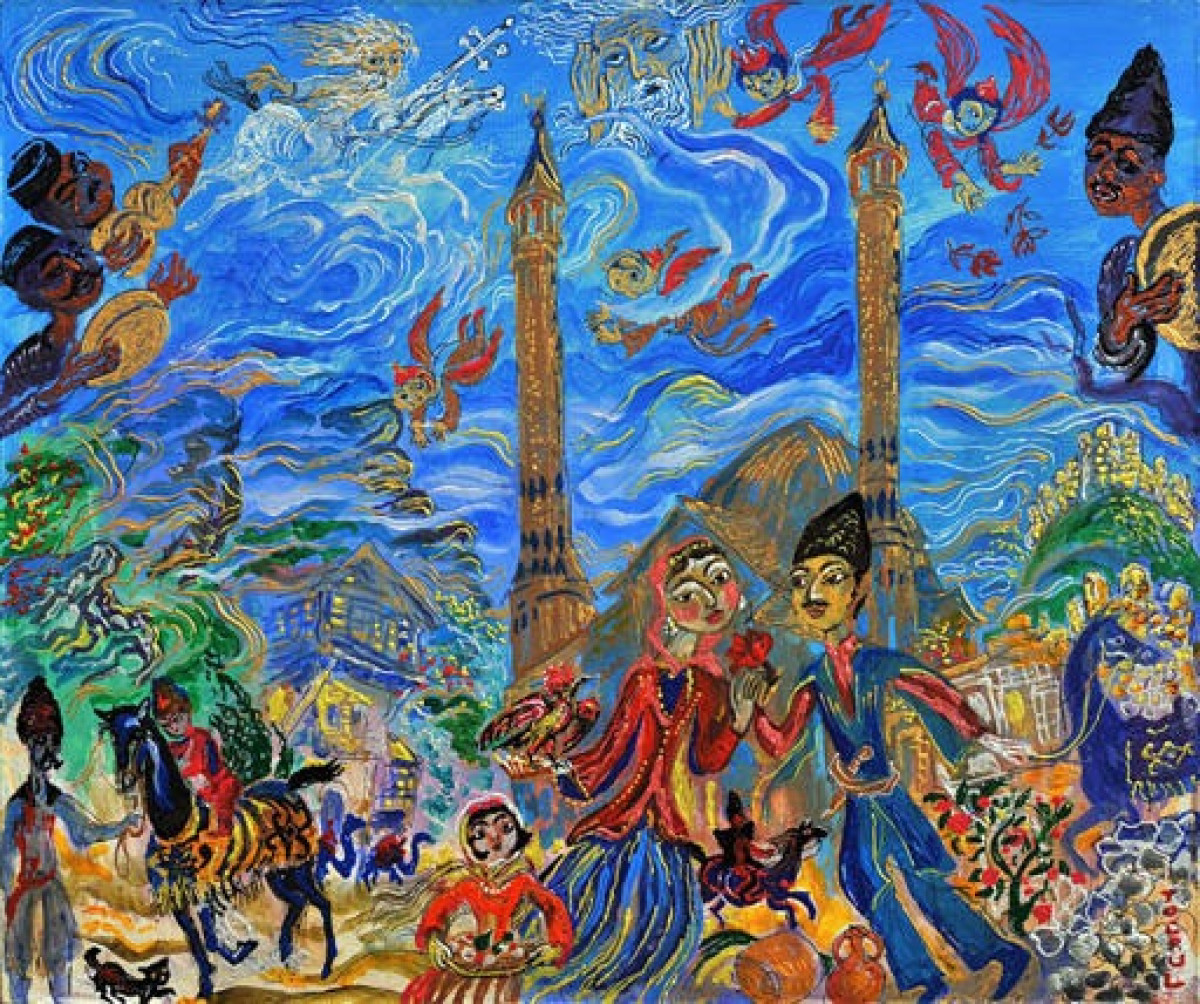
The teahouse theme offers another key to understanding Narimanbekov’s artistic imagination. In these compositions, people, trees, architectural elements and everyday objects form an interconnected visual environment. Rather than presenting an isolated incident, the artist creates a space in which numerous small episodes appear to unfold simultaneously. The viewer’s eye moves through the composition as if through a theatrical scene. This approach can be considered alongside his experience in stage design, where the relationship between setting, movement and visual attention is fundamental.
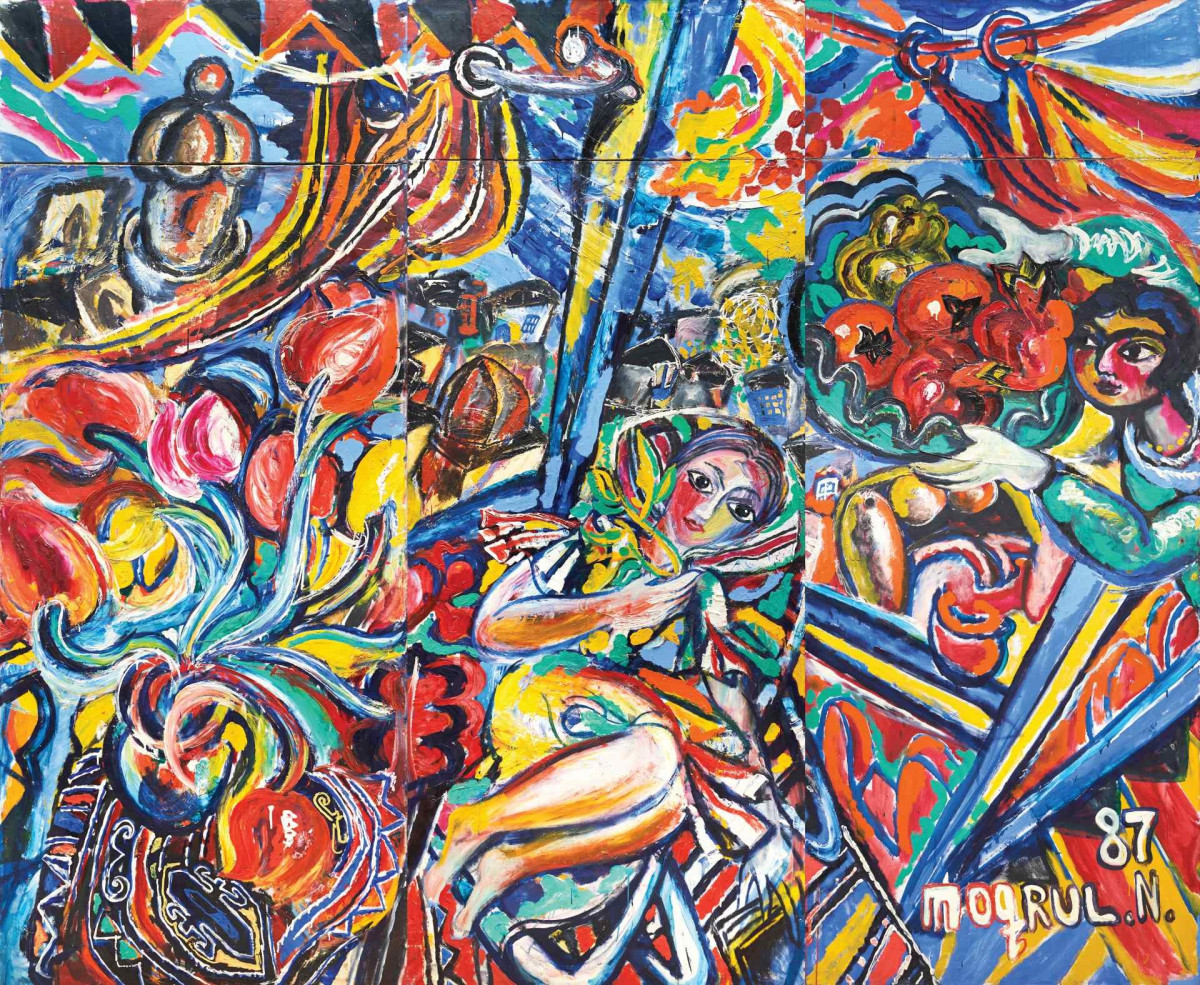
His monumental works extend the principles of his easel painting into architectural space. The murals on the theme In the World of Fairy Tales at the Baku Puppet Theatre (1974–1977), The Song of the Ashug in the foyer of the Moscow Hotel in Baku (1977), and Blossom, My Native Land in the building of the Presidium of the Supreme Soviet of the Azerbaijan SSR (1980) demonstrate his engagement with art beyond the boundaries of the framed canvas. Here, colour becomes part of the viewer’s physical environment and contributes to the experience of public space.
Theatre design was not a secondary occupation but an important dimension of his artistic practice. His work on Fikret Amirov’s The Epic of Nasimi and One Thousand and One Nights, as well as Gara Garayev’s Seven Beauties and Shadows of Gobustan, brought painting into direct contact with music, movement and dramatic interpretation. The Azerbaijan SSR State Prize in 1974 recognised his design for The Epic of Nasimi, while the USSR State Prize in 1980 honoured his work on One Thousand and One Nights. These projects reveal how his sensitivity to rhythm and colour could operate beyond the static image, shaping the visual identity of a performance.
Narimanbekov’s solo exhibitions took his work to a wide range of international audiences. Among the documented presentations were exhibitions in Prague and Bratislava in 1965, Moscow in 1967, Havana in 1978, several German cities and Belgrade in the 1980s, and Luxembourg and Paris in the 1990s. His exhibitions at UNESCO’s Paris headquarters in 1995 and at the exhibition venue of the French Ministry of Culture in 1998 were significant milestones in this international presence. His art made the visual memory of Azerbaijan accessible through a language that did not depend on the viewer’s familiarity with a particular national tradition.
The importance of Narimanbekov’s legacy lies not simply in the presence of Azerbaijani subjects in his paintings, but in the transformation of cultural experience into an individual visual system. In his work, colour becomes a bearer of memory, form conveys movement, and composition reflects the multiplicity of lived experience. He died in Paris on 2 June 2013 and was buried at Passy Cemetery. His achievement remains an important chapter in the development of modern Azerbaijani painting, demonstrating how a deeply rooted artistic sensibility can acquire a distinctive voice within the wider history of international art.
Art Space Gallery MEDIA