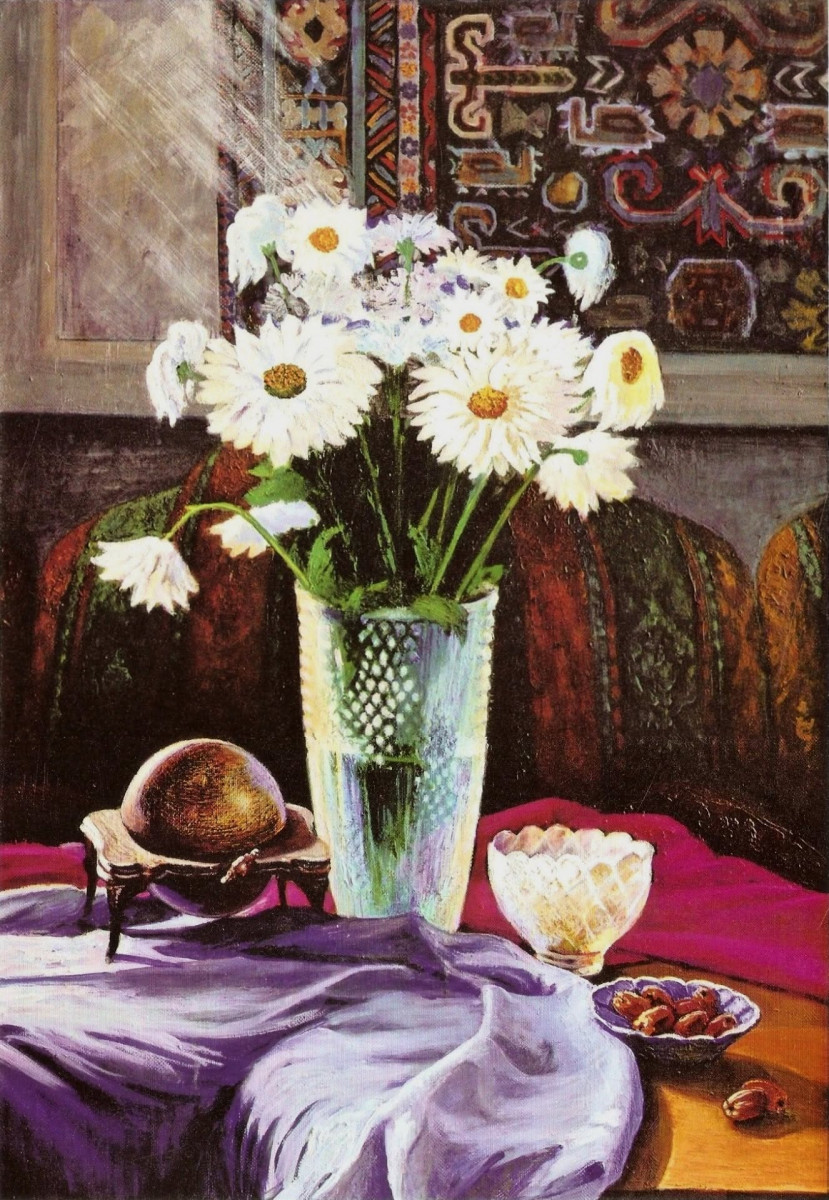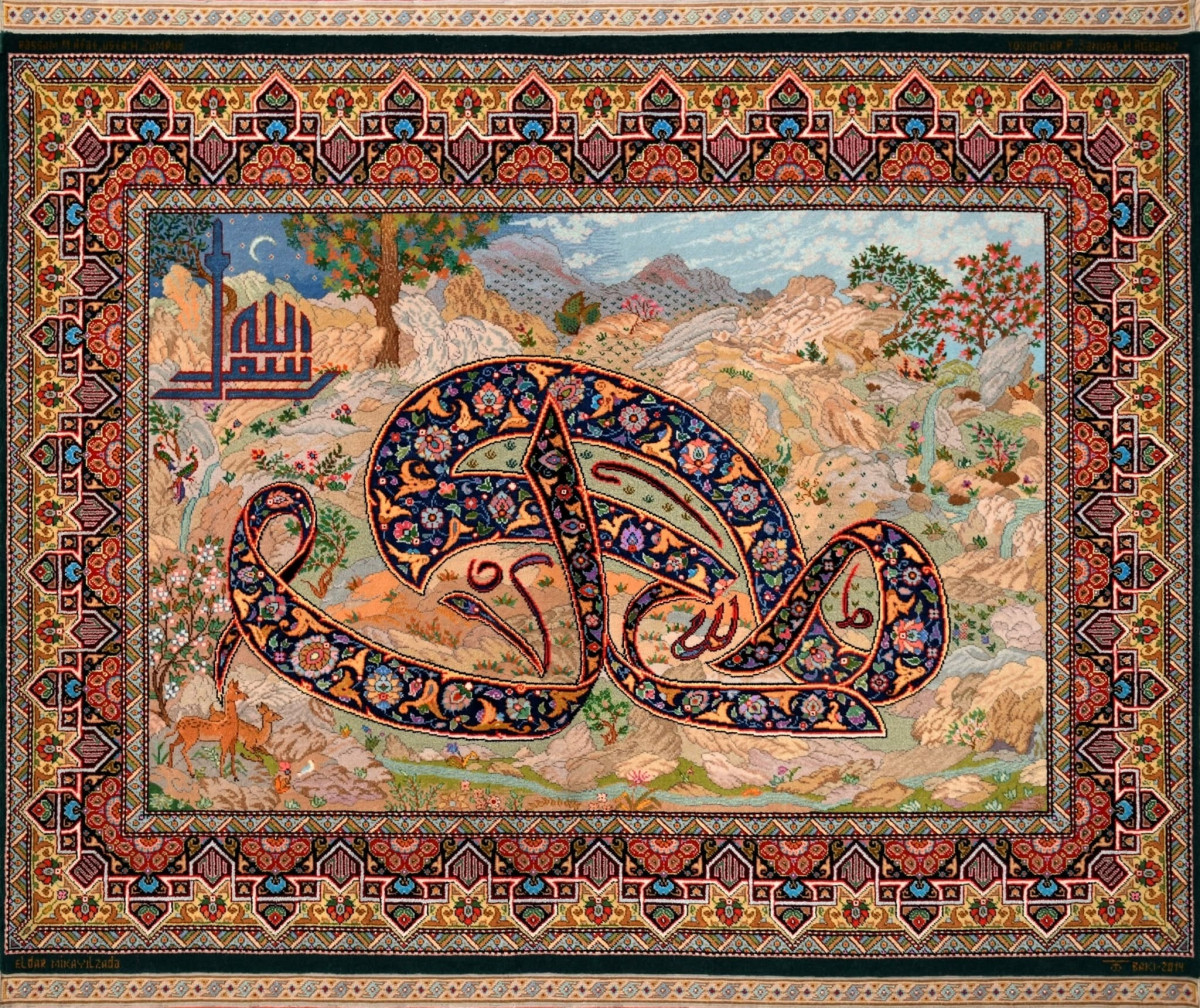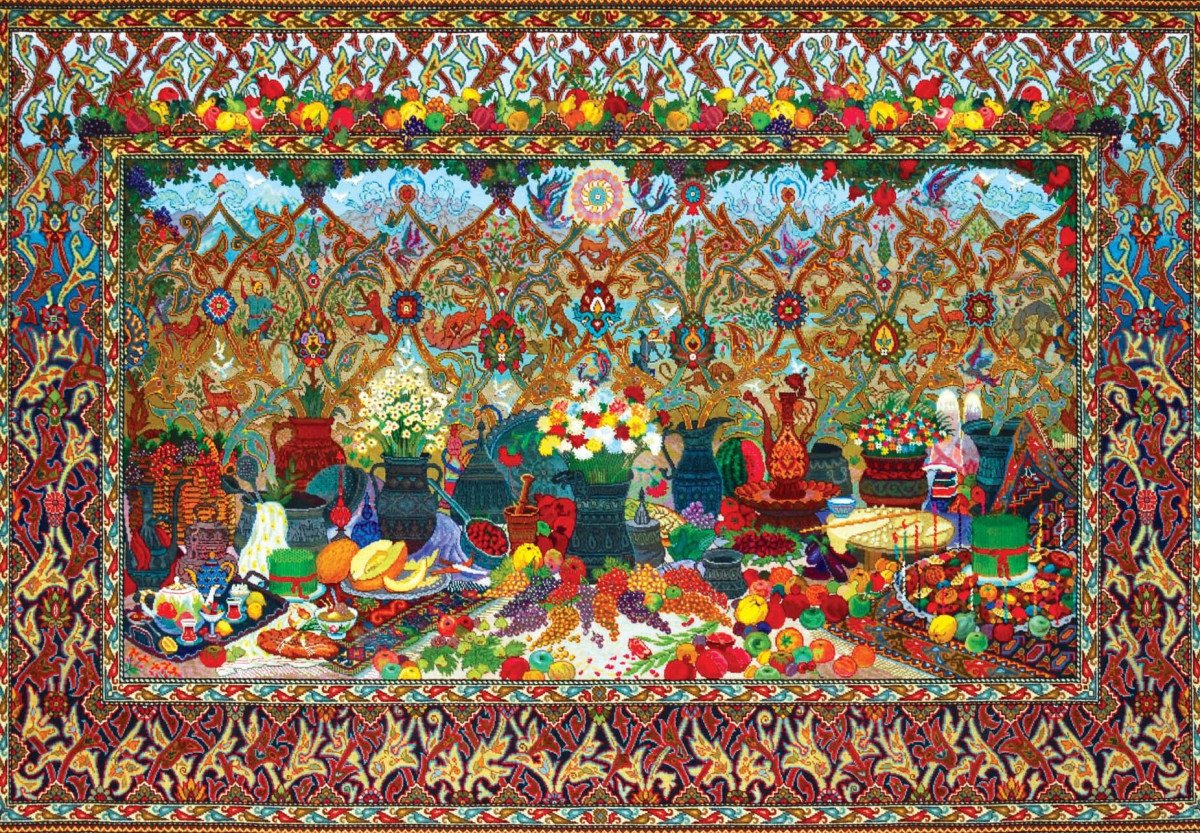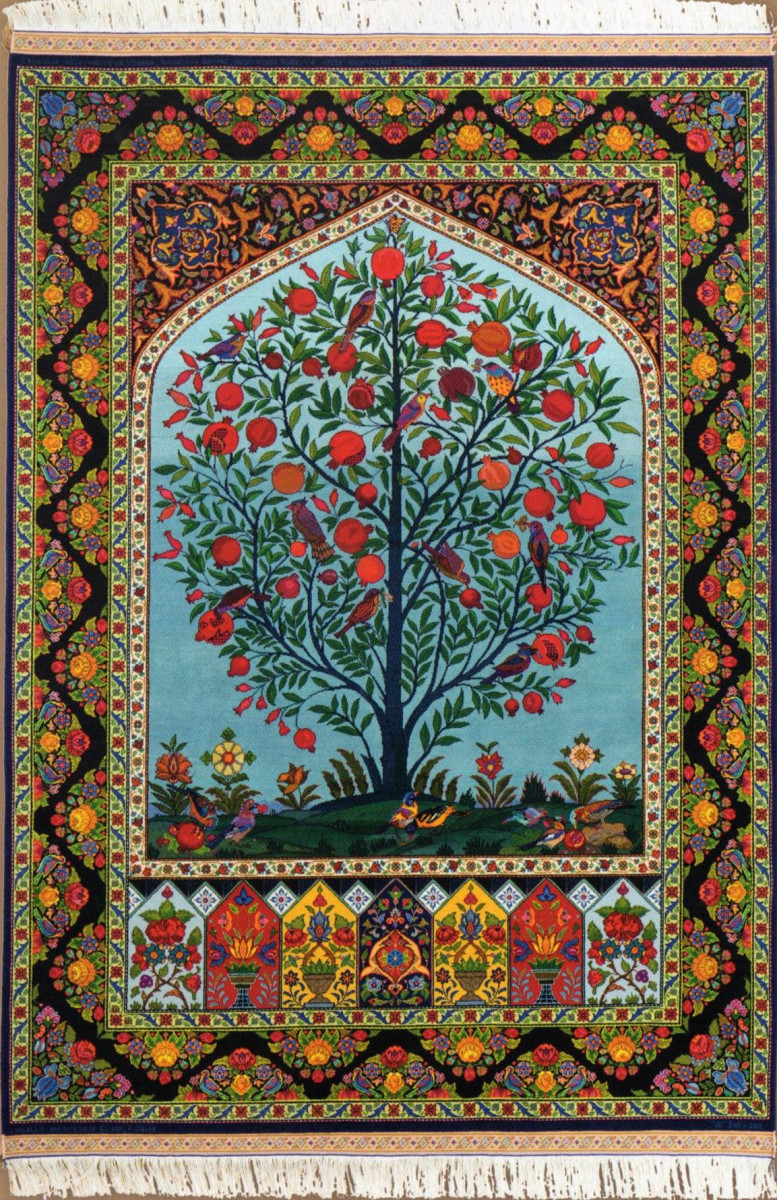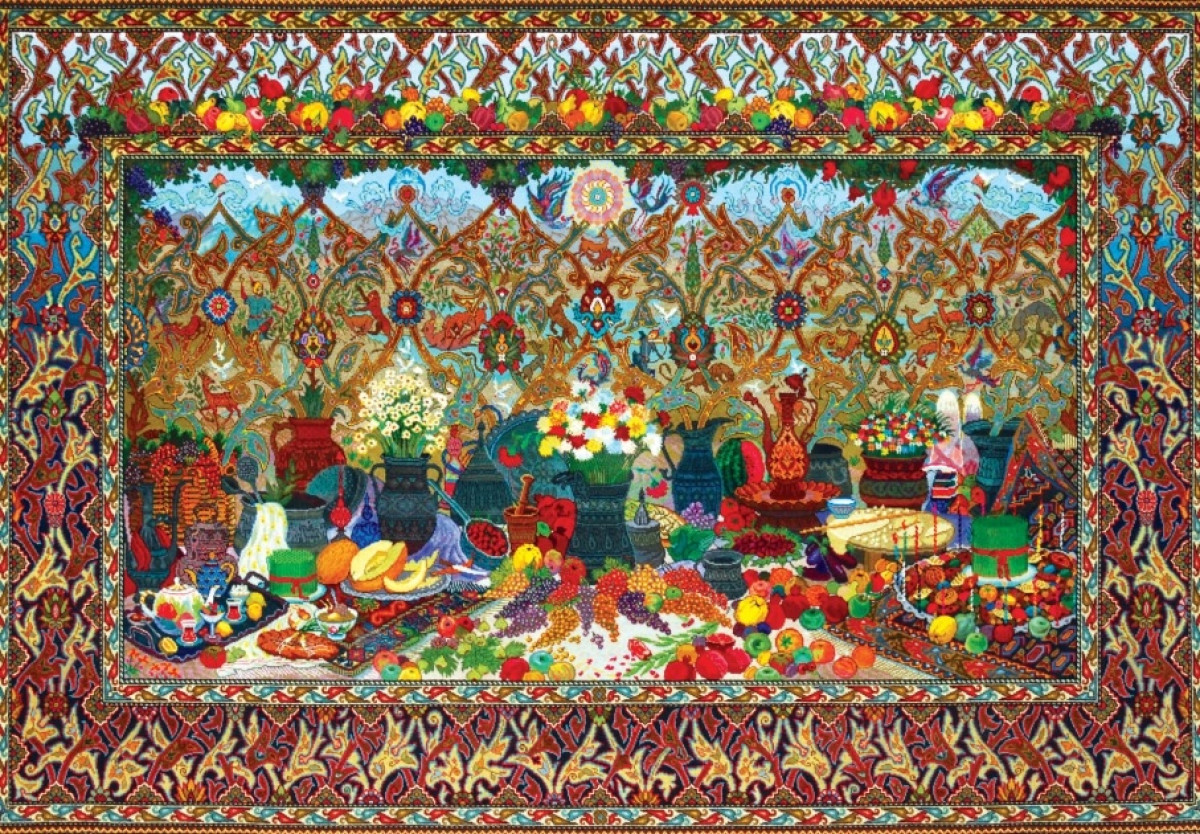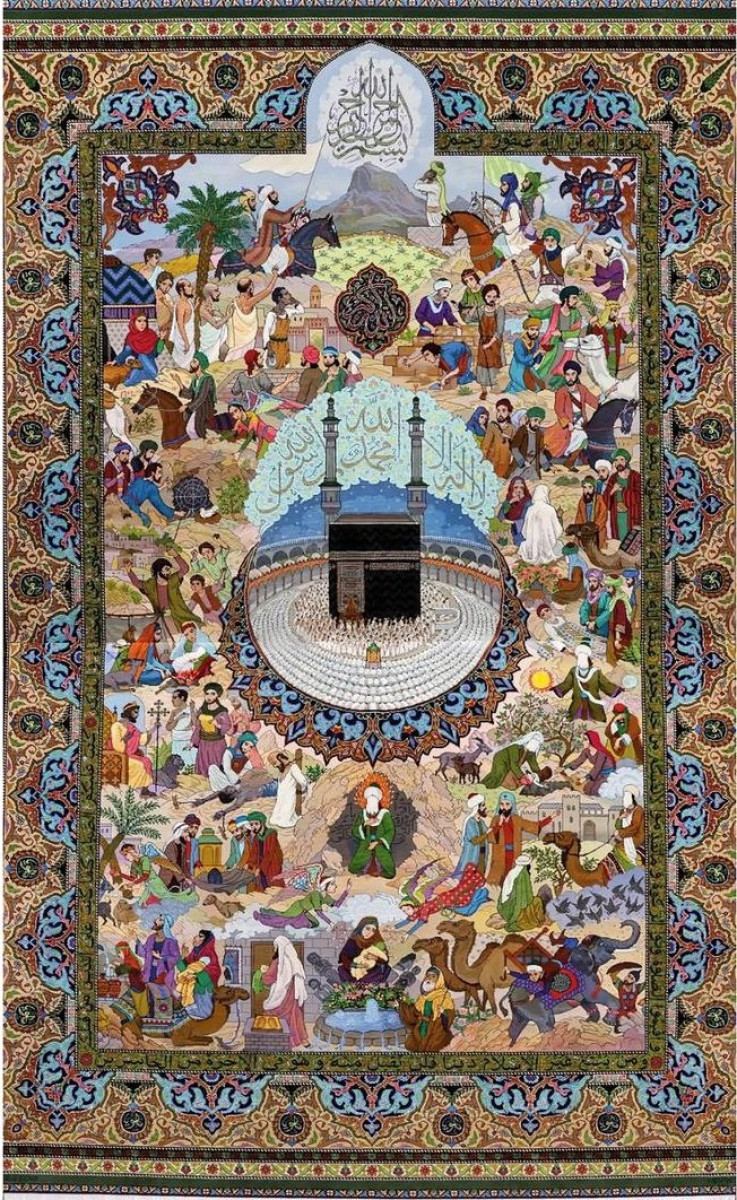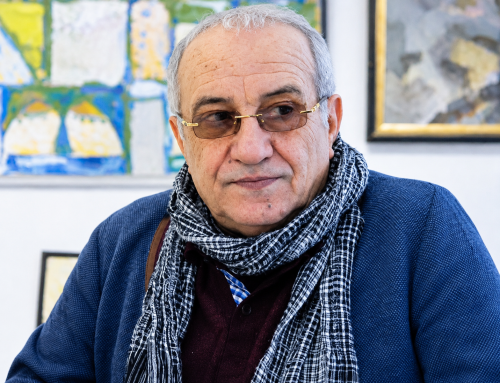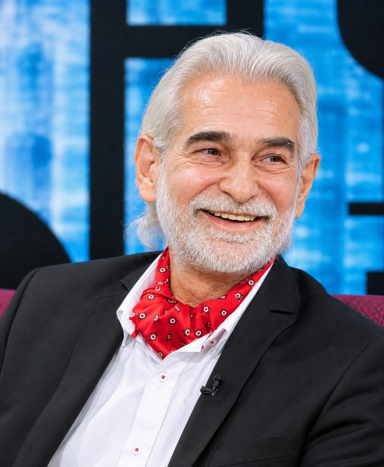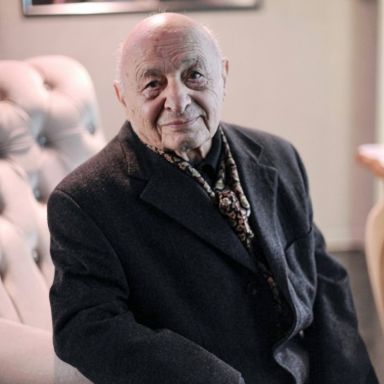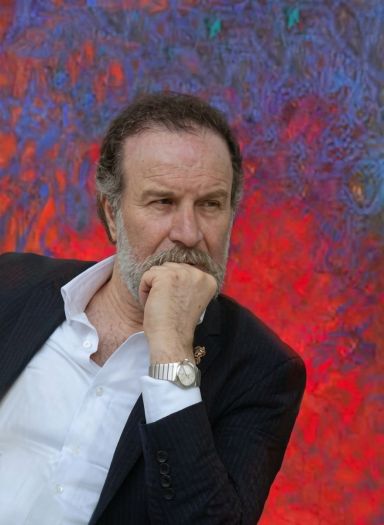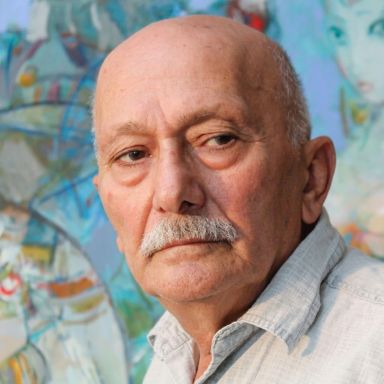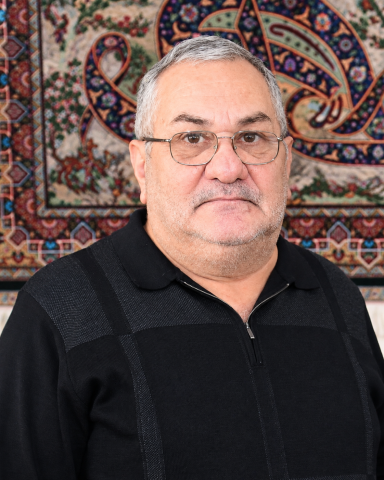
Eldar Hidayat oglu Mikayilzade was born on 18 January 1956 in Amirjan, Baku. He studied at the Azim Azimzade Baku Art School from 1971 to 1975 and at the Azerbaijan State Institute of Arts from 1978 to 1983, specialising in decorative and applied arts and carpet design. Since beginning his professional career as a carpet artist in 1984, he has been associated with the artists’ unions of Azerbaijan, the Soviet Union and Russia, as well as an artists’ association affiliated with UNESCO. In 2018, he was awarded the honorary title of People's Artist of the Republic of Azerbaijan. His practice also encompasses painting, graphic art and design. He contributed to the initial design sketches for Azerbaijan's national currency.
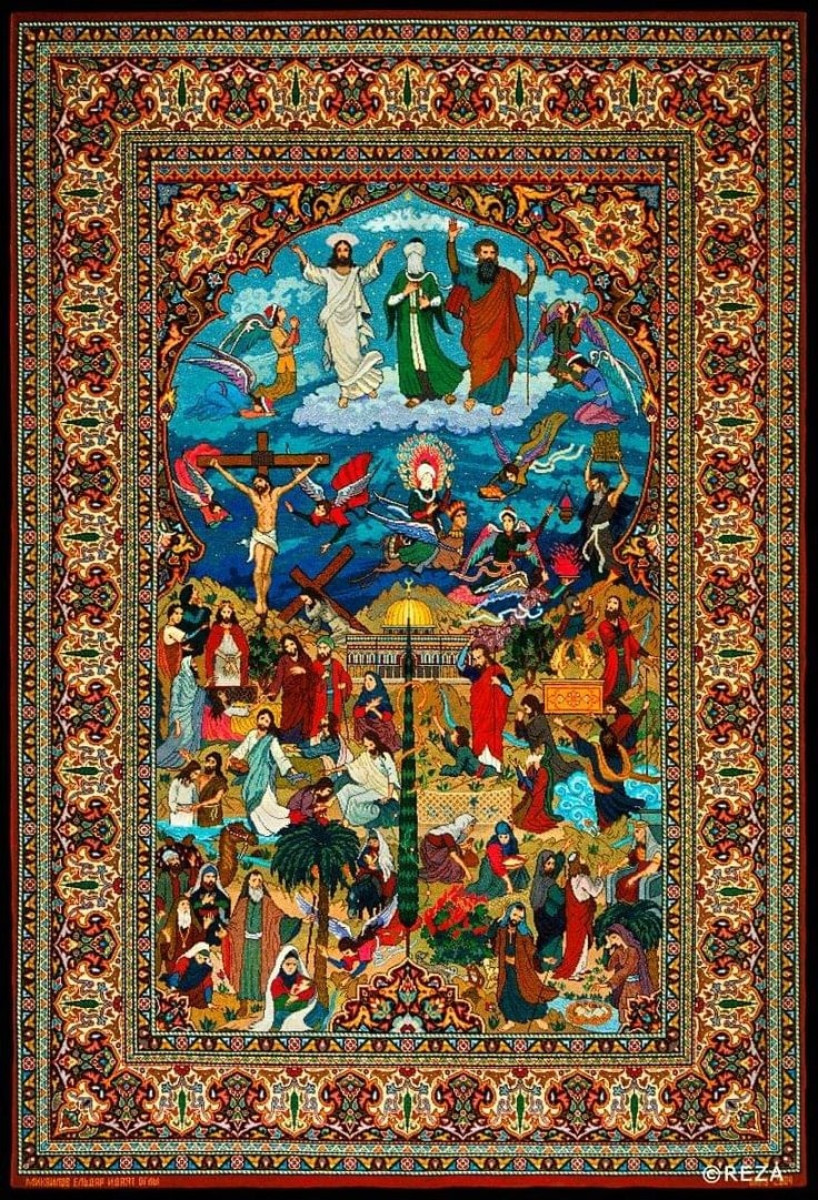
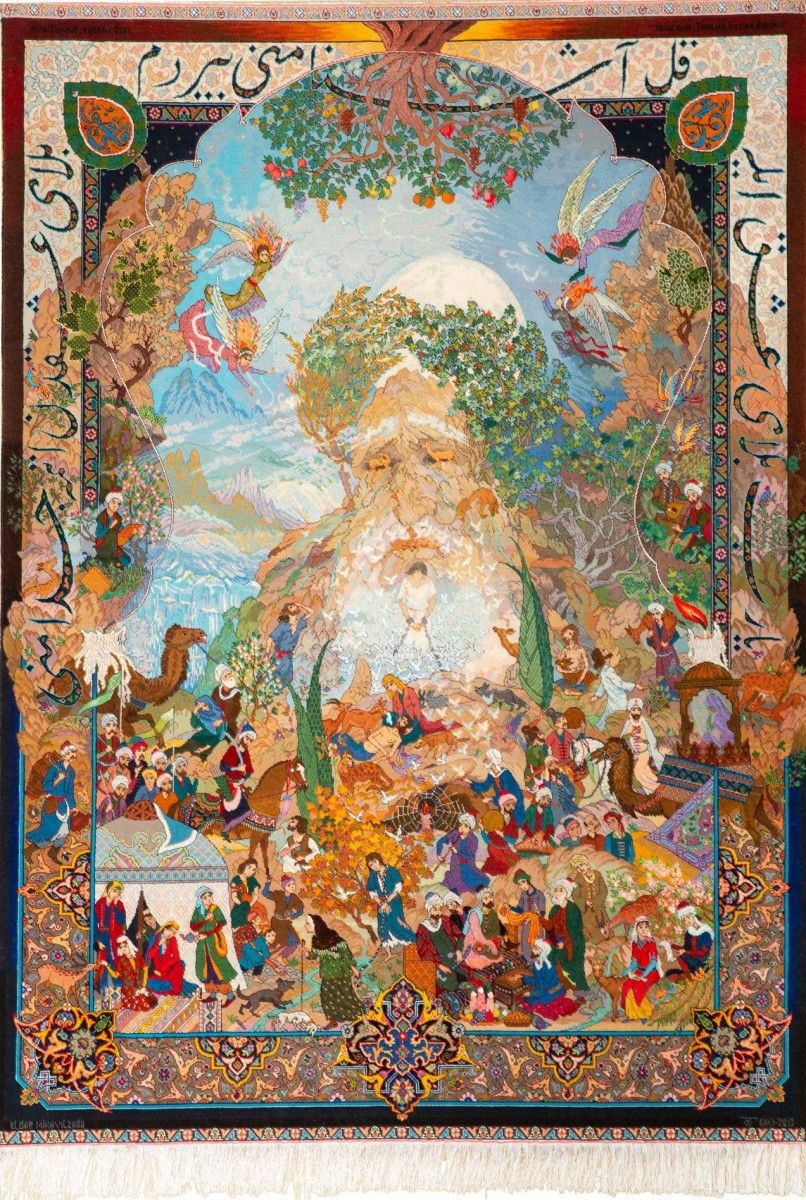
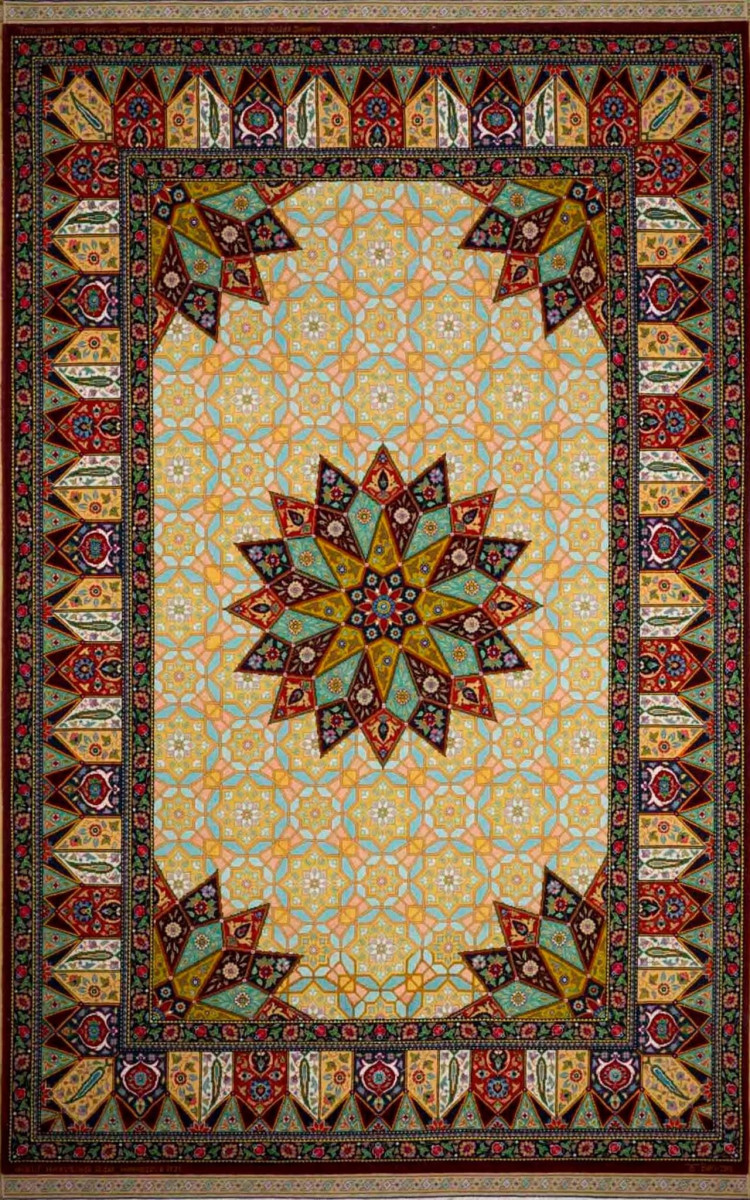
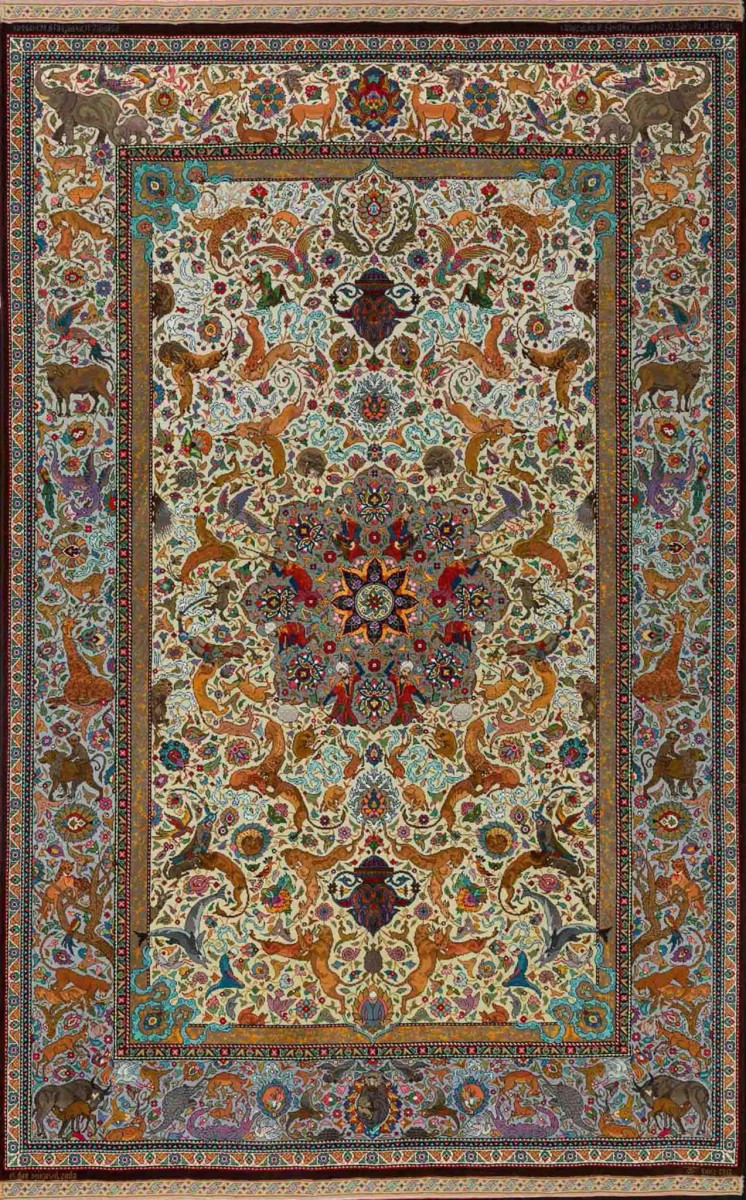
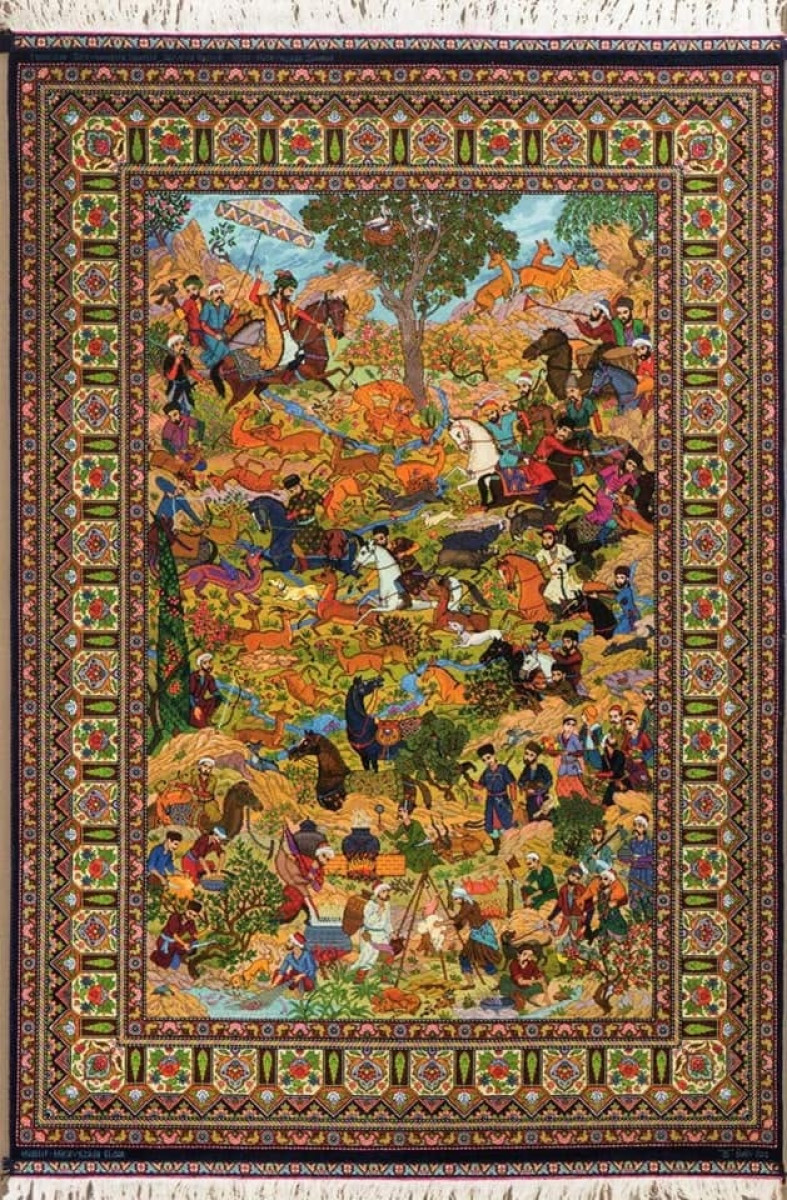
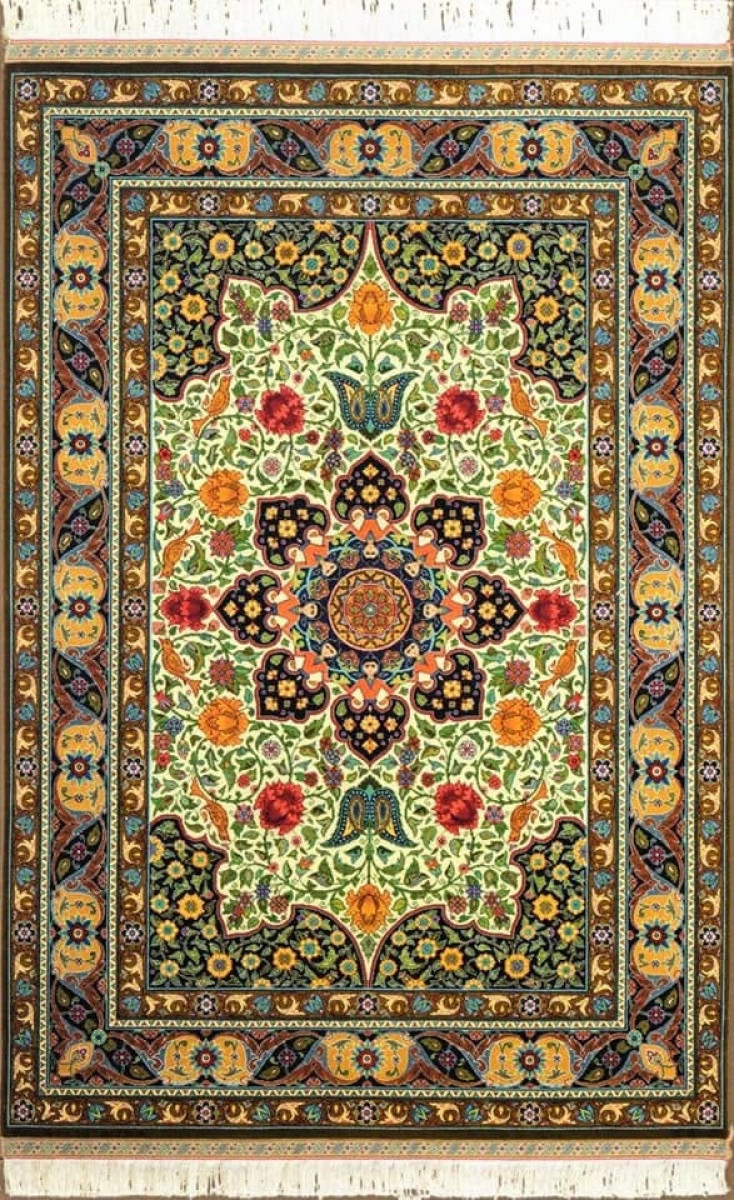
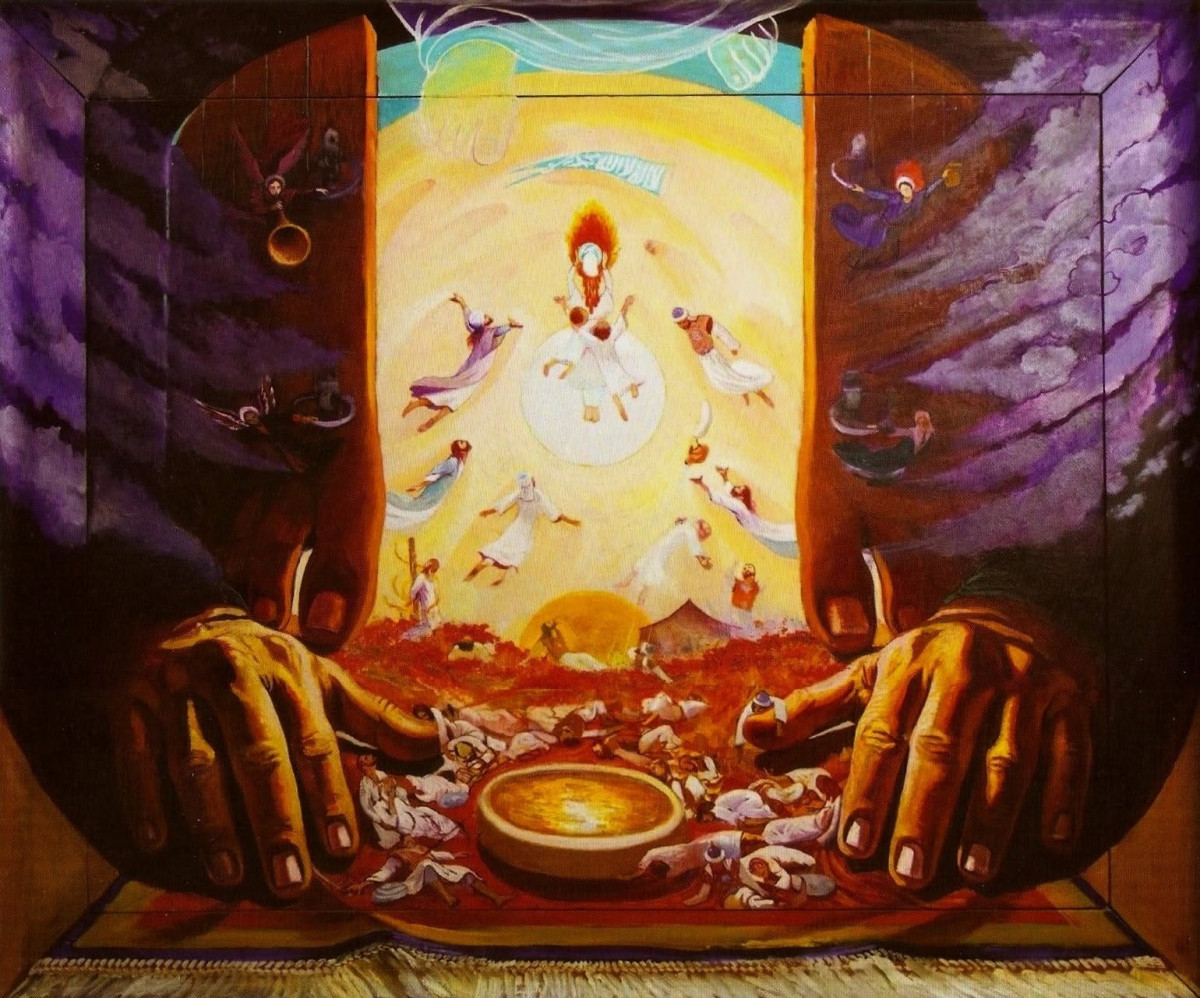
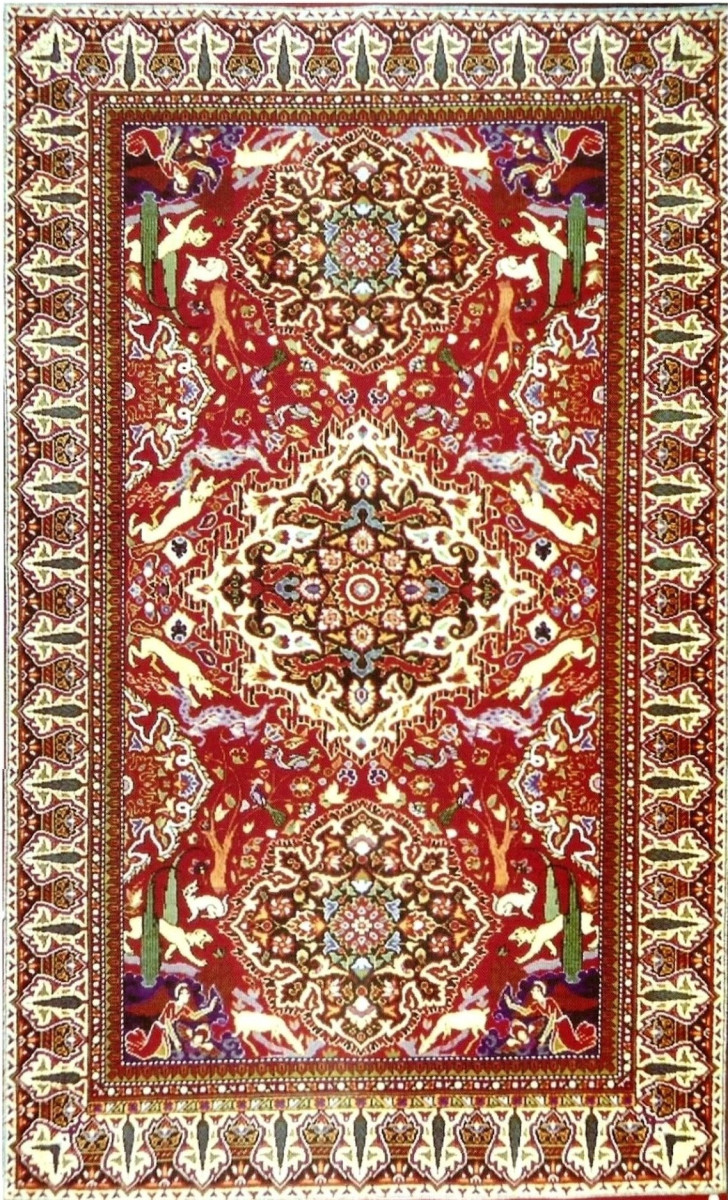
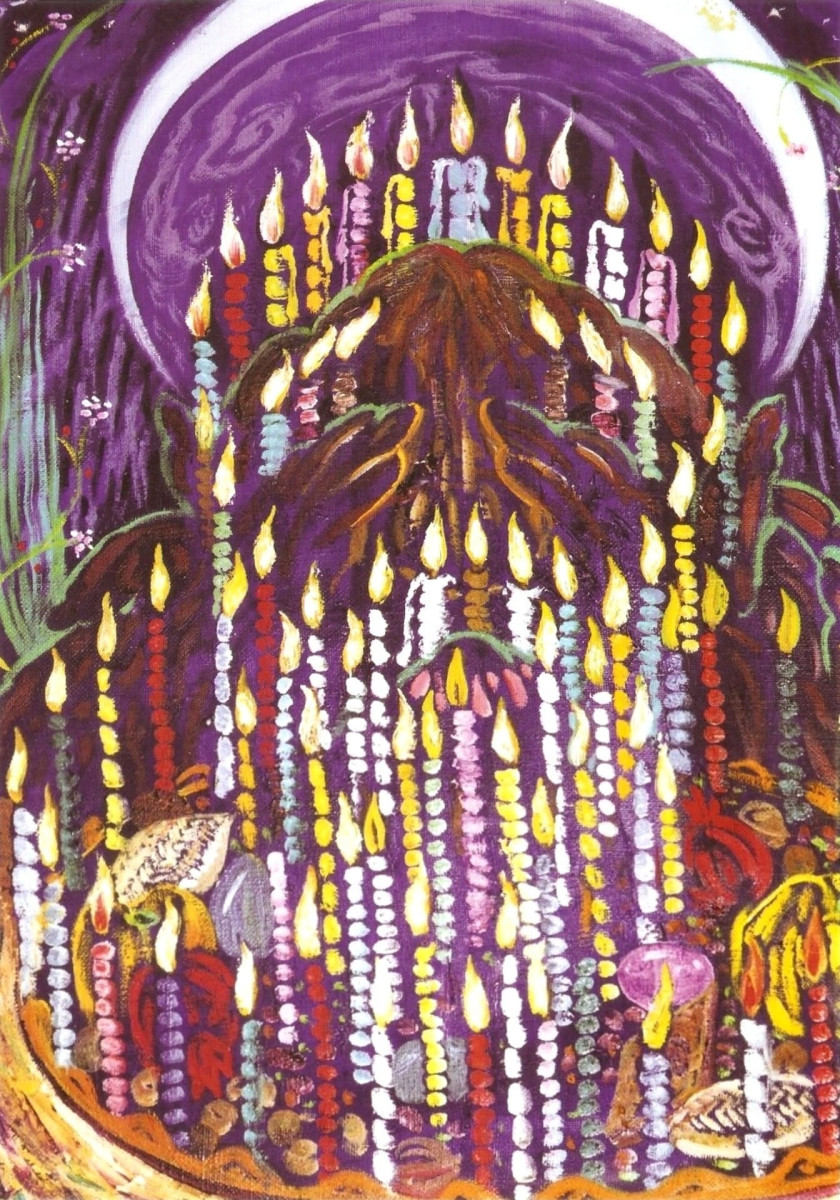
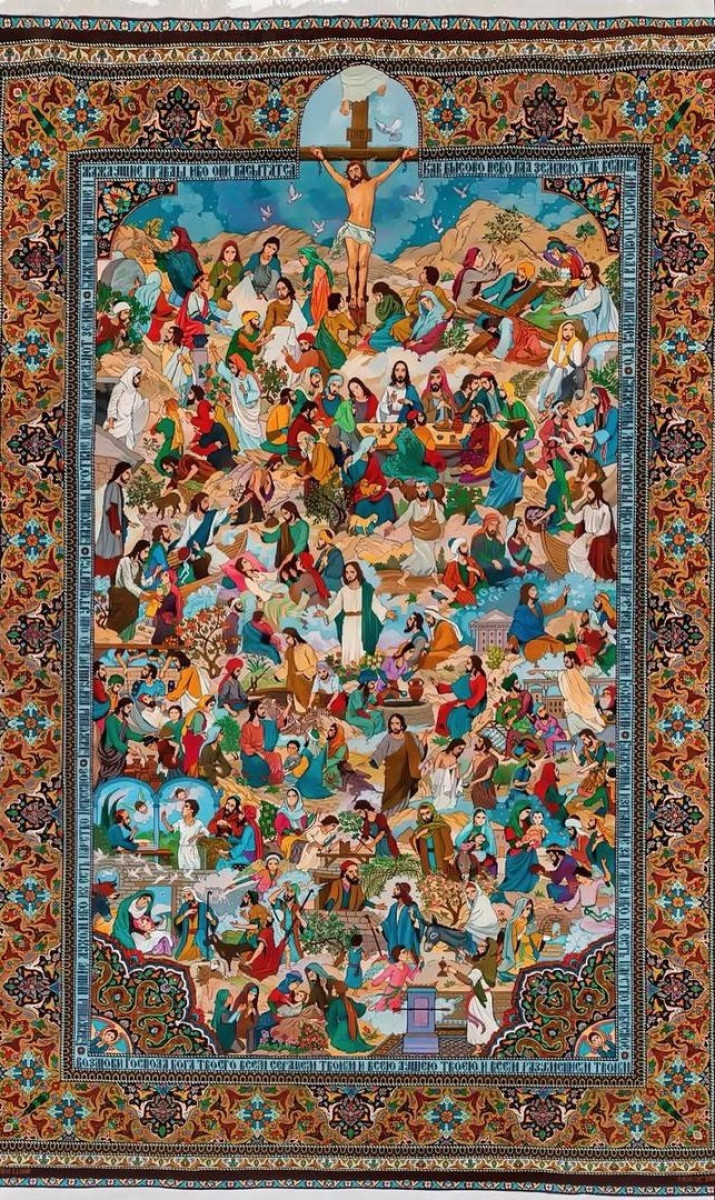
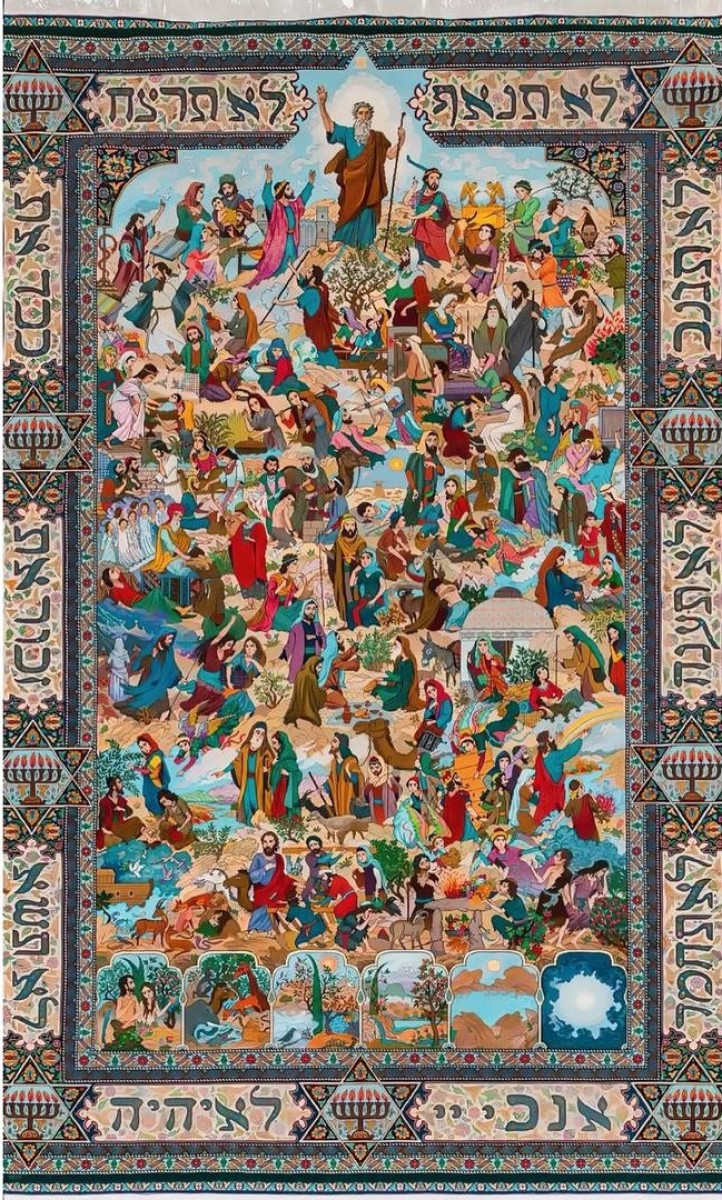
The distinctive quality of Mikayilzade's work lies in his expansion of the expressive possibilities of the traditional carpet. He approaches the woven surface not simply as a decorative arrangement of repeated motifs and harmonious colours, but as an independent artistic space capable of conveying complex ideas, narratives and symbolic relationships. In his compositions, ornament is not a fixed element inherited from the past; it becomes a visual language that can be reinterpreted and assigned new meaning.
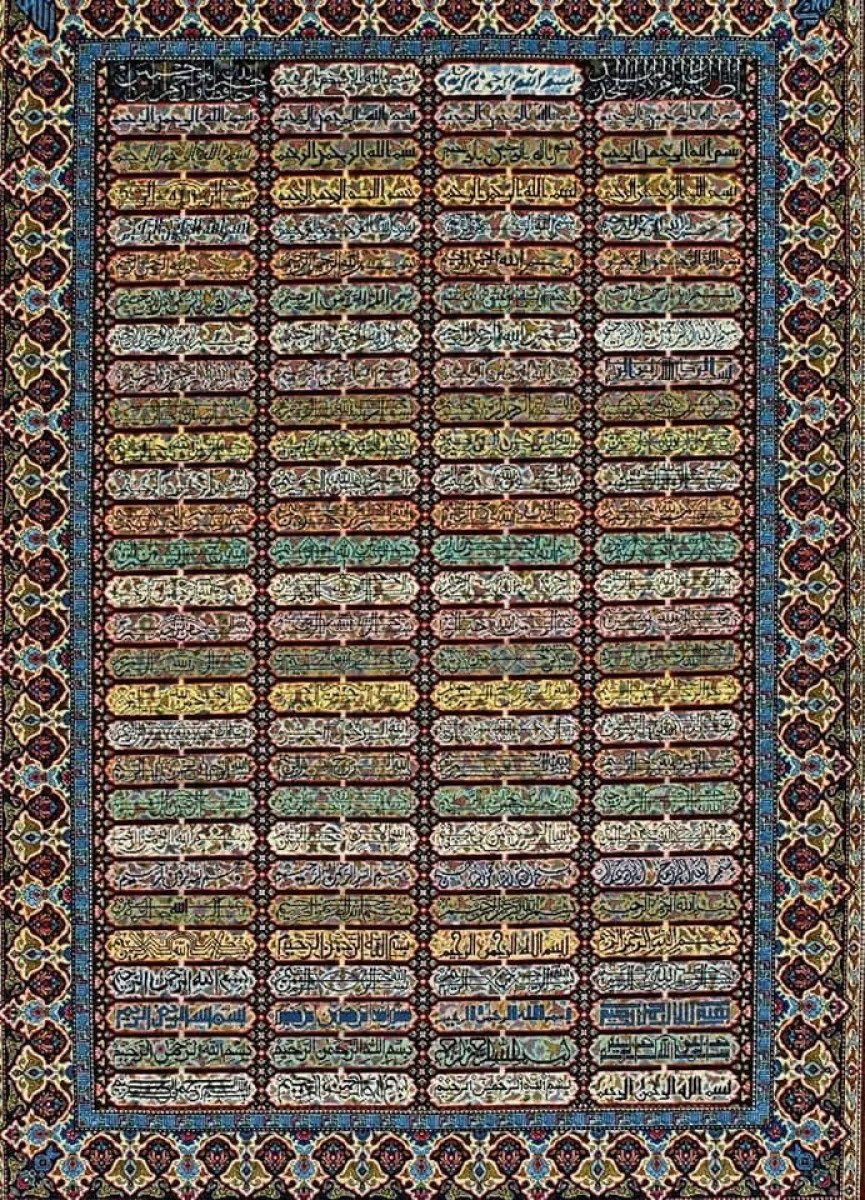
“Yeni Khila”, created in 1977, represents an early indication of this individual approach. Traditional geometric structures and ornamental rhythms are reorganised into a more personal compositional framework. In subsequent works, including “Sattar's World”, “Whole Azerbaijan”, “Shabi-Hijran”, “The World of Fairy Tales” and “Khamsa”, these explorations develop through increasingly diverse subjects. Rather than reproducing the principles of classical carpet schools mechanically, the artist adapts them to the demands of narrative and symbolic expression.
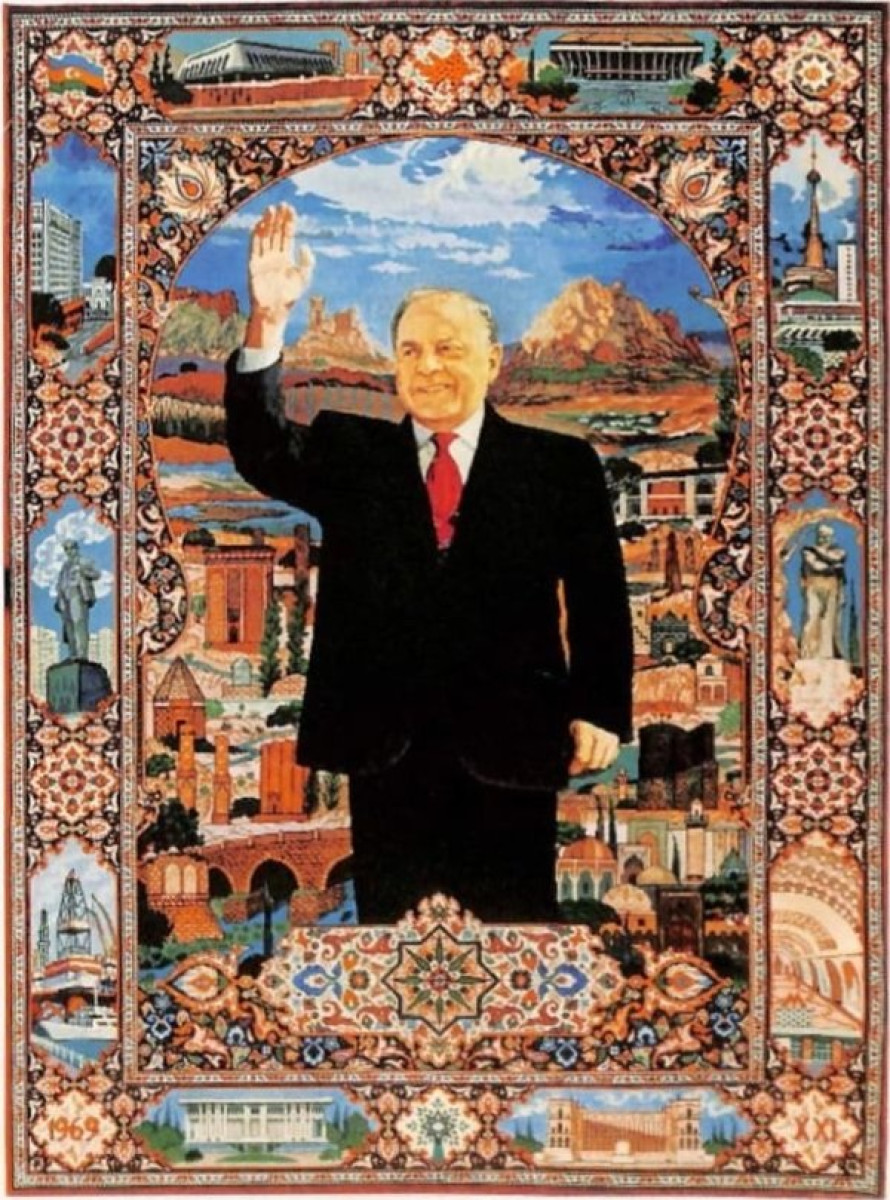
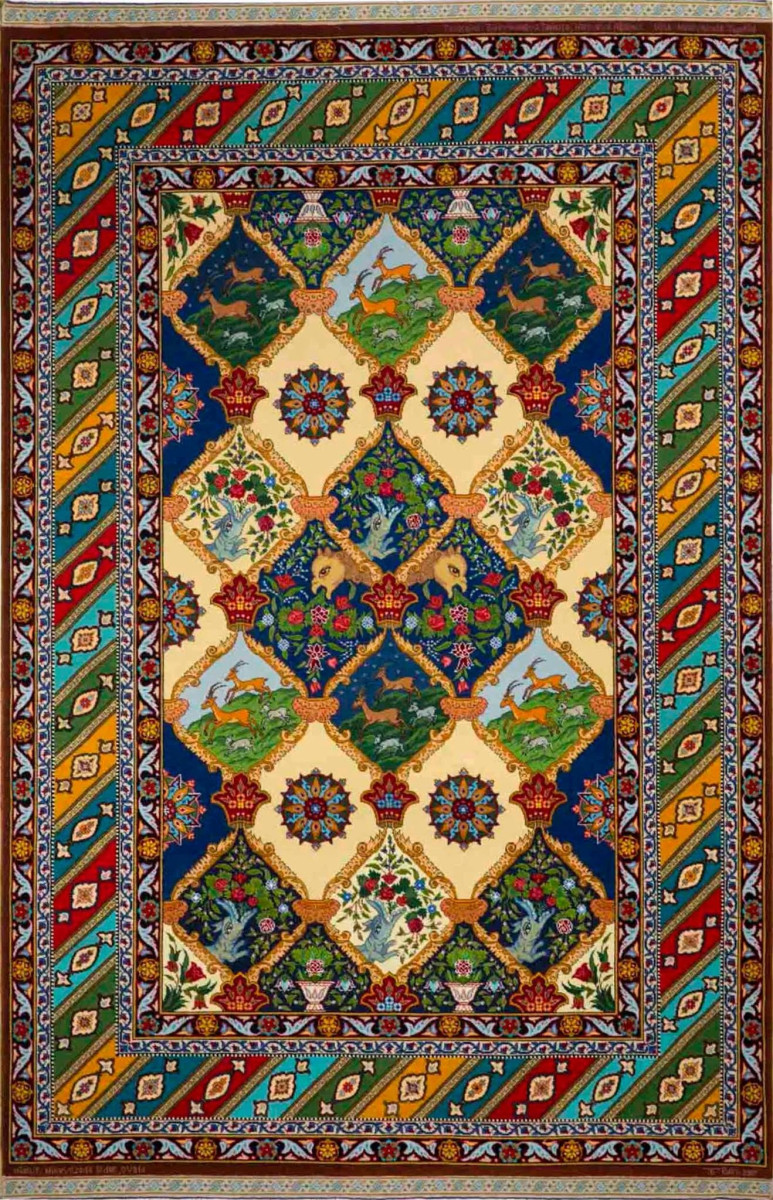
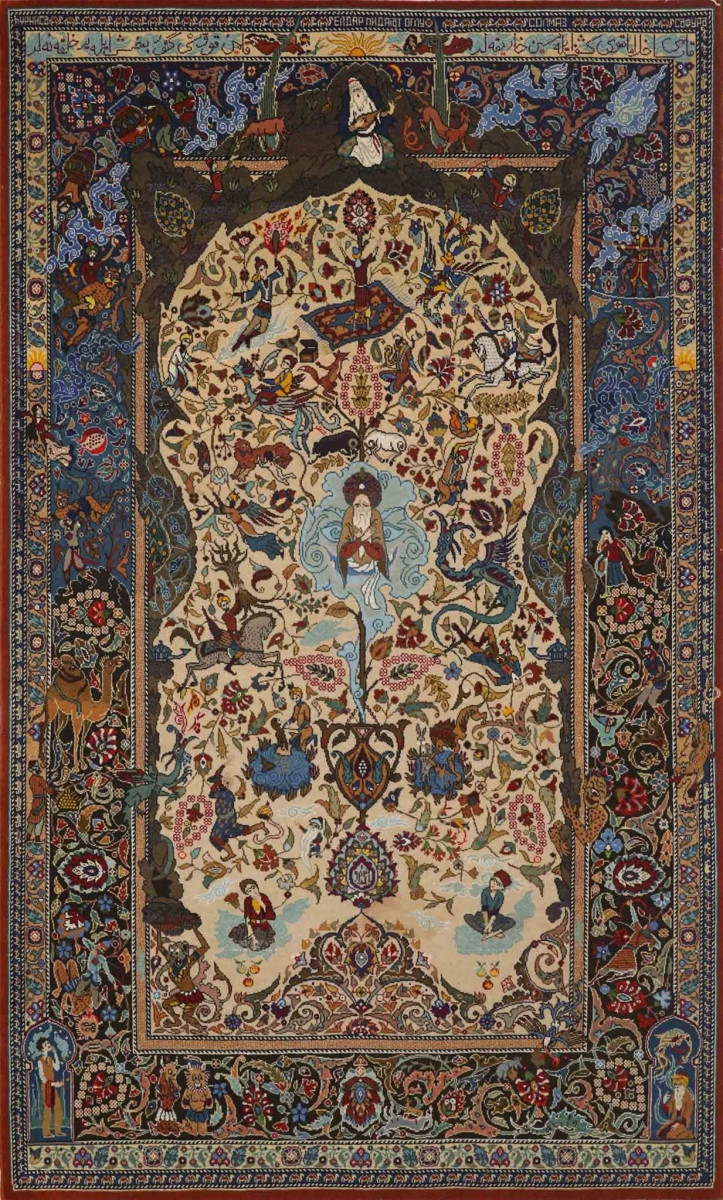
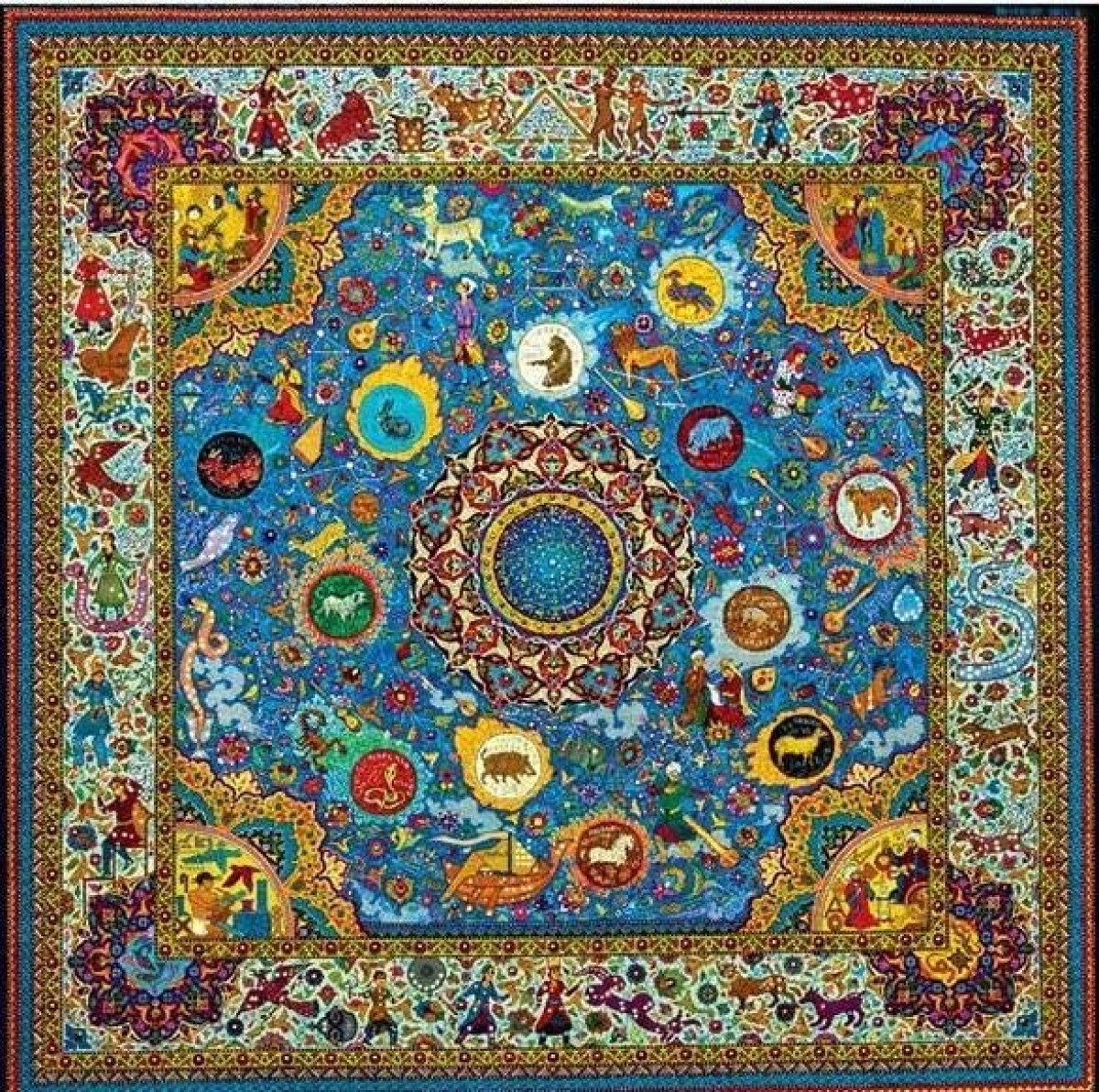
The relationship between the central field and the border is particularly significant in his compositions. The principal image or idea placed at the centre enters into a visual dialogue with the surrounding motifs. The border may extend the meaning of the central scene, creating continuity across the entire surface. Colour distribution, rhythm, the placement of figures and the scale of ornamental elements all contribute to this structural unity. The carpet is therefore conceived as an integrated visual system rather than a collection of separate decorative parts.
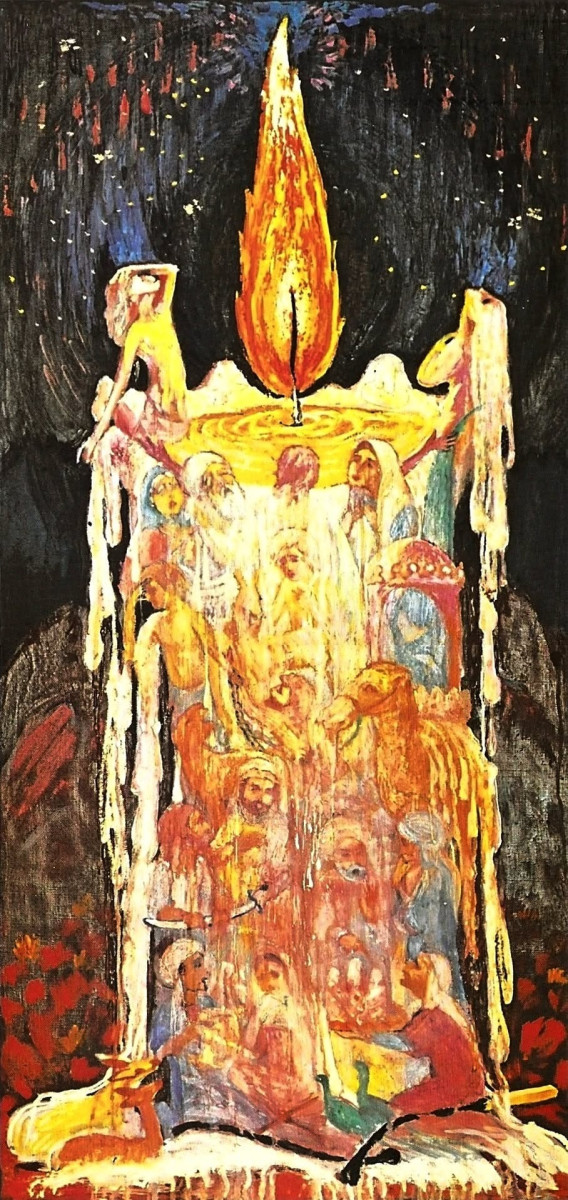
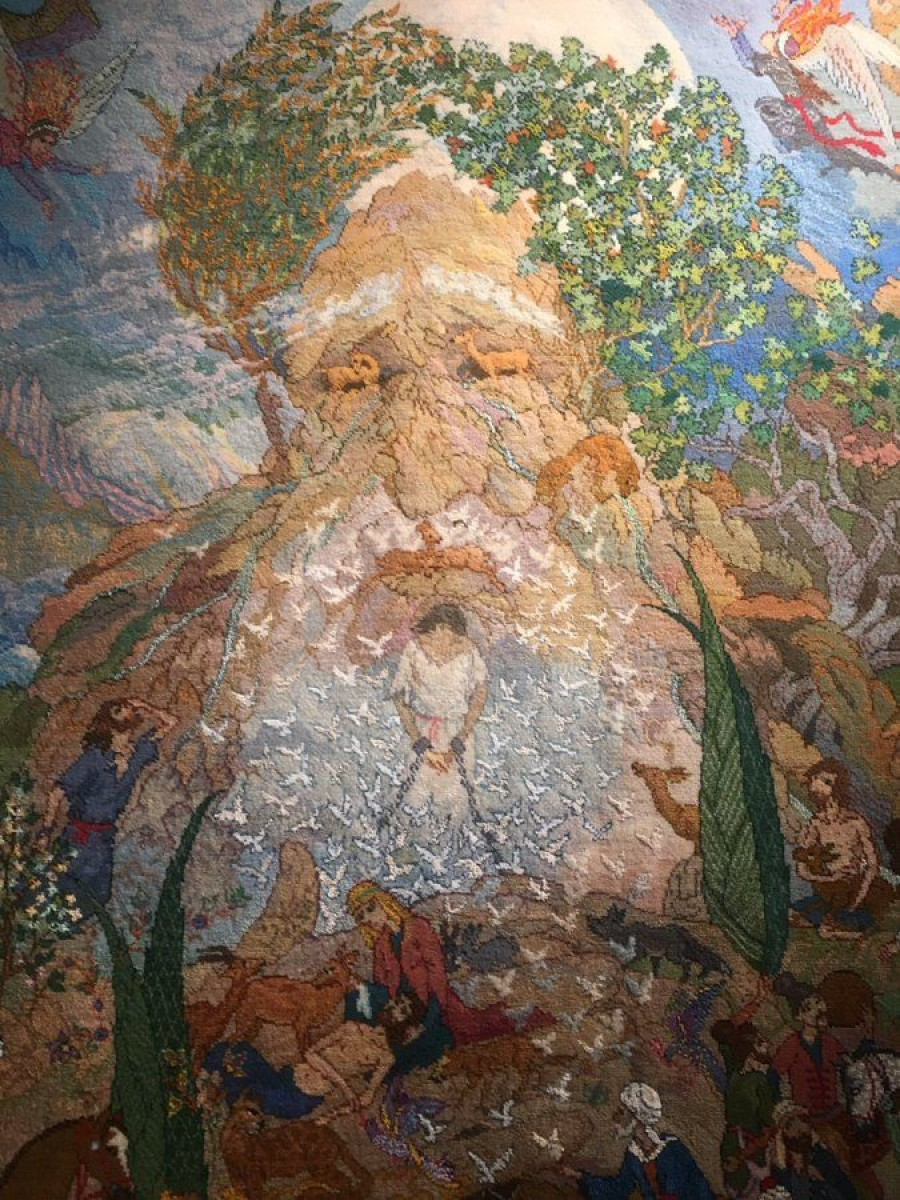
Literature, music, history and spiritual subjects provide important sources for Mikayilzade's narrative carpets. In “The Treasury of Secrets”, a scene from Nizami Ganjavi's Khamsa, “Nushiravan and the Owls”, is translated into a woven narrative composition. “Mugham” explores the relationship between musical imagery and ornamental structure. In “The Candle”, dedicated to the poetic world of Fuzuli, the artist moves beyond direct illustration, interpreting the literary subject through a symbolic and emotionally charged visual space.
His portrait carpets form another significant aspect of his practice. The works dedicated to Sattar Bahlulzade — “Sattar's World”, “Sattar Bahlulzade and His Friends”, “Sattar” and “Sattar's Dream” — approach the painter not merely as an individual portrait subject, but through the wider context of his artistic legacy. The inclusion of 36 paintings by Bahlulzade in the composition of “Sattar's Dream” demonstrates how the carpet can absorb the visual memory of another art form and transform it through its own woven structure.
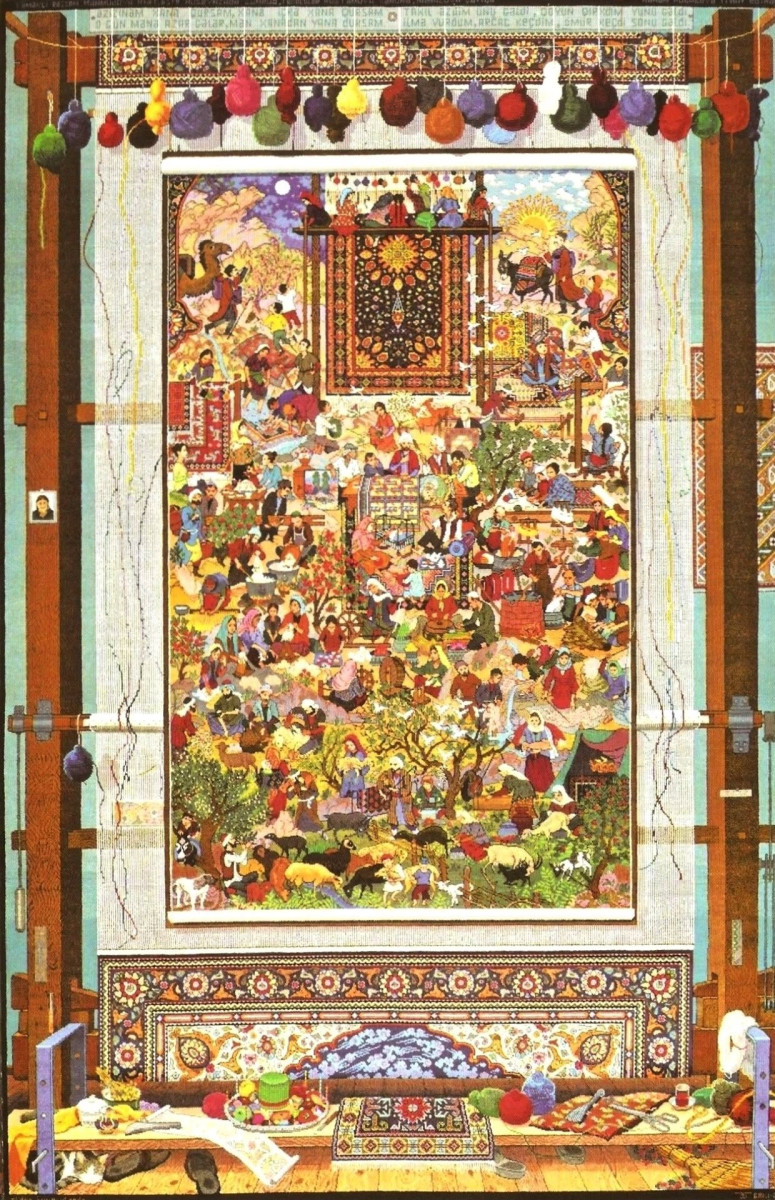
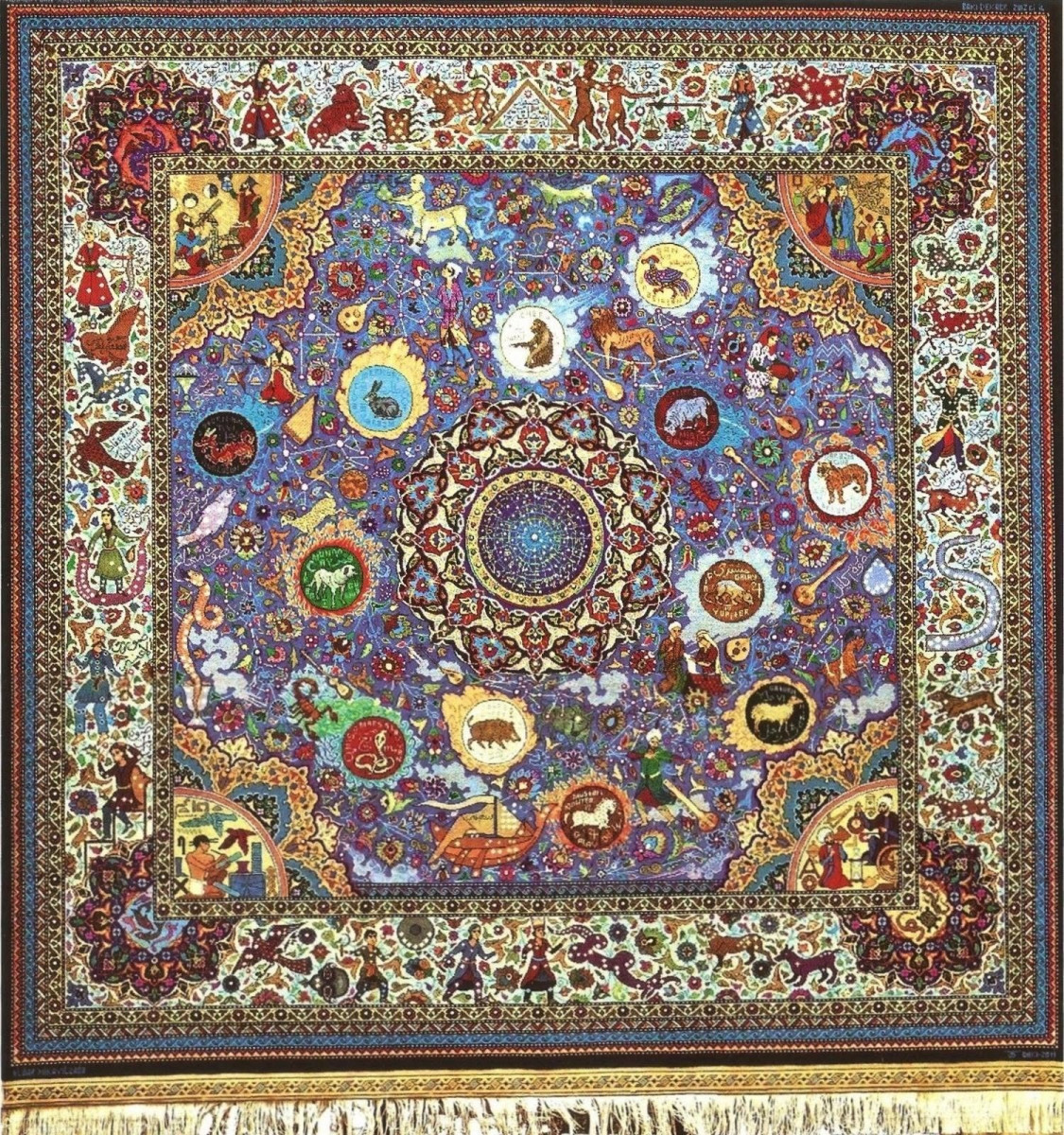
In “Creation” and “Creativity”, the process of carpet-making itself becomes the subject. Weaving is no longer only the technique through which the work is produced; it becomes part of the work's narrative content. “Kahkeshan”, or “Milky Way”, extends this conceptual direction into a cosmic dimension. Constellations and celestial forms are incorporated into the ornamental vocabulary, turning the carpet into a visual meditation on the universe.
The series inspired by the cultural heritage of Shaki is also important in understanding the artist's approach to regional tradition. Drawing on the town's architectural heritage, ornamental vocabulary and historical memory, Mikayilzade develops new compositions that preserve local artistic characteristics while presenting them through a contemporary visual language.
Mikayilzade's contribution lies in the way he reconsiders the relationship between continuity and innovation in carpet art. His work brings inherited ornament into dialogue with contemporary visual thought, while the technical possibilities of weaving become vehicles for philosophical and narrative content. Through this synthesis, the carpet emerges not only as a bearer of cultural heritage but also as an autonomous artistic medium capable of articulating new ideas.
Art Space Gallery MEDIA