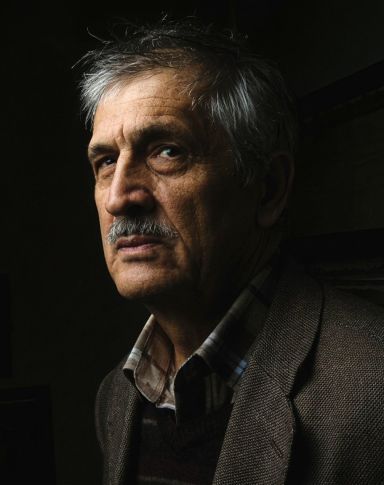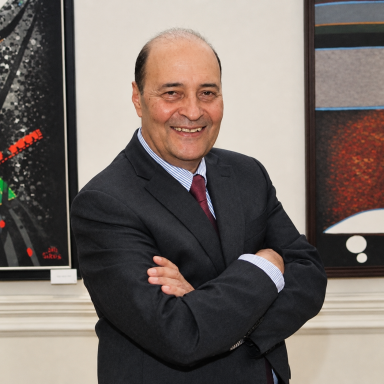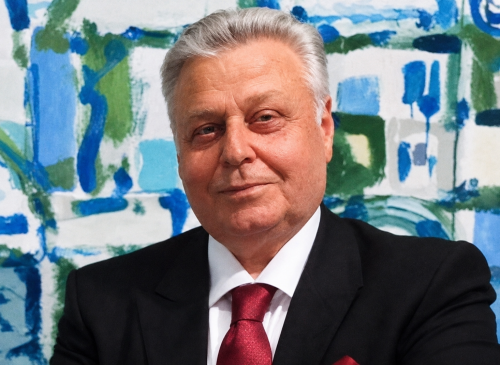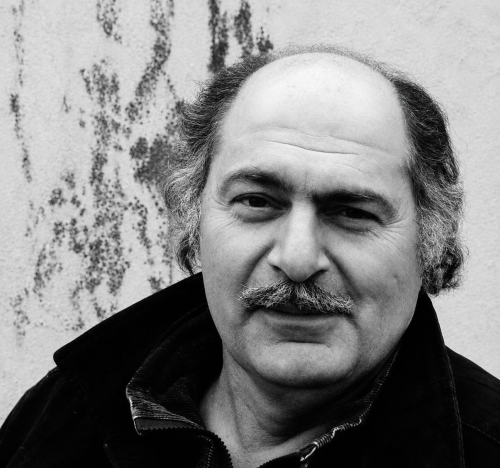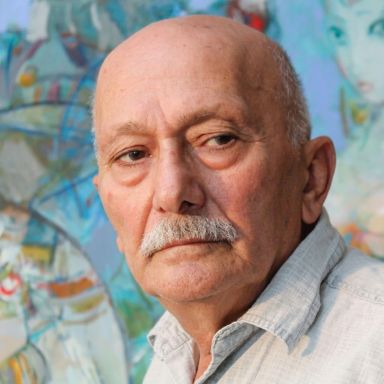
Mayis Alishir oglu Aghabeyov was born in Baku on 1 May 1941. After graduating from the Azerbaijan State Art School named after Azim Azimzade in 1961, he continued his studies at the Art Faculty of the All-Union State Institute of Cinematography in Moscow, completing his education in 1969. That year, he began working as a production designer at the Azerbaijanfilm studio. He joined the Artists’ Union of Azerbaijan in 1972, was awarded the honorary title of Honoured Artist in 1990 and became People's Artist of Azerbaijan in 2000. From 1996, he also pursued an academic career, teaching at the Azerbaijan State University of Culture and Arts and later serving as a professor and head of the Department of Academic Painting at the Azerbaijan State Academy of Fine Arts. A recipient of the Humay National Prize in 2012, Aghabeyov's career encompassed painting, graphic art, sculpture and cinema.
Aghabeyov's artistic identity developed across several interconnected disciplines. Although he became widely recognised for his work in cinema, his practice also encompassed painting, graphic art and sculpture. The relationship between these fields is central to understanding his contribution: he approached the visual environment not as a collection of separate decorative elements, but as a coherent structure in which space, objects, costume, light and human presence work together to shape meaning.
His work as a production designer was particularly significant in historical films. In productions such as Nasimi, Babek and Nizami, the reconstruction of historical settings required more than the arrangement of convincing scenery. Architecture, clothing, furnishings and objects had to establish a visual world capable of communicating the historical atmosphere and the social context of the narrative. Aghabeyov's contribution lay in translating historical research and artistic imagination into a unified cinematic environment. His work on Babek, for example, involved the development of architectural and interior concepts, as well as costume designs that helped define the film's historical setting.
The surviving preparatory material offers an additional perspective on his creative process. Some of the sketches developed for Babek were not included in the final film, yet they remain valuable evidence of the visual ideas considered during production. Such material expands the understanding of a production designer's work beyond what eventually appears on screen. It reveals the range of artistic decisions, alternative solutions and historical interpretations involved in constructing a film's visual identity.
The connection between cinema and easel painting becomes especially apparent in Aghabeyov's treatment of space and composition. In cinema, every object and architectural detail participates in the development of a scene. In painting, these elements can acquire a more autonomous symbolic and emotional role. His work Spring Celebration (1985), preserved in the collection of the State Museum of Oriental Art in Moscow, provides a particularly revealing example: a version of its composition was also used in a design sketch for the film A Walk Outside the City. This relationship demonstrates how a visual idea could move between different artistic forms while retaining its compositional identity.
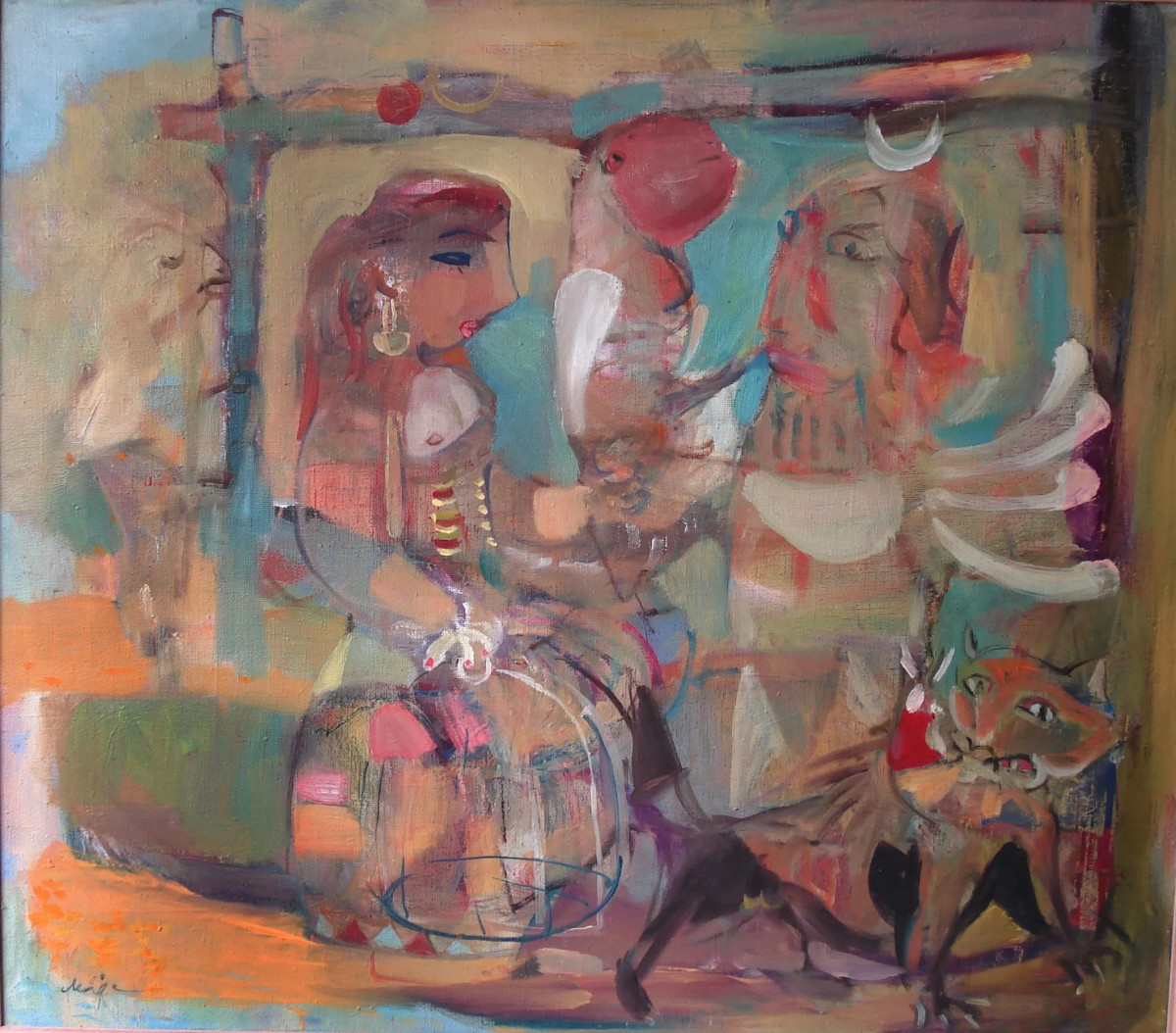
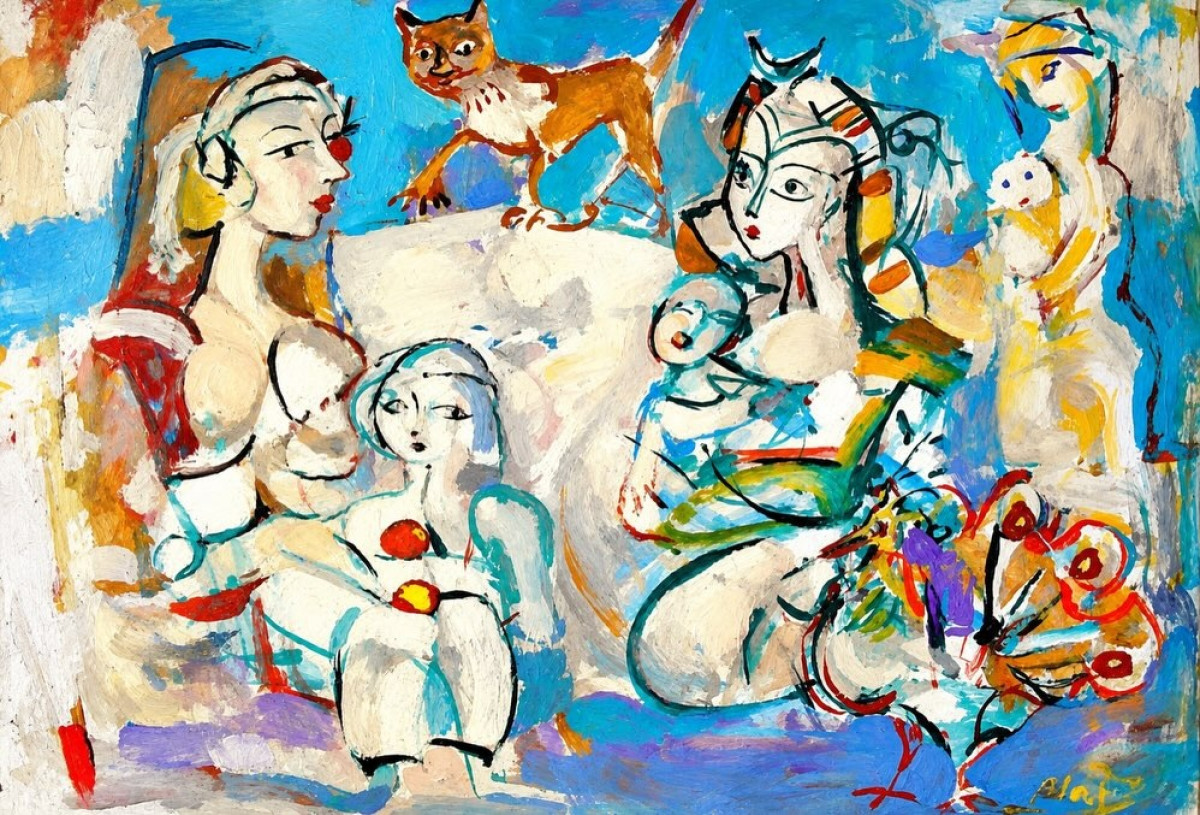
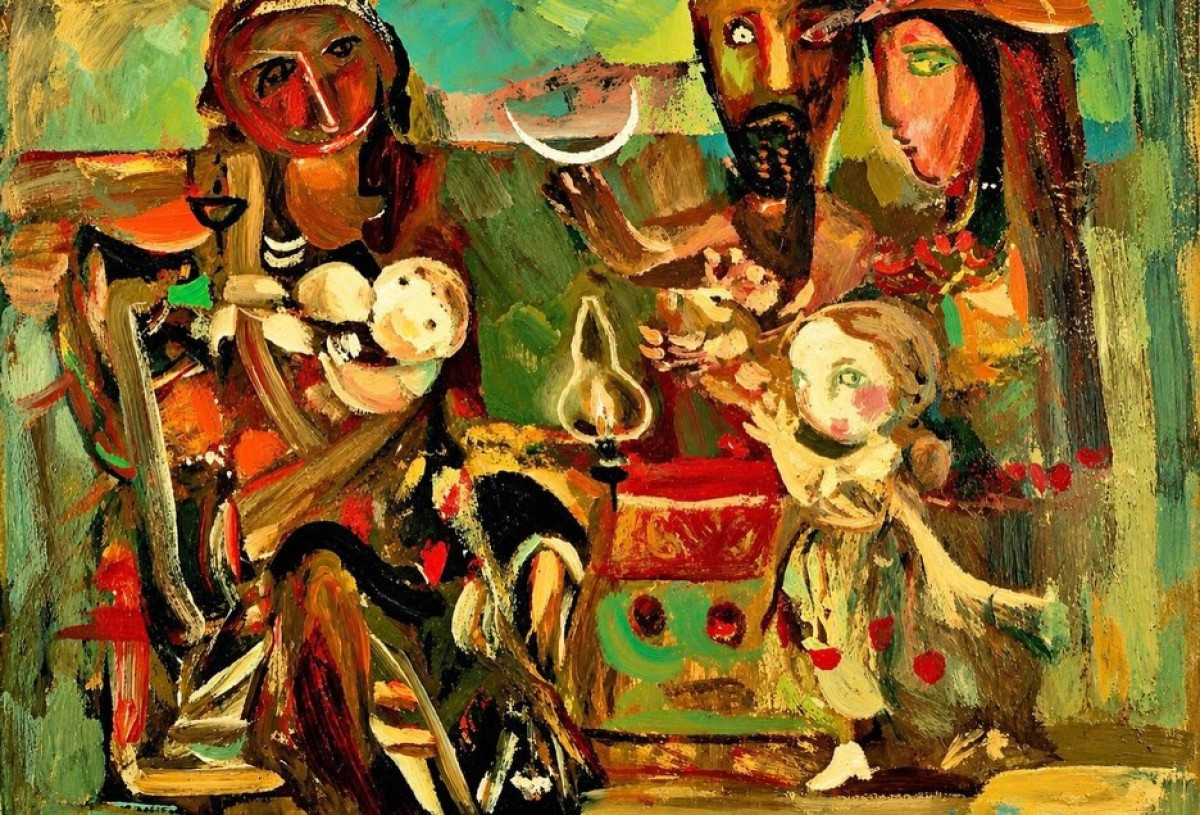
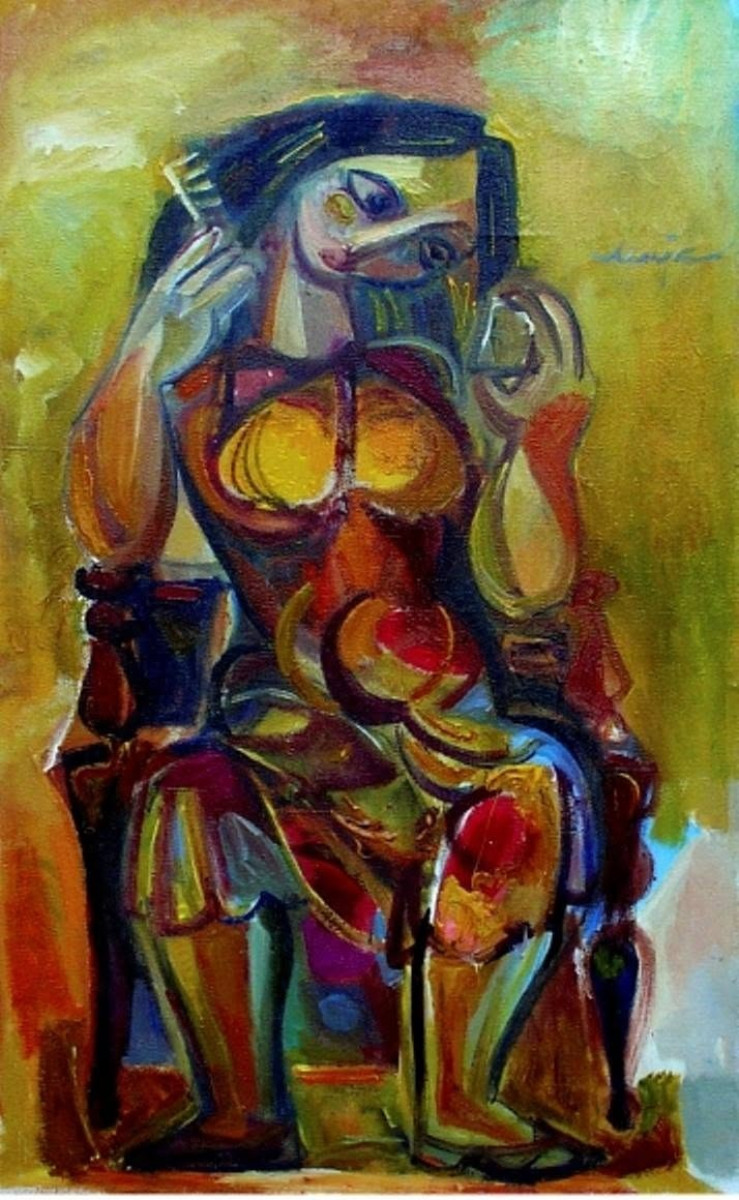
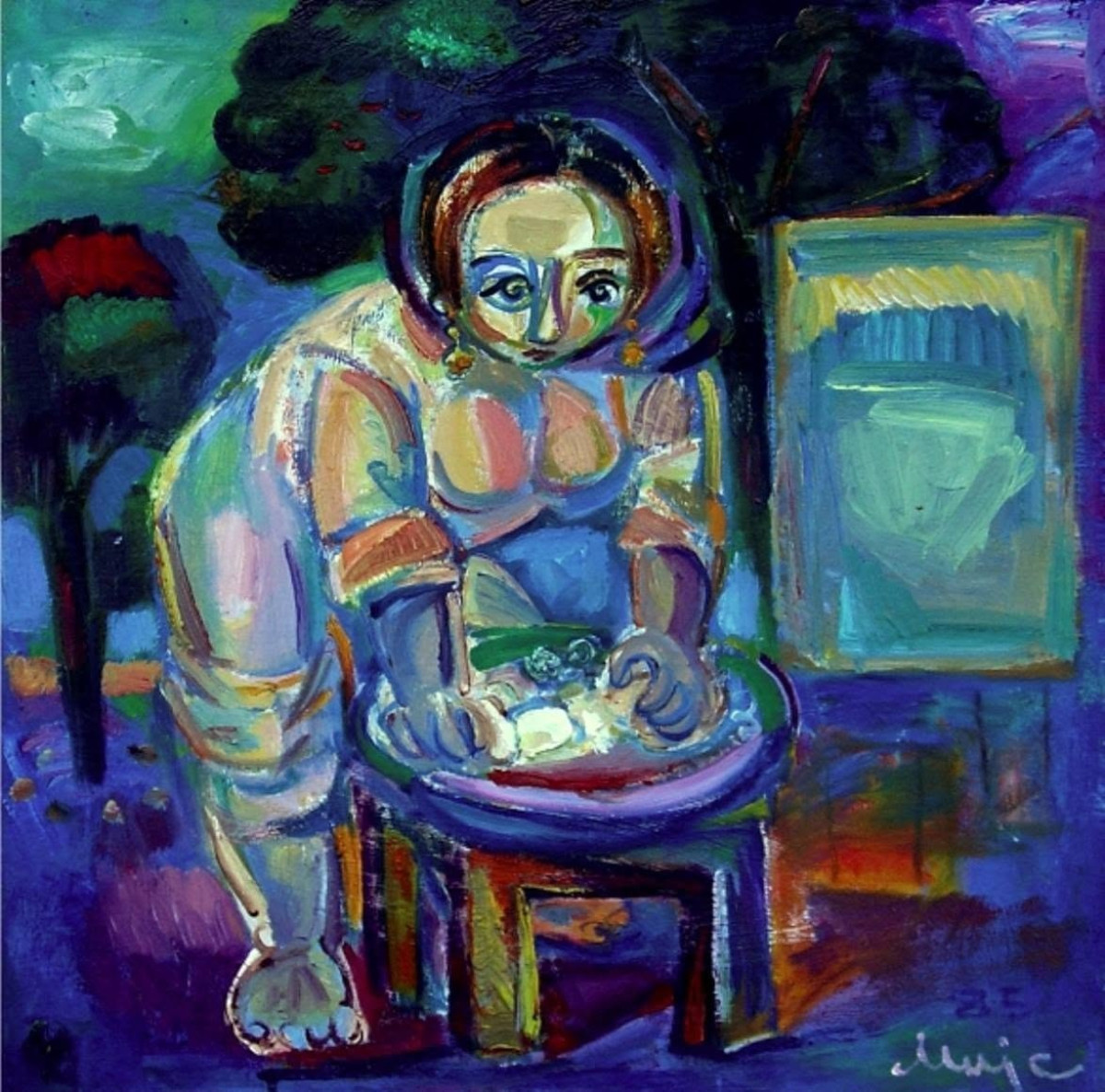
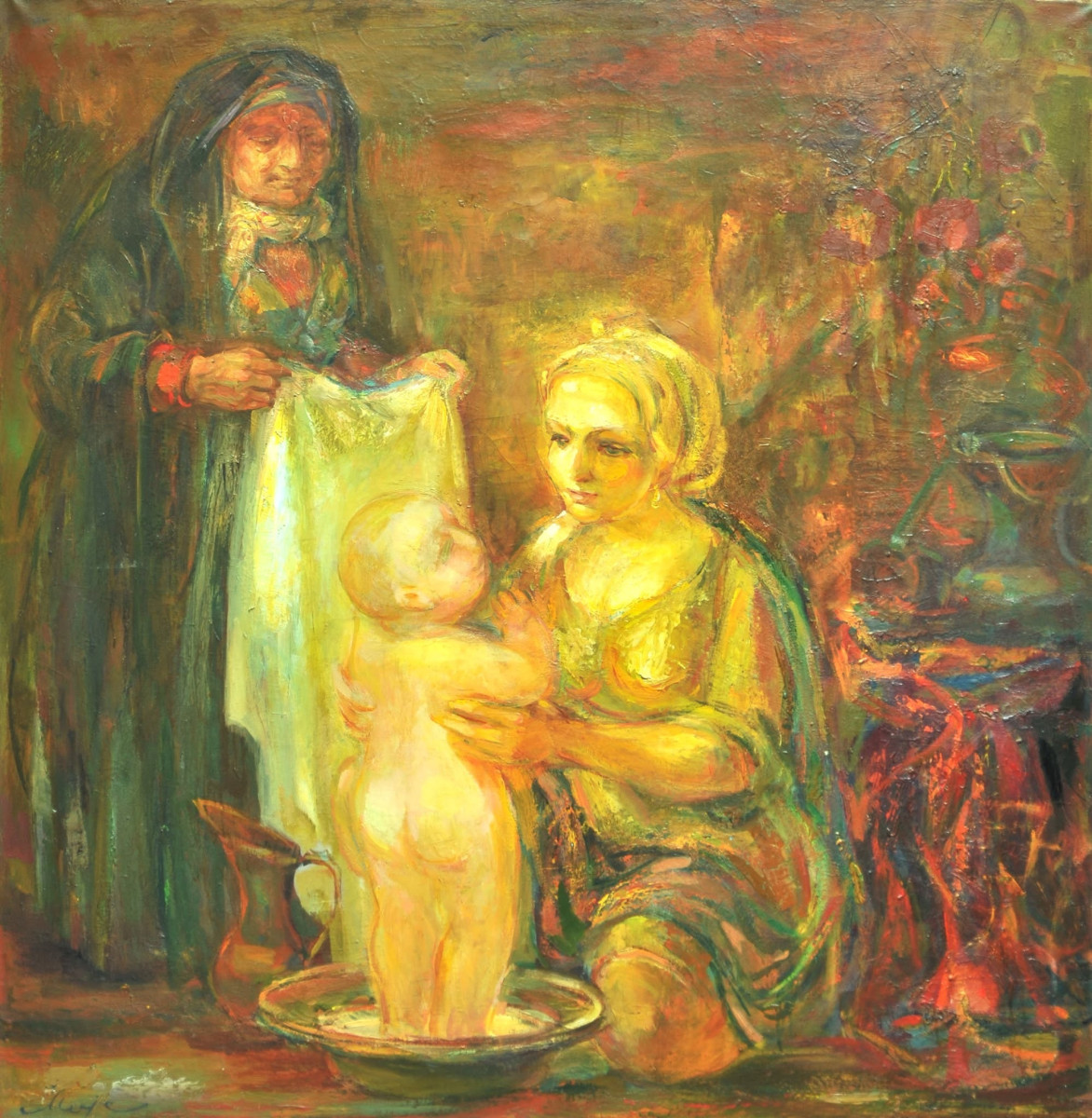
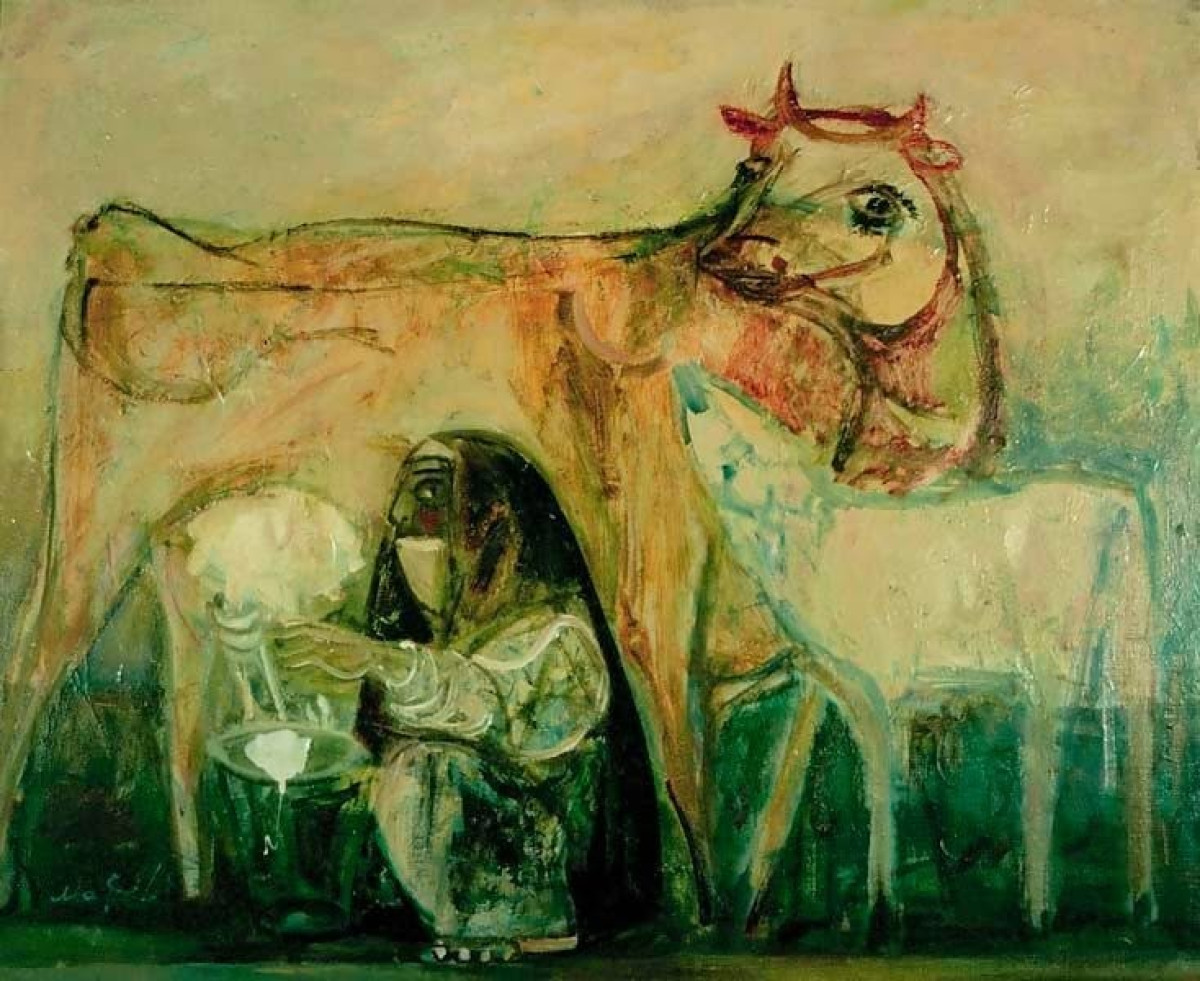
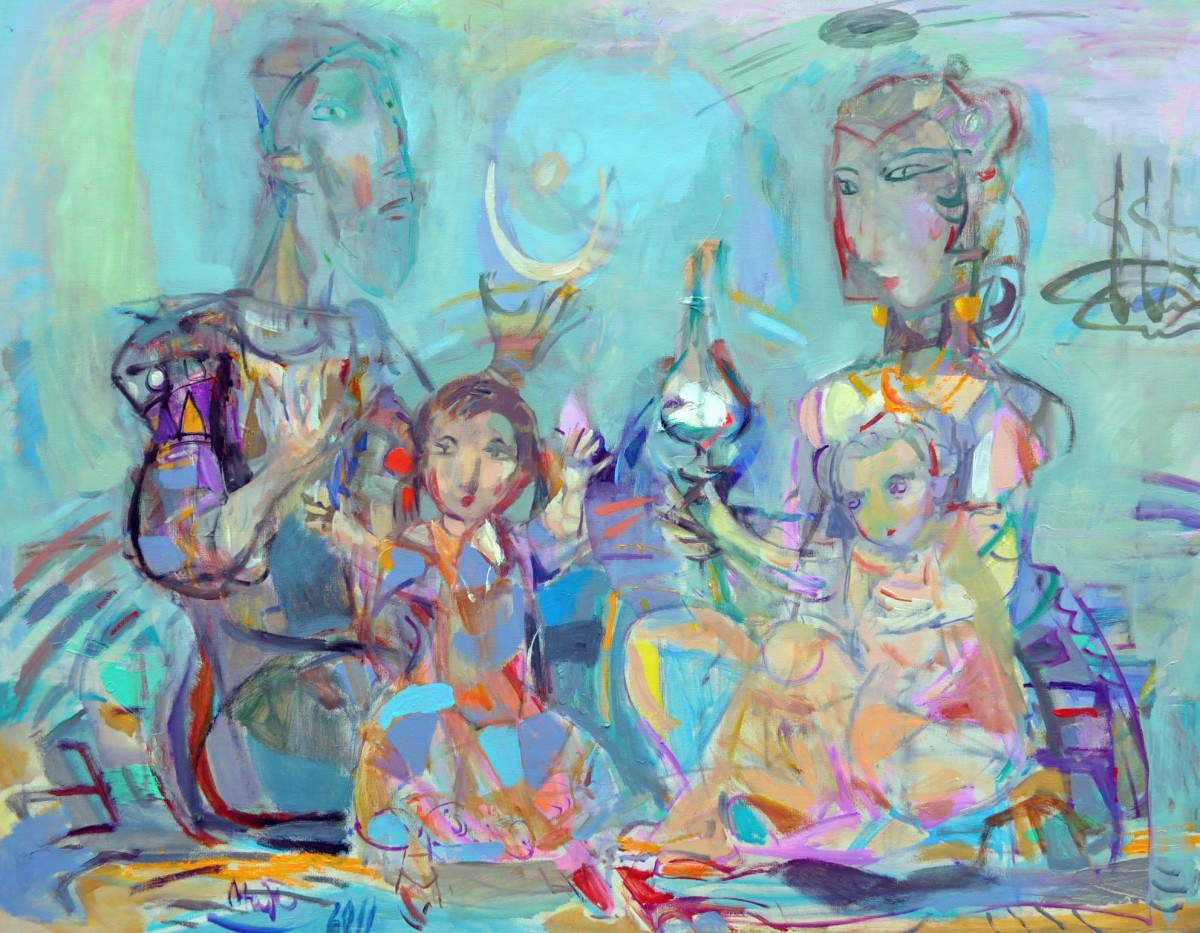
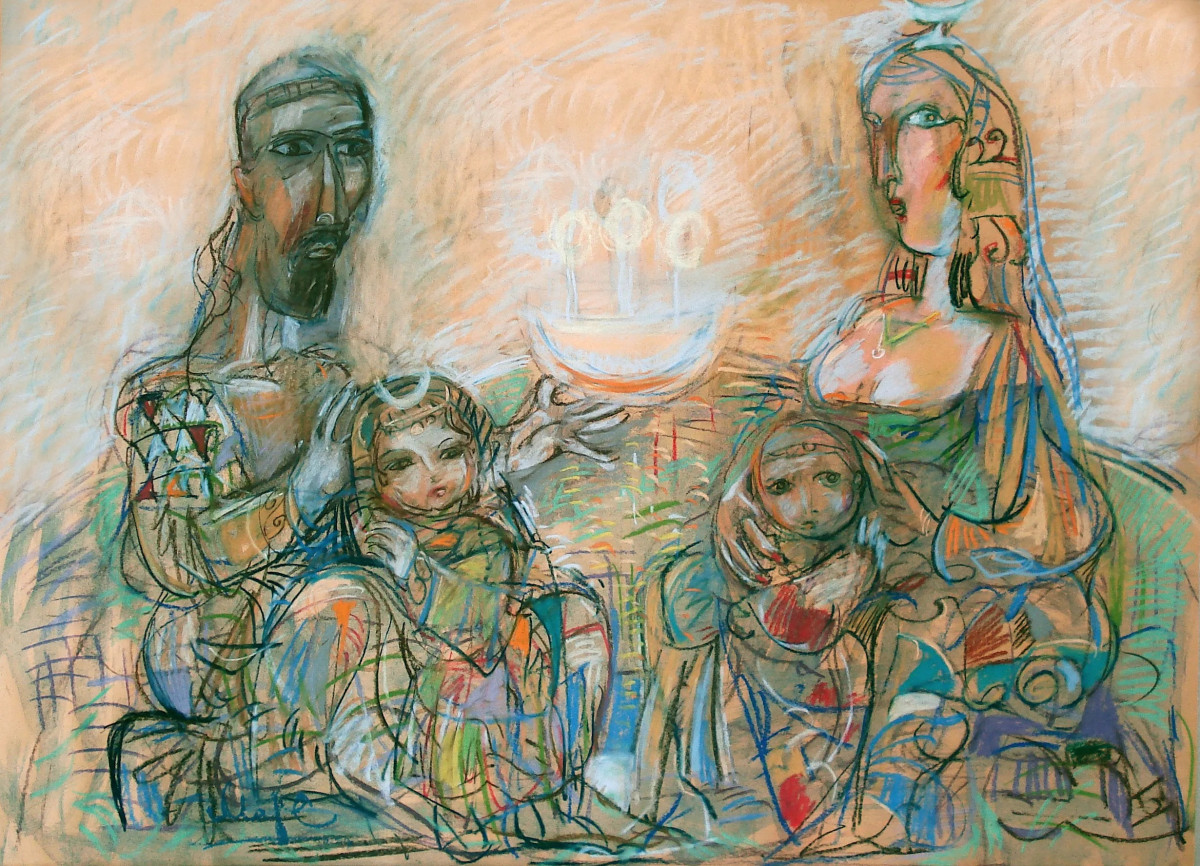
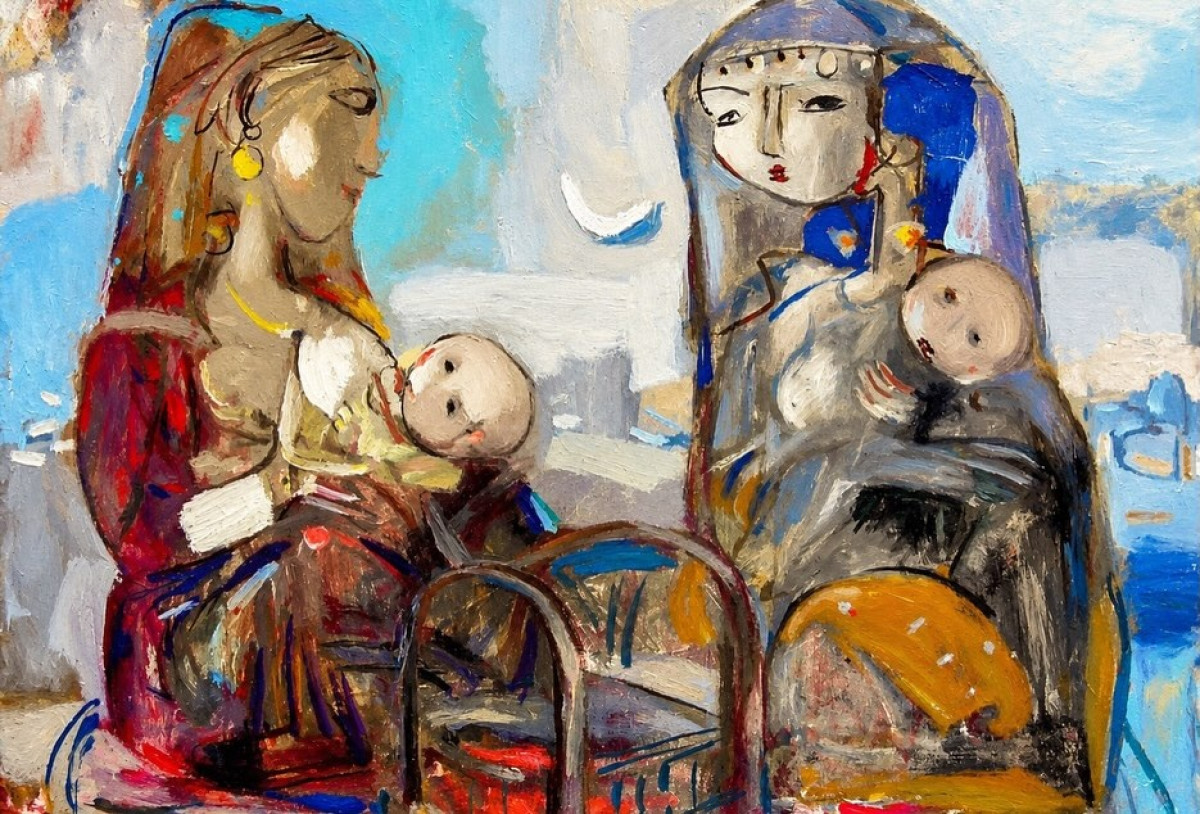
The human figure, particularly women and family relationships, occupies an important place in his paintings. Subjects such as motherhood, domestic life, prayer and collective celebration recur in works including Family, Prayer, Nursing Women, Eastern Women and Mother and Child. Rather than treating these subjects as simple narrative episodes, Aghabeyov gives them a reflective dimension. The figure becomes a means of exploring care, memory, continuity and the emotional bonds that shape human experience. His use of brown, orange, golden, blue and green tones, together with carefully controlled transitions of light and shadow, contributes to the intimate atmosphere of these compositions.
The painting Still Life (1981), also held by the State Museum of Oriental Art, reveals another aspect of his artistic language. Here, the arrangement of vessels and everyday objects creates a measured relationship between colour, volume and pictorial space. The contrast between this concentrated still-life composition and the more expansive, multi-figure structure of Spring Celebration demonstrates the range of his approach to painting.
Aghabeyov also explored graphic art and small-scale sculpture. Works such as Horsewoman, Toreador, Model and Mother show his continuing interest in the human figure, movement and expressive form. In these works, the sensitivity to silhouette, volume and spatial organisation developed through his cinematic practice finds expression in different materials and formats.
His paintings and other works were presented in exhibitions in Baku and abroad, including Berlin, Avignon, Vienna and London. These exhibitions contributed to the international visibility of Azerbaijani visual art and introduced different aspects of his practice to audiences beyond the country. His 2008 publication, The Role of the Artist in Film, further demonstrates his interest in documenting and examining the professional contribution of the production designer to cinematic creation.
The significance of Mayis Aghabeyov's legacy lies in the dialogue he established between cinema and the independent visual arts. His historical film designs, paintings, graphic works and sculptures reveal a consistent interest in the relationship between image, space and human presence. Rather than belonging exclusively to one discipline, his artistic contribution is defined by the ability to carry visual ideas across different forms of expression. In this respect, Aghabeyov occupies a distinctive place in Azerbaijani art as an artist whose work connected the visual imagination of cinema with the broader possibilities of painting and sculpture.
Mayis Aghabeyov died in Baku on 17 June 2020.
Art Space Gallery MEDIA