Abstract Painting, Baku Landscapes and Aesthetic Explorations of Plastic Form
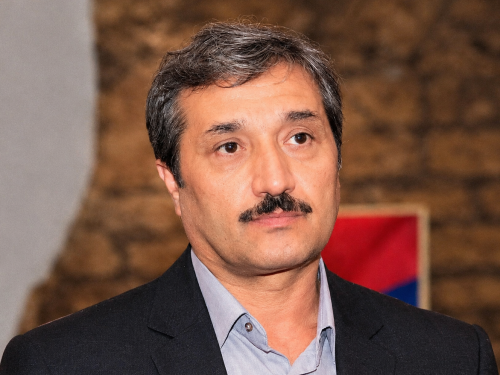
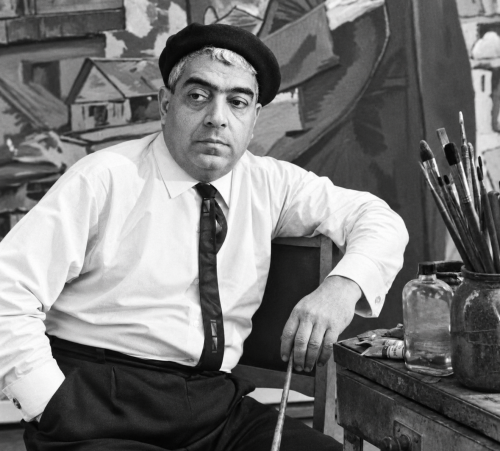
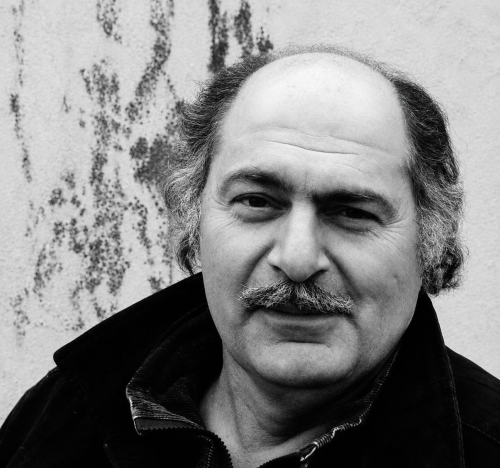
Altay Oktay oglu Sadigzade was born on 27 April 1951 in Baku, into a family closely connected with the arts. From 1966 to 1970, he studied at the A. Azimzade Art School, followed by the painting faculty of the I. Surikov State Art Institute in Moscow from 1971 to 1977. In 1979, he became a member of the USSR Union of Artists, and in 1988 joined the Baku Art Centre. His first solo exhibition was held in Baku in 1988. Alongside painting and graphic art, his creative practice encompasses sculpture, installation and spatial art. A defining feature of his artistic pursuits is the integration of diverse forms of expression within a distinctive and coherent aesthetic vision.
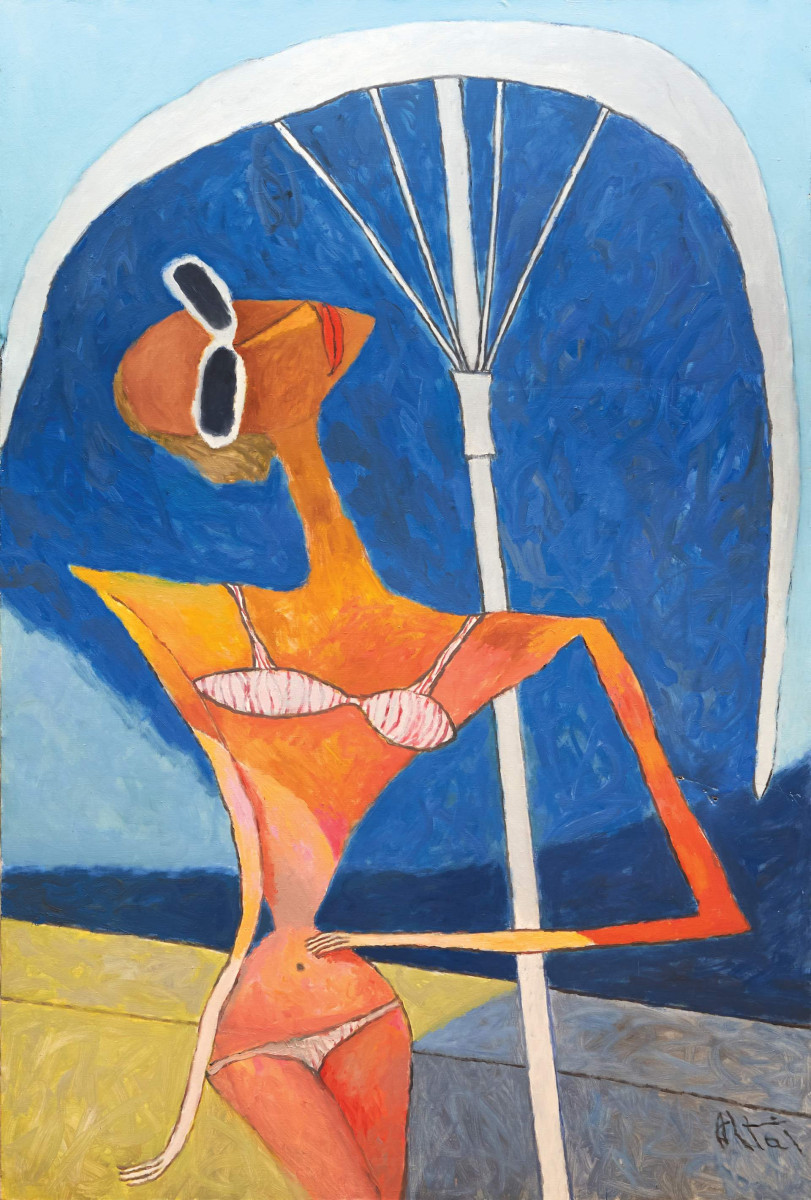
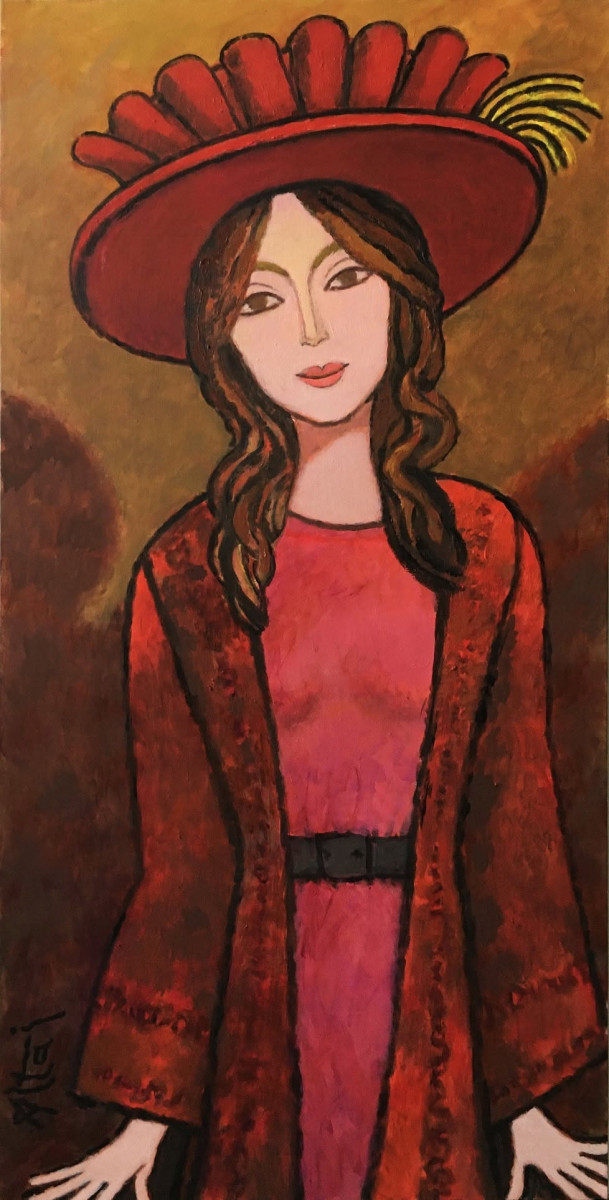
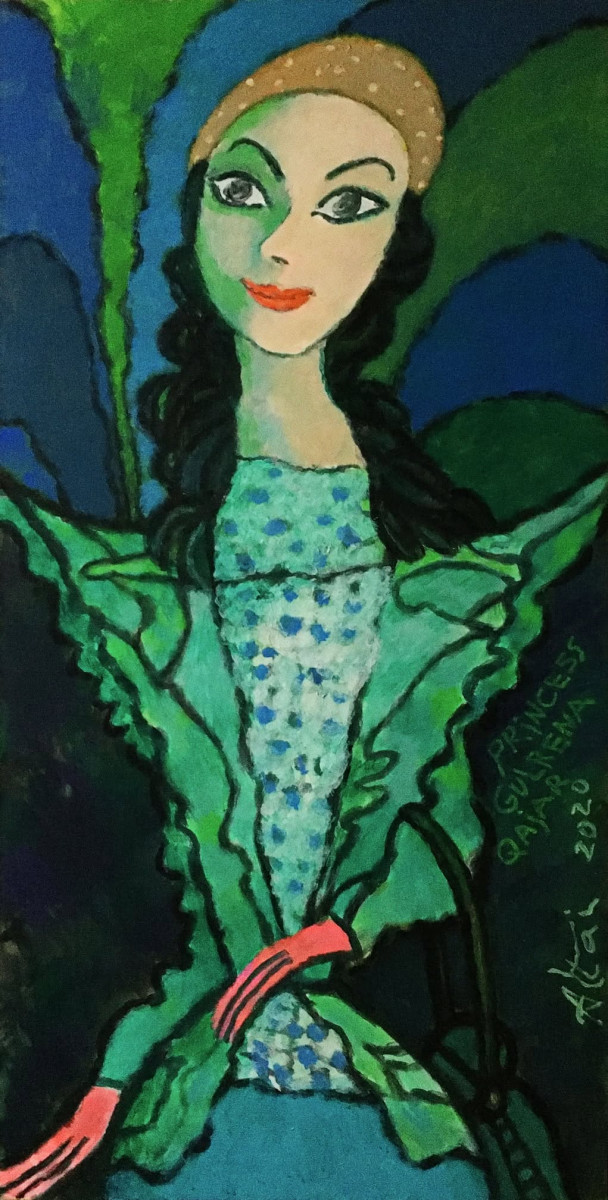
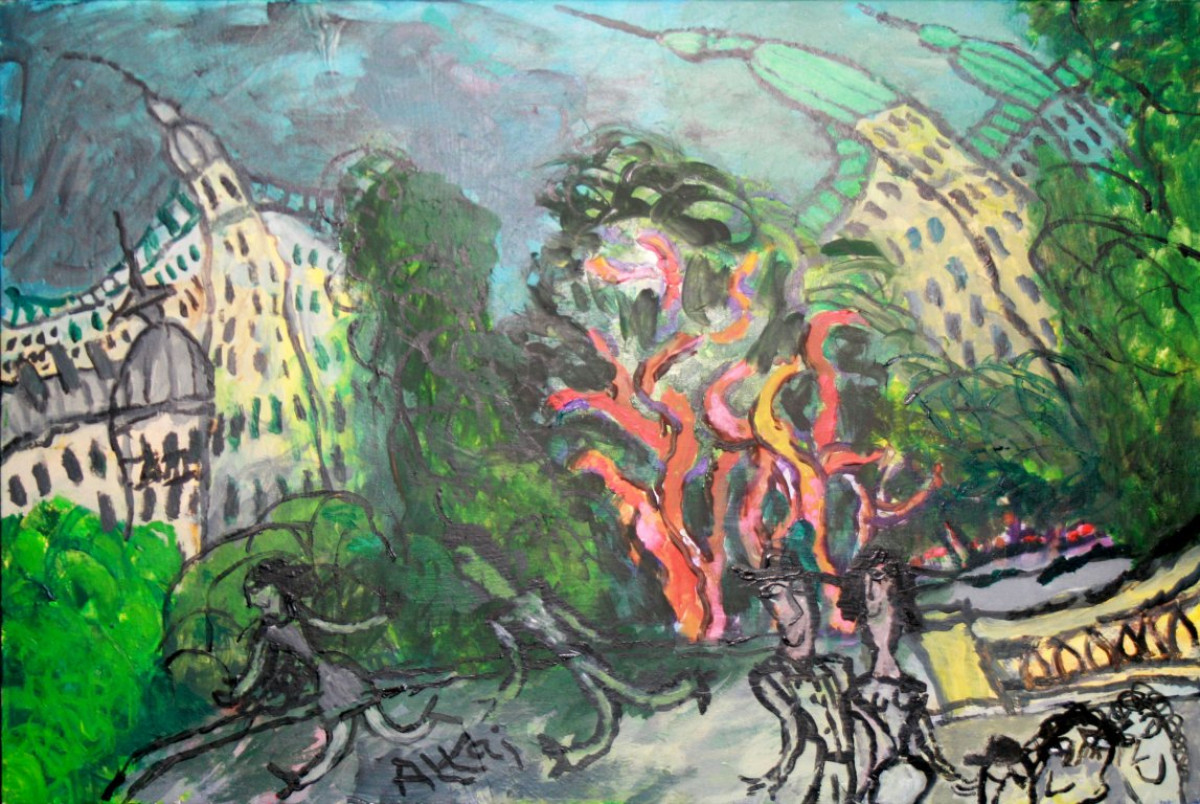
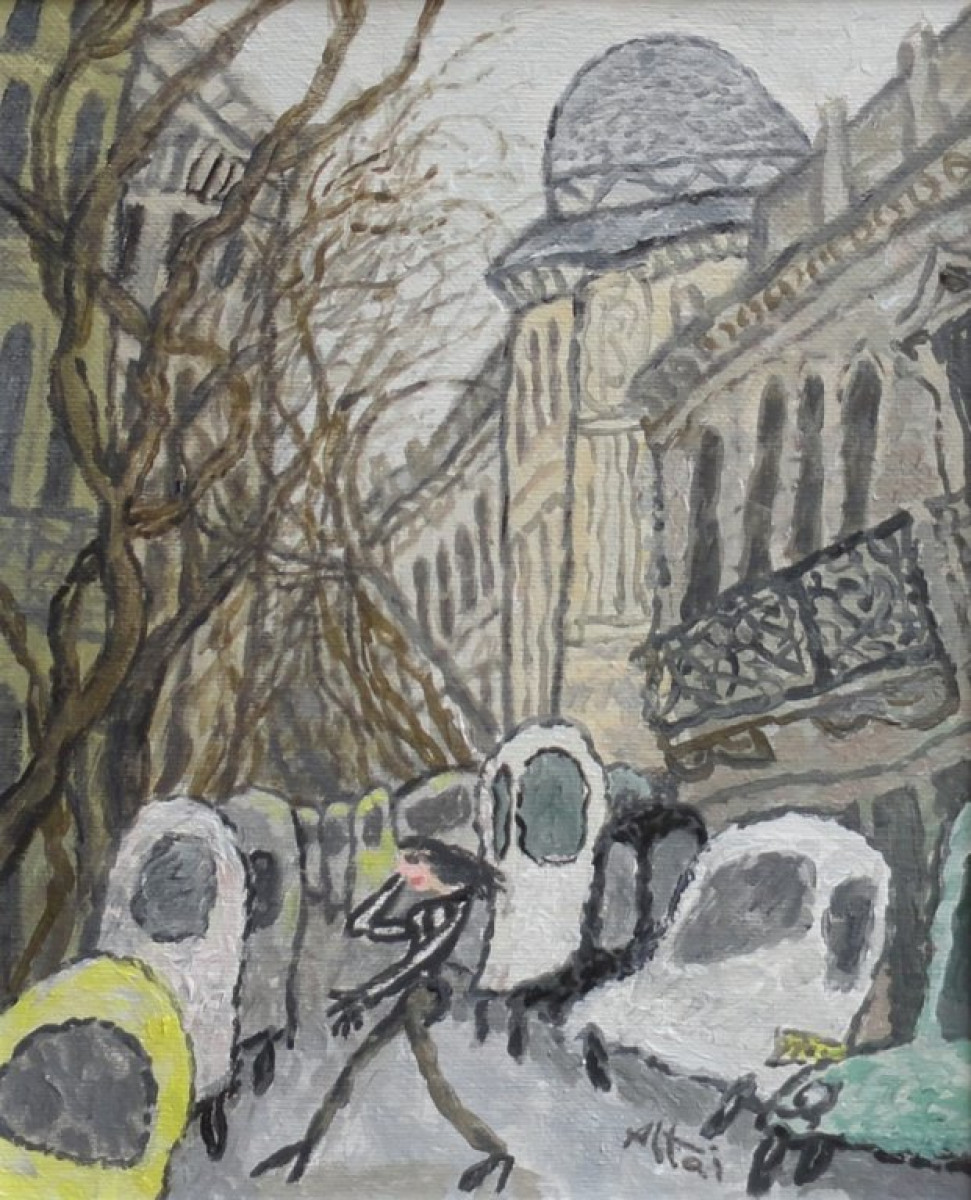
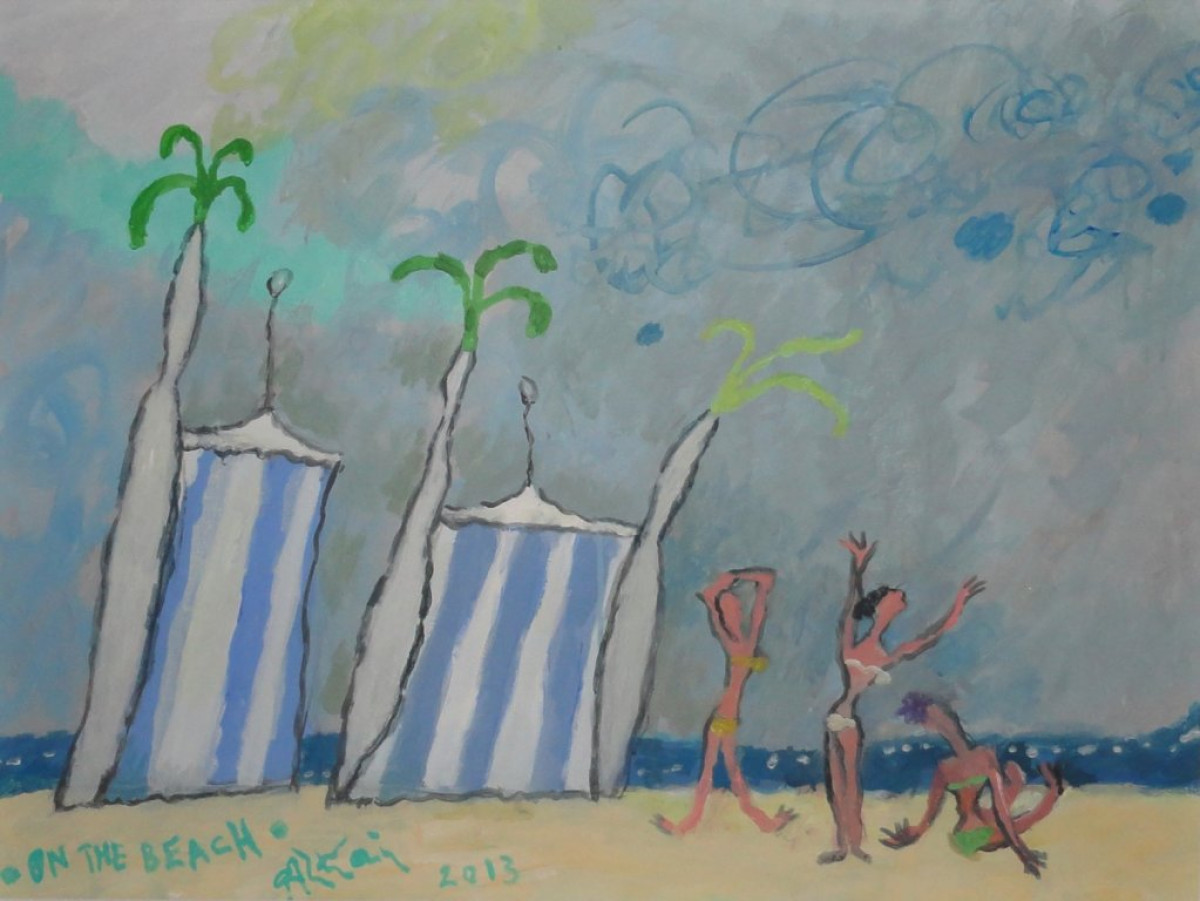
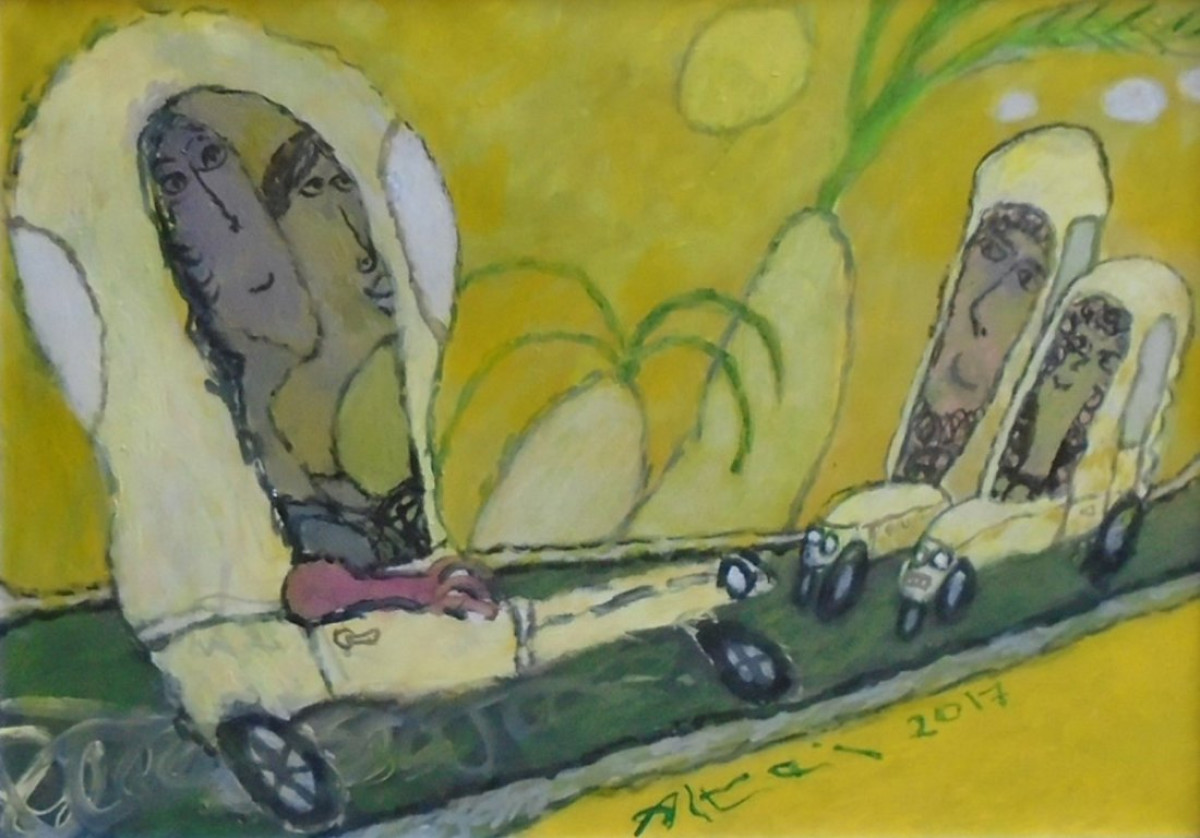
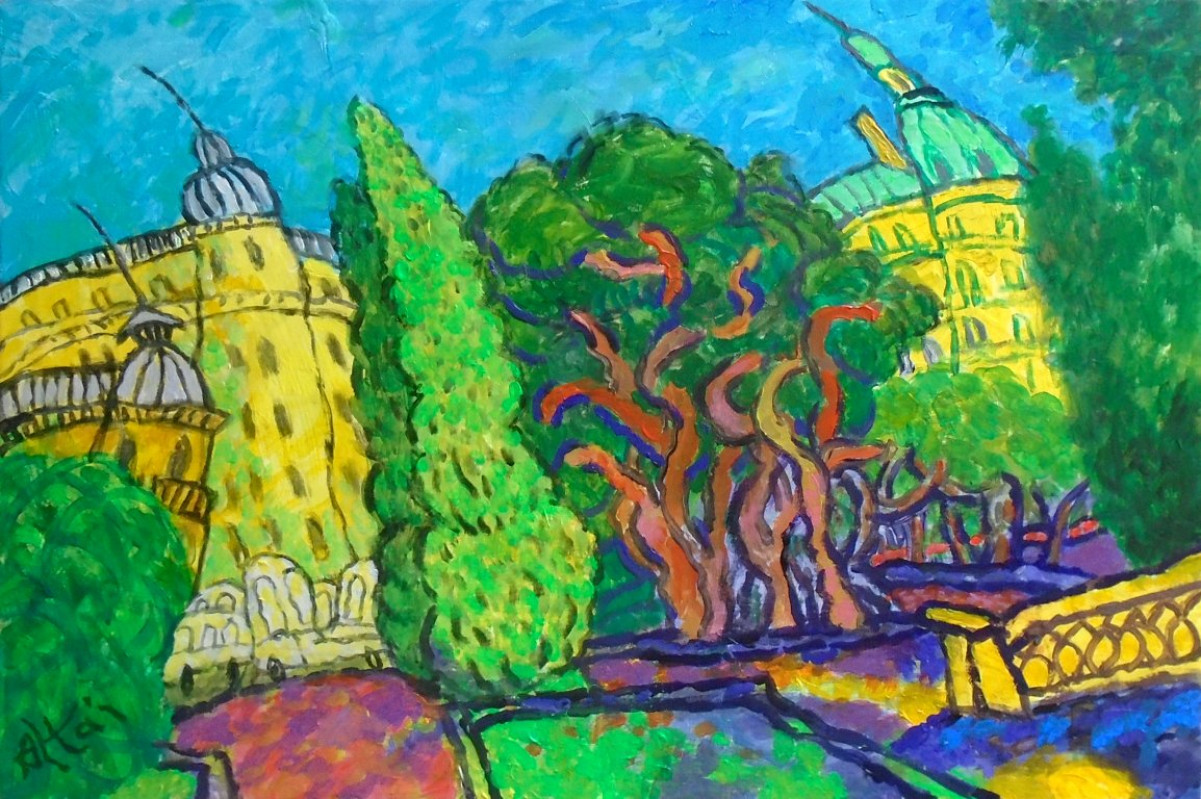
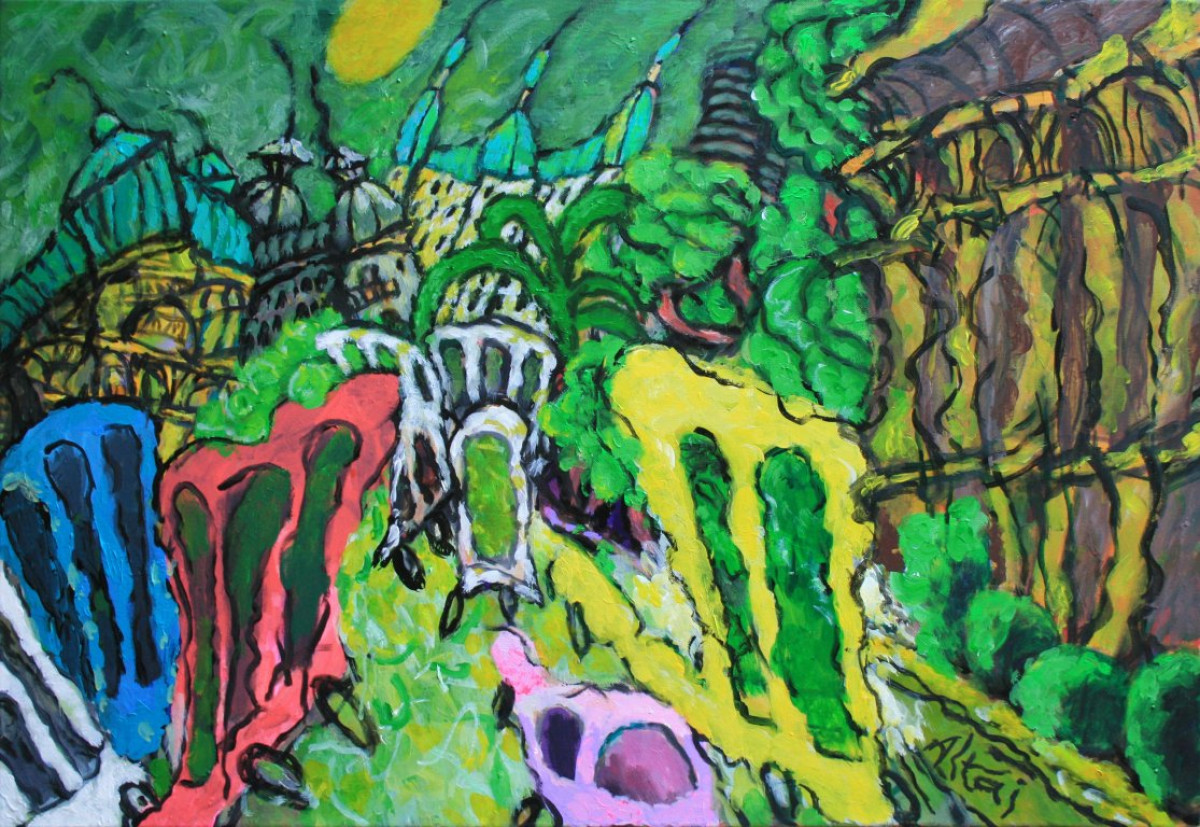
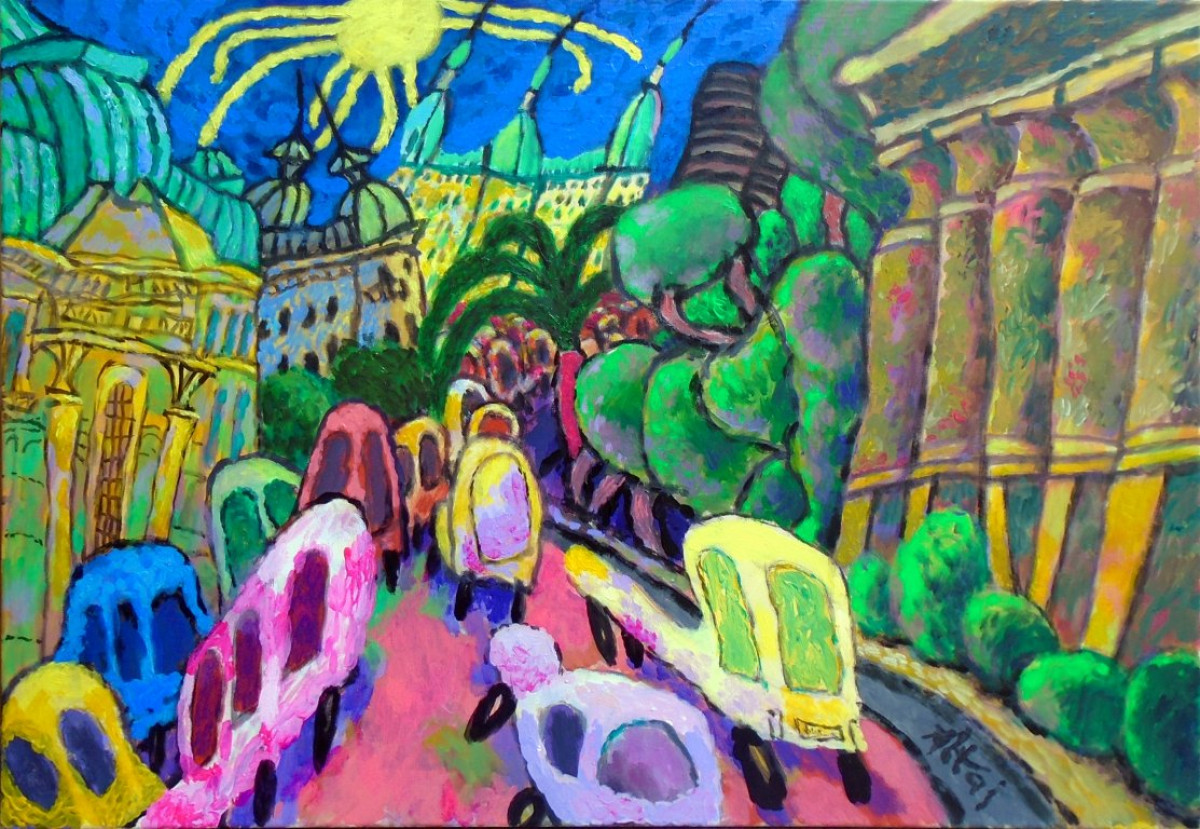
The departure from conventional pictorial structures, the free interpretation of form and the principles of abstract composition occupy a central place in Sadigzade’s painting. Rather than directly imitating reality, the artist reinterprets it through his own visual language. In works such as “Labyrinth”, “Figure in Space”, “Summer Promenade”, “Apparatus”, “Summer Bicycle”, “War” and “Aggressive Personality”, the relationships between form, line, colour and space become the principal means of expression. In these works, the emotional and intellectual impact of the image takes precedence over its outward appearance. Abstraction here is not a denial of representation, but a way of presenting reality through a different level of artistic perception.
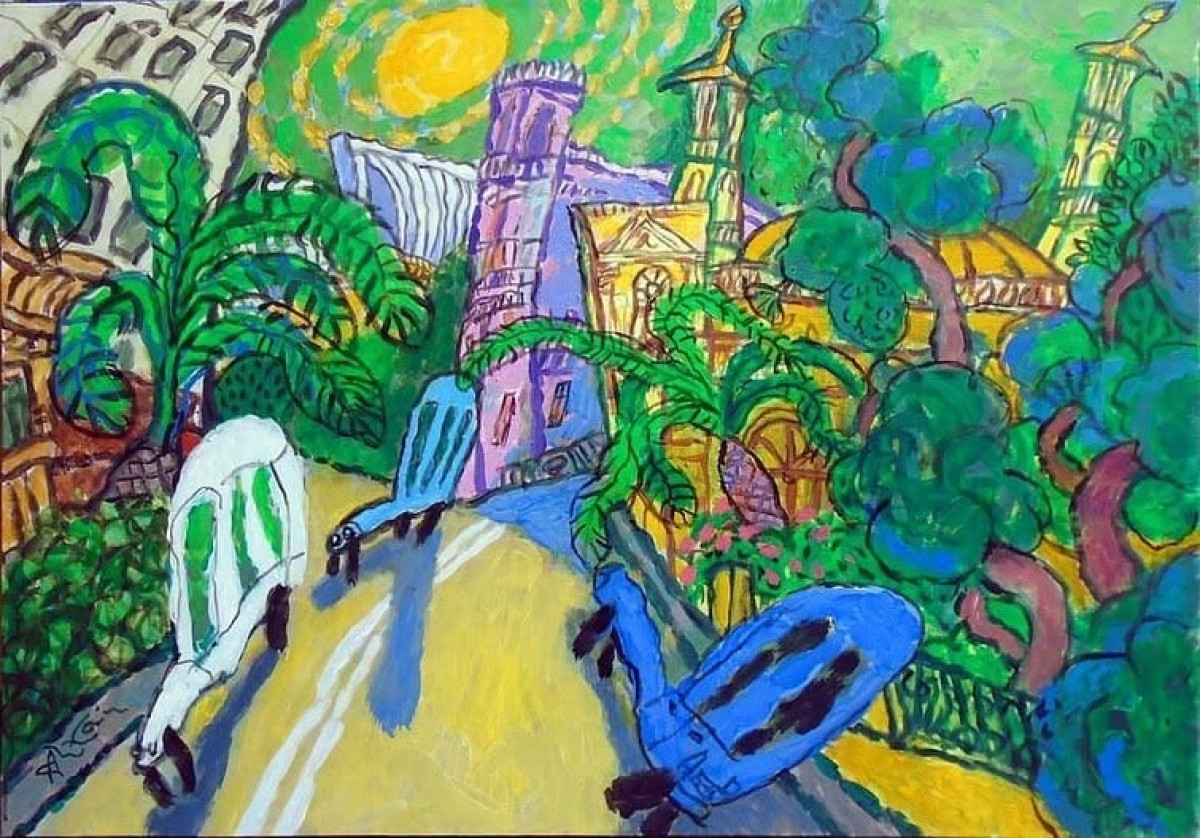
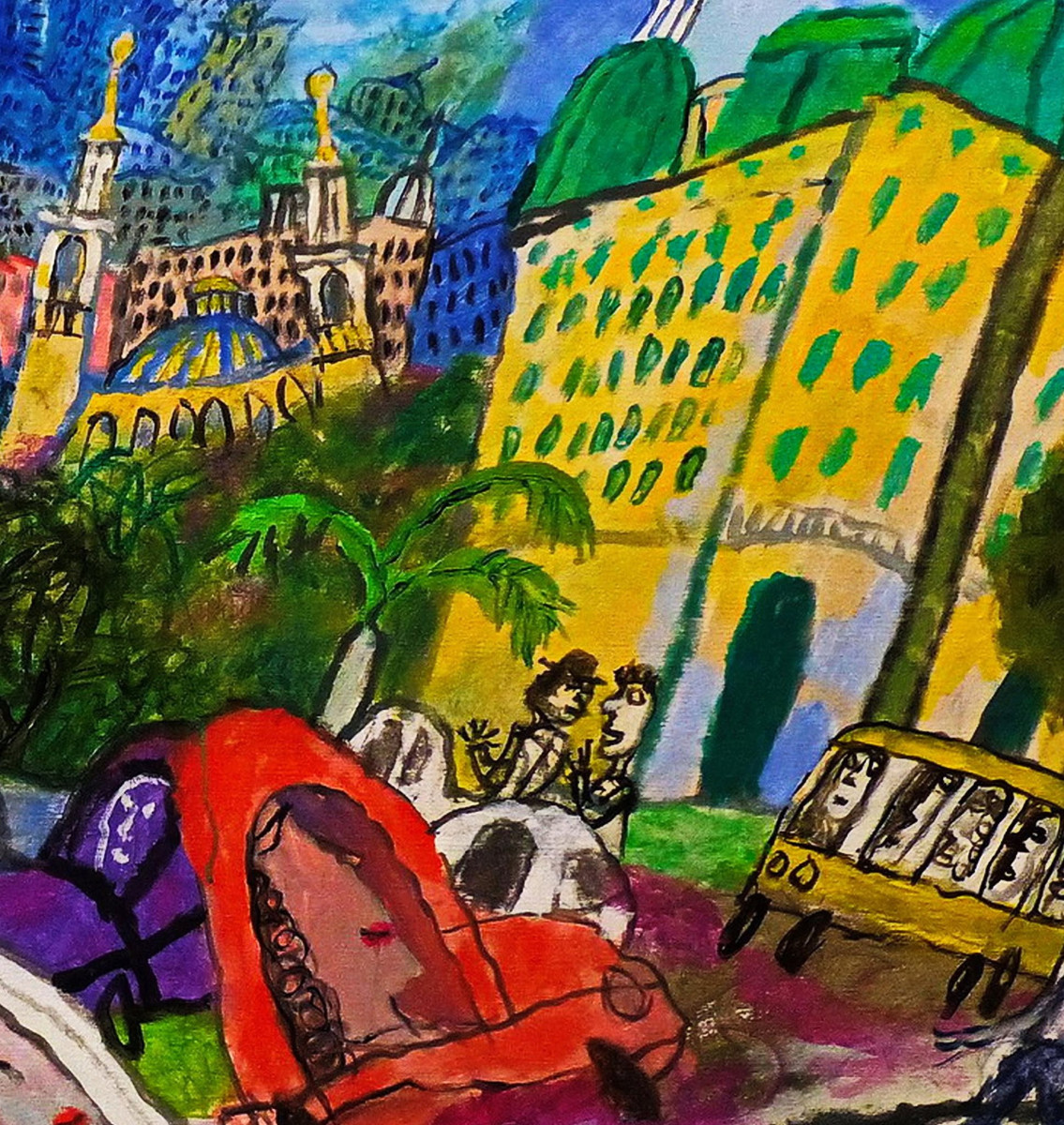
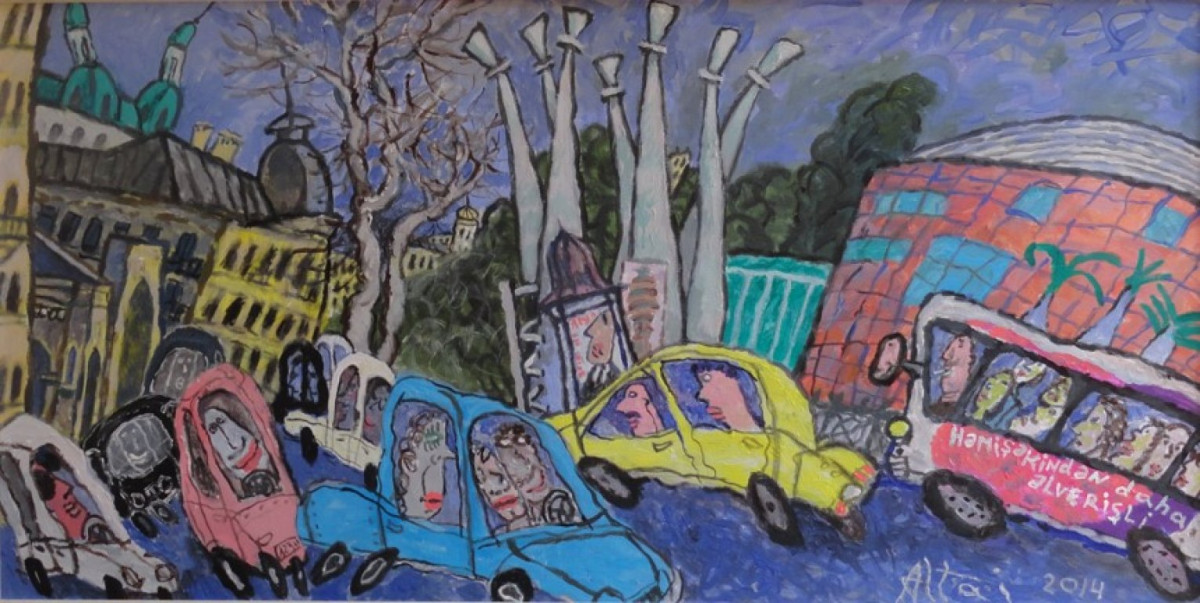
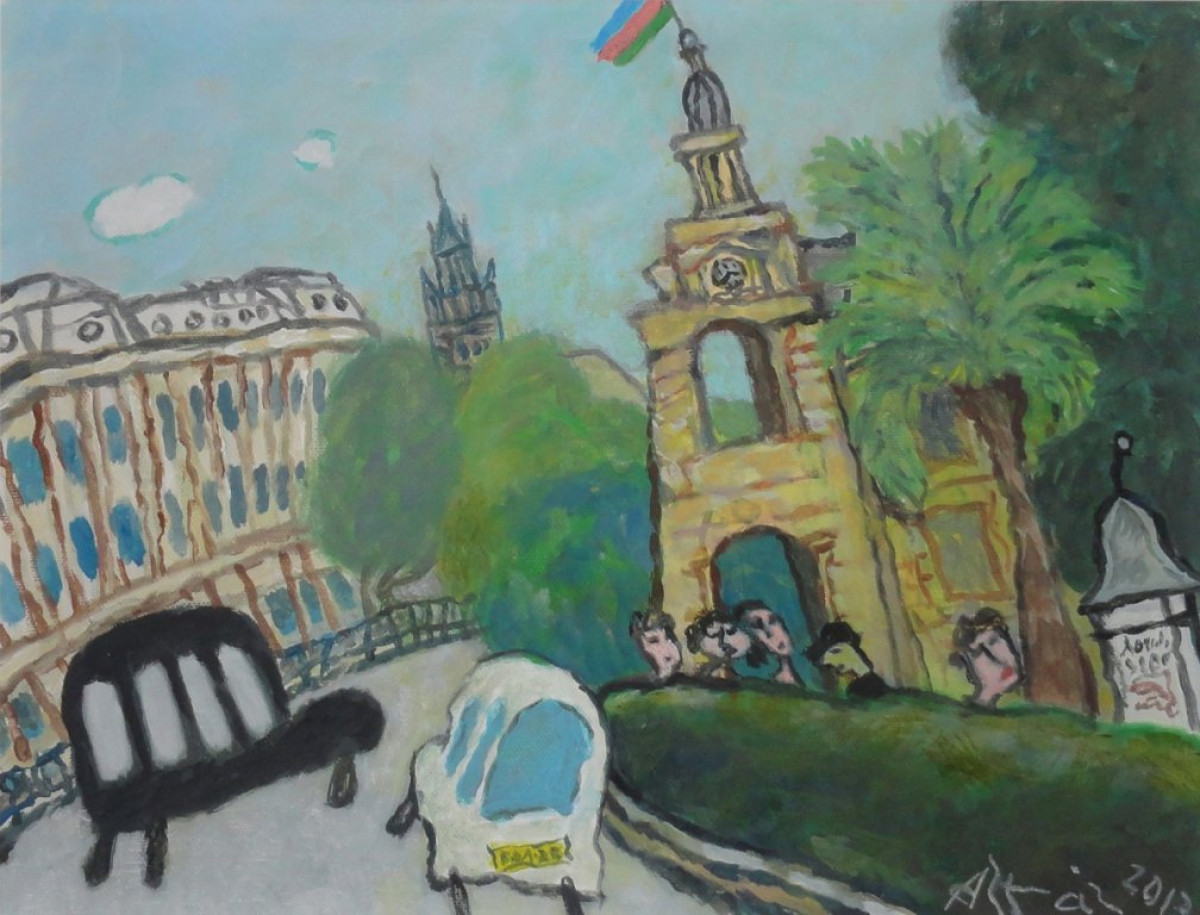
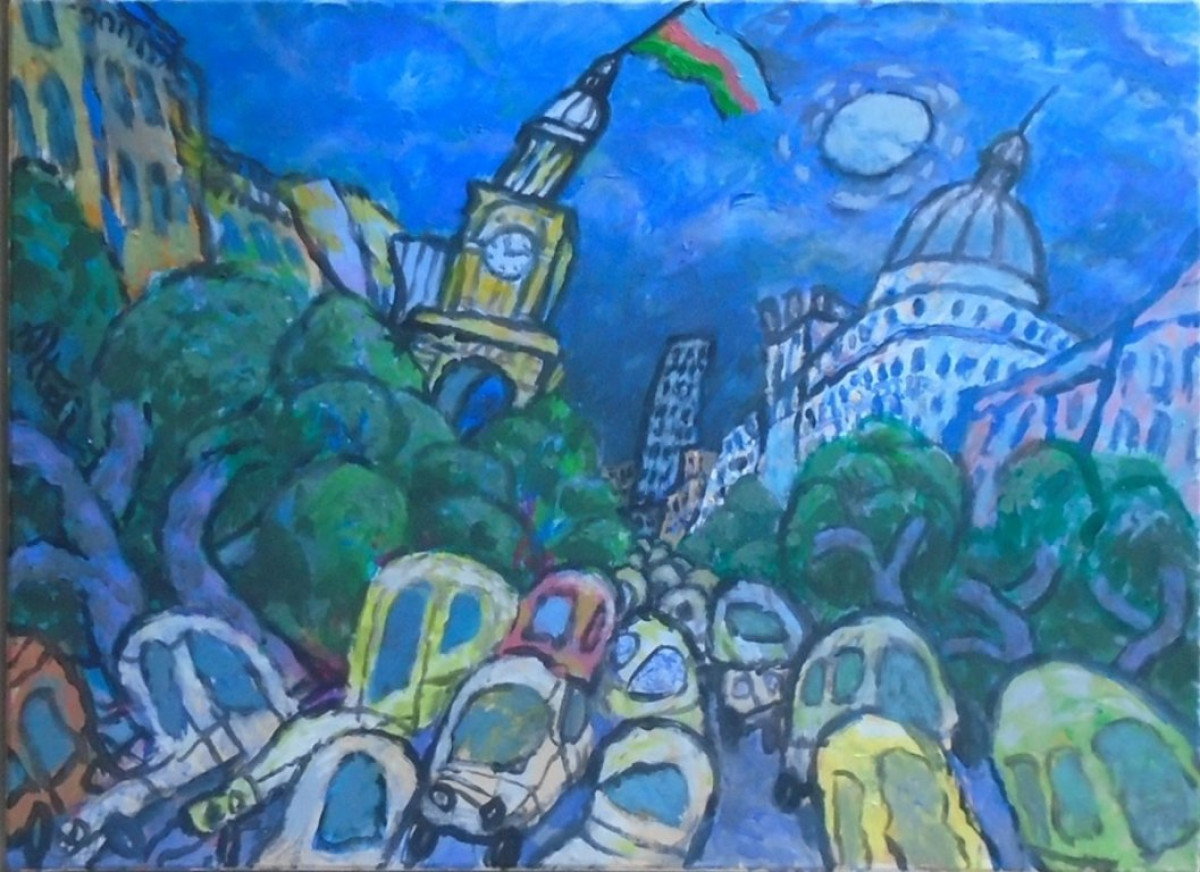
The landscapes of Baku and the Absheron Peninsula hold a distinctive place in the artist’s oeuvre. In the research of art historian and professor A. Salamzade, these landscapes are examined as one of the principal semantic dimensions of Sadigzade’s painting. In his depictions of the city, Baku moves beyond the boundaries of a conventional topographical view and becomes an artistic image shaped by the interplay of the sea, the coastline, architecture and the atmosphere of the city. In this approach, space is not merely a landscape to be observed; it becomes a visual environment in which memory, time and personal impressions converge. The artist’s engagement with Baku is directed less towards repeating familiar city views than towards revealing the city’s artistic essence through an individual visual language.
The artist’s explorations in the field of plastic arts further expand the scope of his creative practice. The material qualities of metal, structural composition, silhouette and abstract form serve as essential expressive elements in his sculptural works. In pieces such as “Exotic Forms”, “Life in the Universe” and “Archaeological Excavations: Wings”, particular attention is drawn to the relationship between material and form. The open-air sculpture project “Territory of the Winds”, realised in the Garadagh area in 2013, represents a significant initiative exploring the relationship between an art object and its natural and industrial surroundings. In this project, sculpture is not limited to the creation of an independent object; it also becomes a means of transforming the aesthetic perception of an existing environment.
Altay Sadigzade’s works have been presented on various international exhibition platforms. Significant milestones in his exhibition history include the solo exhibition “22HX”, held at the Baku Museum of Modern Art in 2011; his participation in the exhibition programme presenting Azerbaijani art within the framework of the 54th Venice Biennale; and the presentation of his work “Portrait of My Mother” in YARAT’s 2018 project “Painting Museum: Labour, Leisure and Dreams”. In his art, abstract thought, the individual interpretation of urban space and experimentation with materials are not separate pursuits, but interconnected dimensions of a unified creative vision. These qualities define Altay Sadigzade’s position in contemporary Azerbaijani visual art as an artist with a distinctive artistic language. The further study of his artistic legacy would benefit from the systematic cataloguing of his works by chronology and technical characteristics, as well as the development of an exhibition archive and scholarly catalogue.
Art Space Gallery MEDIA