A multifaceted artistic journey from painting to theatre
Life and Art Education
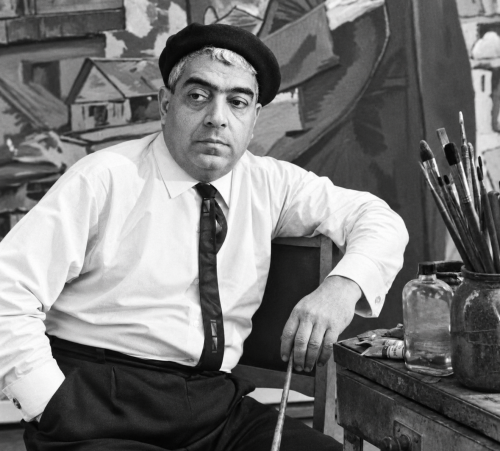
Sadig Sharifzade was born on 5 December 1912 in Ardabil, South Azerbaijan. In 1932, he graduated from the Azim Azimzade Azerbaijan State Art Technical School. In 1936, he entered the Kyiv Art Institute, where he studied under artists including Volokdin, Traximenko and Grigoriev. In 1939, at his own request, he transferred to the V. I. Surikov Moscow Art Institute. In 1940, he returned to Baku before completing his studies and continued his professional artistic career there.
Early Work and Artistic Exploration
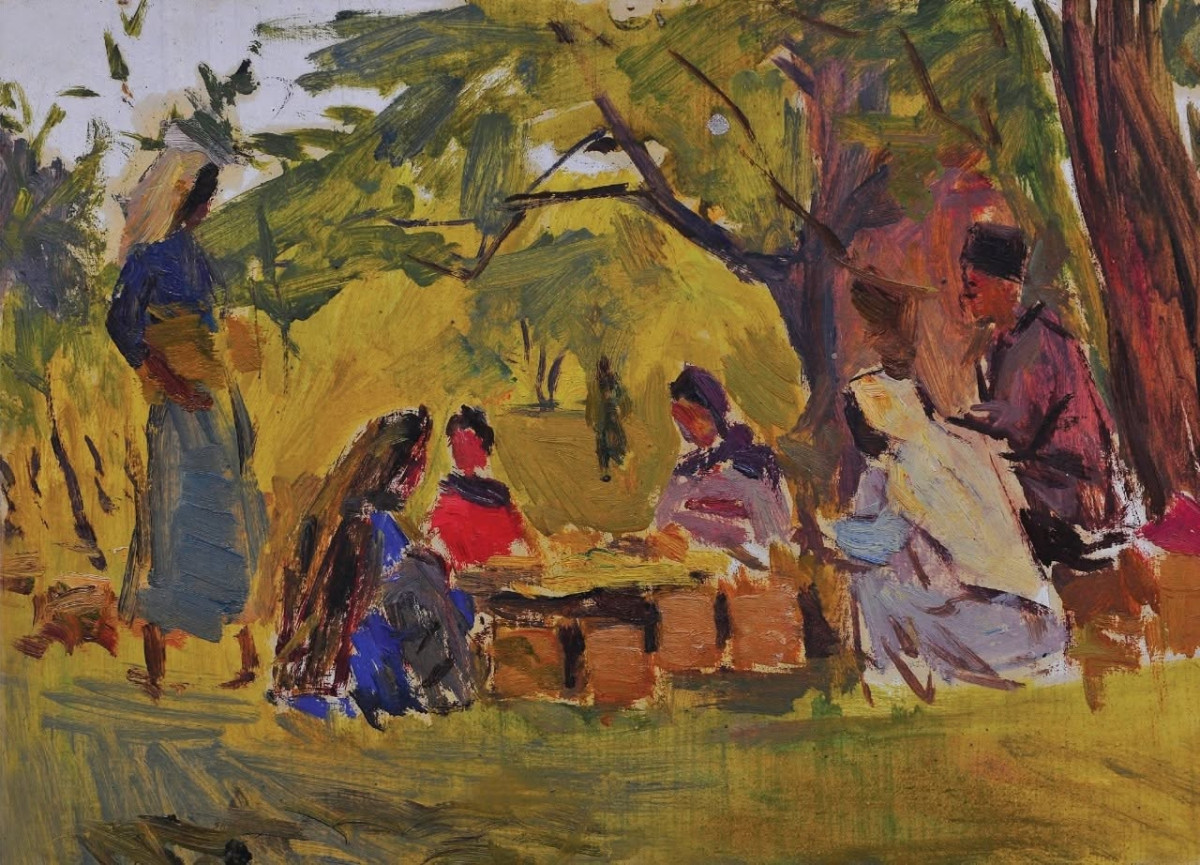
Sharifzade’s early works reveal his powers of observation, his interest in themes of labour and everyday life, and his engagement with the traditions of realist painting. His painting “Grape Harvest” (1939–1940) is among the notable works of this period. In subsequent years, he broadened his practice across portraiture, landscape and narrative painting, exploring a diverse range of subjects.
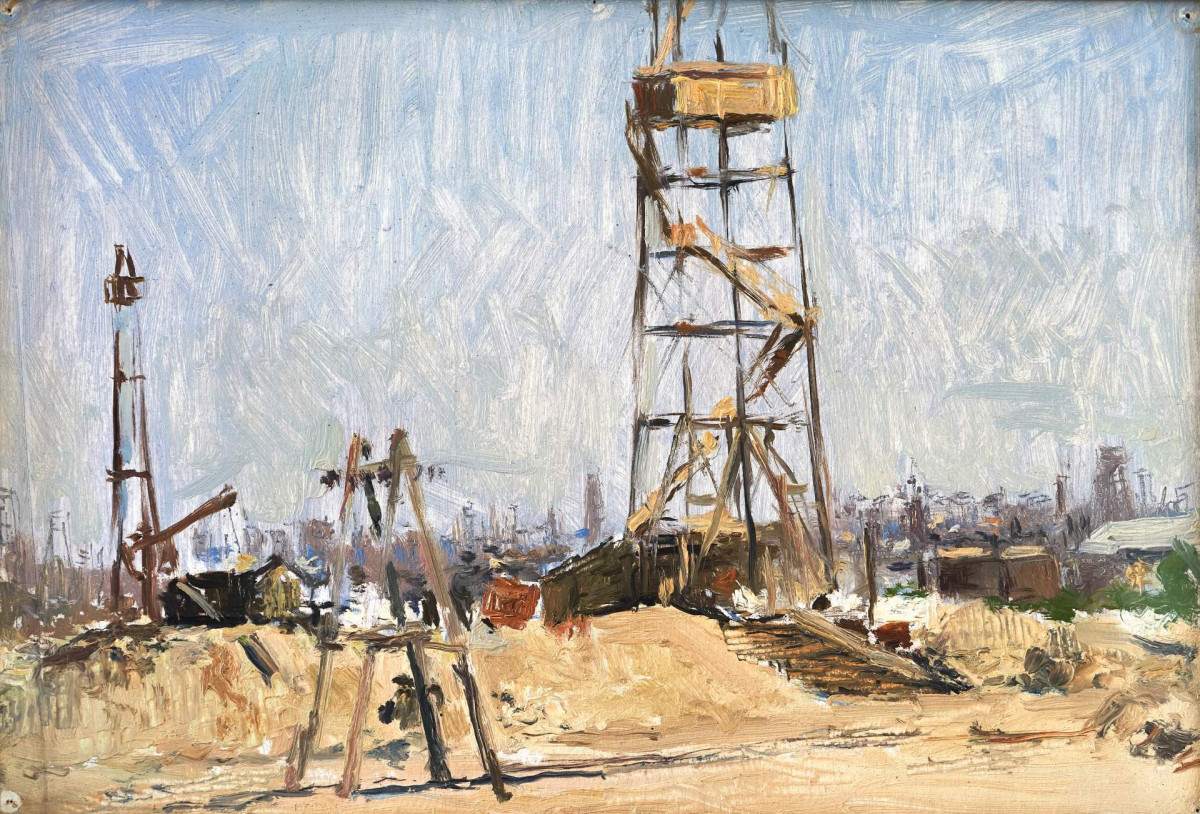
In landscapes such as “Lake Goygol”, “A Street in Shusha” and “Oil Derricks at Sea”, he depicted the natural environment and the character of particular places. His portraits, meanwhile, focused on individual character and the representation of historical figures. This range demonstrates that his artistic practice was not confined to a single genre or subject.
Historical Memory and National Themes
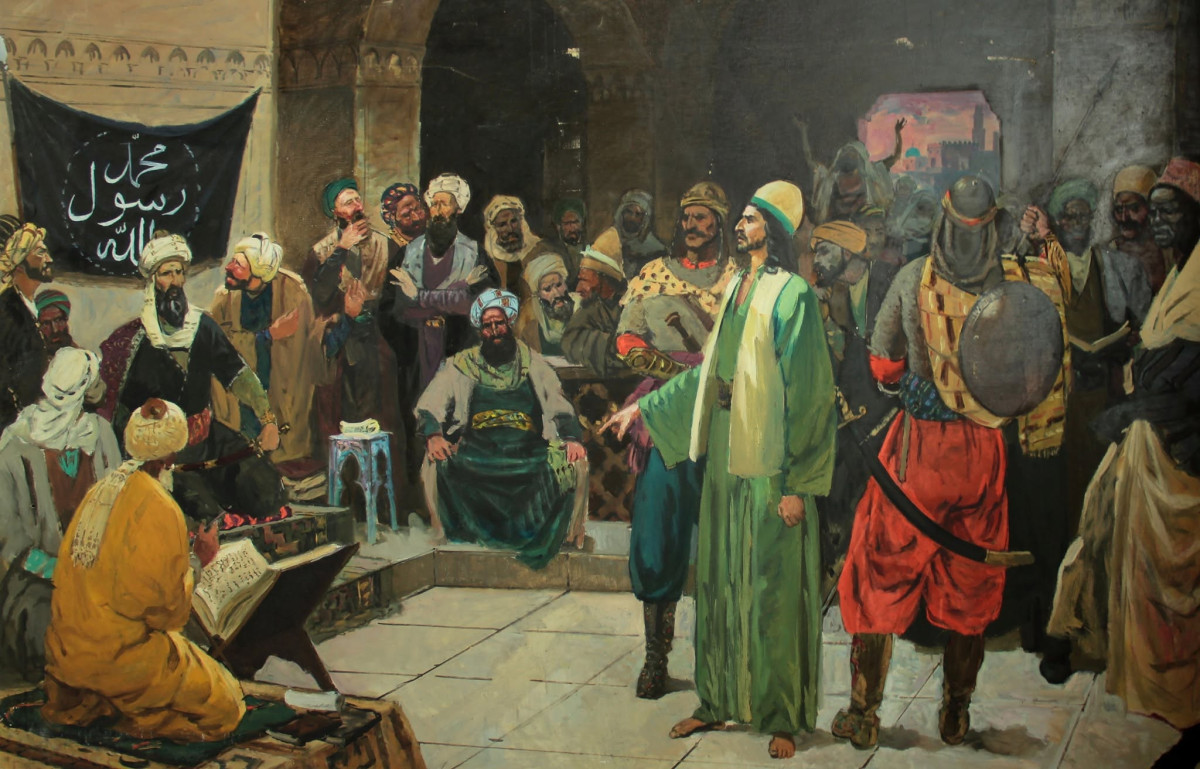
Historical events and national memory form an important strand of Sharifzade’s painting. In works such as “Babek’s Campaign” and “The Defence of Tabriz”, he turned to episodes of historical struggle and heroism. In these compositions, history becomes more than the representation of an event: it serves as a means of expressing collective memory and cultural identity.
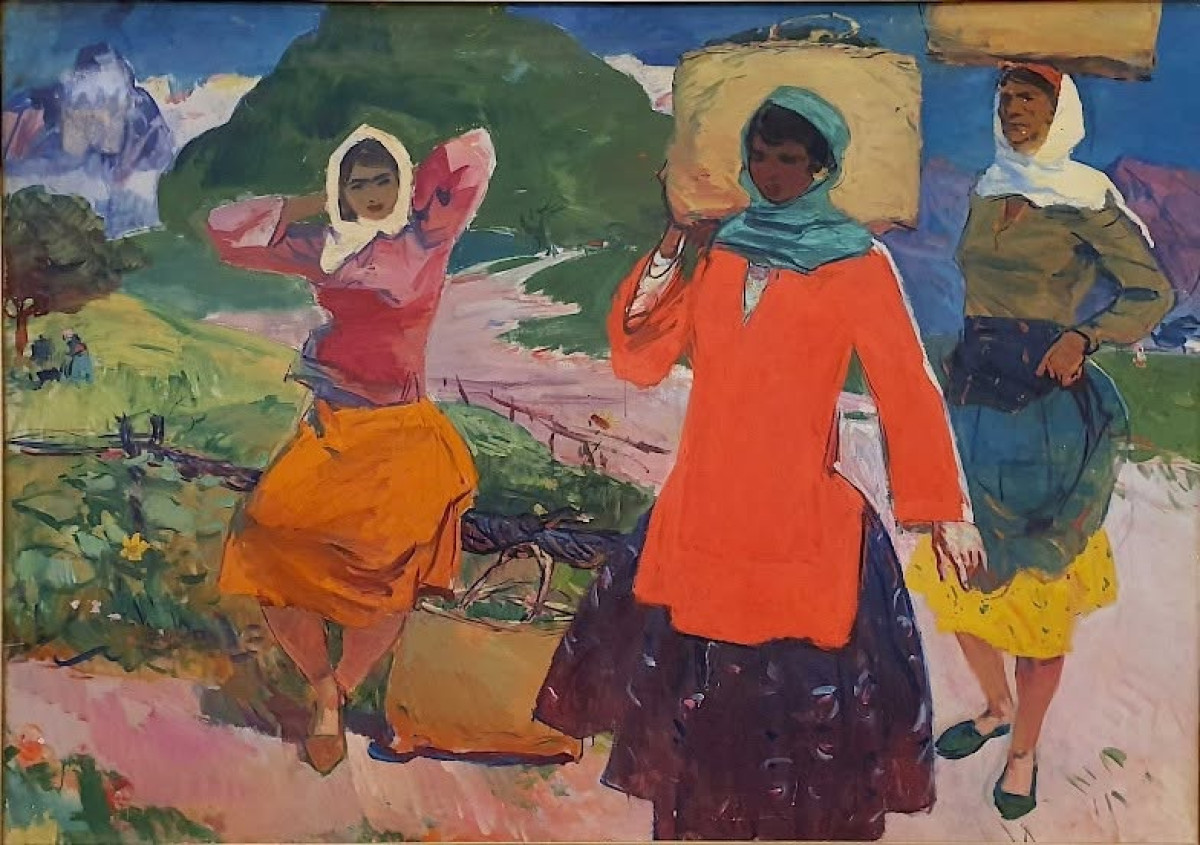
In “The Musical Exchange of Ashiqs”, the artist explored traditions of folk music and oral culture, while “Novruz Celebration” addressed the customs and rituals associated with the traditional spring festival. Works such as “In Lankaran”, “Builders” and “Joy” extended his subject matter to everyday life, labour and human relationships.
Portraiture and Literary Figures
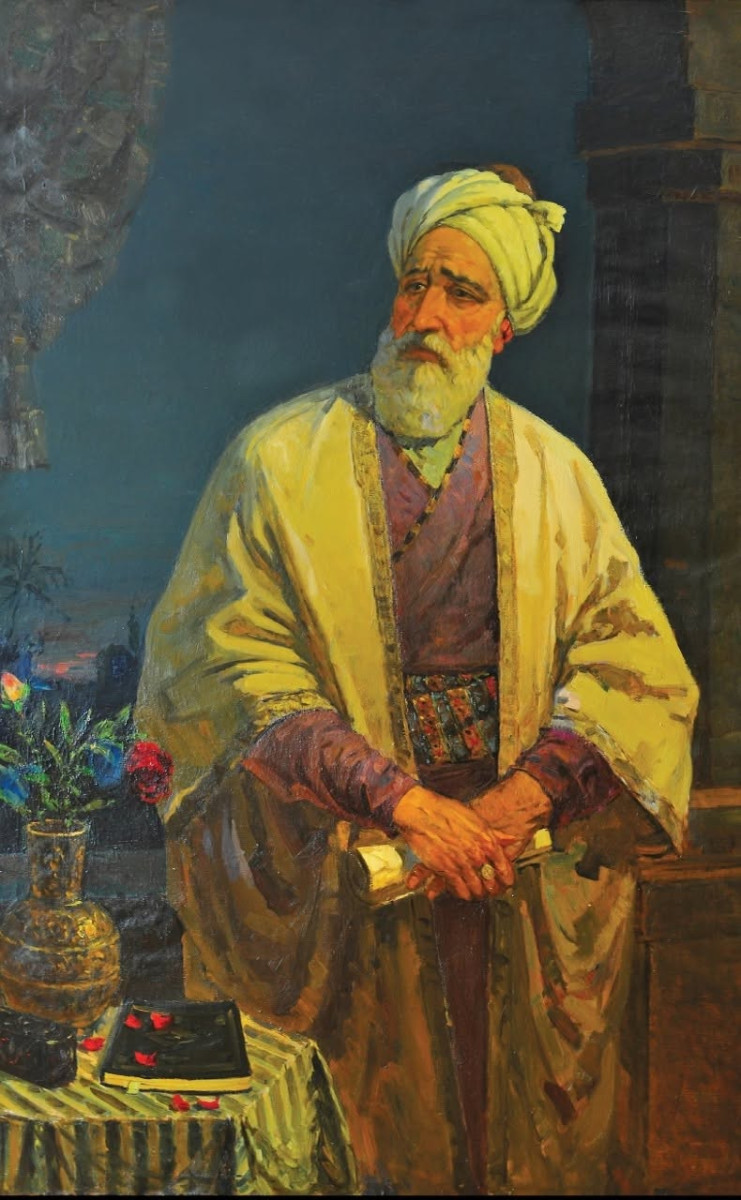
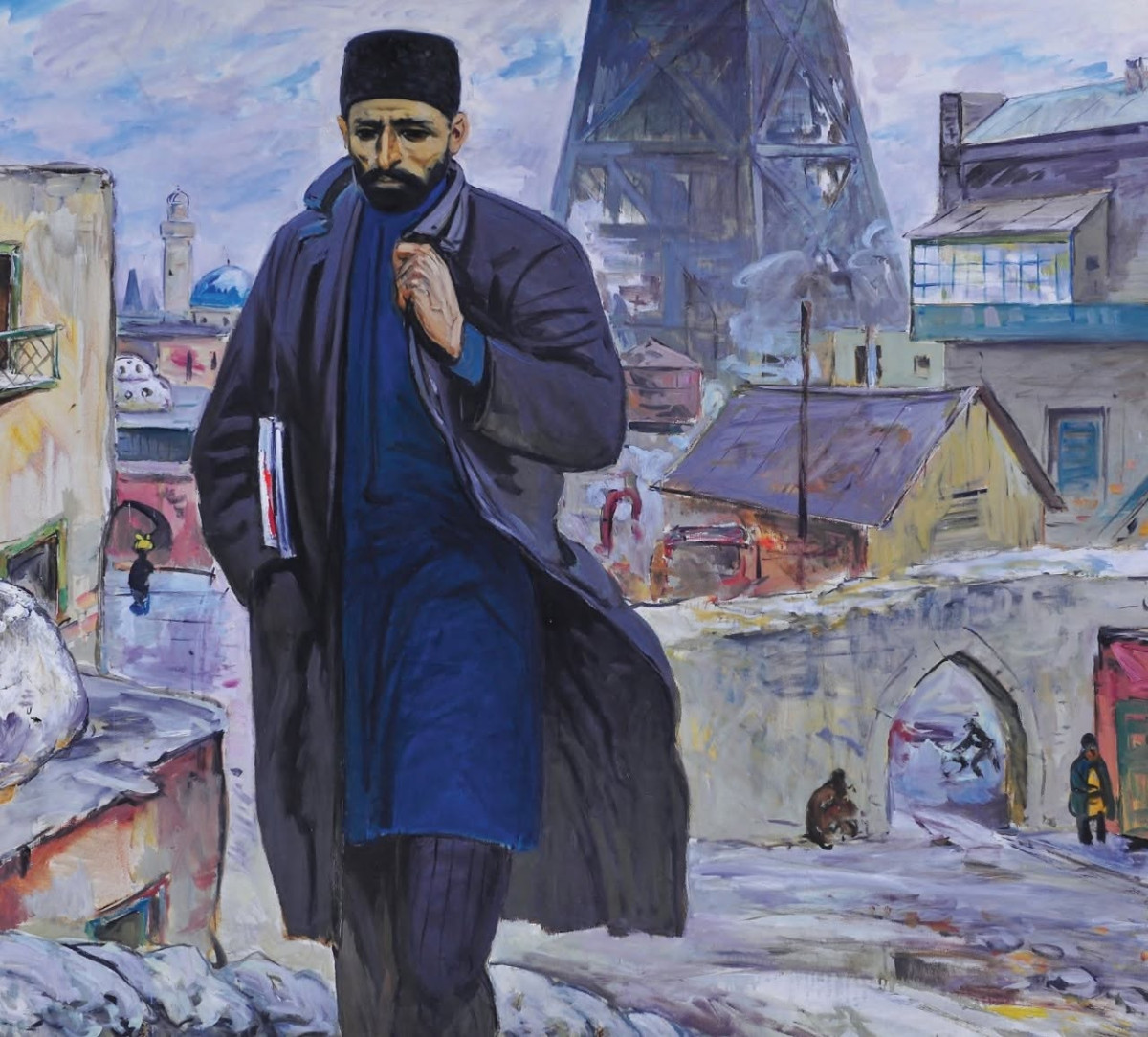
An important aspect of Sharifzade’s portraiture was his interest in prominent figures from the literary and historical heritage of the region. His portraits of Jalil Mammadguluzadeh, Babek, Mirza Agha Aliyev, Garay Asadov and Muhammad Fuzuli are among the works associated with this direction.
His portrait of Muhammad Fuzuli, created in 1958, holds a special place in his career. Sharifzade received the Republic State Prize, Second Degree, for this work. The portrait reflects his interest in conveying the intellectual and historical significance of a major literary figure through the language of painting.
The image of Imadaddin Nasimi also occupied a distinctive place in his artistic practice. Sharifzade returned to this subject in different years and published an article entitled “The Image of Nasimi” in the journal Gobustan in 1979. This publication demonstrates that his engagement with Nasimi extended beyond visual representation to the study of the poet’s historical and cultural significance.
Theatre Design and Satirical Graphics
Sharifzade’s professional activity extended beyond easel painting. He contributed to the development of theatre as a stage designer, creating visual settings for productions based on works by various playwrights and authors.
His theatrical projects included Abdulla Shaig’s “Fitna”, Mir Jalal’s “The Manifesto of a Young Man”, Lope de Vega’s “The Star of Seville”, Islam Safarli’s “The Eye Doctor”, Nazim Hikmet’s “The Strange Man”, Mehdi Huseyn’s “Javanshir”, Suleyman Rustam’s “Gachag Nabi” and Mirza Ibrahimov’s “The Village Girl”.
From 1952 to 1960, he also worked for Kirpi, a satirical magazine. His work in satirical graphics demonstrated his ability to observe characteristic details, convey personality through visual form and address social themes through concise artistic expression.
Recognition and Artistic Legacy
In 1958, Sadig Sharifzade received the Republic State Prize, Second Degree. In 1959, he was awarded the honorary title of Honoured Artist of the Azerbaijan SSR. These distinctions represented official recognition of his contribution to painting and the visual arts.
His artistic legacy is significant for the study of the relationship between painting, theatrical design and satirical graphics in twentieth-century Azerbaijani art. His portraits of historical figures, depictions of national life, landscapes and theatrical designs demonstrate the breadth of his professional practice.
Sadig Sharifzade died in Baku on 2 January 1986. His works remain valuable material for the study of how historical memory, literary heritage and national life were expressed through visual art.
Art Space Gallery MEDIA