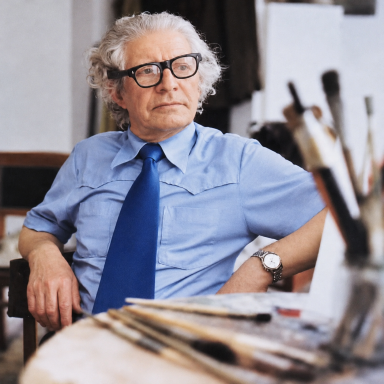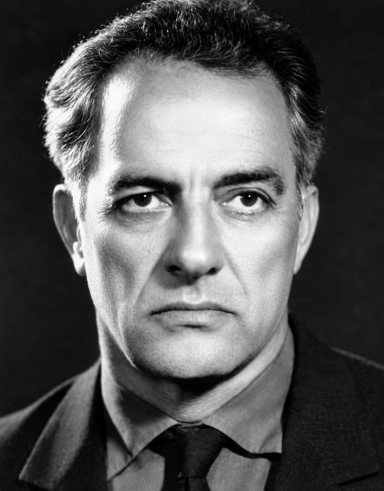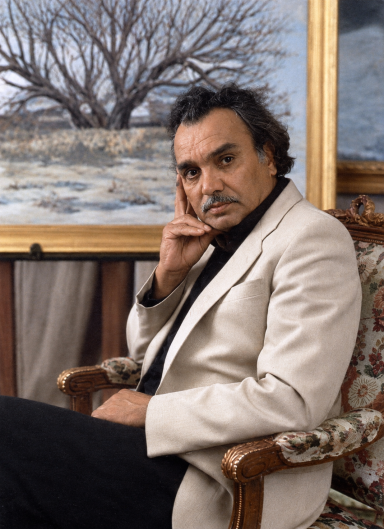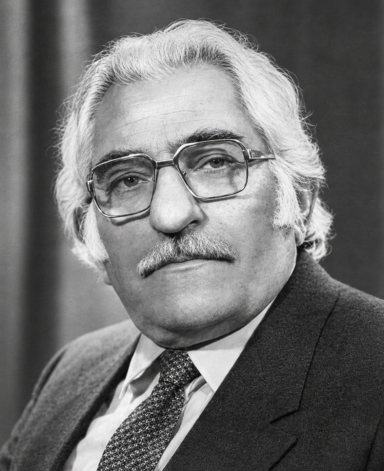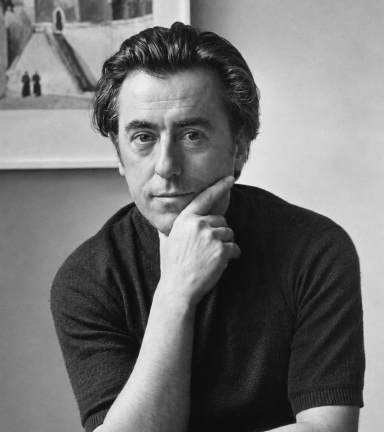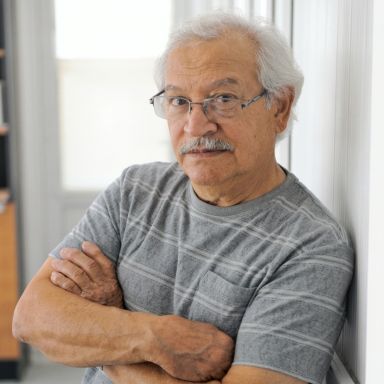
Fazil Imamverdi oglu Najafov was born in Baku on 16 February 1935. He received his professional art education at the A. Azimzade Azerbaijan State Art School between 1950 and 1955, where he studied under distinguished sculptors Fuad Abdurahmanov and Salim Guliyev. In 1955, he continued his studies at the V. I. Surikov Moscow State Art Institute. However, following a disagreement over his diploma project, he left the institute without receiving his diploma and returned to Baku. The artist later recounted this episode in an interview, offering insight into his commitment to artistic freedom and an independent creative position.
Fazil Najafov is recognised as one of the leading representatives of avant-garde thought and modern sculptural expression in Azerbaijani art. His work is distinguished by a reinterpretation of traditional sculptural principles, the abstraction of the human figure and the expression of philosophical ideas through plastic form. In 1988, he was awarded the honorary title of Honoured Art Worker of the Azerbaijan SSR, followed in 2002 by the title of People's Artist of the Republic of Azerbaijan. In 2020, he received the Shohrat Order for his services to the development of Azerbaijani culture.
The Formation of His Artistic Vision and Language
Najafov's artistic career developed during the second half of the twentieth century, a period marked by the expansion of individual modes of expression and new formal explorations in Azerbaijani visual art. The experimental artistic environment that emerged in Baku in the late 1950s and early 1960s played an important role in shaping his creative outlook. Moving beyond conventional realism, the sculptor embraced the freedom of form, monumental composition and the inner meaning of the artistic image.
His artistic language evolved through an interaction between the archaic layers of national culture and the wider experience of international sculpture. The formal explorations associated with artists such as Auguste Rodin, Alberto Giacometti and Henry Moore, alongside an interest in the sculptural traditions of ancient Egyptian, Assyrian and Sumerian cultures, formed important aspects of Najafov's artistic outlook.
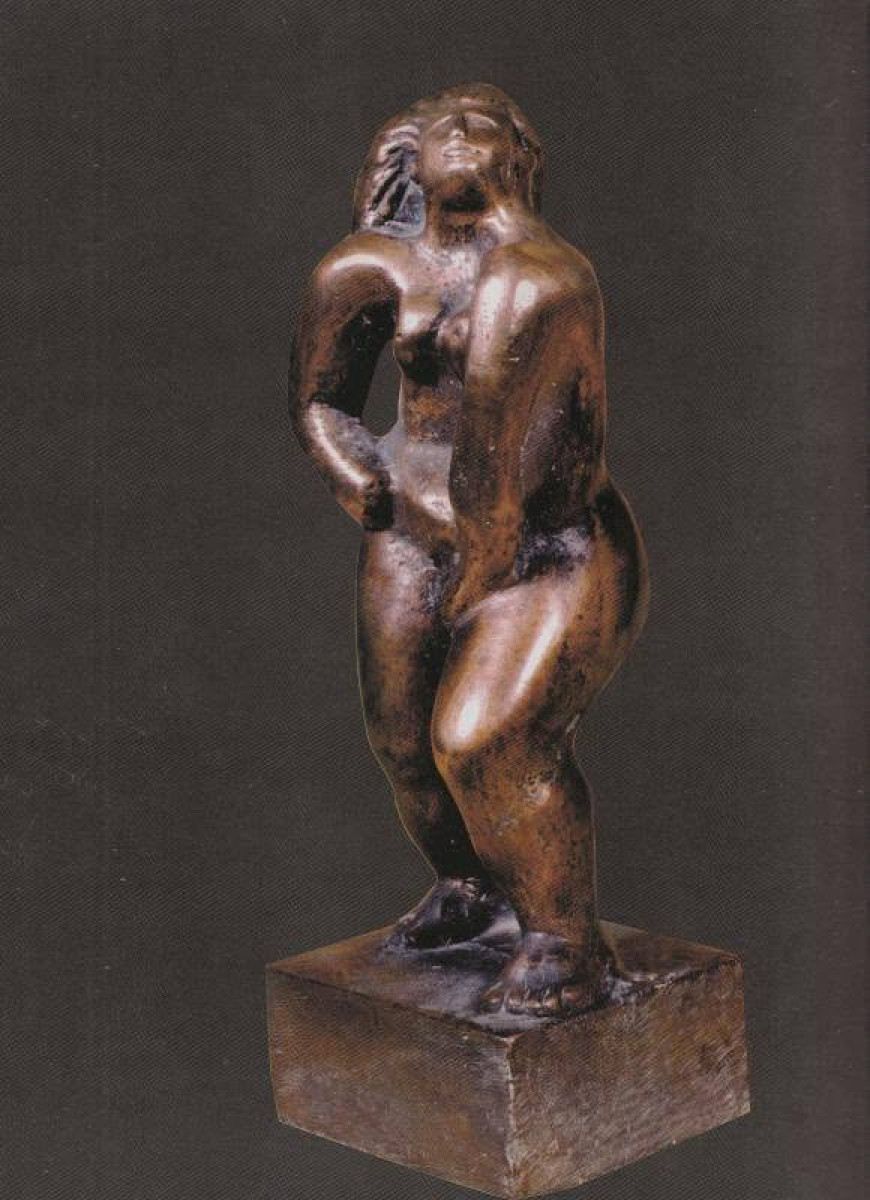
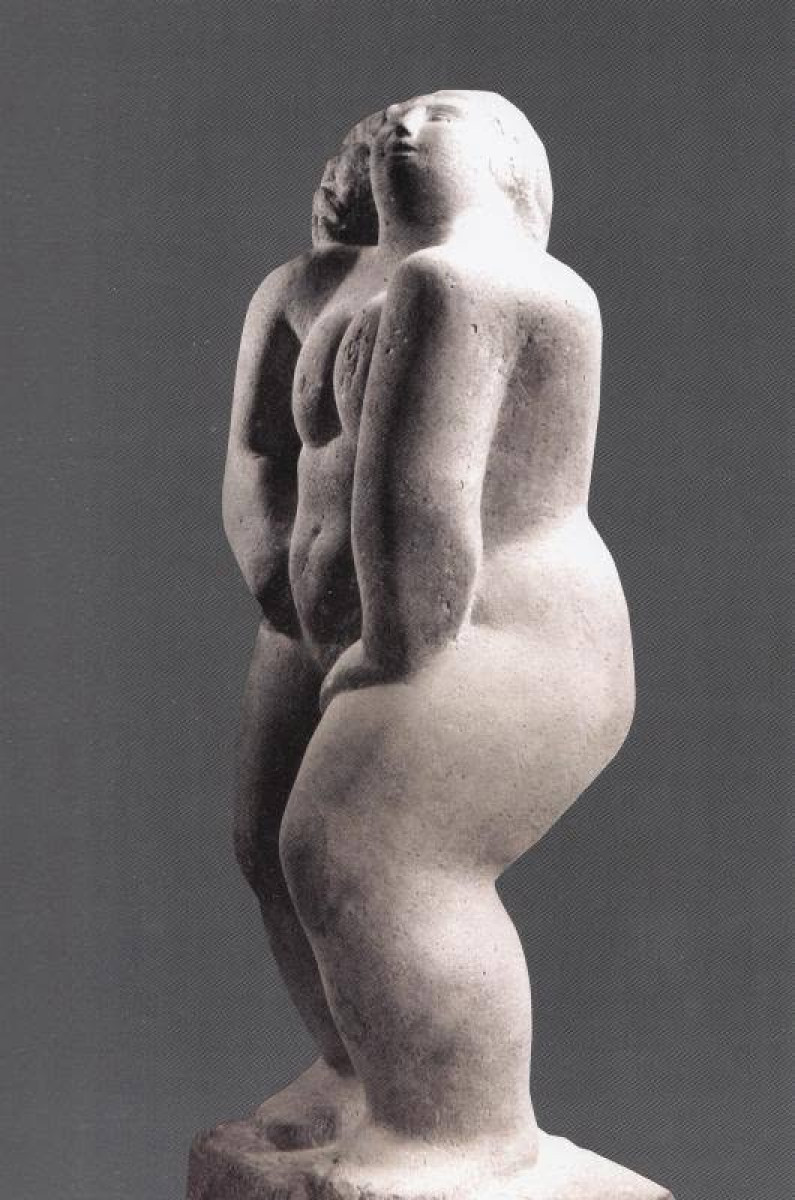
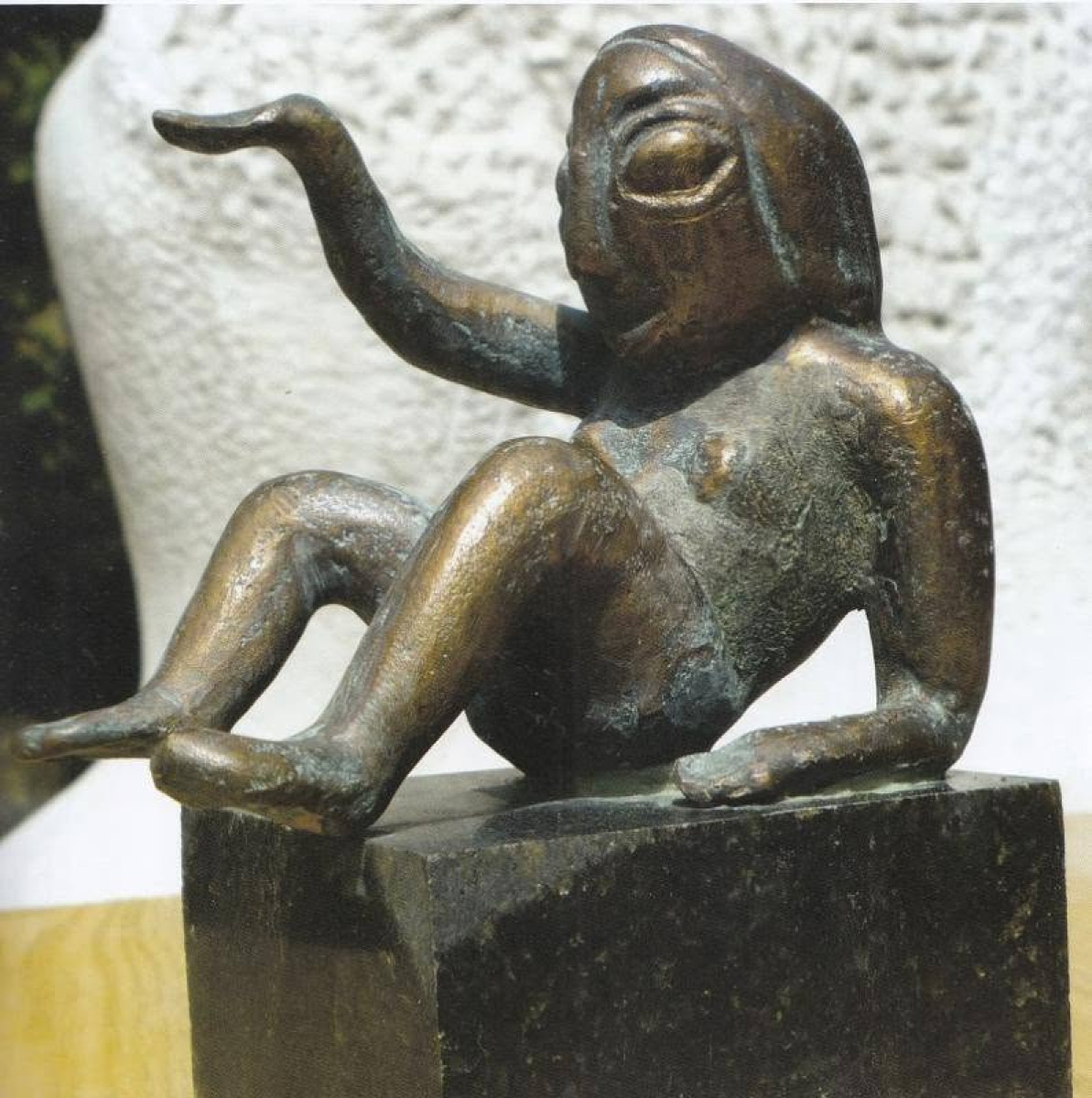
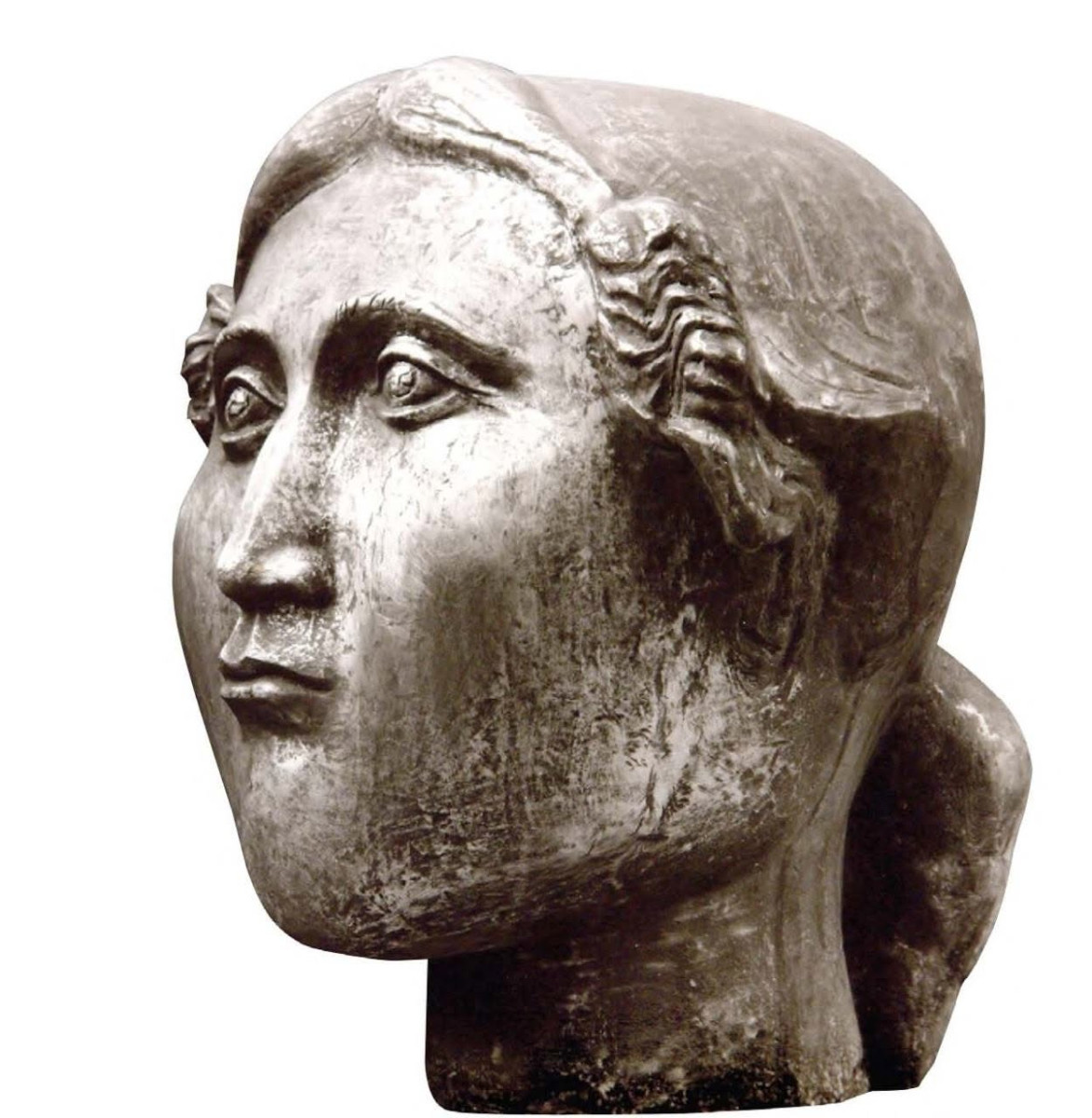
Monumental volume, concise composition, generalised forms and emotional intensity are among the defining characteristics of Najafov's sculpture. Rather than emphasising anatomical detail, he sought to reveal the character, psychological condition and inner energy of the human figure through sculptural form.
Early Works and the Human Figure
The theme of the working individual and contemporary life occupies an important place in Najafov's early work. Oil Worker is a notable example of this period. The artist presents the Baku oil worker not merely as a participant in the labour process, but as a person endowed with strength of character and inner determination. The work focuses less on an idealised heroic image than on the individual's actual circumstances and psychological state.
Created in 1965, Auschwitz holds a particularly significant place in his early oeuvre. This stone relief column, dedicated to the tragedy of the Second World War, conveys the fate of prisoners condemned to death through a dramatic sculptural language. Its emotional force derives not from literal depiction, but from the universalised representation of human suffering. Its stark and tragic expression stood apart from the heroic optimism characteristic of official Soviet art of the period.
“Motifs of Old Baku” and the Sculptural Expression of Human Destiny
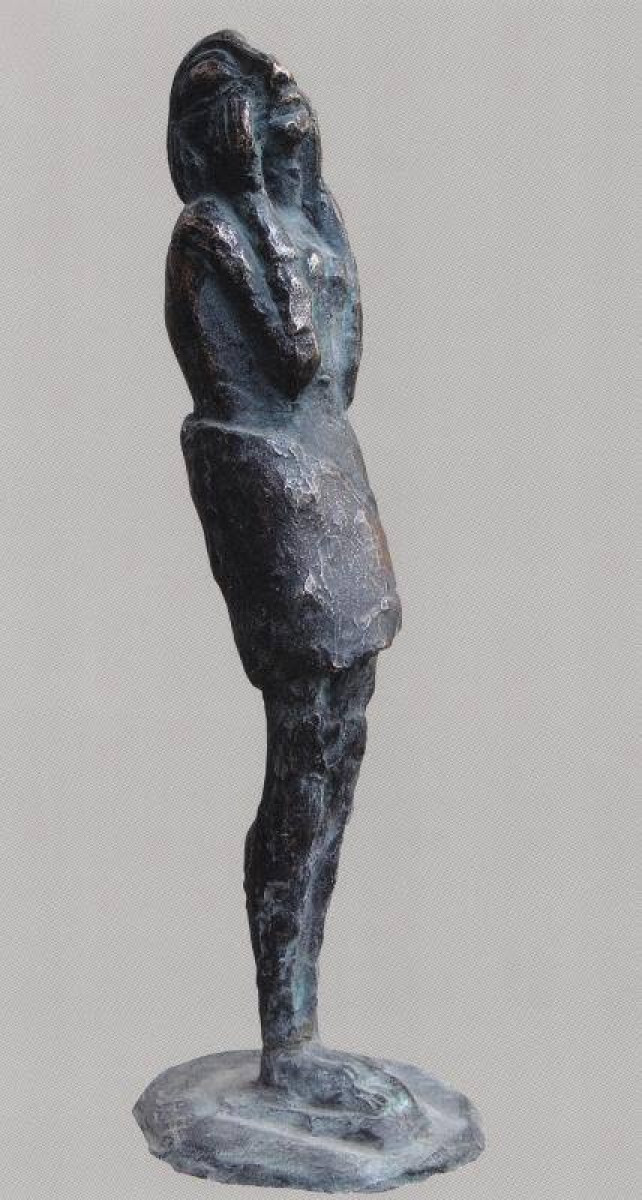
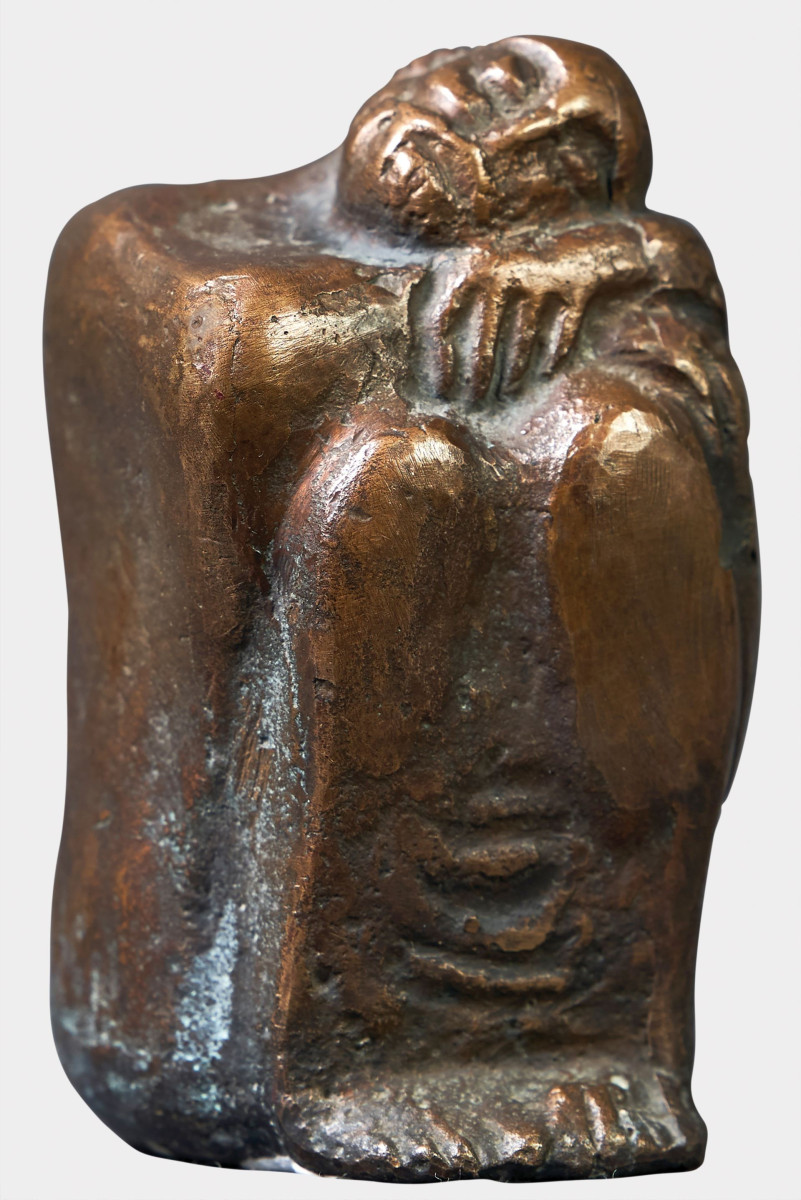
The 1970s marked a period of artistic maturity and the clearer consolidation of Najafov's individual style. In works such as The One Who Leaves (1971), Alone (1973), In the Desert (1973), Crowd (1973) and Awakening (1978), the artist explored solitude, the trials of life, the human inner condition and the individual's position within society. These works later became associated with the series Motifs of Old Baku.
In these compositions, individual human experiences acquire broader social and philosophical significance. The generalisation of figures, the internal tension of the compositions and their dramatic sculptural treatment express the relationship between the individual and the surrounding world.
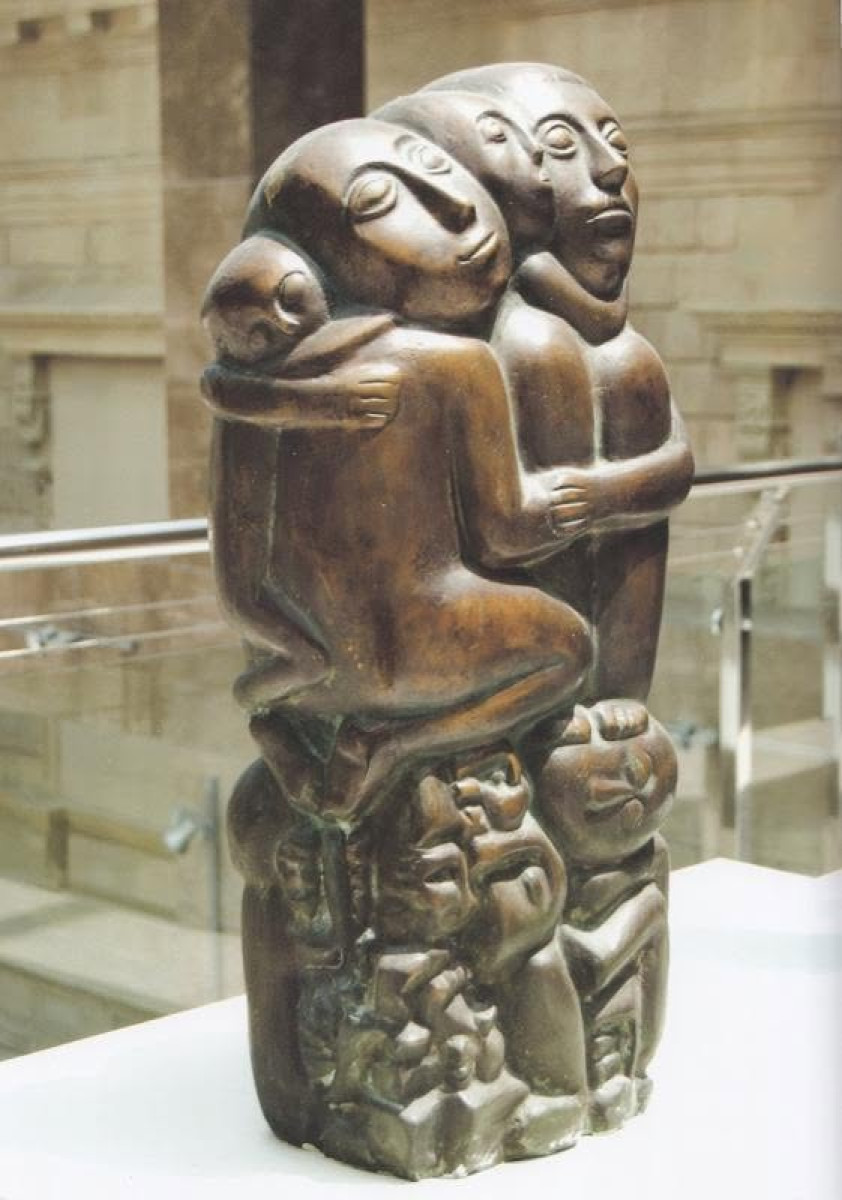
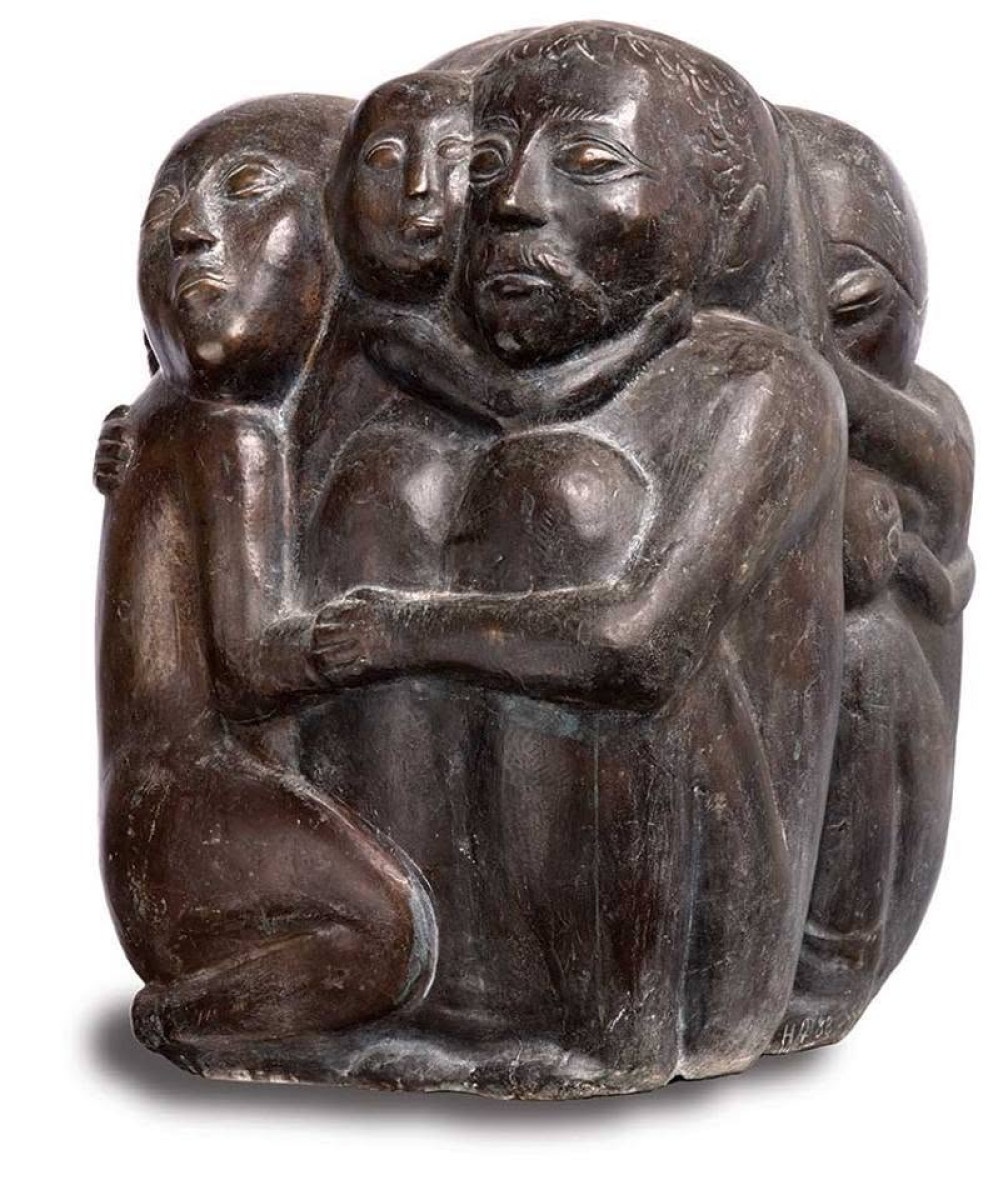
The Blind (1979, bronze) is one of Najafov's most significant works in this respect. The figures, gathered closely together to form a unified sculptural whole, evoke reflections on the human condition, the social environment and the tragic dimensions of existence. The work transcends the literal depiction of physical blindness, functioning instead as a symbolic expression of the artist's philosophical concerns.
The composition Echo of the Age, also created in 1979, employs the metaphor of “blind humanity” as a central conceptual device. Individual figures are placed within a broader social and political context. Its sculptural structure and generalised forms express the artist's response to the moral and spiritual concerns of his time.
Stone, Material and Sculptural Form
Stone is not merely a medium in Fazil Najafov's work; it is an essential means of articulating his artistic ideas. The sculptor explored the expressive possibilities of stone, marble, bronze and granite, adapting the texture, colour and volume of each material to the conceptual demands of the composition.
The simplification and generalisation of form in Najafov's sculptures reveal the natural qualities of the materials he employs. The reduction of external detail does not diminish the expressive power of the image; rather, it strengthens its formal unity and symbolic depth.
Works such as Camel (1980), Wind (1980), Morning (1982), The Worshipper (1985) and Formula of Life (1988) are characteristic examples of this approach. In these sculptures, form and meaning are organically connected, allowing the images to move beyond literal representation and acquire a more universal philosophical significance.
“The Games of Time” — History and the Human Condition
The Games of Time is one of the conceptually significant works in Fazil Najafov's oeuvre. The composition brings together the sculptor's artistic vision, his engagement with historical memory and the breadth of his philosophical thought in a complex visual structure.
References to ancient Greek and Roman civilisations, as well as Media and Manna, appear alongside the names of conquerors, philosophical sayings and symbolic figures, integrated into a unified artistic system. The conceptual scope of the work extends beyond the representation of specific historical events. It raises questions concerning power, time, human ambition and the destiny of humankind.
The complexity of its sculptural structure, the interaction of symbols and the historical associations create a multilayered meaning. The Games of Time demonstrates Najafov's ability to construct a broad philosophical and historical concept through the language of sculpture.
The Monument to Gara Garayev and Monumental Sculpture
One of the most important works in Fazil Najafov's monumental practice is the monument dedicated to the distinguished Azerbaijani composer Gara Garayev. Unveiled in Baku on 3 February 2014, on 28 May Street, the monument occupies a significant place in the sculptor's monumental oeuvre.
Najafov worked on numerous sketches and plaster models while developing the compositional concept. The sculptural treatment of the monument's different surfaces takes the work beyond the conventions of a traditional portrait monument. Images associated with the composer's creative world, including Don Quixote and Majnun, appear alongside scenes referring to his life and artistic journey.
Rather than limiting the work to the composer's physical likeness, Najafov sought to convey Gara Garayev's inner world, spiritual character and artistic stature through monumental form. The monument is an important example of the complex relationship between material, space and artistic image in the sculptor's practice.
International Recognition
Fazil Najafov's work was also presented within the international contemporary art scene. In 2015, he participated in Azerbaijan's national pavilion, Beyond the Line, at the 56th Venice Biennale. The official pavilion archive lists him alongside Ashraf Murad, Javad Mirjavadov, Tofik Javadov, Rasim Babayev, Huseyn Hagverdi and Shamil Najafzada.
The Beyond the Line exhibition drew attention to Azerbaijani artists whose practices developed beyond official ideological frameworks during the Soviet period and who were distinguished by their independent artistic positions. Najafov's participation provided an opportunity to present his avant-garde approach and individual sculptural language to an international audience.
The Place of His Artistic Legacy in Art History
Fazil Najafov's oeuvre demonstrates the interaction between tradition and modernity, national artistic memory and individual freedom of expression in Azerbaijani sculpture. Through the expressive possibilities of stone, marble and bronze, his works explore human destiny, historical memory, time and the conditions of existence.
His independent artistic position, bold formal experimentation and philosophically charged compositions established a distinctive direction within the development of modern Azerbaijani sculpture in the twentieth century. Najafov's legacy reflects not only the aesthetic tendencies of a particular historical period, but also constitutes an independent artistic world that invites reflection on the human inner condition, the changing nature of history and the individual's place in time.
Fazil Najafov died in Baku on 11 July 2023.
Art Space Gallery MEDIA