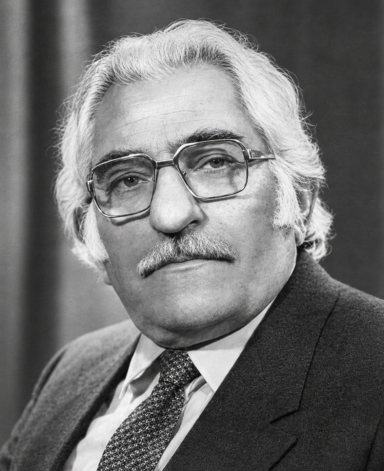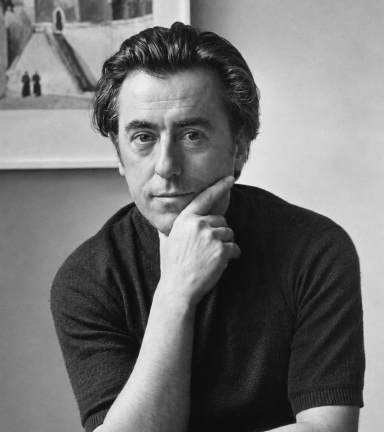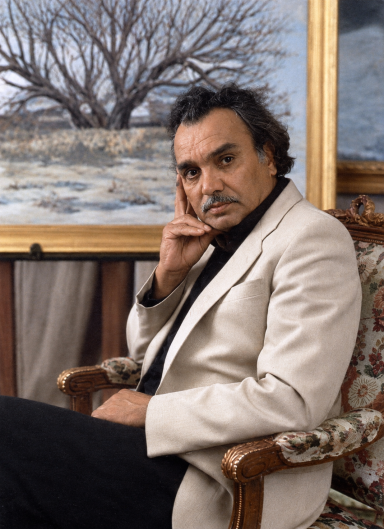
Elbey Rzaguliyev was born on 17 June 1926 in Baku. In 1941, he entered the Azim Azimzade Azerbaijan State Art School, graduating in 1946. In the same year, he continued his studies at the Art Faculty of the All-Union State Institute of Cinematography, completing his education in 1953. That year, he began working as an artist at the Azerbaijanfilm film studio.
Rzaguliyev’s artistic career is distinguished by a multifaceted practice that brought together painting, graphic art and production design for cinema. In 1964, he was awarded the honorary title of Honoured Art Worker, followed in 1977 by the title of People’s Artist of the Azerbaijan SSR. In 1974, he received a diploma from the USSR Academy of Arts, and in 1986 he was awarded the State Prize. In 1998, he received the Shohrat Order. From 1977 to 1987, he served as Secretary of the Board of the Union of Artists of Azerbaijan.
Two Dimensions of Artistic Thought
In Elbey Rzaguliyev’s work, painting and film design were not isolated disciplines. They complemented one another in his approach to composition, spatial structure, the arrangement of figures and visual rhythm. The precision of framing and the dramatic organisation of space evident in his paintings reveal the influence of his experience in cinema. At the same time, his command of colour and form gave the visual environments he created for the screen a distinctive artistic character.
Rzaguliyev’s artistic language sought to reveal the inner structure of a subject rather than merely reproduce its outward appearance. Compositional balance, measured colour relationships and the interaction of visual elements are among the defining features of his work.
Absheron and the Old City: The Artistic Memory of Place
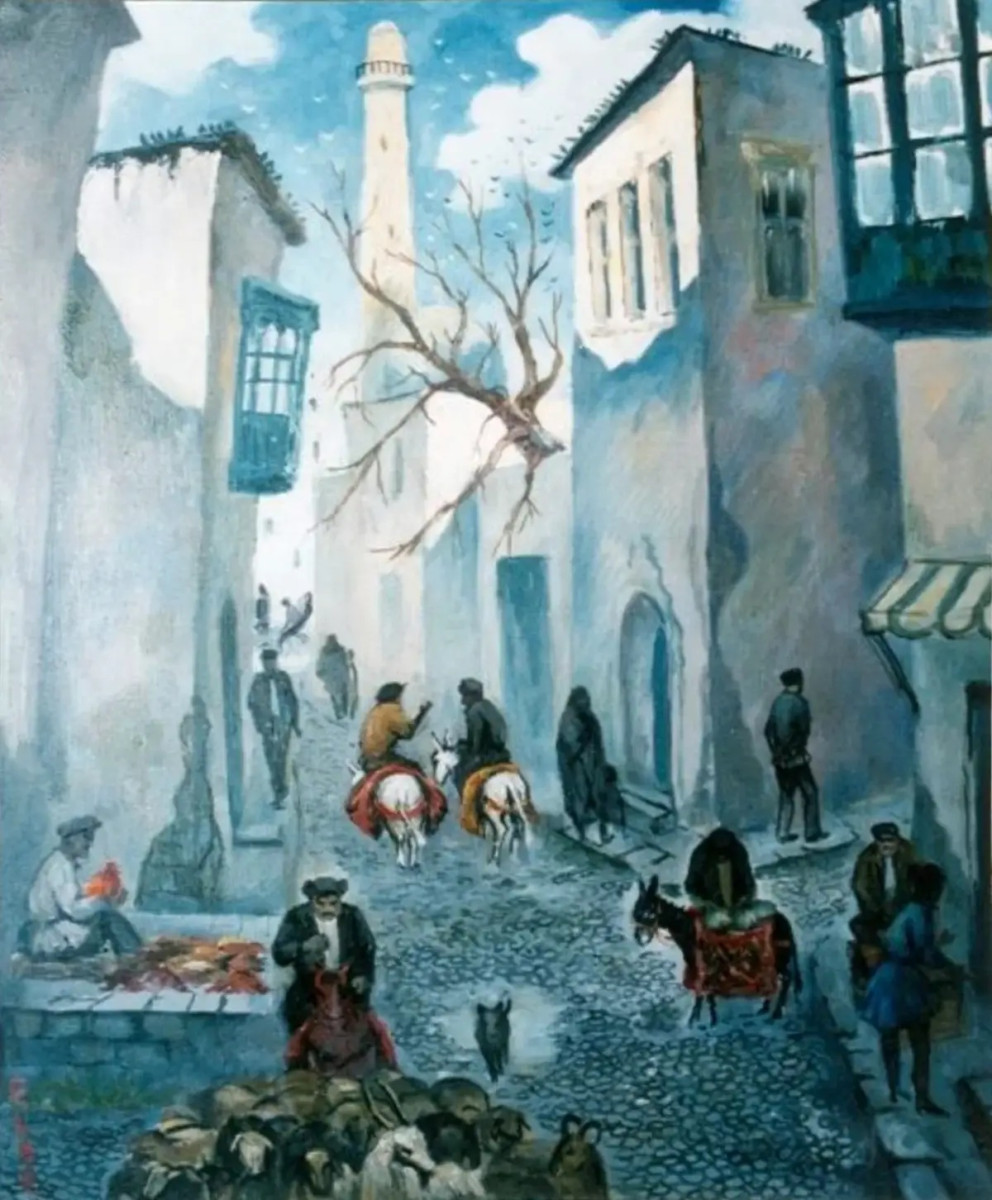
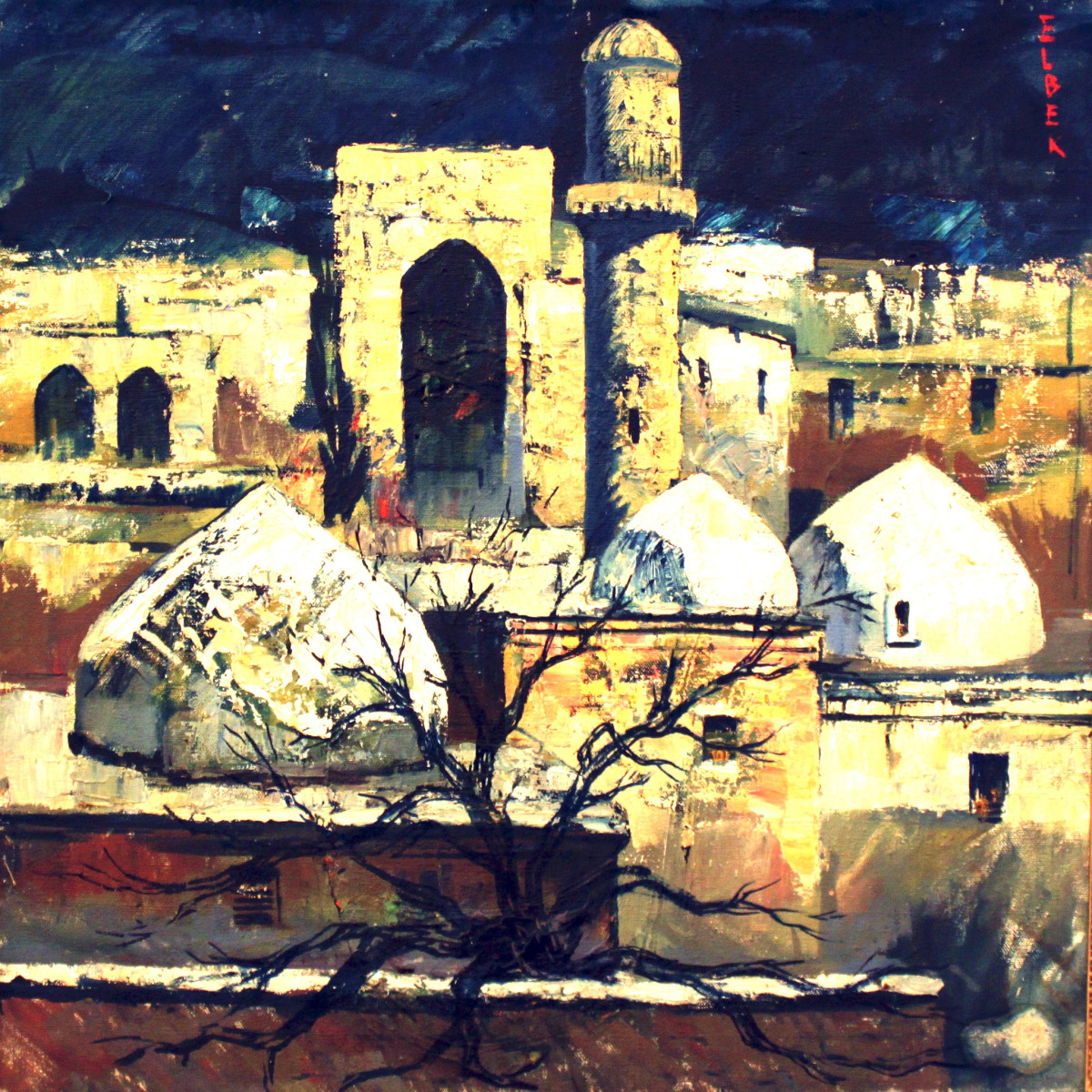
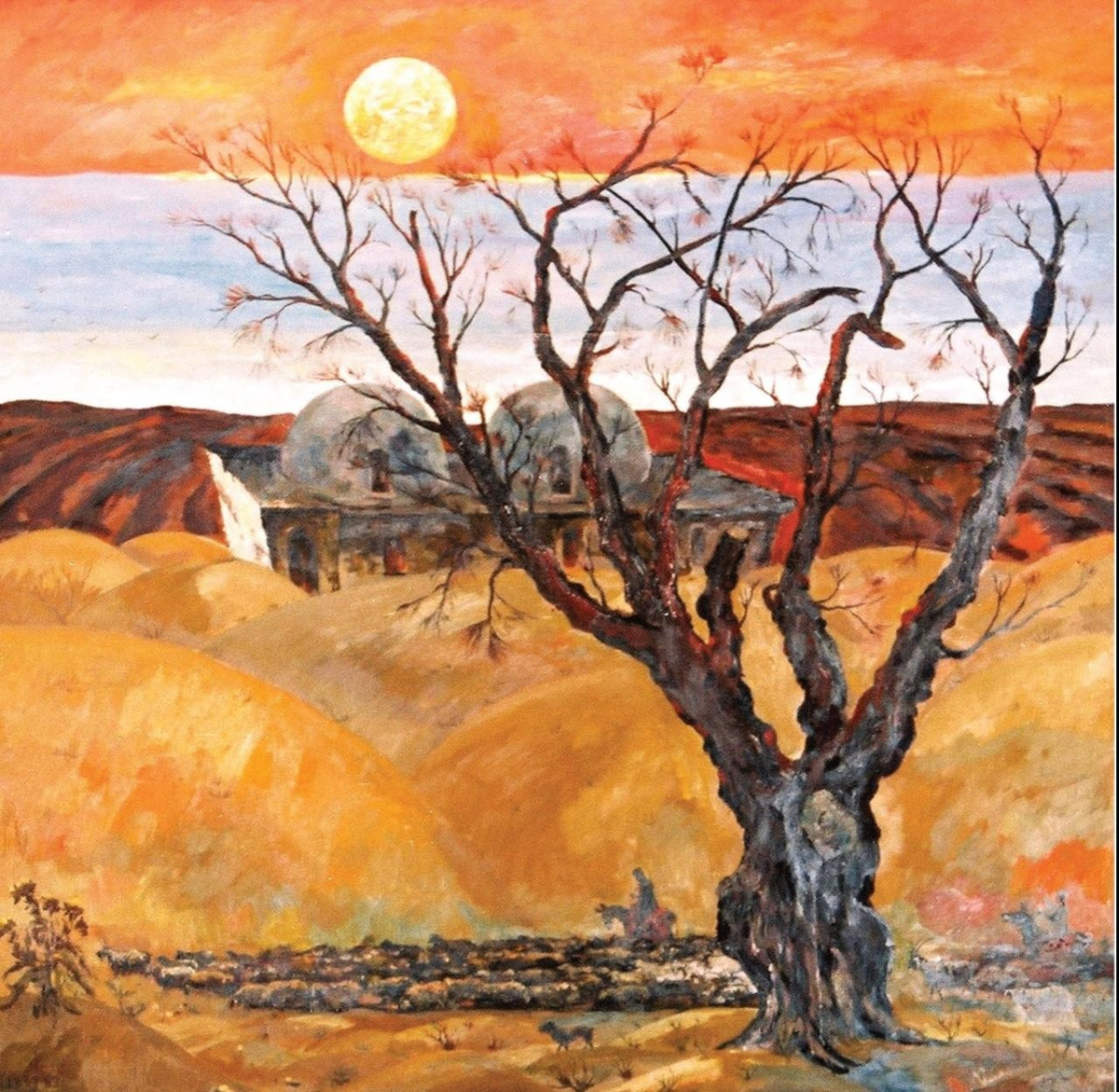
The historic environment of Baku, the architectural fabric of the Old City and the distinctive landscape of Absheron occupy an important place in the artist’s work. In paintings such as Shirvanshahs’ Palace, Blue Balcony, An Old Street in Baku, An Ancient Bathhouse in Absheron and Absheron, place is presented not simply as a subject of depiction, but as an artistic environment carrying historical memory and traces of local life.
The artist closely observed architectural rhythms, the textures of walls, the perspective of streets and the changing effects of light across surfaces. These works establish a visual relationship between the natural landscape of Absheron and the living spaces shaped by people. Historic architecture and elements of everyday life become interconnected parts of a unified pictorial space.
The Human Figure and the Theme of Labour
The human figure and the theme of labour form a distinct direction in Rzaguliyev’s artistic practice. In works such as Young Builders of Dashkasan, Ali Bayramli Power Station, The Land of People, Installers and People of Labour, the environment in which people work, the process of labour and the rhythm of collective life determine the central subject of the composition.
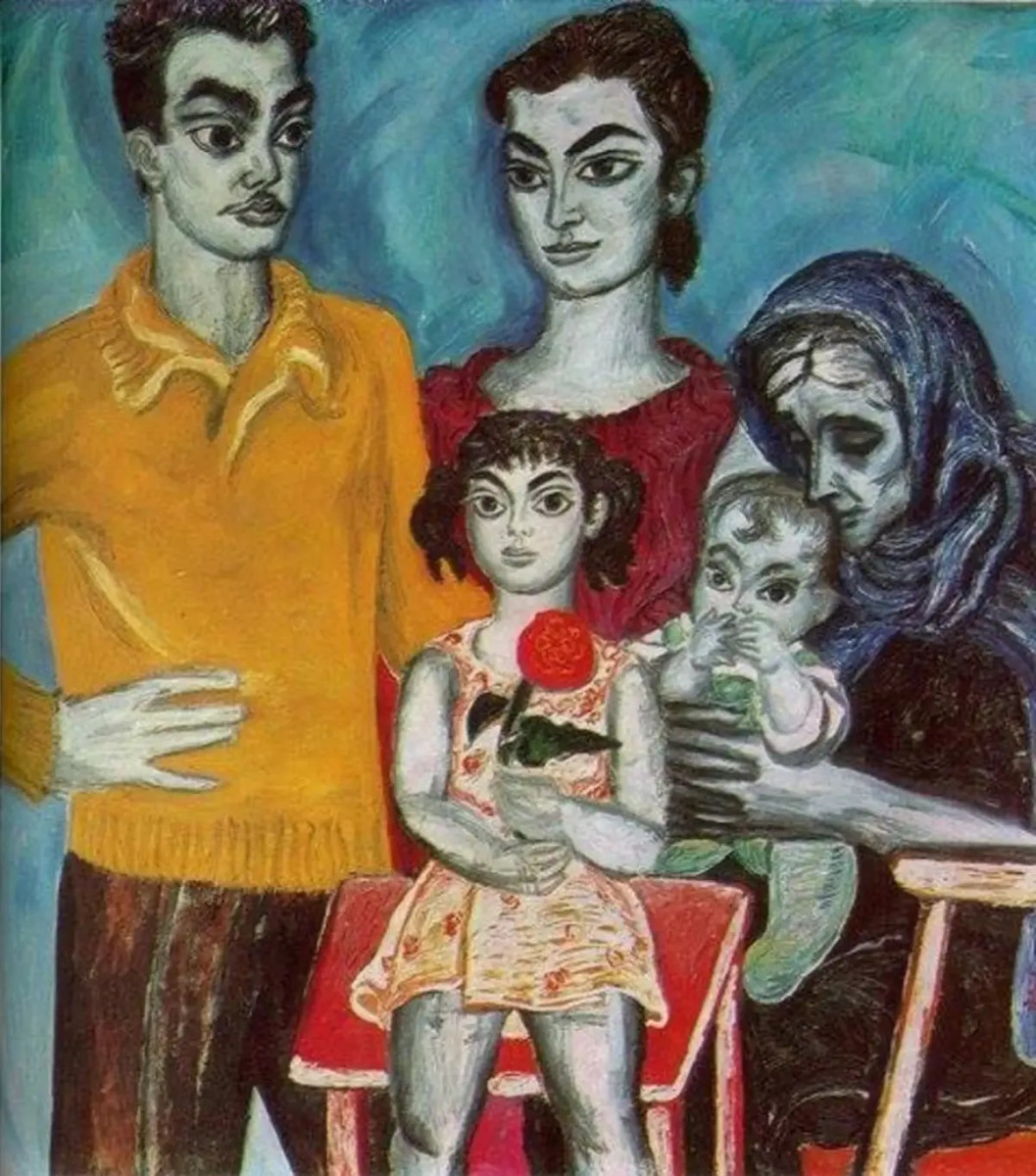
The figures are presented not merely as representatives of particular professions, but as active participants in a changing social environment. The artist pays particular attention to the placement of figures, their gestures and the overall movement of the composition. In Mother, the human figure is explored on a more personal and emotional level.
Travel Series and the Depiction of Different Cultures
Rzaguliyev’s travels to different countries broadened the range of subjects and visual experiences in his work. In paintings such as Mexican Girls, People of Mexico and The Taj Mahal, the distinctive features of different geographical and cultural environments are interpreted through the artist’s own observations.
In the Japan Series, particular attention is given to spatial structure, architectural details and elements of everyday life. Rather than treating other cultures solely as subjects of ethnographic interest, the artist presents them as environments with their own distinctive aesthetic structures. Observation, composition and sensitivity to colour work together throughout these pieces.
Still Life: Form and Colour Relationships
Still life reveals important aspects of Rzaguliyev’s approach to painting. In works such as Red and White Roses, White Roses, Carnations, Violets and Carnations, Oriental Still Life and Oriental Weapons, the form of objects, the texture of surfaces and the relationships between colours become central means of expression.
The objects in these compositions are not presented merely as domestic items or flowers. Their placement in space, their relationship with light and the contrasts between colours determine the overall artistic structure of each work. The balance between form and colour creates a measured yet carefully constructed rhythm.
Film Design: The Construction of Screen Space
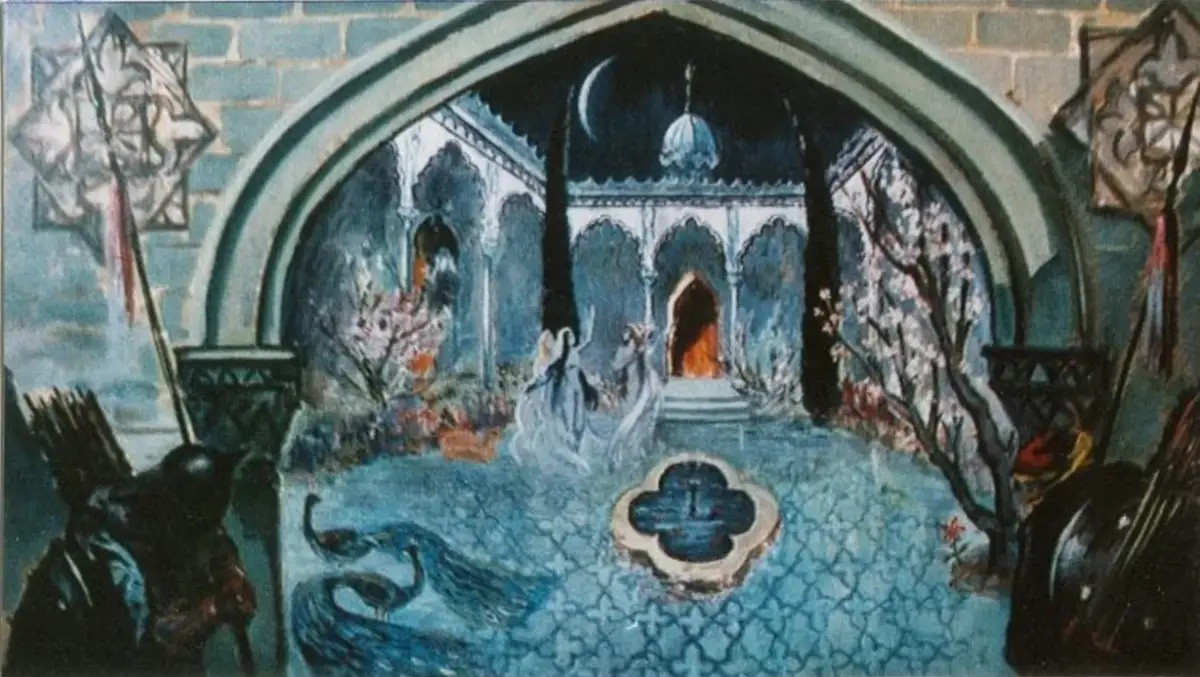
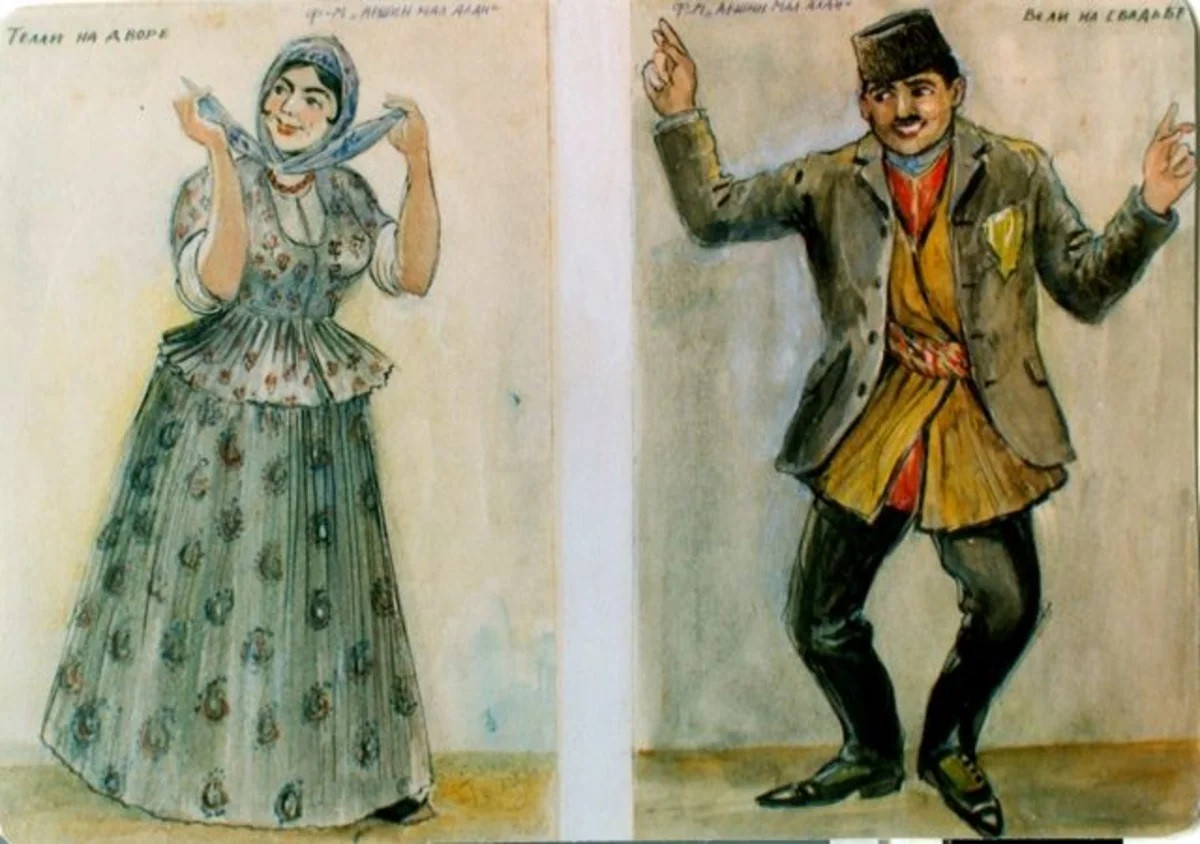
Film design occupies a significant place in Elbey Rzaguliyev’s career. From 1953, he worked at the Azerbaijanfilm studio and contributed to the artistic design of a number of films. His Great Heart, Stepmother, The Telephone Operator Girl, The Last Night of Childhood, A Day Has Passed, The Sound of the Pipe and A Blow from Behind are among the notable examples associated with his work in cinema.
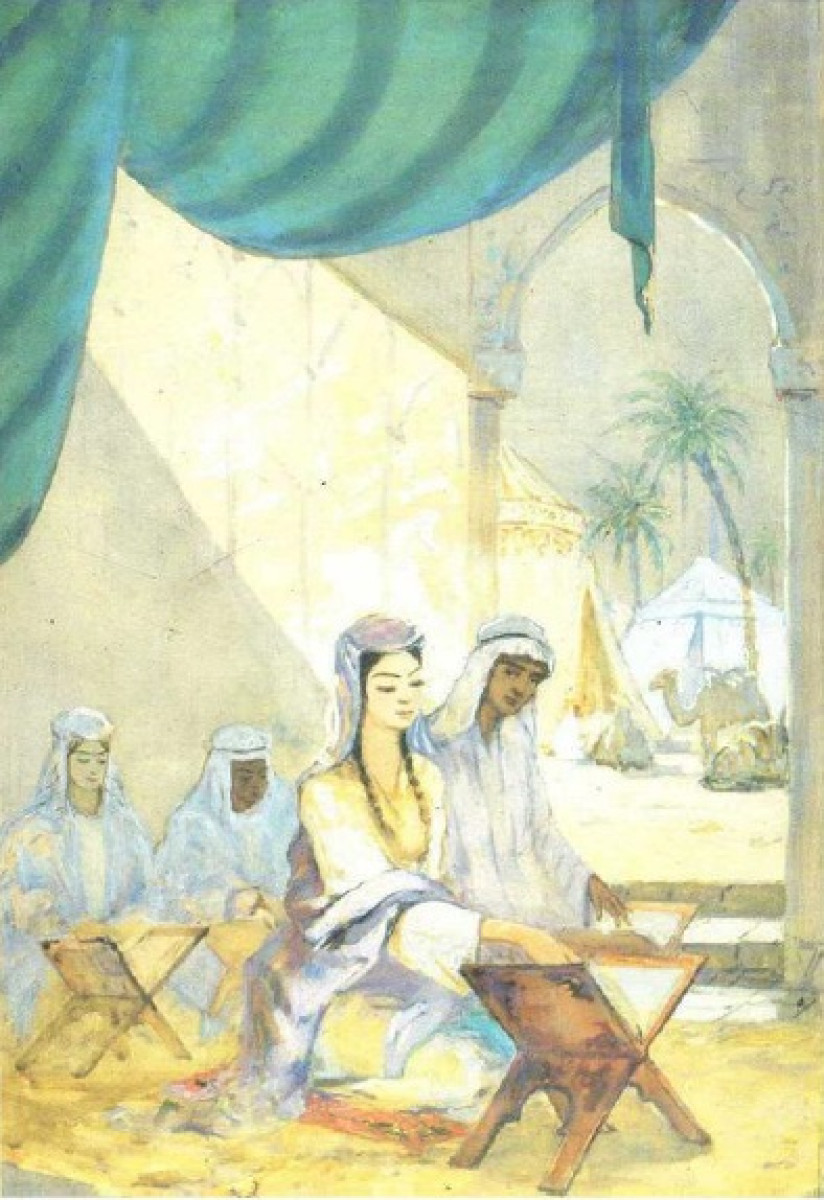
The artistic environment created for a film is more than the setting in which events unfold; it also conveys the characters’ identities and their dramatic relationships. In Rzaguliyev’s screen designs, spatial composition, the selection of objects, colour schemes and the treatment of light contribute to the creation of visual coherence. His experience in the fine arts informed his individual approach to the construction of cinematic space.
The Place of His Artistic Legacy in Art History
Elbey Rzaguliyev’s work is significant for understanding the connections between different fields of Azerbaijani visual art. His paintings and graphic works, together with his experience in film design, represent different expressions of a unified professional outlook. His artistic legacy encompasses depictions of the urban environment of Azerbaijan, the human figure, working life and diverse cultures.
Precision of observation, compositional discipline and a sensitive approach to visual expression are among the defining characteristics of Rzaguliyev’s art. His work demonstrates the relationship between the artistic traditions developed in Azerbaijani painting and cinema.
He died on 15 September 2007 in Baku.
Art Space Gallery MEDIA