Biography and Artistic Education
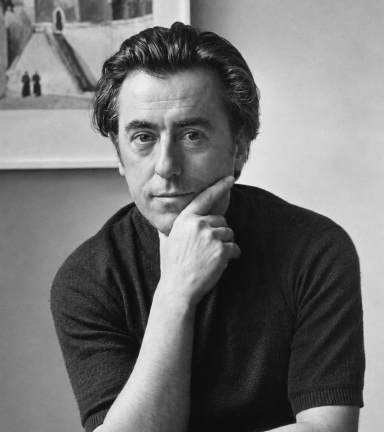
Born on 13 July 1926 in Cannes, France, Vidadi Narimanbayov moved to Baku with his family in 1929. One of the notable representatives of twentieth-century Azerbaijani visual art, he developed an artistic vision shaped by historical events, the experience of war and his professional education.
In 1943–1944, Narimanbayov studied at the Azim Azimzade Azerbaijan State Art School. From 1944 to 1950, he served in the military. After completing his service, he resumed his art studies at the same school. Between 1953 and 1956, he studied at the V. I. Mukhina Higher School of Art and Industry in Leningrad, and from 1957 to 1960, at the Tbilisi Academy of Arts.
The Theme of War and the Human Condition
The Second World War left a profound mark on Narimanbayov’s life and artistic development. Having volunteered for military service, he returned to the subject of war at different stages of his career. His wartime experience contributed to the prominence of human destiny, loss, suffering and moral resilience in his art.
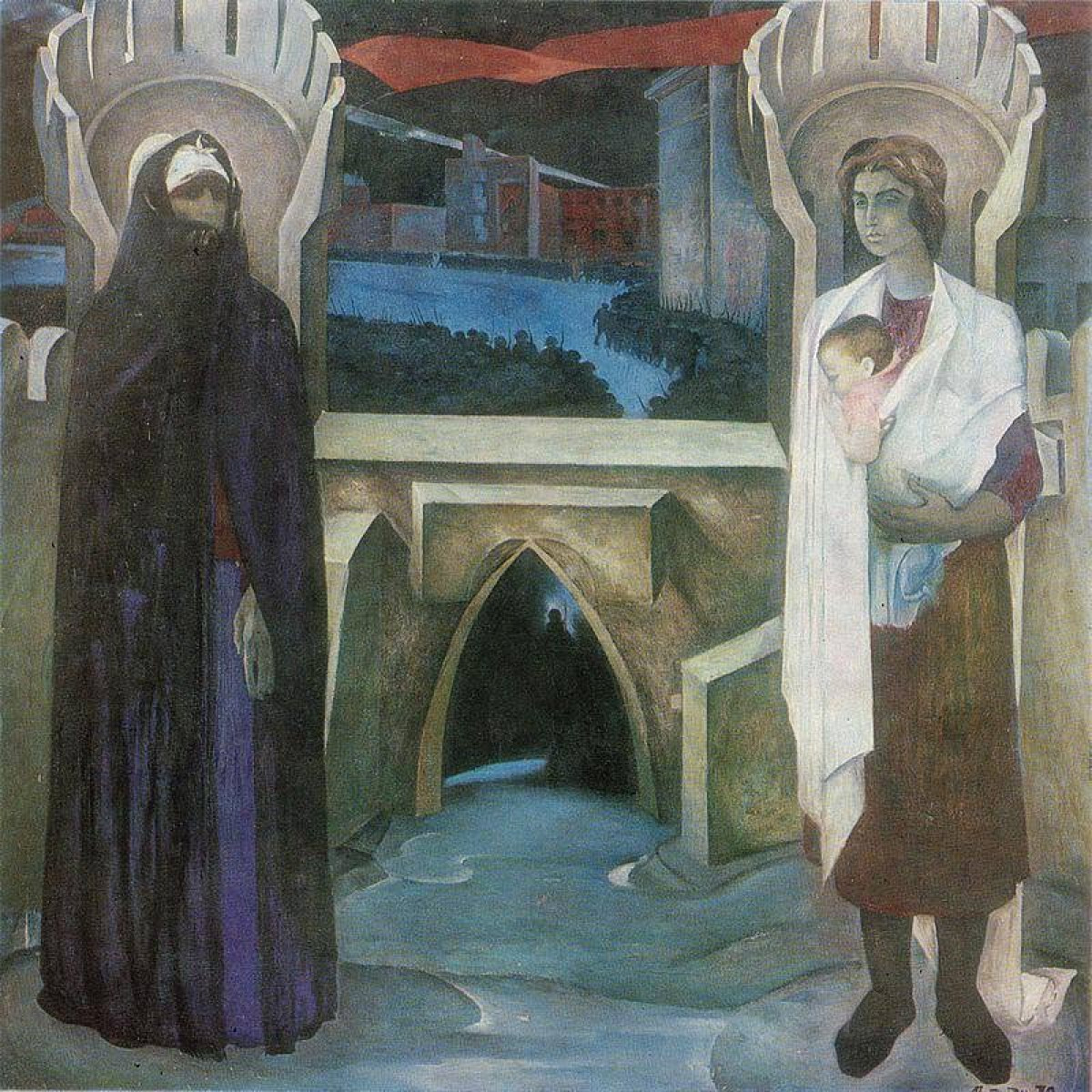
“Düşmənin sevinci...” (“The Enemy’s Joy...”), created during his student years, is among the notable works of his early period. Through the contrast between the open sky, the sun, dark clouds and the two figures in the foreground, the painting conveys a sense of human vulnerability and the contradictions of life. “Nədir günahımız?” (“What Is Our Guilt?”) also reflects the artist’s early response to the tragedies inflicted on ordinary people by war.
In works such as “1941”, “In Memory of the People of Baku”, “On the Roads of War”, “The Spring of 1945”, “Children of War” and “At the Nameless Heights”, war emerges not merely as a historical event, but as an experience that transforms the human inner world and leaves lasting marks on individual lives.
“On the Way” — The Humanist Dimension of War Memory
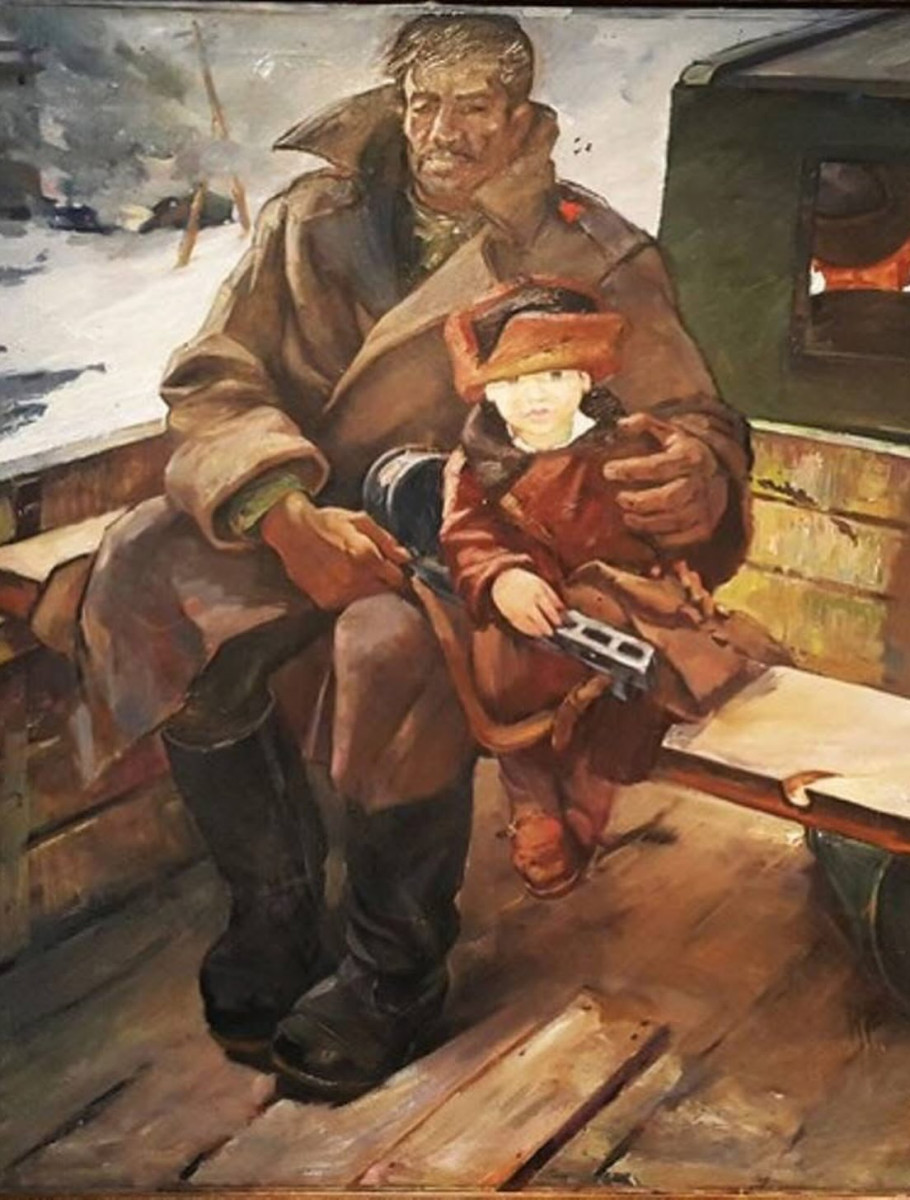
Created in 1963, “On the Way” (“Yolda”) holds a distinctive place in Vidadi Narimanbayov’s artistic legacy. Preserved in the collection of the Azerbaijan National Museum of Art, the painting depicts a soldier seated in a military truck, protectively holding a child beside him.
Through this scene, the artist juxtaposes the harsh reality of war with the human capacity for compassion and care. Rather than focusing on combat itself, he directs attention towards the fate of a person in need of protection amid the turmoil of war.
The painting’s emotional force lies precisely in this humanist perspective. War is presented not simply as a historical event, but as a condition that tests human relationships and moral responsibility.
Portraiture and National Memory
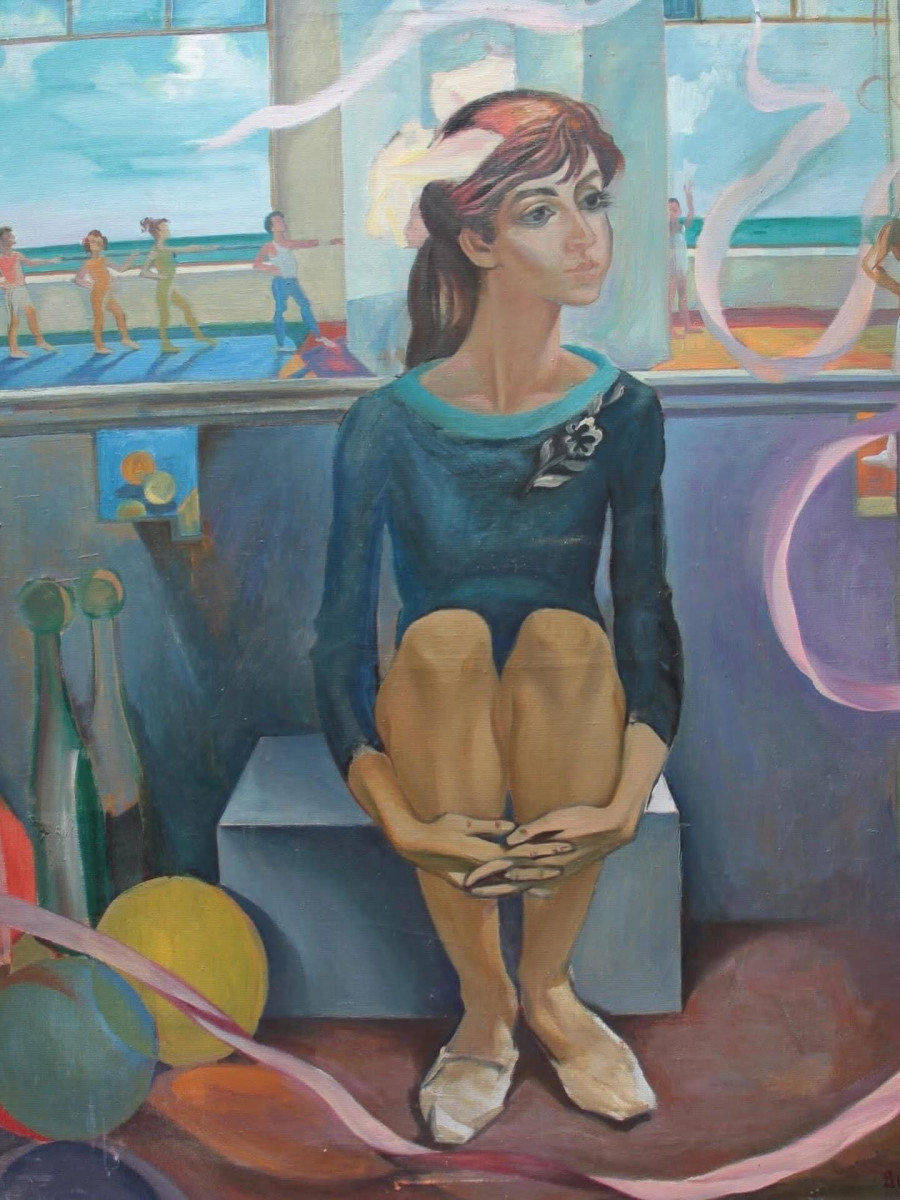
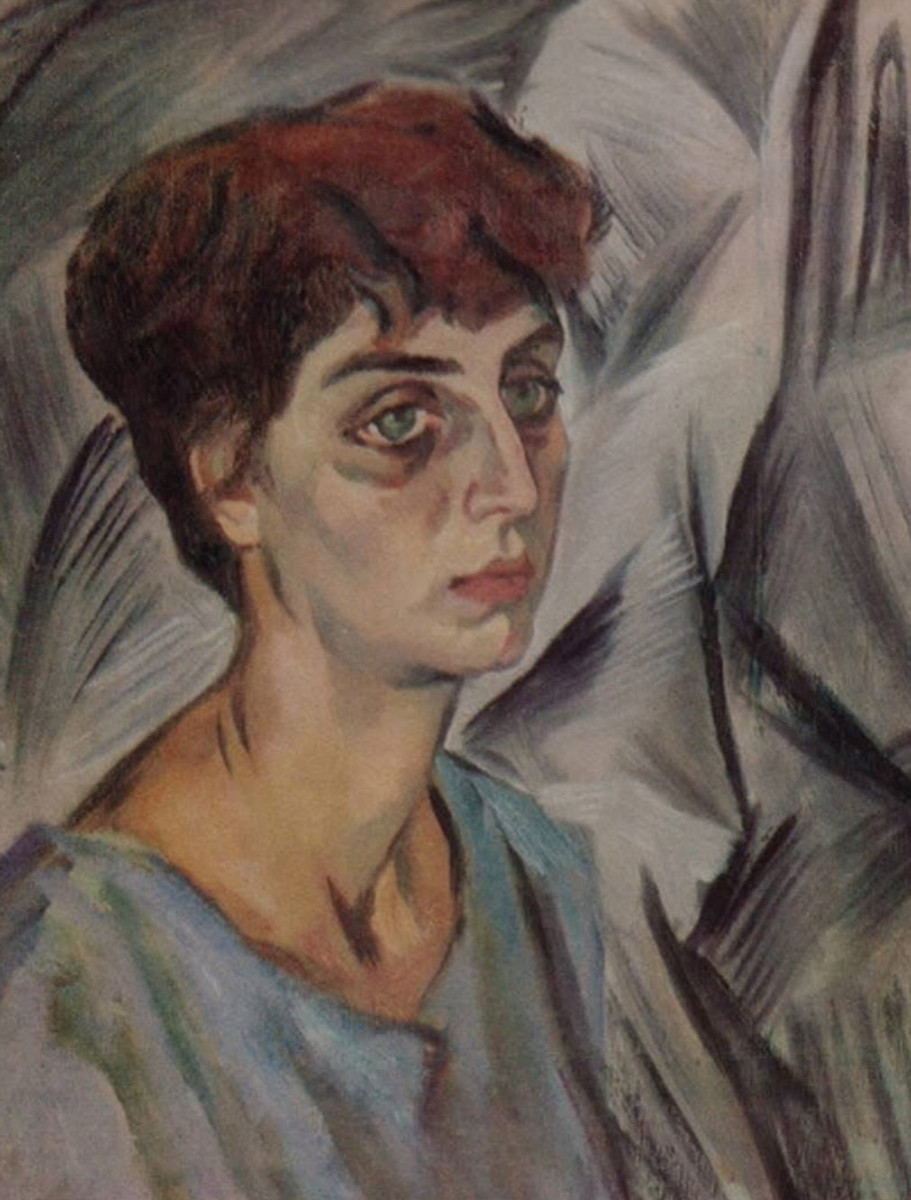
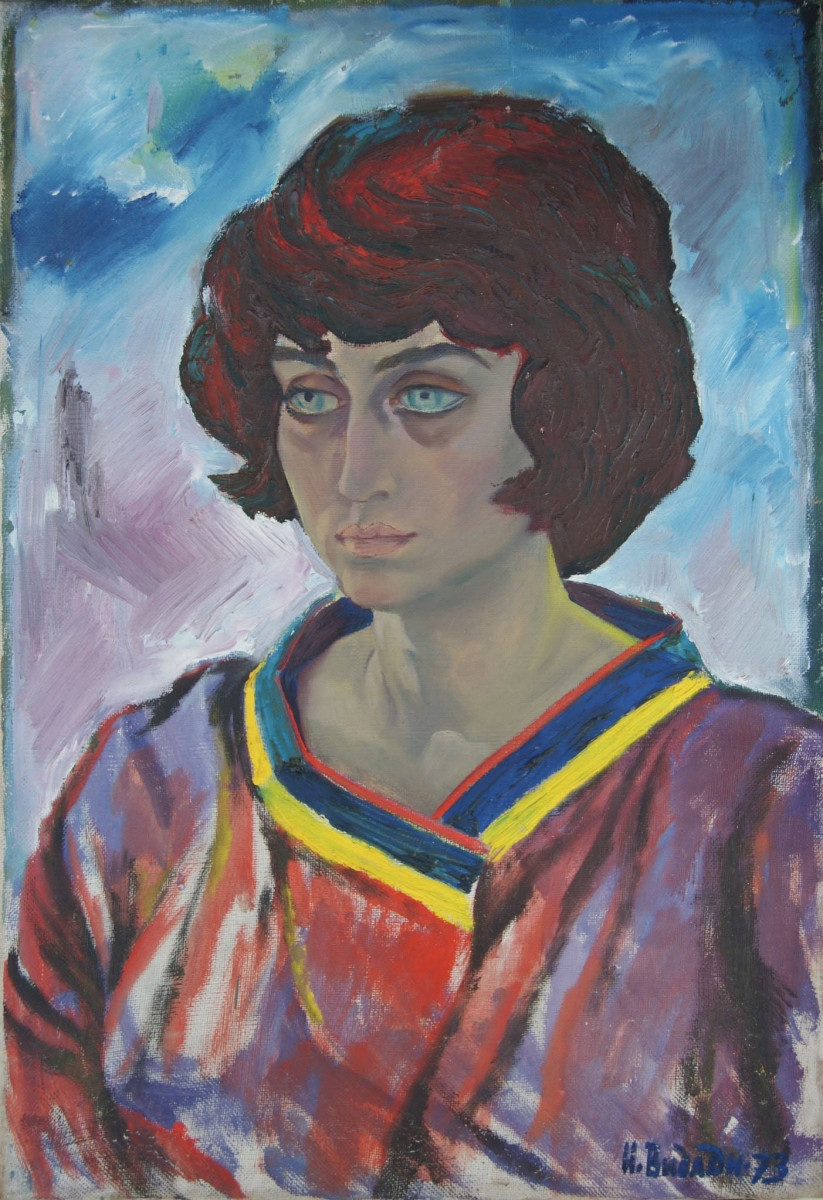
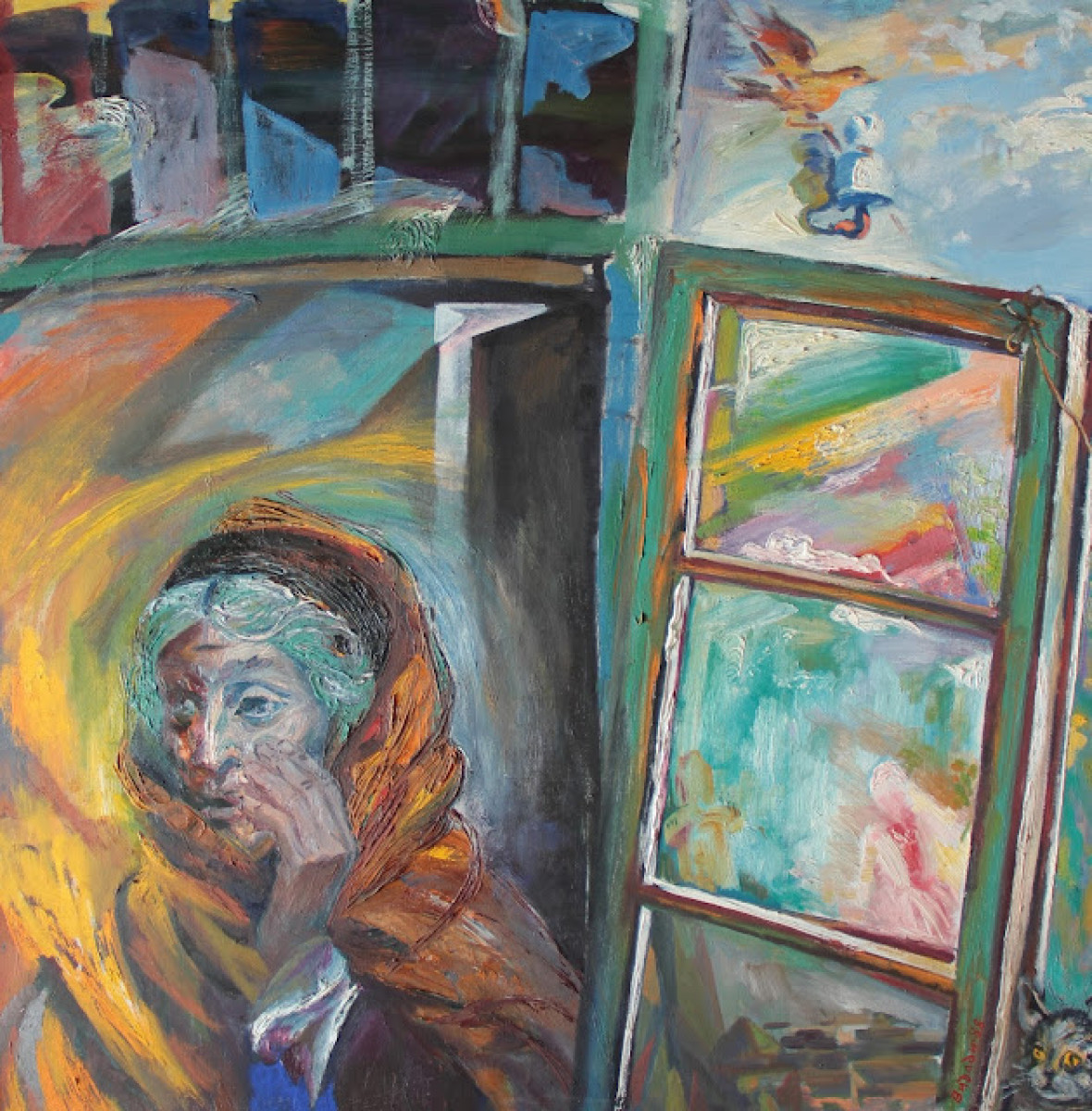
Narimanbayov’s artistic output extends beyond the theme of war. Portraiture and thematic compositions constitute important dimensions of his legacy. In works such as “Portrait of a Mother”, “Portrait of A. Semyonov”, “Portrait of Foreman S. Mammadov”, “Student Girl”, “Portrait of Nazifa” and “Girl in an Interior”, individual character, inner life and the relationship between a person and their surroundings become central elements of the image.
In “Gachag Nabi”, the artist turns to a figure rooted in Azerbaijani historical memory. His painting “The Murderers” (“Qatillər”), dedicated to the events of 20 January 1990, gives artistic expression to a tragedy deeply embedded in the collective memory of the Azerbaijani people.
In these works, the human figure moves beyond the boundaries of individual portraiture to become a bearer of its historical period, collective memory and moral values.
Exhibitions and Artistic Legacy
From 1958 onwards, Narimanbayov participated in republican, All-Union and international exhibitions. In 1961, he became a member of the USSR Union of Artists. Between 1972 and 1986, he served as Deputy Chairman of the Board of the Union of Artists of the Azerbaijan SSR. He was awarded the honorary title of Honoured Artist in 1977 and that of People's Artist of the Azerbaijan SSR in 1982.
Between 1992 and 2000, solo exhibitions of his work were held at the Bouscayrol Gallery in France. His works were exhibited in various countries, contributing to the international recognition of Azerbaijani visual art. In 2001, he was awarded the Order of Glory.
Vidadi Narimanbayov died in Baku on 13 December 2001.
His artistic legacy remains a significant contribution to twentieth-century Azerbaijani painting, distinguished by its engagement with human destiny, historical events and national memory. In his works, history is brought to life through the human figure, while individual experiences acquire broader social and moral significance.
Art Space Gallery MEDIA